
The large language model market is experiencing a curious paradox. On one hand, flagship solutions from leading labs deliver impressively high-quality responses. On the other, alternatives are emerging that claim comparable results but at a very different price. Comparing Kimi K3 and Claude Fable 5 is a vivid example of this dilemma. Let’s break down how two models can be close in quality yet radically different in cost and speed, and what that means for practical choice.
The essence of the contradiction: quality, price, and speed
When it comes to choosing a language model, users usually look at three key parameters: generation quality, response speed, and token cost. In an ideal world, all three should be balanced. In practice, you have to find a compromise.
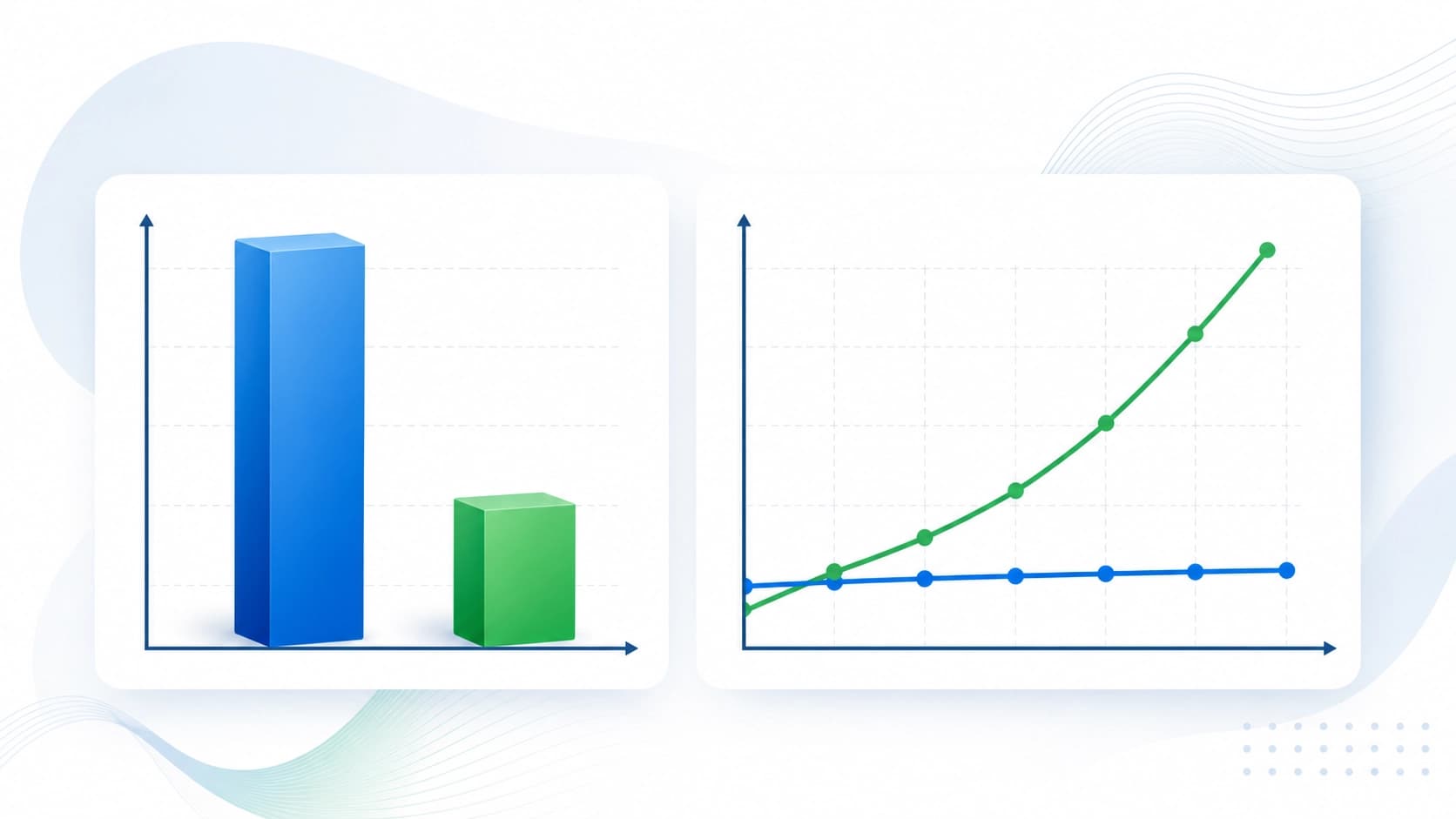
Kimi K3 is positioned as a model capable of competing with more expensive alternatives in text generation, data analysis, and coding tasks. At the same time, its token processing price is noticeably lower than that of Claude Fable 5 — roughly three times lower. However, this advantage has a downside: the model takes significantly longer to generate a response. While Claude Fable 5 responds almost instantly, Kimi K3 may take four times longer to think through a request.
 Why saving money doesn’t always mean compromising on quality
How comparable performance is achieved
The secret behind inexpensive models that deliver flagship-level results lies in their architecture and training approach. Developers often use distillation — a technique in which a large, powerful model transfers its knowledge to a more compact model. The result is a reduced version that retains a significant share of the original’s skills while requiring fewer computing resources to run.
That is why Kimi K3 can demonstrate results comparable to Claude Fable 5 in tests of natural language understanding, reasoning, and even code writing. For many standard scenarios, users simply won’t notice a difference in quality: the model formulates thoughts correctly, follows instructions, and doesn’t make critical mistakes.
The hidden price of cheapness
However, savings don’t come for free. While the quality of output remains high, the resources needed to achieve that quality may be used less efficiently. Slower generation often means the model performs additional iterations during processing, double-checks its answers, or uses more complex decoding mechanisms to compensate for its smaller size and reach the required level of confidence.
In simple terms, Claude Fable 5 produces the right answer immediately and quickly, relying on the enormous capacity of its architecture. Kimi K3 has to “think longer” to arrive at the same result with less computing power. This is like comparing an experienced surgeon who completes an operation in an hour and a talented resident who needs three hours to achieve the same outcome — the result is identical, but the time and costs differ.
 Practical implications for different scenarios
When speed matters most
There are tasks where every second of waiting translates into money. For example, processing requests in customer support, where a user is waiting for a response in chat. Or generating content at scale, when the pipeline consists of many sequential API calls.
Imagine you are automating product card writing for an online store. If one request to Claude Fable 5 takes a couple of seconds, processing a thousand products will be fairly quick. With Kimi K3, the same process will take four times longer. If throughput and responsiveness are important to your business, the savings on tokens may not outweigh the loss of time.
When saving money is the smarter choice
On the other hand, there are scenarios where speed doesn’t matter. These include offline analytics, drafting documents, and research tasks where results aren’t needed right away. In such cases, choosing Kimi K3 looks completely justified: you pay three times less and get the same level of text, just with a delay.
This option is especially interesting for startups and small teams with limited budgets. Instead of paying for premium speed that doesn’t add extra value, you can save money and direct it toward product development or other expenses.
 Key criteria for choosing between the models
Your type of workload
Analyze the ratio of “interactive” to “background” requests in your project. If most interactions happen in real time — in chats, through plugin interfaces, or in applications where the user is waiting — speed will be decisive. If you send batch requests or work in asynchronous mode, Kimi K3’s slowness will be almost imperceptible.
Scale of usage
With occasional requests, the price difference, while noticeable, is not significant. However, when processing millions of tokens per day, the savings become a meaningful number. If you plan a large-scale integration, it’s worth calculating total costs with speed in mind. Increasing your API budget may turn out to be cheaper than hiring additional servers to parallelize slow Kimi K3 calls.
Quality requirements
Since both models are comparable in performance, quality can be removed from the equation unless you’re dealing with specific tasks where one model has proven better on your real data. It’s always useful to run your own testing on a representative sample of your requests to verify the developers’ claims of parity.
Step-by-step testing and decision plan
- Identify key scenarios. Write down five to seven typical tasks the model will perform in your project.
- Prepare a test dataset. Collect real requests that have already come from users or that you plan to send.
- Evaluate quality. Send identical requests to both models and ask several people to independently rate the responses on a scale from 1 to 5 without knowing which model generated them.
- Measure speed and cost. Record the time of each request and calculate the total token spend for the same batch of data.
- Compare results at your scale. Multiply the obtained metrics by your average daily number of requests to see the real savings and the real delay.
- Make a decision based on the numbers. If the quality difference turns out to be statistically insignificant and speed is not a bottleneck in your pipeline, the choice of the smaller, cheaper model is obvious. Otherwise, prioritize speed.
Conclusions and a look ahead
The situation with Kimi K3 and Claude Fable 5 is not an isolated case but a steady trend across the entire market of both large and compact language models. While leaders chase quality and speed by expanding model parameters, their competitors build their strategy on the opposite: offering “good enough” quality for minimal money while sacrificing performance.
For users, this is great news. It becomes possible to choose a tool not by the principle of “take the most expensive and powerful option,” but based on your own needs and constraints. Perhaps soon the alignment of prices and speeds will continue, and we’ll see models that are fast, cheap, and high-quality all at once. For now, the choice comes down to a simple question: what matters more to you — saving money or saving time? Everyone answers that for themselves.