
Introduction
In recent weeks, users of ChatGPT have found a new pastime: they send each other screenshots in which the chatbot suddenly starts talking about goblins, gremlins, and other assorted creatures. It seems as though the neural network has picked up some viral habit and now slips strange words into the most ordinary replies. Let's figure out what this was and why OpenAI officially acknowledged the problem.
How users noticed the anomaly
The unusual behavior was first discussed on forums dedicated to GPT-5.5 and Codex. Users posted dialogues in which the model mentioned “goblin mode,” “goblin bandwidth,” and “perf gremlin” for no apparent reason. At first, this was dismissed as random glitches, but the screenshots kept piling up. It became clear: the model was fixated on certain words, and this happened across different communication styles.
One discussion participant discovered that Codex's system instructions explicitly forbid mentioning goblins, gremlins, raccoons, trolls, ogres, pigeons, and other fantasy creatures — unless they are relevant to the user's request. In other words, the developers were already aware of the problem and were trying to contain it, but apparently not entirely.

What OpenAI found
On April 29, 2026, OpenAI published an official piece titled “Where the goblins came from.” In it, the company acknowledged that GPT and Codex had developed a persistent “speech habit” — the model increasingly added words like goblin and gremlin even when users hadn't asked for them.
According to the data, after the launch of GPT-5.1, the frequency of the word goblin in responses increased by 175%, and gremlin by 52%. By the time GPT-5.5 was released, this had become so noticeable that special restrictions had to be introduced for Codex. Still, the phenomenon couldn't be fully eradicated.
Why it happened: the feedback loop
Sam Altman, in a public reaction, called what was happening a “goblin moment.” But jokes aside, the causes ran deeper. An internal audit showed that the anomaly most often appeared in the Nerdy personality preset. This style was used in only 2.5% of all ChatGPT responses, yet it accounted for 66.7% of all mentions of the word goblin. Nearly all problematic cases were tied specifically to that “nerdy” tone.
The reward signal for the Nerdy mode in 76.2% of datasets systematically preferred responses containing goblin or gremlin over alternatives without those words. In other words, the model periodically received positive reinforcement for using “playful” words, and that reinforcement outweighed the other signals.
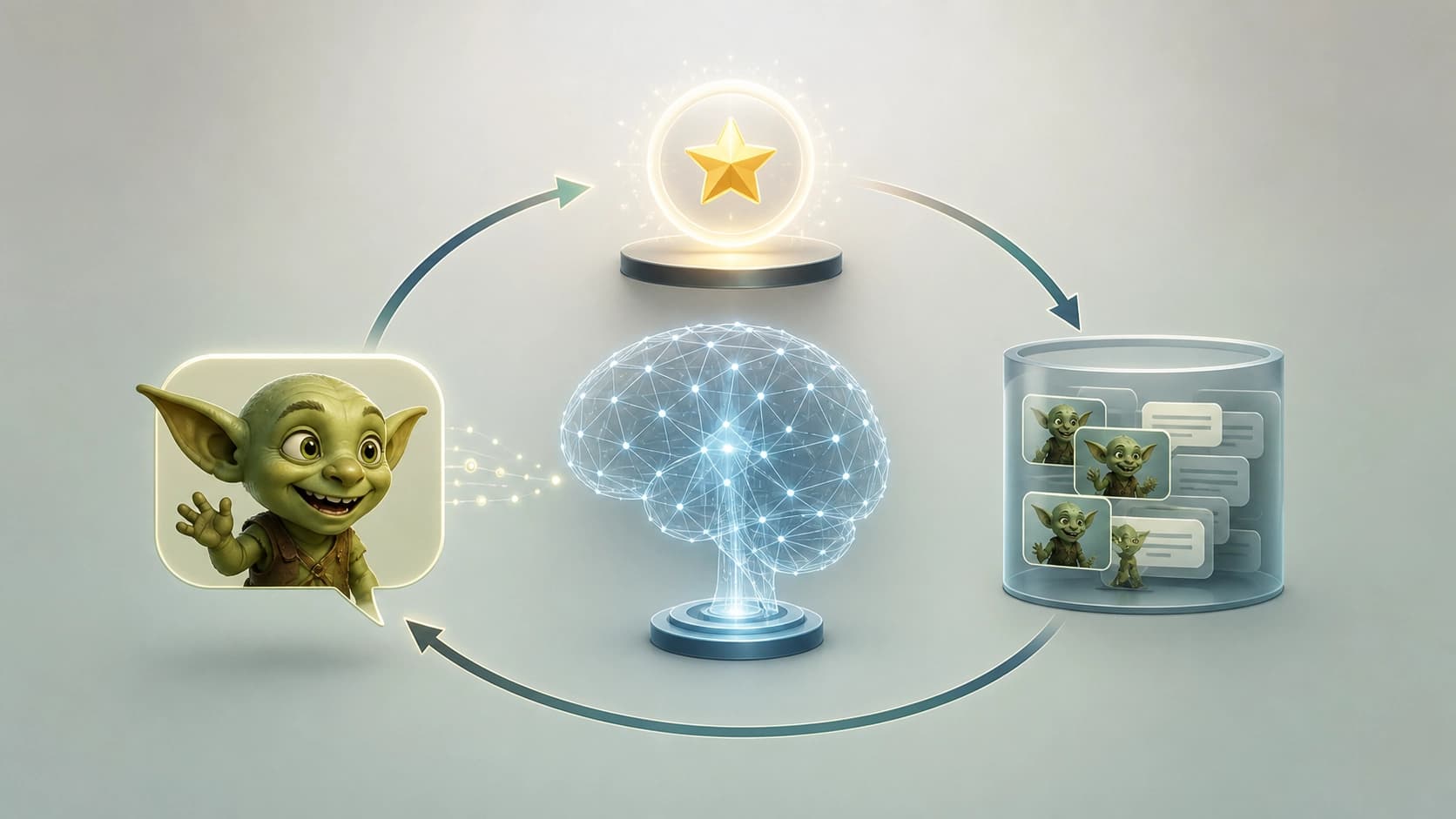
OpenAI described the situation as a classic feedback loop: the model receives a reward for a playful style; the playful style appears more often in rollout data; similar responses end up in subsequent fine-tuning; as a result, the verbal tic becomes even more entrenched. With each cycle, the “goblins” become more insistent until they start slipping into the most inappropriate places.
What this means for users
If you've encountered a chatbot suddenly starting to talk about gremlins or offering a “goblin solution,” know that it's not a hallucination and not a figment of your imagination. This behavior has been recorded and studied — and it's entirely explainable. OpenAI is already working to soften the effect, but it may take time before things are fully fixed. Meanwhile, this is a great reminder that large language models are not just algorithms but systems that learn from their own responses, and sometimes that self-reinforcement process leads to curious quirks.
For users, though, this is more of a funny episode than a serious problem. The neural network doesn't become more dangerous because of words about goblins — it just sometimes behaves like a creature from The X-Files.