
LLM engineering through play: an overview of the Odyssey platform with 13 browser-based scenarios
A new project turns learning about large language models into a set of interactive games covering tokenization, transformers, prompts, and RAG. The platform has already completed a pilot launch at a college and is preparing for a more rigorous evaluation of results.
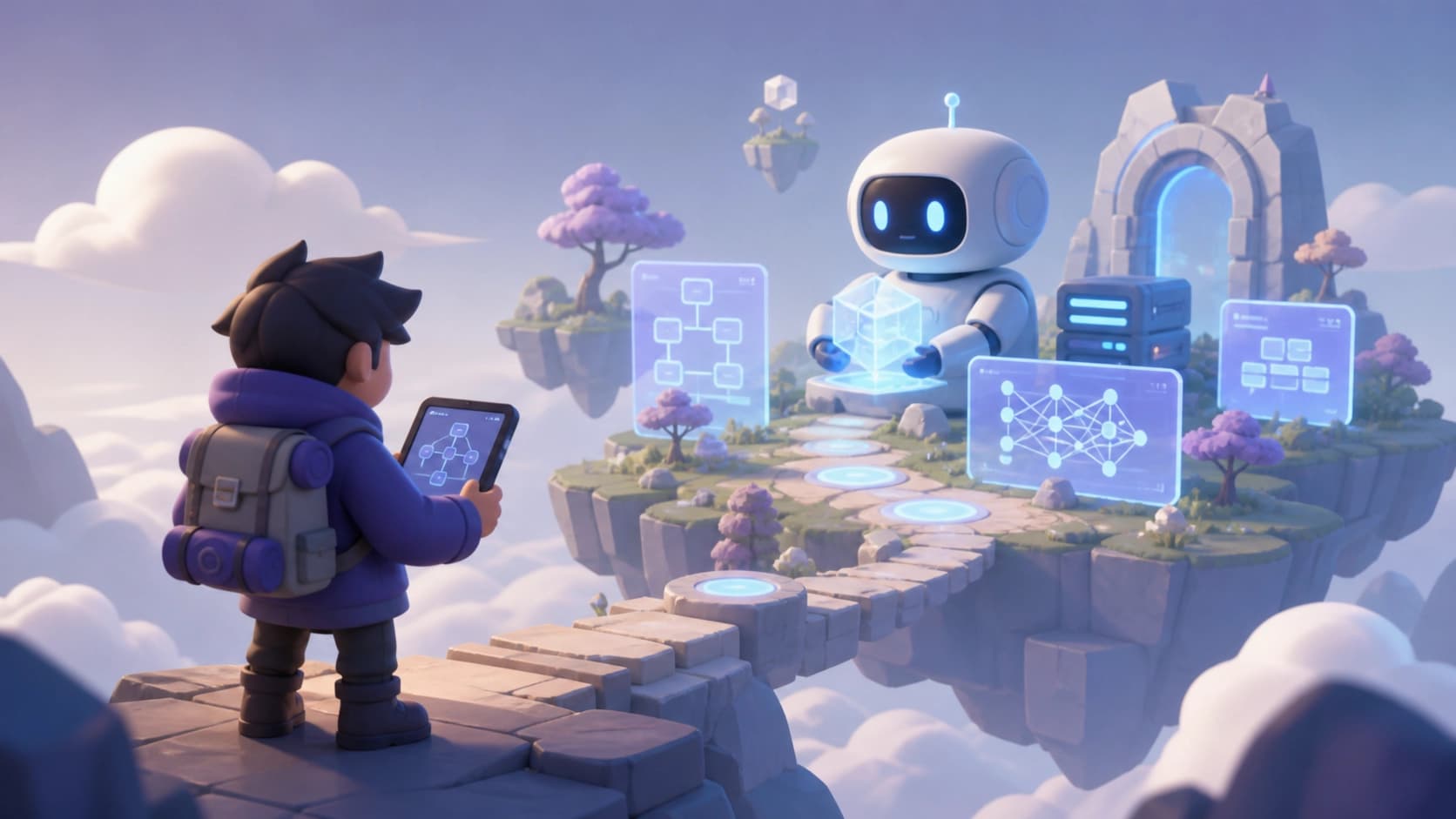
LLM Odyssey: A Gaming Sandbox for Future Engineers
Every year, working with large language models becomes easier, but understanding the inner workings of LLMs still requires serious preparation. University programs typically offer either theory or a set of disparate tools, and comprehensive practical courses are lacking. The LLM Odyssey platform attempts to fill this gap by turning learning into a browser-based game.
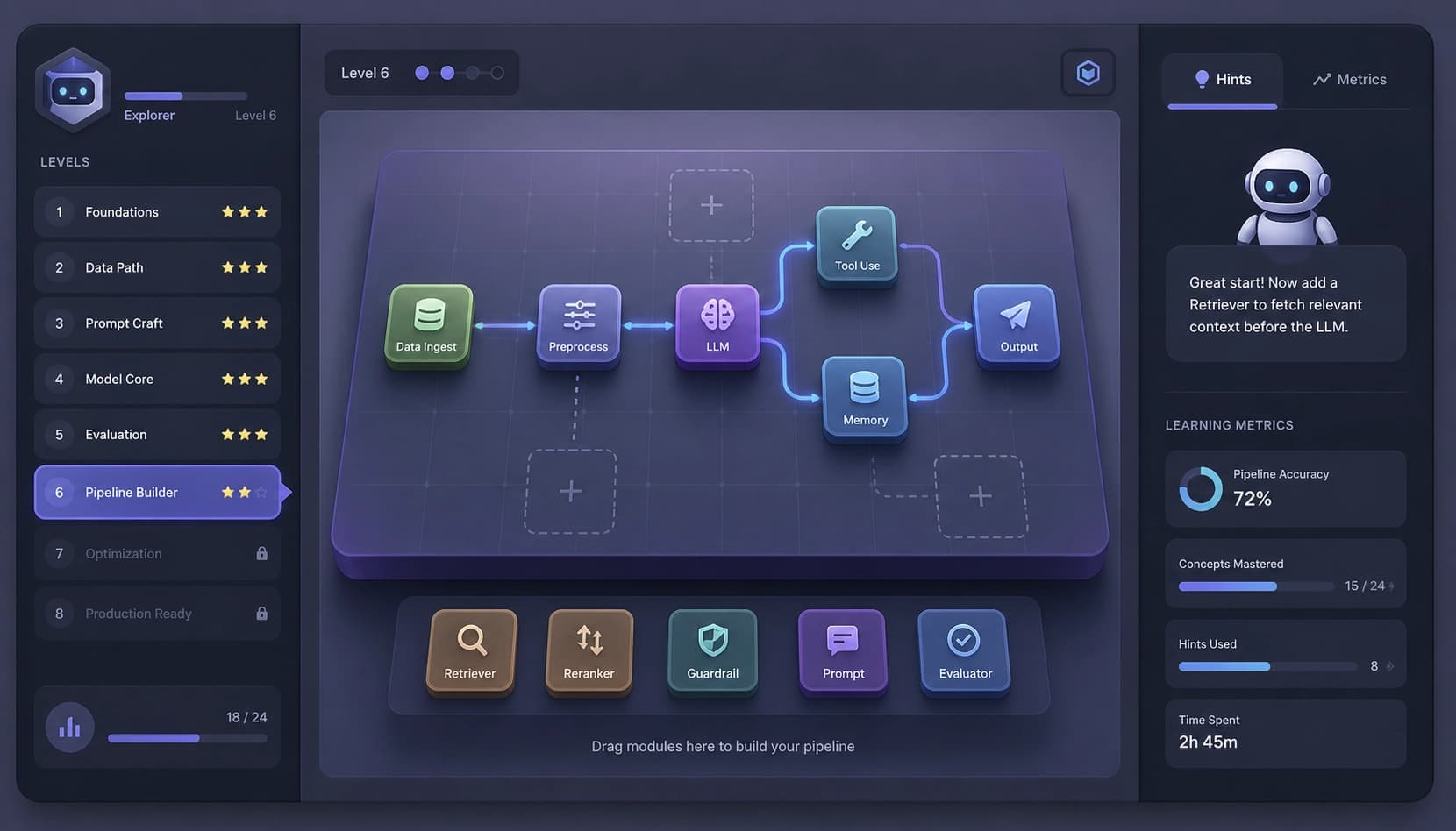
LLM Odyssey is an open serious gaming platform that runs directly in the browser. It contains thirteen interactive mini-games dedicated to different aspects of large language model engineering: from tokenization and the architecture of transformers to advanced prompt engineering, RAG approaches, and deploying models in production.
What's Inside: Three Levels of Mastery
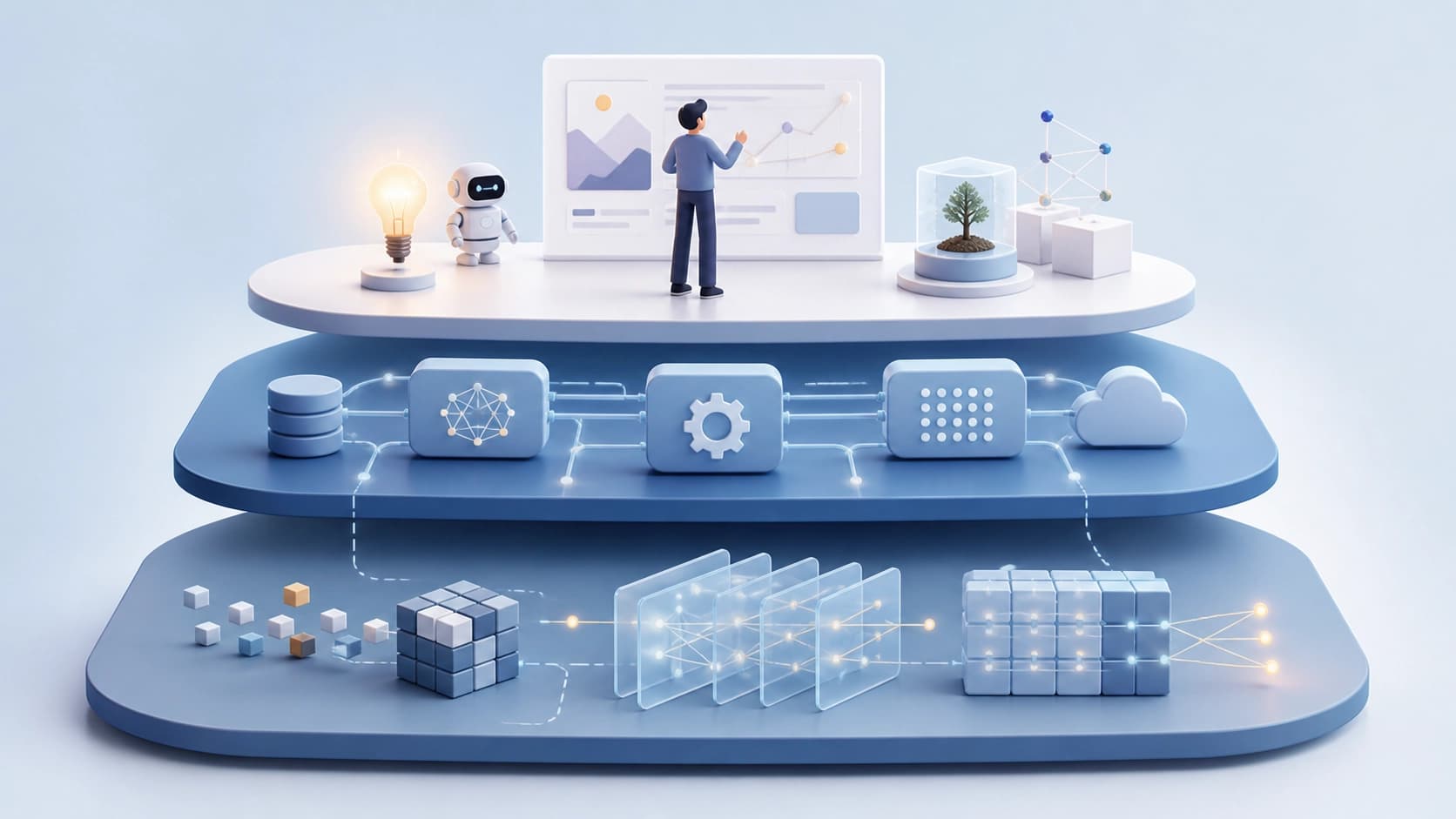
Instead of a flat set of tasks, the platform offers a structured learning trajectory. The developers have identified three stages aligned with Bloom's pedagogical taxonomy.
The first level — Cognitive Core — includes seven games that lay the foundation. Here, the user explores how models split text into tokens, what happens inside attention layers, and how generation mechanisms work. This is the base without which it's hard to move forward.
The second level — Systems Forge — consists of five scenarios and shifts the focus from fundamental concepts to production engineering: how to build a RAG pipeline, how to optimize queries, how to integrate a model into a real service. Finally, the third level — Foundry Arena — features capstone tasks where the student applies all acquired skills in a comprehensive project as close to real-world conditions as possible.
This division allows beginners not to drown in details, while experienced engineers can quickly move on to complex scenarios.
Pedagogy Hidden in Gameplay
Simply making a game isn't enough: it's important that it actually teaches. In LLM Odyssey, each game is built around five techniques that accelerate material retention.
First, there's immediate feedback: if a player assembles an incorrect pipeline, they find out right away, not after a lecture. Second, the system uses hints oriented toward the zone of proximal development: if a task isn't solved, the player receives a guiding question rather than a ready-made answer. Third, difficulty increases gradually to keep the user in a state of flow — not too easy, but not so hard that they give up.
The authors also highlight worked examples — they reduce cognitive load and show what correct reasoning should look like. Finally, all scenarios simulate real production situations, so after training there's no question of "where will this even be useful?"
Boring Goes into the Game, Complex Goes into Practice
The main advantage of this approach is the ability to experiment safely. In the learning sandbox, you can break a RAG pipeline, see how a model degrades with poor tokenization, and try to fix it without any risk to production.
First Field Trials and Development Plans
In winter 2026, the platform underwent a pilot implementation at a Canadian college. Initial review confirmed that all stated features work, and the main request from students and instructors was adaptive difficulty — the ability to tailor task levels to individual progress.
For a more serious evaluation, the authors prepared a mixed-methods research protocol involving 50 participants. It includes pre- and post-testing of knowledge, standardized surveys, engagement analysis, and participant interviews. This will assess not only whether knowledge grew, but also how comfortable the platform is to use.
Currently, the project is positioned as a work-in-progress: a paper about the platform has been accepted for the IEEE Frontiers in Education 2026 conference. This means development is ongoing, and some mechanics may change after full research results are obtained.
Why This Matters
The emergence of such platforms is a logical response to the lack of hands-on practice in AI education. Classic textbooks don't convey the feel of real work with LLMs, and scattered demos don't build a systematic approach. LLM Odyssey shows how gamification, pedagogy, and current engineering challenges can be combined in a single product. If the evaluation protocol confirms its effectiveness, universities will have a ready-made tool for training engineers who aren't afraid to look under the hood of large language models.
Frequently asked questions
Related materials
All materials
OpenCollab: programmable agent coordination, controlled execution environment, and policy compliance metric
The framework brings together the specification of agent interaction structures, a shared environment for experiments, and detailed event tracing, while the newly introduced Adherence metric reflects how closely actual execution follows the declared schema. In benchmarks, the Duo configuration achieves a new state of the art, while the single-agent variant uses the fewest tokens.
11 November 2026
Toollery: Choose tools for LLM agents from tens of thousands of options without fine-tuning
Toollery builds a search index from descriptions of skills and tools, then passes the model only a limited set of candidates for each query. In experiments with libraries containing tens of thousands of functions, the approach helps maintain selection quality at a fixed top-K, although the overall effect depends on the workload profile and the provider’s caching.
11 November 2026
Step-by-Step Evaluation of GUI Agents for Dashboard Analysis: The DashAct Benchmark
Introducing DashAct, a benchmark of 348 human-verified trajectories that breaks down GUI agents’ work with interactive dashboards into three stages and four visual conditions. The results reveal persistent issues with action prediction and visual target grounding, as well as agents’ reliance on contextual and spatial support.
11 November 2026