
CoWriter AI
AI assistant for students and researchers, accelerating the creation of academic texts and automating citation formatting.
Overview
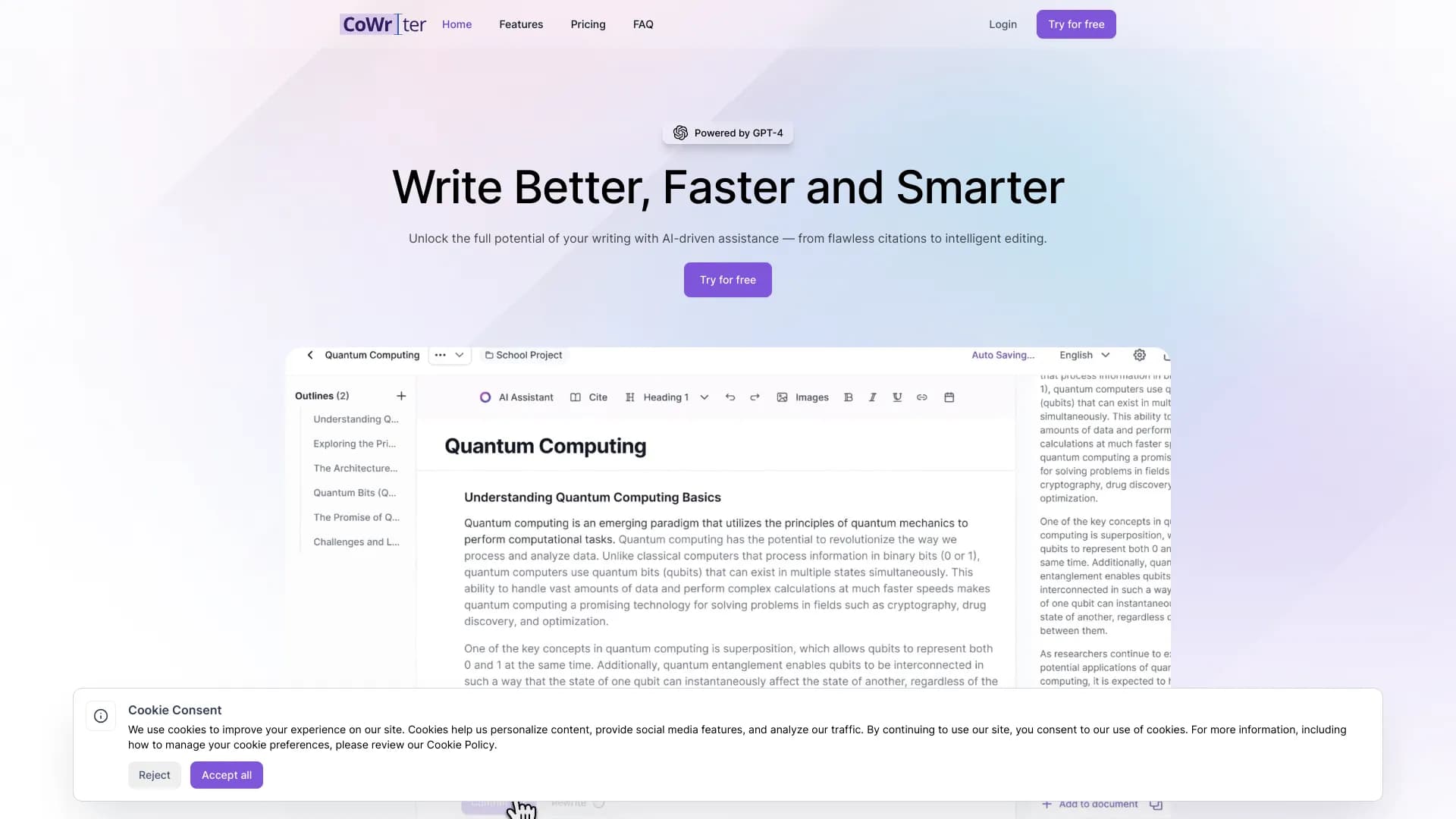
CoWriter AI is a specialized AI assistant designed for students, researchers, and authors of academic texts. The service's main goal is to speed up the process of creating scientific and educational materials, guiding users from the initial idea to the final version of a completed work. The tool automates routine aspects of academic writing, such as formatting citations and bibliographies, and supports real-time collaborative work on documents.
A key feature of CoWriter AI is its ability to adapt to the individual style of the author. Unlike template-based solutions, the neural network strives to preserve each user's unique voice, which is especially important in an academic environment where authorial perspective and originality of expression are valued.
CoWriter AI Features
| Feature | Value |
|---|---|
| Type | AI assistant for academic and scientific texts |
| Categories | Essays, scientific articles, and research |
| Website | cowriter.ai |
| Card publication date | December 16, 2025 |
| Target audience | Students, researchers, authors of academic works |
Who is CoWriter AI for?
CoWriter AI is aimed at anyone who regularly needs to prepare academic documents. The tool will be useful for several categories of users.
Higher and secondary education students
The service helps students tackle essays, term papers, and theses. The assistant simplifies the process of structuring thoughts and formatting references, which is especially relevant for those just learning academic standards.
Researchers and postgraduate students
For researchers, CoWriter AI becomes a supporting tool when preparing scientific articles for publication. The system helps gather materials, facilitates a quick transition from rough drafts to a more cohesive text, and automatically aligns the bibliography with academic requirements.
Professional authors
Authors who work with academic content on a regular basis can use CoWriter AI to speed up routine operations, such as creating drafts and formatting references, leaving more time for substantive work.
How to use CoWriter AI?
Working with CoWriter AI is built around a unified workspace where users go through several stages of text creation.
Formulating the topic and gathering materials
The first step is for the user to formulate the topic of the future work and gather the necessary materials in one workspace. This keeps all resources at hand and avoids switching between different applications.
Working with the draft and structure
The system helps shape the text's structure and suggests logical transitions between sections. At the initial stage, CoWriter AI can expand on arguments or suggest alternative phrasings, helping to overcome "writer's block."
Review and final formatting
The final stage uses built-in tools for formatting citations and bibliographies according to academic standards, as well as plagiarism checking. Collaborative work on a document is supported through a co-editing mode.
Key features of CoWriter AI
CoWriter AI includes a range of features covering the full cycle of academic text preparation.
Writing and structuring assistance
The service helps with drafting and organizing thoughts. The system can suggest directions for developing arguments, making the writing process more coherent.
Citation and bibliography generator
The built-in tool automatically formats references and reference lists according to common academic standards. This reduces the likelihood of formatting errors, which often consume a lot of time.
Checking and protection tools
The service includes plagiarism checking tools, as well as features for protection against AI detectors (AI detection proof). The latter capability is met with mixed reviews; however, it is part of the tool's arsenal.
Collaborative editing mode
The multiplayer mode allows multiple users to work on the same document simultaneously. This is convenient for joint projects where synchronizing co-authors' actions is required.
Advantages of CoWriter AI
Using CoWriter AI offers users several tangible benefits when working on academic texts.
Time savings on drafts and research
The system significantly speeds up the preparation of initial text versions and data collection. What traditionally takes days can be completed in a few hours with the assistant.
Preserving individual style
CoWriter AI adapts to a specific author's writing style. Instead of impersonal phrasing, the neural network suggests options that match the user's unique voice.
Overcoming "writer's block"
The thought-structuring feature helps get started when there is no clarity on where to begin. The system nudges users toward the first step by offering a logical starting point.
Automating formatting
The citation and bibliography generator eliminates tedious manual work on reference formatting, allowing users to focus on the substantive part.
Disadvantages of CoWriter AI
When analyzing CoWriter AI, it is also worth considering the limitations inherent to this tool. Public sources contain limited information about potential drawbacks, so this review is based on general characteristics of how similar services operate.
A possible drawback is the service's narrow focus on academic content. Users who need a universal assistant for business texts, marketing materials, or technical documentation may not find the functionality they need in CoWriter AI.
Additionally, using "AI-detector protection" features may raise ethical concerns in academic settings and could conflict with the rules of some educational institutions. This should be considered when deciding whether to use the tool.
What tasks does CoWriter AI solve?
CoWriter AI addresses the key needs of academic authors, solving several typical tasks within a single workflow.
Creating academic texts
The assistant's main task is to help write essays, scientific articles, and other academic materials. The system guides users from idea to final version, reducing the time needed to prepare each work.
Structuring ideas and arguments
CoWriter AI organizes thoughts and helps build a logical chain of arguments. This is especially valuable at the planning stage, when the main sections and their content need to be defined.
Formatting citations and bibliographies
The tool automates reference formatting, reducing the burden on the author and decreasing the number of errors in the bibliography.
Working on text originality
The system helps reduce the risk of plagiarism and provides tools for text checking. Additionally, a feature aimed at preventing AI-text detection is implemented.
Collaborative work on documents
The co-editing mode allows co-authors to work in parallel, increasing the efficiency of team projects.
CoWriter AI Pricing
At the time of the card's publication, the source website did not provide information about the cost of using CoWriter AI. Details on pricing, subscription plans, or the availability of a free version were not disclosed. Potential users are advised to visit the service's official website (cowriter.ai) for up-to-date information on the pricing model.
CoWriter AI Terms of Use
Detailed terms of use for CoWriter AI — the license agreement, privacy rules, and data processing policy — are not disclosed in available sources. It is also not specified whether registration is required to start using the service. Information about the user agreement can be obtained directly from the tool's official website.
CoWriter AI Availability
CoWriter AI is hosted on the website cowriter.ai and, judging by its format, is available as a web service. Information about the availability of mobile apps, desktop versions, or plugins for text editors is absent from the source data.
No restrictions on geographic availability are mentioned either. Additional information about supported regions and languages can be found in the product's official interface.
How CoWriter AI differs from alternatives
There are several tools on the market that solve similar tasks, including Huihui AI, Marsik AI, Semantic Scholar, ResearchRabbit, A4DOC.AI, and Studgen. The main differences between CoWriter AI and the listed services lie in several areas.
| Alternative | Key difference of CoWriter AI |
|---|---|
| Semantic Scholar / ResearchRabbit | CoWriter AI focuses not only on source discovery but on the entire text creation cycle, including drafts and formatting |
| Huihui AI / Marsik AI | CoWriter AI emphasizes academic content and preserving the author's style, rather than universal answers |
| A4DOC.AI | CoWriter AI automates bibliography formatting and offers a co-editing mode |
| Studgen | CoWriter AI provides broader functionality — from structuring to plagiarism checking |
The main difference of CoWriter AI is its comprehensive approach to academic writing. Instead of performing individual point functions (article search, text checking, or answer generation), the service combines draft creation, research, reference formatting, and teamwork in a single space. The combination of plagiarism checking and AI-detector protection tools also sets this service apart from many competitors.
Conclusion
CoWriter AI is positioned as an assistant for smart writing and research, aimed at students, researchers, and authors of academic texts. The service speeds up work on drafts, helps structure thoughts, automates citation and bibliography formatting, and supports collaborative work. The ability to adapt to an author's individual style allows users to maintain their unique voice when using AI assistance. At the same time, users should independently assess whether the functionality meets their tasks and their institution's requirements.
Frequently asked questions
See also

Multifunctional AI platform for content creation, combining speech synthesis, text generation, avatar creation, and video editing.
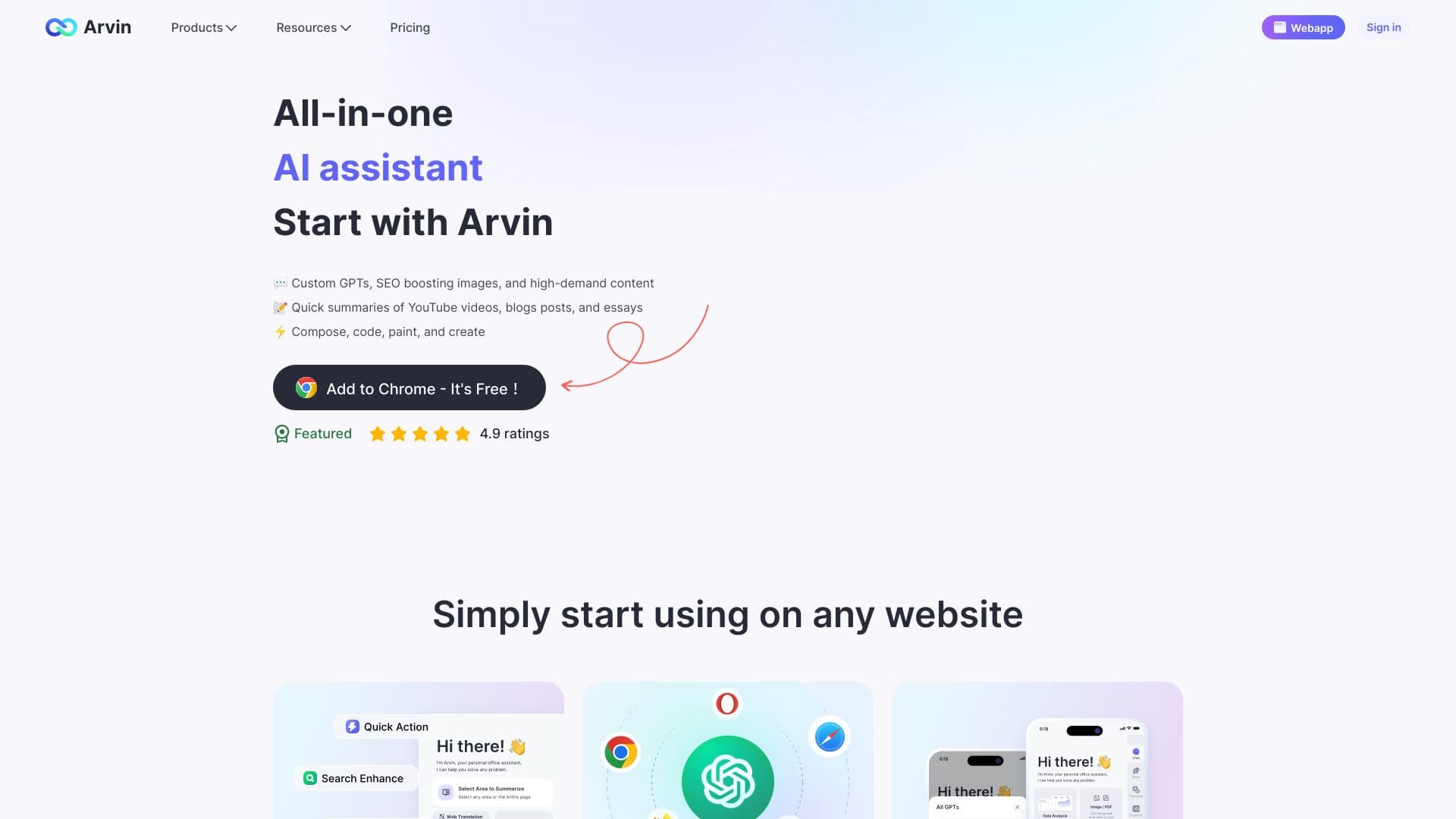
Browser extension and web service with AI assistant features: answering queries, summarizing videos and documents, and translating text.
AI assistant for business that helps manage tasks and automate routine through dialogue.
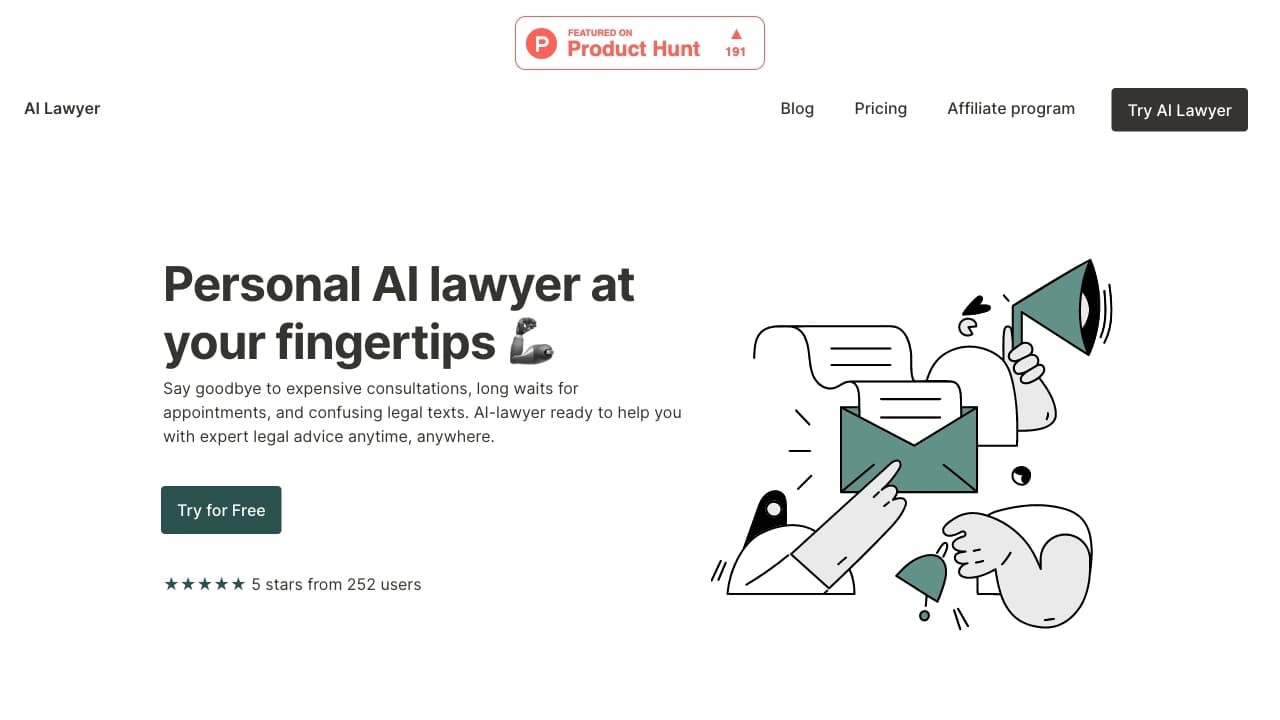

AI-powered platform for generating legal documents, contract analysis, and obtaining legal information.
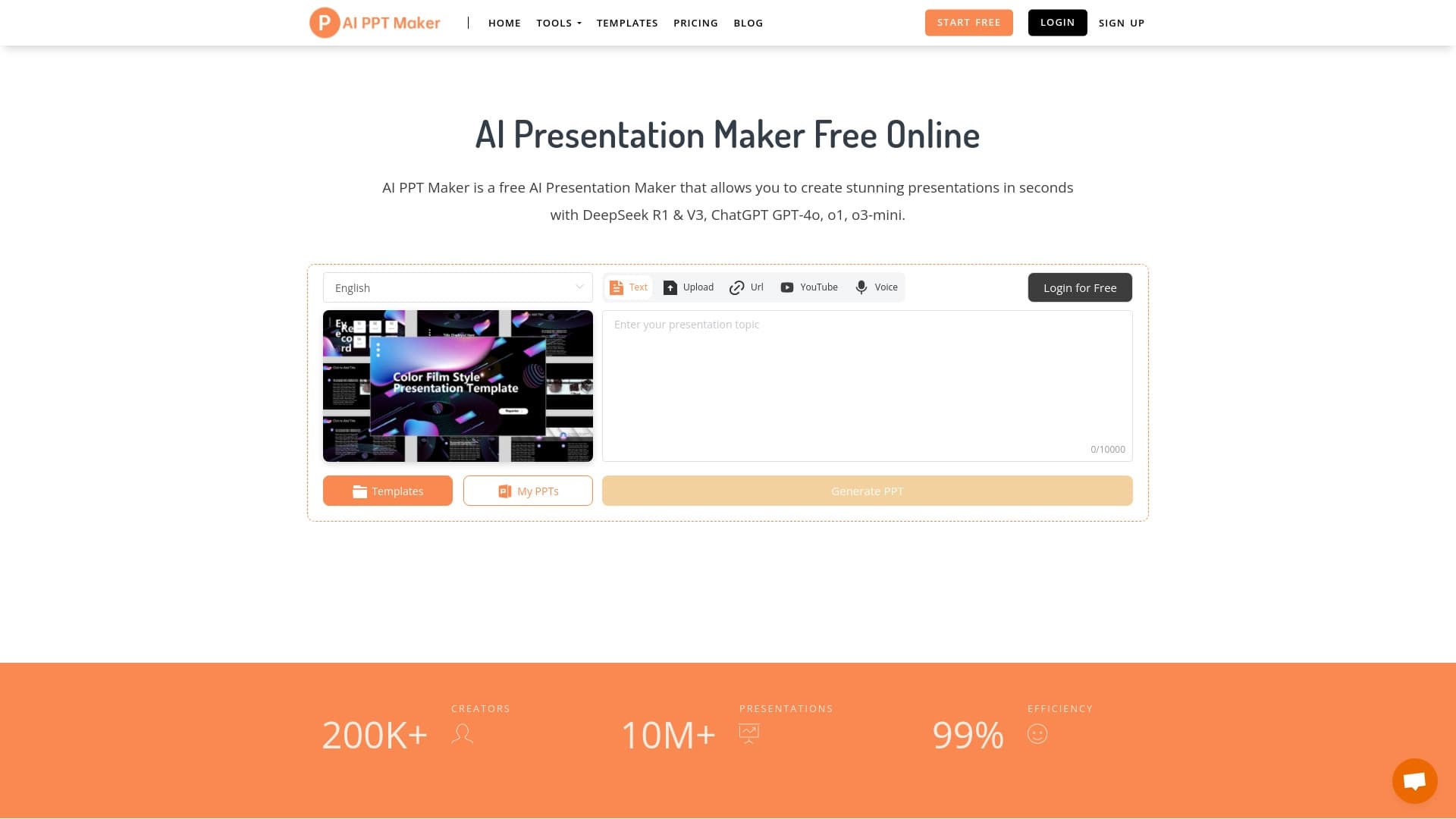

AI-powered online service for automatically creating presentations from text, PDF, audio, video, or URL links.
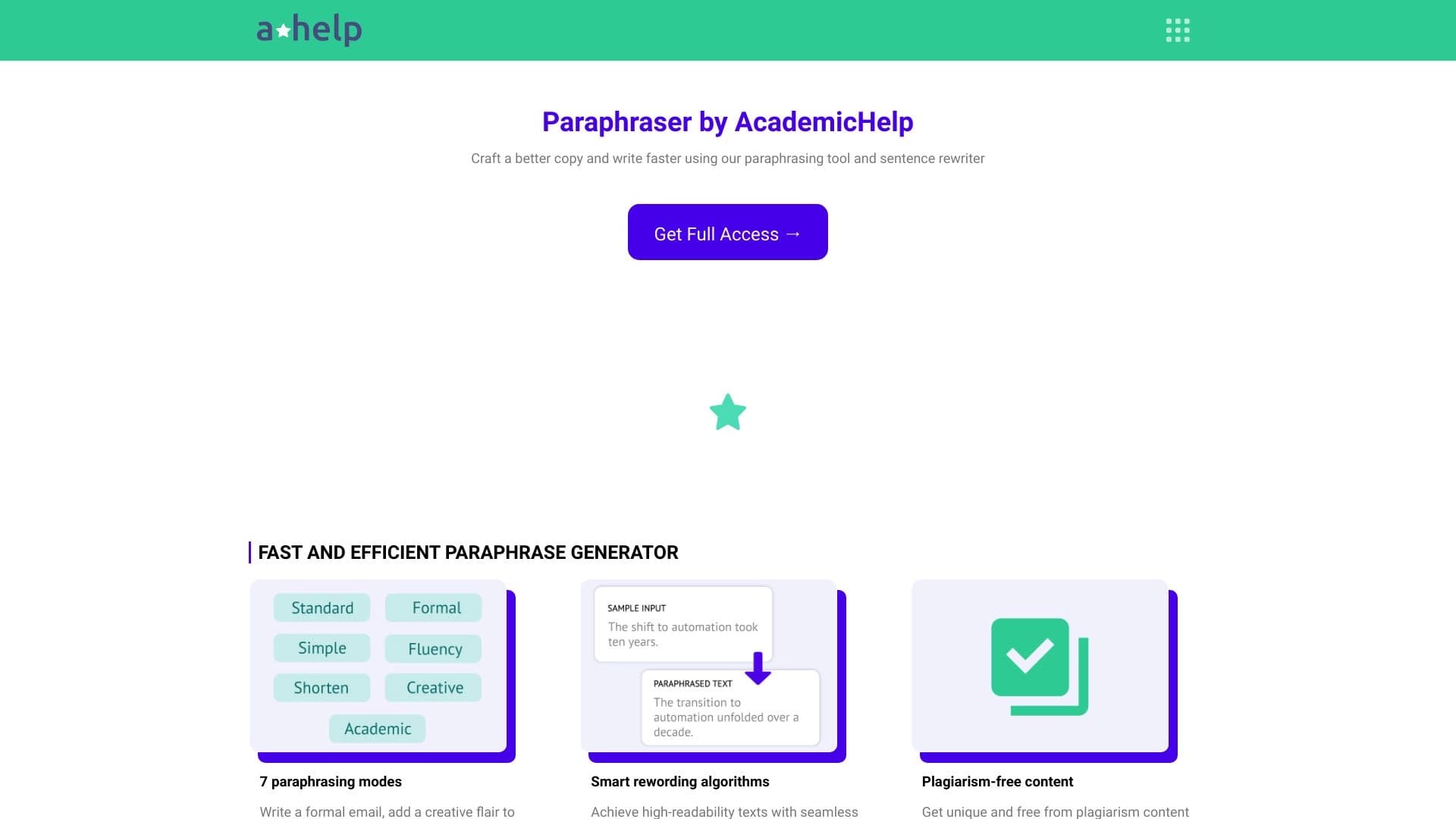

Online service for text paraphrasing with seven modes, helping you create unique content.
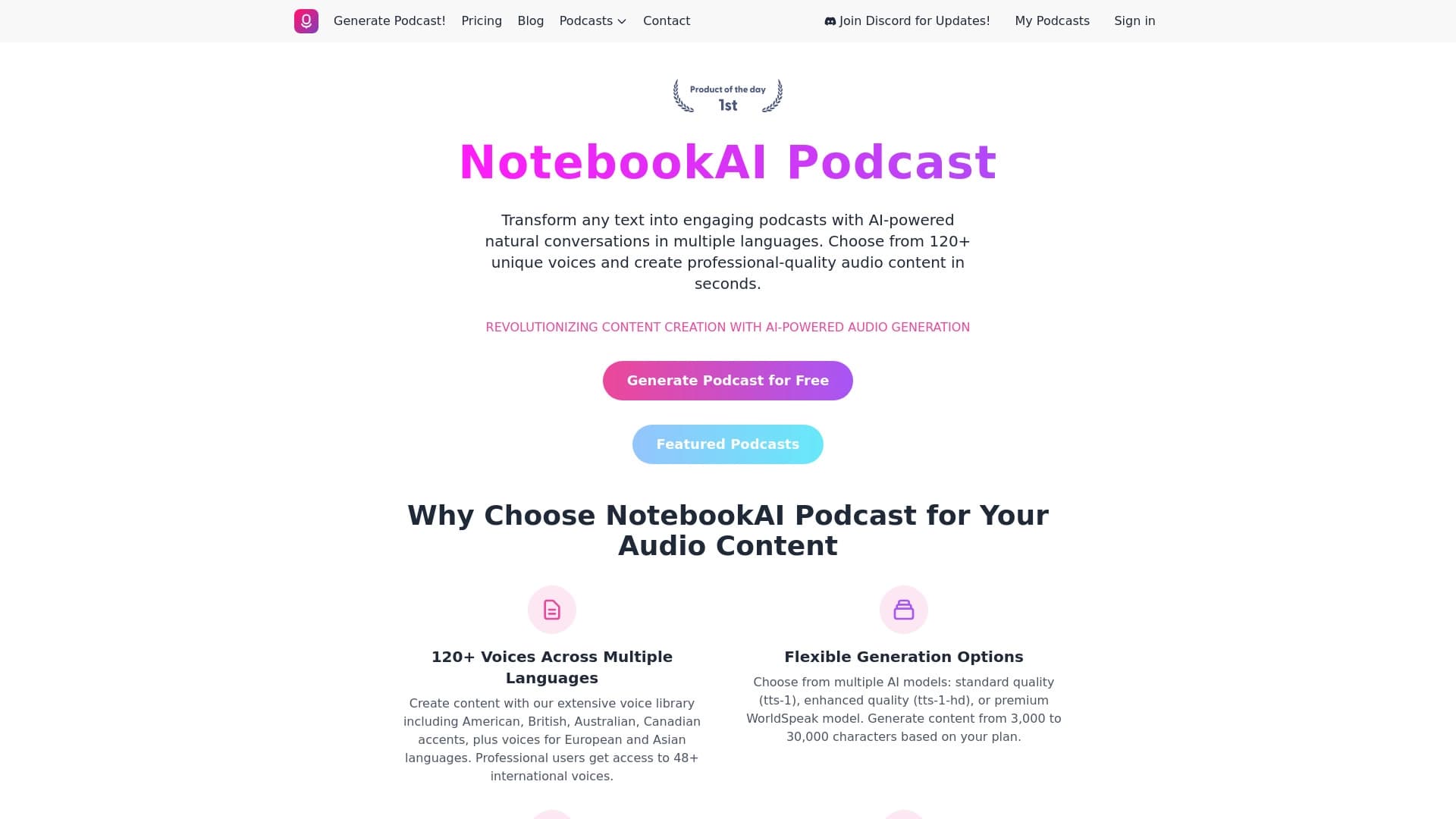

A service for turning text into podcasts with naturally sounding voices in different languages.
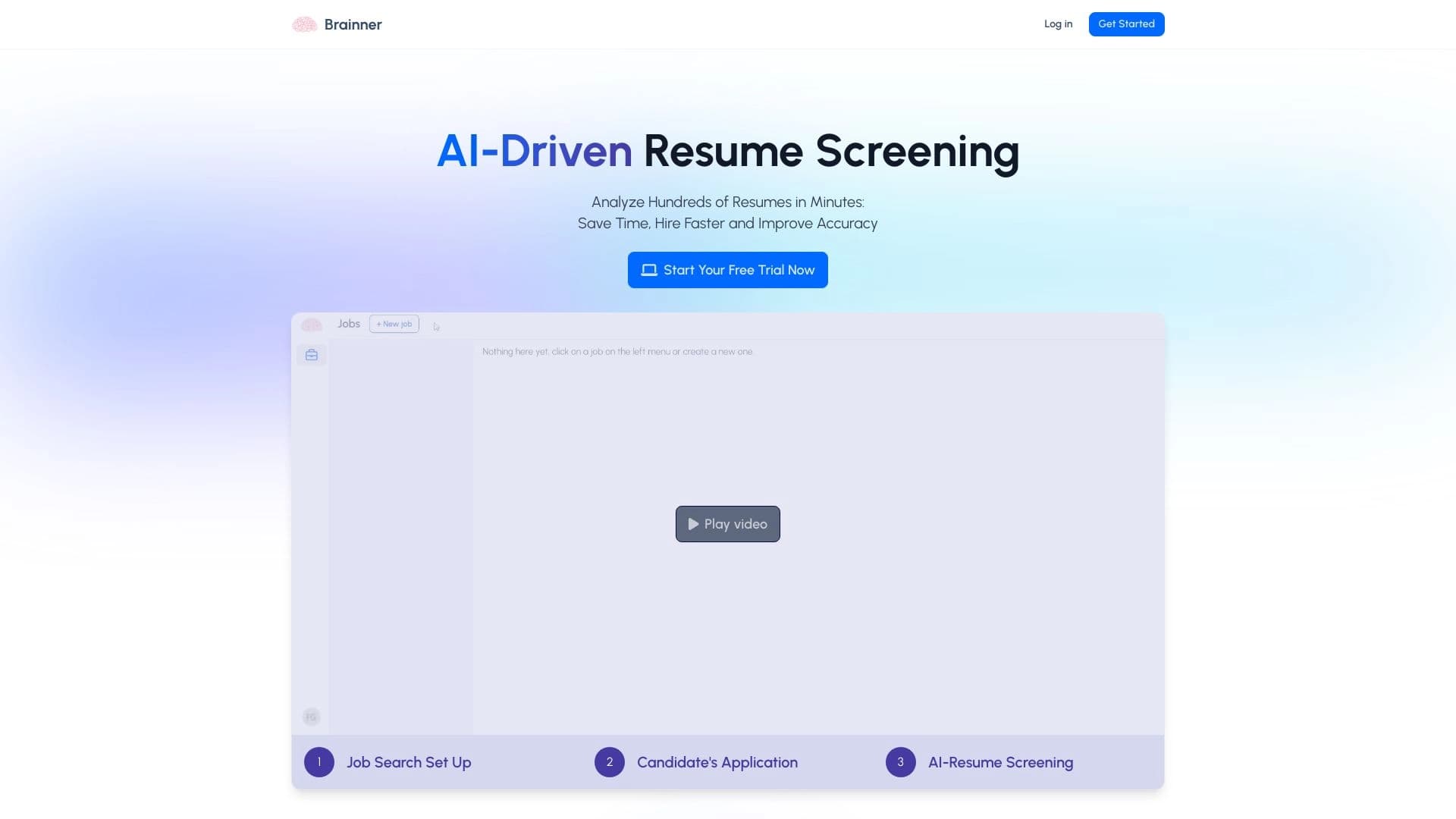
AI platform for fast resume screening that helps recruiters select suitable candidates.