
Arcee AI
Open intelligence laboratory creating powerful language models with open weights and online learning capability.
Overview
Arcee AI is an American open intelligence lab focused on creating large language models with open weights. The project stands out in the market by offering not just static neural networks, but systems capable of self-learning after deployment. In a short period, the company has released three flagship models, the latest of which — Trinity Large Preview — has 400 billion parameters.
The lab's core principle is transparency. The team publishes open research, shares tools for model distillation, and trains all its developments in the United States. Unlike many competitors that announce future technologies, Arcee AI focuses on solutions that actually work and are available to users right now.
Arcee AI Features
| Feature | Value |
|---|---|
| Product type | Open intelligence lab |
| Focus | Open-source large language models |
| Flagship model | Trinity Large Preview (400B parameters) |
| Key feature | Online reinforcement learning after deployment |
| Distribution model | Freemium (free testing via OpenRouter) |
| Training location | United States |
| Open tools | DistillKit and other research assets |
| Publications | Research on distillation, long-context training |
Who is Arcee AI for?
Developers and AI researchers
Arcee AI is built for those who want not just to use neural networks but to understand how they work. Open weights and published research allow developers to study model architectures, adapt them to their tasks, and integrate them into their own products without the restrictions of closed APIs.
Companies with strict cost requirements
Organizations that need top-tier model performance without sky-high API prices will find a practical solution in Arcee AI. The model architecture is designed to reduce inference and operational costs, which is critical for large-scale projects.
Research groups and academic institutions
The lab publishes open research on attention mechanism distillation, long-context training, and shares tools like DistillKit. This makes Arcee AI a valuable resource for the scientific community.
How to use Arcee AI
Testing via OpenRouter
Since the distribution model is freemium, the key model Trinity Large Preview is available for free testing through the OpenRouter platform. This lets you evaluate model quality without upfront investment, simply by sending requests via the web interface or API.
Integration into your own projects
Thanks to open weights, Arcee AI models can be deployed in your own infrastructure. This gives you full control over data and the training process. After deployment, the model continues to improve through online reinforcement learning — it adapts to your data without the need for manual fine-tuning.
Working with open tools
For deep model customization, toolkits like DistillKit are available. They allow knowledge distillation from larger models into smaller ones, preserving performance while reducing resource requirements.
Core Arcee AI functions
Online reinforcement learning
The platform's key function is that models don't remain static after release. Once you deploy a model, you get a system that continues to learn and improve without your intervention. This fundamentally sets the product apart from classic LLMs.
Open model weights
All released models have open weights, allowing you to use them locally, modify them, and integrate them into any application without licensing restrictions.
Distillation tools
DistillKit is an open tool for model distillation that transfers knowledge from large models into more compact ones. This reduces operational costs without significant quality loss.
Arcee AI advantages
Arcee AI offers a set of significant advantages that set it apart from competitors:
- Continuous model improvement — online reinforcement learning ensures quality growth without manual user intervention
- Cost efficiency — the architecture keeps costs low while maintaining performance at the level of top models
- Openness — all weights, research, and tools are published openly, without marketing promises about the future
- Data security — models are trained entirely in the United States, which matters for companies with strict data requirements
- Practical accessibility — the flagship model can be tested for free right now via OpenRouter
Arcee AI drawbacks
The main drawback is limited recognition compared to industry giants — Arcee AI models still need to build an ecosystem of integrations and tools as extensive as more mature platforms. Also, despite openness, documentation and community support may not be as comprehensive as with the largest open-source projects. Additionally, the source data doesn't specify detailed technical characteristics for all models, which can make it harder to choose a specific version for particular tasks.
What problems does Arcee AI solve?
Reducing LLM infrastructure costs
The main problem Arcee AI solves is cost savings. Companies can get performance comparable to large proprietary models without multi-million-dollar API bills. The architecture is designed to minimize computational costs.
Customization and data control
Open weights help solve the challenge of managing sensitive data: you can deploy the model within your own security perimeter without sending data to third-party services. This is critical for the financial, healthcare, and government sectors.
Research and education
The lab helps spread knowledge: by publishing research on distillation and long-context training, Arcee AI advances the industry as a whole, giving researchers practical tools to work with.
Continuous adaptation to data
Arcee AI models solve the problem of knowledge obsolescence — through online learning, they adapt to new data, keeping answers relevant throughout their entire operational life.
Arcee AI pricing
Exact pricing for all Arcee AI models isn't available in the source materials. It's known that the distribution model is freemium: the flagship Trinity Large Preview can be tested for free via OpenRouter. This means the product has a free tier, and for extended use or commercial applications, paid options are likely available, but pricing details aren't disclosed in the available information.
Arcee AI terms of use
Based on available data, several key terms can be highlighted. All models are trained in the United States, which may be an important factor for meeting regulatory requirements. Model weights are open — this implies broad freedom in use, modification, and distribution under open-source licenses. Tools like DistillKit are published for the community without restrictions. Exact terms for commercial use, licensing agreements, and permitted use cases aren't detailed in the source data, so it's recommended to check the official website before commercial deployment.
Arcee AI availability
Arcee AI is based in the United States, and all models are trained within the country. The product is available to international users through online platforms — in particular, testing via OpenRouter implies global access from any region with an internet connection. Open-source code and public tools are available for download through official repositories. Models can be run locally on your own hardware, making them accessible regardless of geographic location. However, specific data on regional restrictions, support for particular languages, or national versions of the product isn't provided in the source materials.
How Arcee AI differs from alternatives
The main difference between Arcee AI and competitors is the models' ability to self-learn after release. Most alternatives offer static models: once trained, they don't change until the developer releases a new version. Arcee AI models continue to improve through online reinforcement learning during operation, adapting to user data without user involvement.
The second important difference is the philosophy of openness. While many commercial labs keep their weights and technologies closed, Arcee AI publishes not only models but also research papers (for example, on Delta Attention mechanism distillation), and provides distillation tools in open access. This lets the community not just use the models but also develop them.
The third difference is the approach to cost. The model architecture is initially optimized for low costs, making it accessible to mid-sized businesses. Competitors among large closed labs can't offer such cost efficiency without losing performance. Additionally, all models are trained exclusively in the United States, which sets Arcee apart from competitors that outsource training to other jurisdictions.
Conclusion
Arcee AI is a dynamically developing lab that bets on three key values: openness, cost efficiency, and continuous learning. Having released three flagship models in six months, including Trinity Large with 400 billion parameters, the company has proven its ability to create serious solutions. Free testing via OpenRouter lowers the entry barrier, while open weights and published research strengthen community trust. Although pricing and licensing details aren't fully disclosed in open data, the existing freemium model and practical tools make Arcee AI a real player in the LLM market. For companies seeking a balance between performance, cost, and data control, this project is a worthy option.
Frequently asked questions
See also

A multimedia AI toolkit for editing and enhancing photos, videos, and PDF documents.

Chrome extension that helps manage tabs, history, and bookmarks with an AI assistant.

AI toolkit for video generation and editing, including avatars, lip-sync, and voice cloning.

Cloud platform for creating videos using AI avatars, synthesized speech, and automatic translation of clips into dozens of languages.
Multifunctional AI platform for content creation, combining speech synthesis, text generation, avatar creation, and video editing.

AI platform for fast website creation and small business process management.
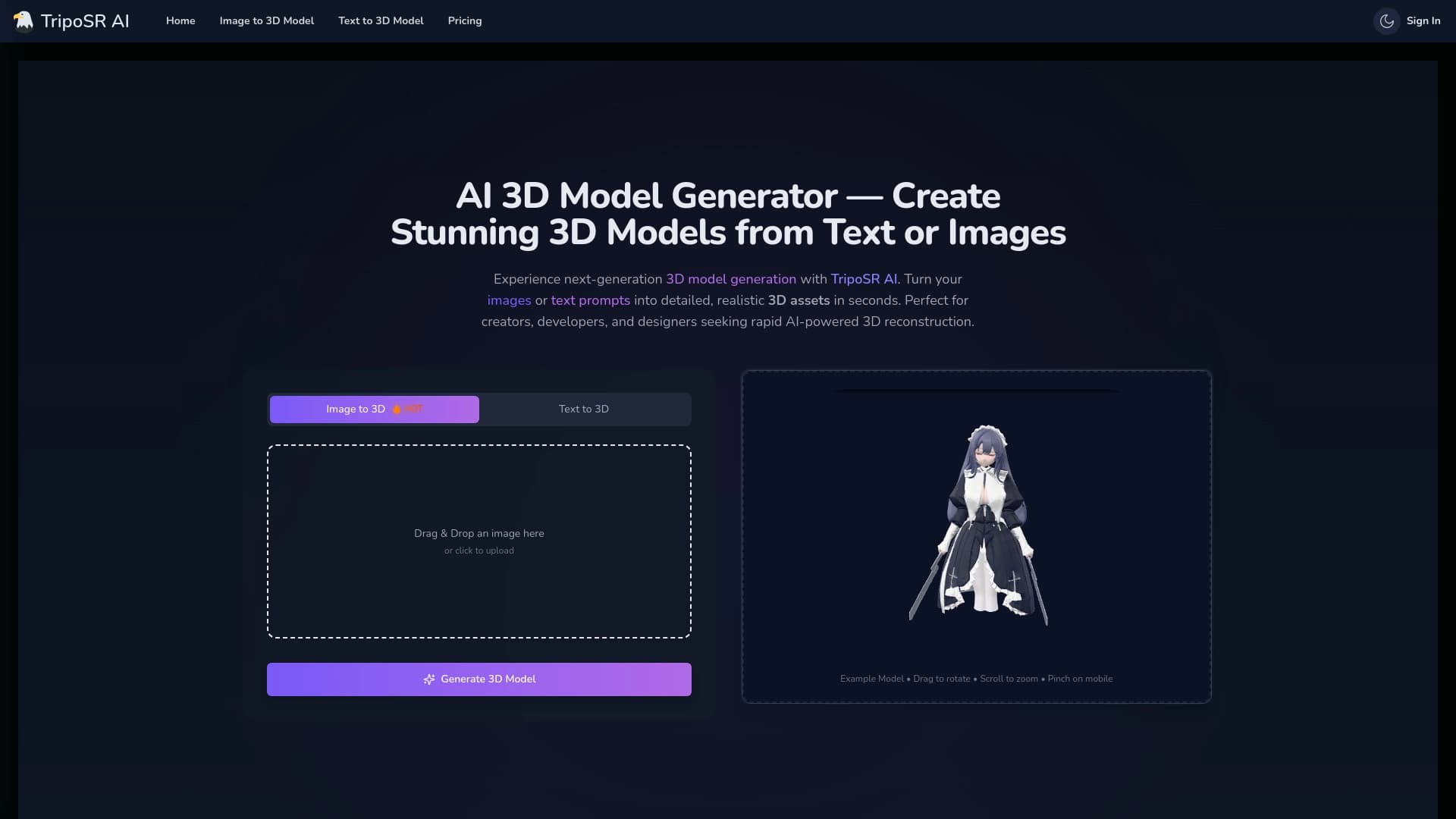

Open-source tool for quickly converting a single image into a 3D model.
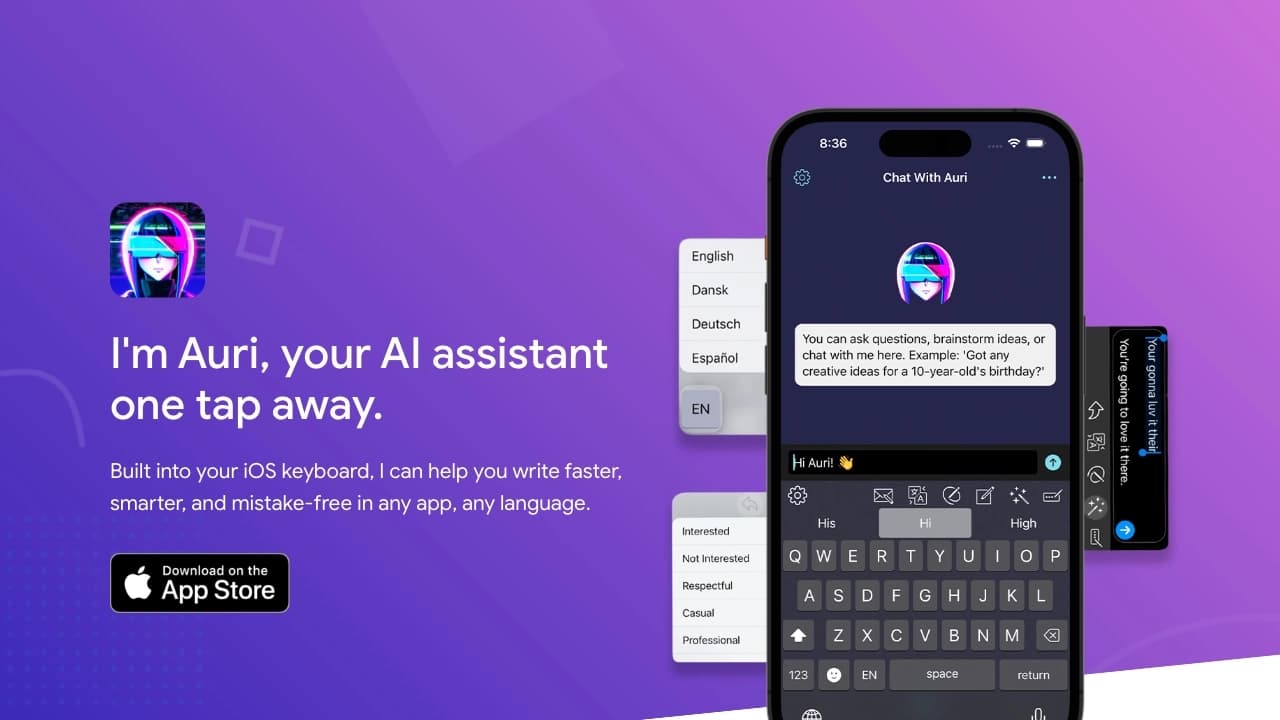
AI keyboard for Apple devices that speeds up typing with corrections, translation, and response generation.