

Music AI
A platform for professional audio processing with AI features for track separation, mastering, and voice changing.
Overview
Music AI
Description of the Music AI neural network
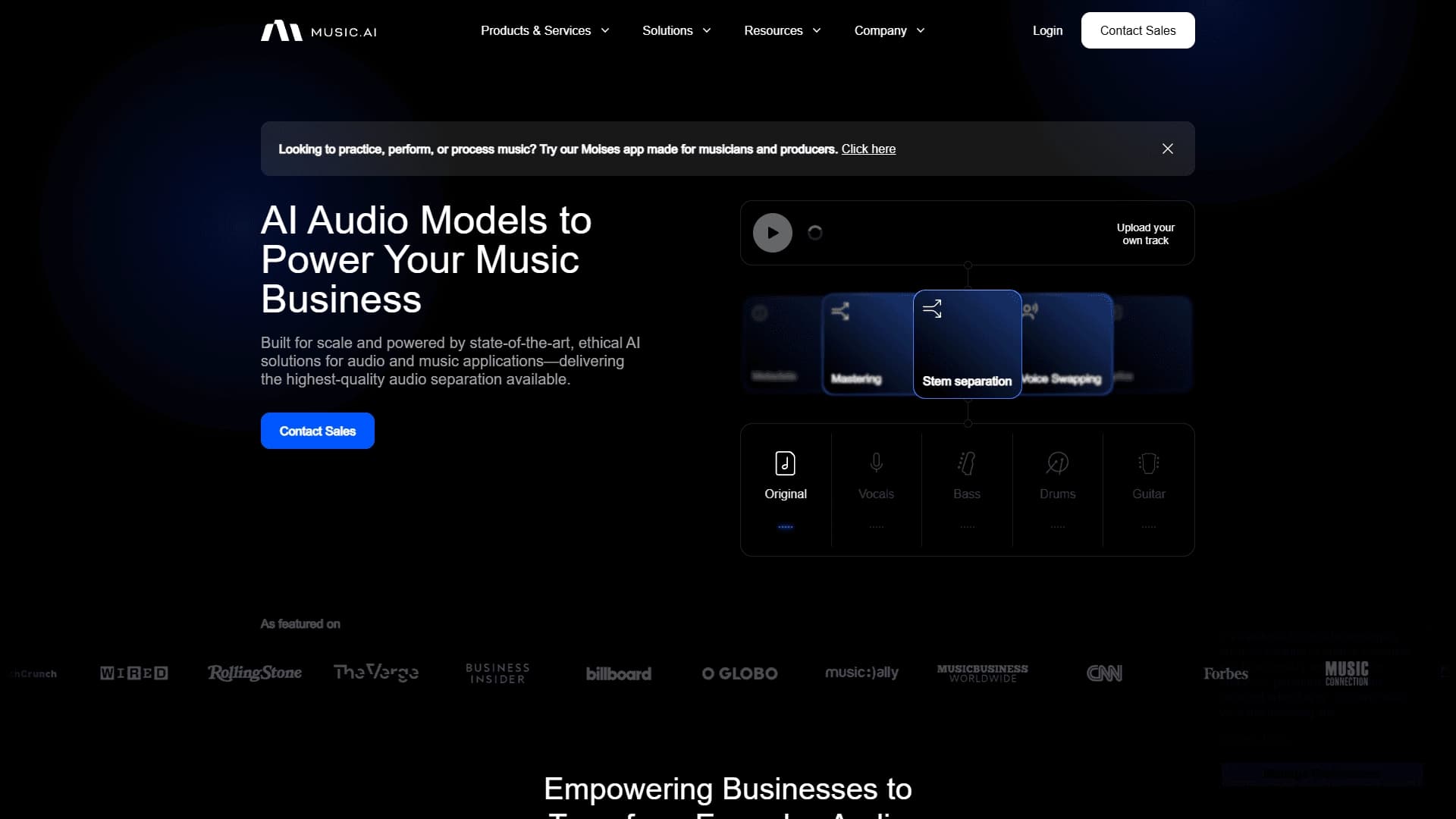
Music AI is a professional audio processing platform available via a web interface and API. The service solves a wide range of sound-related tasks, from splitting finished tracks into individual instruments and vocals to mastering, voice swapping, and metadata management.
The platform focuses primarily on professional use. It is designed for music labels, recording studios, and developers who integrate AI features into their own products and services. At the same time, the company emphasizes an ethical approach to technology and strict compliance with copyright.
Notably, a separate app called Moises, intended for musicians and producers, runs on the same models. This allows the platform to serve both individual users and the larger music business.
Music AI Characteristics
| Characteristic | Value |
|---|---|
| Type | Platform with AI models for audio and music |
| Categories | Music creation, audio quality enhancement |
| Primary focus | Music processing and separation |
| Target audience | Music business, labels, studios, developers |
| Website | music.ai |
Who is the Music AI neural network suitable for?
Music business and labels
First and foremost, the platform is aimed at companies operating in the music industry. Labels and studios can use the service to process large volumes of audio, prepare releases for distribution, and improve the sound of their catalogs.
Developers
For developers, integration via API is available. This makes it possible to embed AI audio processing features into third-party products, services, and streaming applications, automating workflows.
Musicians and producers
Individual users can work with the same technologies through the Moises app. It is suitable for practice, rehearsals, creating backing tracks, and creative work with tracks.
How to use the Music AI neural network?
Via the web interface
The simplest way is to upload your own track to the music.ai website and run automatic processing. The platform itself will perform stem separation, mastering, or other selected operations.
Via the API for developers
An API is provided for integrating AI features into your own products. Developers can connect track separation, mastering, and voice swapping capabilities to their services.
Via the Moises app
Musicians and producers have access to a separate app, Moises, built on the same models. It is convenient for individual work, practice, and preparing material.
Key Features of Music AI
Separating audio tracks into stems
The platform can split finished tracks into individual components: vocals, bass, drums, guitar, and other instruments. This is one of the service's key capabilities.
Mastering and metadata management
Music AI allows you to master tracks and manage audio file metadata—an important part of preparing releases for publication and distribution.
Voice swapping and API integration
The service supports voice swapping, as well as API integration for adding features to third-party products. Additionally, the Moises app is available for practice and creative work.
Advantages of Music AI
High-quality separation
Audio track separation is one of the platform's strongest features. The quality of isolating individual instruments and vocals is considered among the best on the market.
Ethical use of AI
The platform pays serious attention to ethics and the protection of rights holders. This approach is especially important for the professional music industry, where authorship issues are particularly acute.
Scalability and broad capabilities
The service architecture is designed to work with large volumes of audio. The platform allows you to create backing tracks, remixes, and karaoke versions, improve catalog sound, and prepare materials for distribution.
Disadvantages of Music AI
Detailed information about the platform's drawbacks is not available in the source materials. It is worth noting that the service is primarily aimed at professional users and organizations, which may imply a corresponding level of setup complexity and cost for individual users. More precise information about the service's weaknesses requires further research.
What tasks does Music AI solve?
Audio processing and music separation
The service's key task is processing audio and splitting tracks into separate components for further work.
Creating new versions of tracks
The platform allows you to create backing tracks, remixes, and karaoke versions based on existing compositions.
Improving and preparing catalogs
Music AI helps improve the sound of a music catalog and prepare releases for distribution, as well as embed AI capabilities into existing products and streaming services.
Music AI Pricing
Exact information about Music AI's prices and plans is not provided in the source data. The platform is aimed at the professional music business and developers, so access to features is likely organized through a subscription or corporate model. Up-to-date prices should be checked on the official service website.
Terms of Use for Music AI
The platform emphasizes the ethical use of technology and compliance with copyright. This is reflected in its approach to processing materials: the service is oriented toward legal work with tracks and respect for the interests of rights holders. More detailed terms of use are not disclosed in the source materials.
Music AI Availability
The service is provided through the music.ai website, as well as through a separate Moises app for musicians. Interface languages and supported regions are not explicitly stated in the source data, so information about support for specific countries and languages should be clarified separately.
How is Music AI different from alternatives?
Focus on the professional segment
Unlike many similar services, Music AI was originally designed around the needs of the music business: labels, studios, and developers. This is reflected in API support, work with large volumes of audio, and attention to copyright issues.
Dual access model
A unique feature is the combination of a B2B platform and a separate Moises app for musicians based on the same models. This approach covers both corporate clients and individual users.
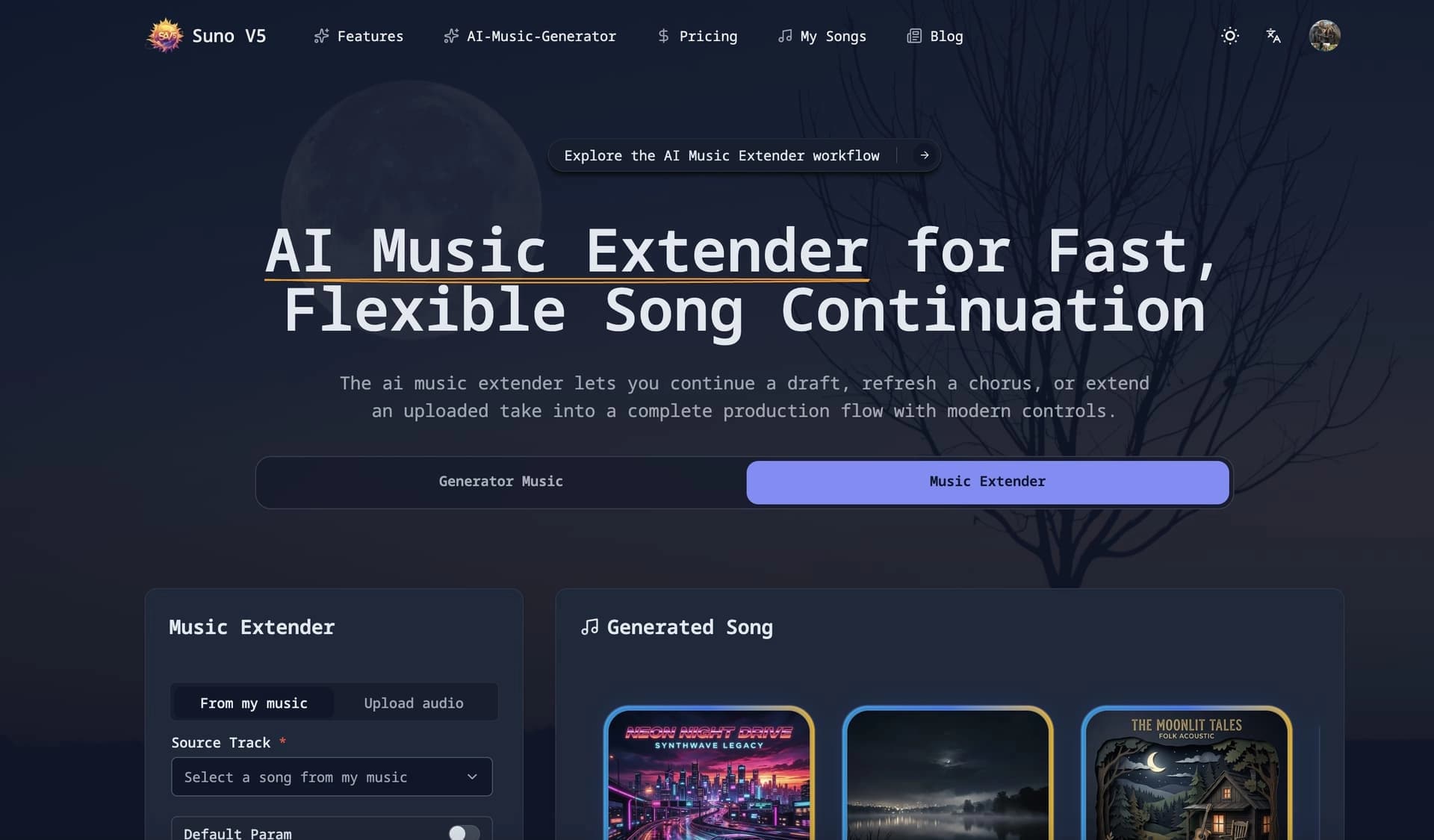
Alternatives to the service include TagMyBeat, Songive, OpenMusic AI, Suno V5 Generator, MP3 to MIDI, and LyricMV. However, Music AI stands out among them with its professional focus, track separation quality, and attention to the ethical application of technology.
Conclusion
Music AI is a professional B2B platform for audio processing that emphasizes high-quality track separation, ethical technology use, and scalability. The service suits labels, studios, and developers, and is also available to individual musicians through the Moises app, making it a universal solution for the music industry.
Frequently asked questions


See also

A workflow automation platform that connects thousands of apps without requiring coding.
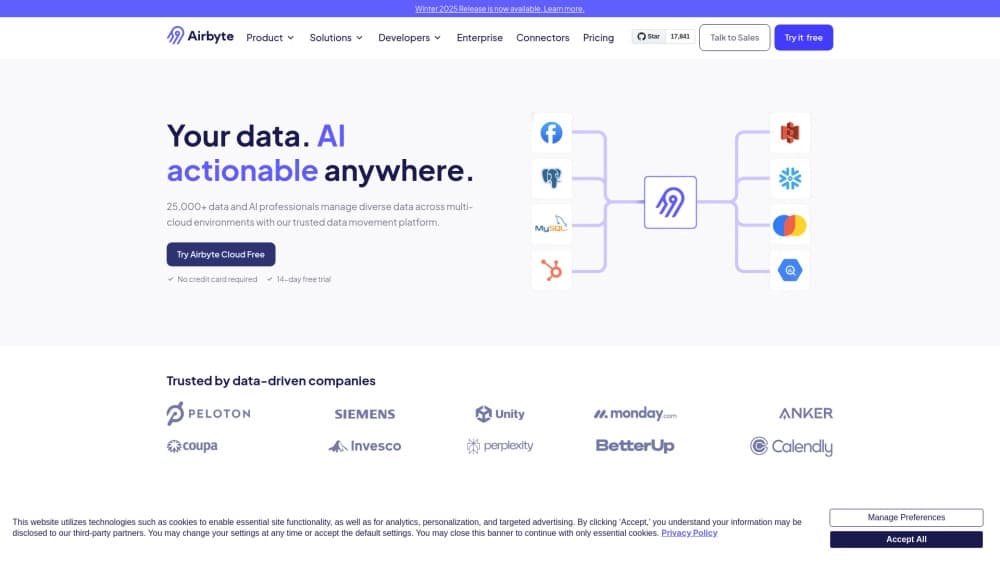
Open-source platform for integrating data from various sources into data warehouses and analytics systems.

AI-powered platform for generating and editing images and videos.
Cloud platform for text-to-speech conversion with realistic AI-powered voices.

Cloud platform for launching AI applications directly in the browser without installation.

Web interface for testing and prototyping based on Google's artificial intelligence models.
Enterprise language model platform focused on privacy and on-premise deployment.
Free five-day intensive from Kaggle and Google on building AI agents using the vibe coding technique.