

Llama 3.1 405B
The largest open language model from Meta with 405 billion parameters, available for commercial use and independent fine-tuning.
Overview
Llama 3.1 405B
Description of the Llama 3.1 405B neural network
Llama 3.1 405B is the largest open-source language model released by Meta in July 2024. It contains 405 billion parameters and is trained on a dataset of more than 15 trillion tokens using the RLHF (Reinforcement Learning from Human Feedback) stage. In terms of task performance, the model is comparable to closed flagship models — GPT-4 and Claude 3 Opus — while its model weights are fully open, allowing it to be used as a foundation for fine-tuning for specialized tasks.
The model works with text and code and supports a 128K token context window — enough for analyzing long documents, extensive dialogues, and complex multi-step reasoning. Llama 3.1 405B is available both for commercial use via cloud platforms and for self-hosting on your own servers if you have sufficient computing power.
Llama 3.1 405B specifications
| Characteristic | Value |
|---|---|
| Developer | Meta |
| Release date | July 23, 2024 |
| Number of parameters | 405 billion |
| Context window | 128K tokens |
| Type | Open-source language model (Open Source) |
| Available modalities | Text, Code |
| License | Meta Llama 3.1 Community License (commercial use for up to 700 million users) |
Who is the Llama 3.1 405B neural network suitable for?
Researchers and specialized companies
Llama 3.1 405B is an ideal choice for research groups and companies that need a base model for further fine-tuning in specific domains. The openness of the weights makes it possible to adapt the model for tasks in medicine, law, finance, and other industries where deep specialization is required rather than generic answers.
Developers using open-source models
Developers who want to work with a GPT-4-level model but prefer open-source solutions without vendor lock-in get full control over the model with Llama 3.1 405B: from configuration and fine-tuning to deployment on their own infrastructure or through a chosen cloud provider.
How to use the Llama 3.1 405B neural network?
Through cloud platforms
The easiest way to get started is to access the model through one of the cloud providers: AWS Bedrock, Azure Machine Learning, GCP Vertex AI, Together.ai, Fireworks AI, or Replicate. Registration is done through the selected service, after which the model is available via API without the need to deploy infrastructure yourself.
Self-hosting
Running Llama 3.1 405B locally requires at least 8 A100 GPUs with 80 GB of memory each when using FP8 precision. This is a significant requirement that makes local deployment accessible only to organizations with their own server capacity or access to high-performance clusters.
Free testing
Limited free access to the model is provided by Together.ai. You can also test the model in demo mode on HuggingFace Spaces. This is enough to evaluate the quality of the model, but regular use will require a paid subscription.
Key features of Llama 3.1 405B
Record-breaking number of parameters
405 billion parameters make Llama 3.1 405B the largest open-source language model at the time of release. The large size directly affects the model's ability to handle complex, multi-step tasks that require deep contextual understanding and a long chain of reasoning.
128K token context window
The model processes up to 128 thousand tokens in a single request. This allows working with large documents, analyzing long dialogues, and processing entire books, codebases, and legal contracts without losing context.
High benchmark scores
Llama 3.1 405B achieves 88.6% on the MMLU benchmark (knowledge assessment across various domains) and 89.0% on HumanEval (programming tasks). These results put it on par with the best closed commercial models.
Fully open weights
Unlike many competitors, Meta publishes not only the API but also the model weights themselves. This makes it possible to fine-tune Llama 3.1 405B for specialized tasks, create custom versions, and fully control the inference process.
Advantages of Llama 3.1 405B
- GPT-4-level quality with full openness — the model is comparable to leading closed alternatives, while remaining available for independent study, modification, and fine-tuning.
- The largest open-source language model — 405 billion parameters provide the greatest depth of analysis among all open-source solutions.
- 128K token context — allows processing long documents and dialogues that are inaccessible to models with smaller context windows.
- Commercial use under the Meta license — the model may be used in commercial products by companies with an audience of up to 700 million users.
- Availability through cloud providers — AWS Bedrock, Azure, and other services offer the model without the need to deploy heavy infrastructure yourself.
Disadvantages of Llama 3.1 405B
- Huge computing requirements — local deployment requires at least 8 A100 GPUs with 80 GB each, making self-hosting inaccessible to most users and small companies.
- High API cost — the cost of model calls is significantly higher than that of the smaller Llama 3.1 70B versions, making it unprofitable for simple and routine tasks.
- Slow inference — due to the large model size, response time is noticeably higher compared to compact alternatives.
- Hallucinations on recent events — the model's training data is cut off in early 2024, so information about newer events may be inaccurate or fabricated.
What tasks does Llama 3.1 405B solve?
Complex multi-step reasoning
The model is particularly strong in tasks that require a long logical chain: mathematical proofs, planning, analytical reports, legal analysis. The large context window and high-quality instruction following allow it to maintain complex logic throughout the entire response.
Programming and working with code
Llama 3.1 405B achieves 89.0% on the HumanEval benchmark, which corresponds to the level of leading commercial models. It handles writing code, refactoring, explaining algorithms, and debugging.
Long document analysis
Thanks to the 128K token context, the model can process entire books, scientific articles, legal contracts, or codebases, extracting key information and answering questions about the entire content.
Creating base models for fine-tuning
The openness of the weights makes Llama 3.1 405B the primary platform for creating specialized models in fields such as medicine, law, and finance. Researchers can fine-tune the model on their own datasets, obtaining tools precisely tailored to a specific industry.
Llama 3.1 405B pricing
Free access
Limited free access is provided through Together.ai. A demo version is also available on HuggingFace Spaces. This is enough to get familiar with the model's capabilities and test it on small amounts of data.
Paid plans
The cost of usage through Together.ai starts at $3 per 1 million input tokens. In addition, the model is available by subscription through cloud providers: Together.ai, Fireworks AI, Replicate, AWS Bedrock, and Azure. Specific rates depend on the chosen provider and usage volumes.
Terms of use for Llama 3.1 405B
To work with the model, registration through a chosen cloud provider is required. Commercial use is governed by the Meta Llama 3.1 Community License, which permits the use of the model by companies with an audience of up to 700 million users. Organizations exceeding this threshold must request a separate license from Meta.
Availability of Llama 3.1 405B
The model is available through major cloud platforms: Together.ai, Fireworks AI, Replicate, AWS Bedrock, Azure Machine Learning, and GCP Vertex AI. Local installation requires at least 8 A100 80GB GPUs. Since the model is fully open, there are no language or regional restrictions — access is determined only by the ability to connect to the chosen cloud service or the availability of your own hardware.
How Llama 3.1 405B differs from alternatives
Openness with GPT-4-level quality
The main difference between Llama 3.1 405B and commercial alternatives (GPT-4, Claude 3 Opus) is the full openness of the weights with comparable quality. Closed models do not allow fine-tuning for specific tasks, studying the internal architecture, or deploying on your own infrastructure. Llama 3.1 405B provides all of these capabilities.
Comparison with smaller open-source models
Compared to Llama 3.1 70B, the version with 405 billion parameters significantly outperforms the smaller model in complex tasks: mathematics, programming, and multi-step reasoning. However, for most everyday tasks, the quality difference is negligible, while Llama 3.1 70B noticeably wins in response speed and cost of use.
Conclusion
Llama 3.1 405B is a historically significant open-source model from Meta that has come very close in quality to the closed flagship models GPT-4 and Claude 3 Opus. It sets a new bar for open-source language models and is especially valuable as a base model for fine-tuning for specialized tasks thanks to its fully open weights. Despite the high resource requirements and cost, Llama 3.1 405B has become an important milestone on the path to democratizing access to powerful language models.
Pricing
Frequently asked questions


See also
A sales automation platform that combines customer prospecting, deal management, and AI-powered forecasting.
AI editor for creating, editing, and publishing content with templates and prompts.

Financial platform with an AI assistant for managing accounting, taxes, and budgets.
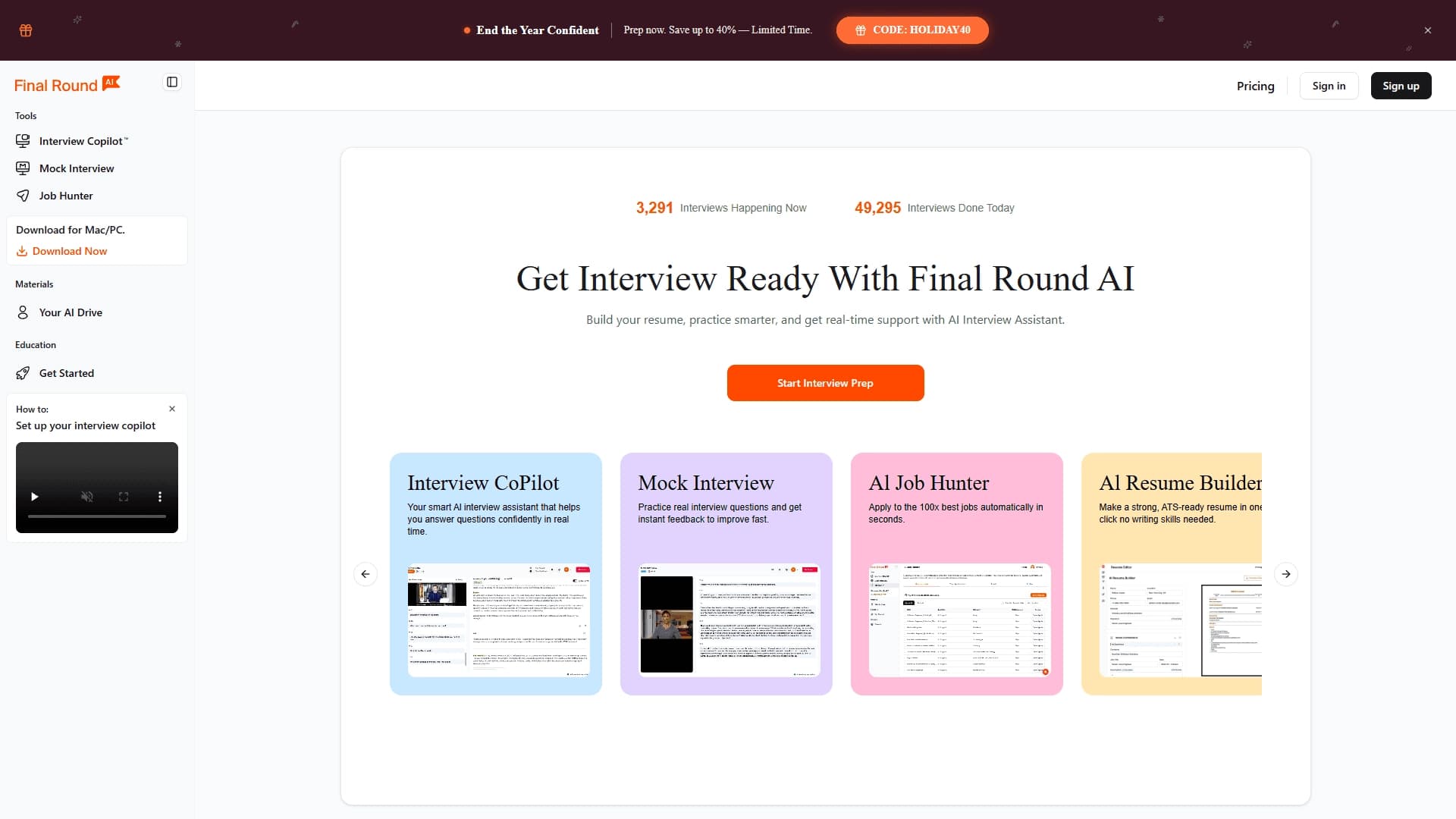
Platform for interview preparation with AI mock interviews and real-time support.
Enterprise language model platform focused on privacy and on-premise deployment.


AI assistant for creating short summaries of videos, PDF documents, and web pages.
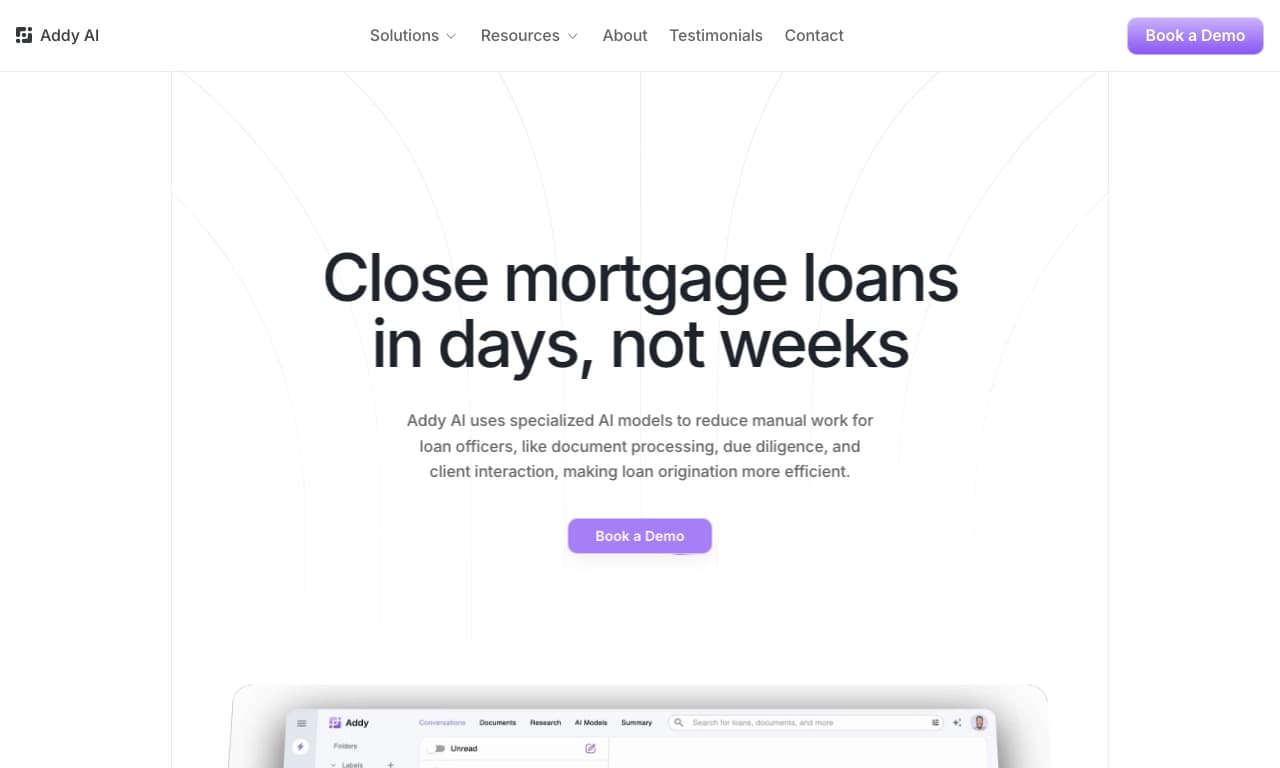

AI email assistant that helps quickly draft messages, adapting to the user's style.
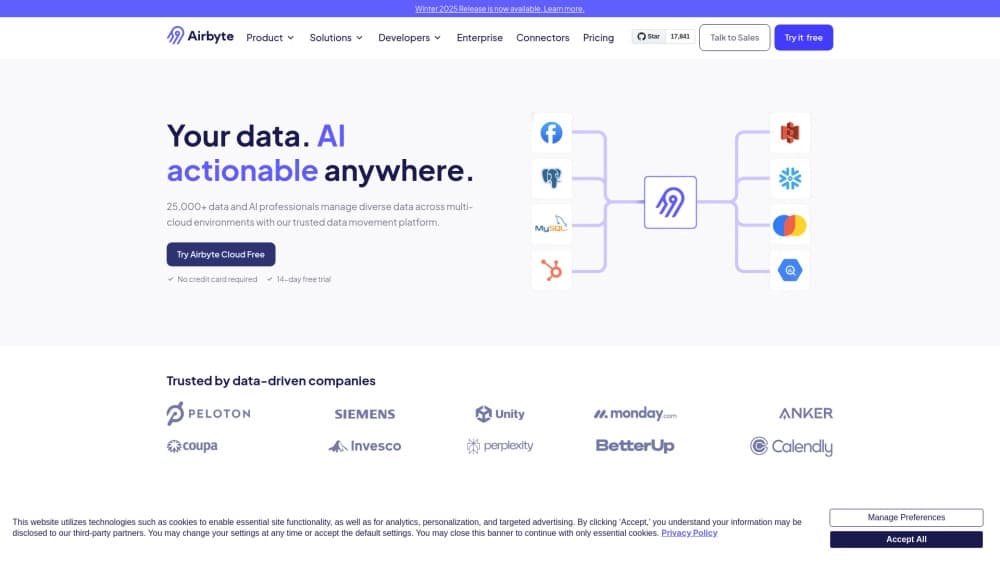
Open-source platform for integrating data from various sources into data warehouses and analytics systems.