
GPT-5.4
Multimodal model from OpenAI that works with text, full-resolution images, and complex programming tasks.
Overview
GPT-5.4
Description of GPT-5.4
GPT-5.4 is a multimodal language model developed by OpenAI. It can work with text and full-resolution images and solve complex programming tasks. The model supports a context of up to 1 million tokens, allowing it to process very large amounts of information in a single request. GPT-5.4 can generate structured data, call functions, search across tools, and perform long-term logical reasoning. The model is available through a paid API subscription and is designed for professional tasks that require analyzing large volumes of data and working with different types of content.
GPT-5.4 Specifications
| Characteristic | Value |
|---|---|
| Type | Multimodal model |
| Developer | OpenAI |
| Context | 1.0M tokens |
| Release date | March 5, 2026 |
| Average score | 93.0% |
| Input price (1M tokens) | $2.50 |
| Output price (1M tokens) | $15.00 |
| Max input tokens | 1.0M |
| Max output tokens | 128.0K |
| License | proprietary |
Who is GPT-5.4 for?
Programmers and developers
The model is designed for professionals who need a powerful tool for writing and debugging code. GPT-5.4 handles complex programming tasks, supports function calling, and generates structured code.
Documentation specialists
Thanks to its 1-million-token context, the model is well suited for analyzing and processing large documents, reports, legal texts, and technical texts.
Image analysts
The ability to process full-resolution images makes GPT-5.4 useful for those who work with visual data, from analyzing charts and tables to recognizing details in images.
How to use GPT-5.4?
Through the OpenAI API
The model is available directly through the OpenAI API. To use it, you need to sign up and get access to a paid subscription. The API documentation describes all integration methods, including configuring function calls and generating structured data.
Core Features of GPT-5.4
Multimodality and image processing
GPT-5.4 processes text and full-resolution images. This allows the model to be used for tasks where detailed visual analysis is important, such as recognizing complex diagrams or reading text from photos.
Context of up to 1 million tokens
One of the model's key parameters is its ability to hold up to 1 million tokens in context. This makes it suitable for processing entire books, large codebases, or long conversations without losing information.
Long-term reasoning and tool search
The model supports improved long-term logical reasoning mechanisms that enable it to solve multi-step tasks. It also includes tool search (Tool Use), Function Calling, Code Execution, Web Search, Batch Inference, and Fine-tuning.
Advantages of GPT-5.4
Strong benchmark performance
The model achieves high scores on tests: GPQA — 93%, ARC-AGI — 94%, Tau2 Telecom — 99%. This confirms its ability to handle complex tasks in reasoning, computer vision, and telecommunications.
Huge context window
A context of 1 million tokens is one of the model's main advantages. It allows you to work with large amounts of data without having to split requests into multiple parts.
Wide range of tools
GPT-5.4 includes many built-in capabilities, from function calling and structured data generation to batch processing and fine-tuning. This makes the model a versatile solution for professional tasks.
Limitations of GPT-5.4
Paid access model
GPT-5.4 is available exclusively through a paid subscription. There is no free access to the model, which may be a limitation for users with a small budget or those who are just getting familiar with neural network capabilities.
Proprietary license
The model uses a proprietary license. This means the source code, architecture, and weights are not available for independent study, modification, or local deployment. Users fully depend on OpenAI's infrastructure.
Output token limit
The maximum response length is 128,000 tokens. For very large tasks that require generating extremely long texts or code, the request may need to be split into several parts.
What Tasks Does GPT-5.4 Solve?
Professional programming
The model is designed for writing, refactoring, and debugging code. It supports function calling, structured data generation, and code execution, which is useful for developers of any level.
Image processing and analysis
GPT-5.4 can analyze full-resolution images. This is suitable for recognition tasks, describing visual content, extracting text from images, and working with graphical data.
Long-term reasoning and multi-step tasks
Thanks to improved long-term reasoning, the model handles tasks that require logical chains, planning, and the sequential solution of complex problems.
Batch processing, web search, and function calling
The model supports batch processing of requests, built-in web search, and external function calls. This makes it possible to automate routine processes and integrate the neural network into existing workflows.
GPT-5.4 Pricing
The cost of using the model is calculated based on the number of processed tokens. Input tokens (data sent to the model) are priced at $2.50 per 1 million tokens. Output tokens (model responses) cost $15.00 per 1 million tokens. This pricing is typical for professional OpenAI models and is aimed at users who need high performance and a large context.
Terms of Use for GPT-5.4
The model is available through the OpenAI API. A paid subscription and access to OpenAI's infrastructure are required. Terms of use follow OpenAI's general policy for proprietary models.
Availability of GPT-5.4
GPT-5.4 is available through the OpenAI API (web platform).
How Does GPT-5.4 Differ from Alternatives?
GPT-5.4 is part of the GPT-5 family from OpenAI. The comparison page contains links to other models in this lineup: GPT-5.5, GPT-5.1 High, GPT-5 High, GPT-5.1 Thinking, GPT-5.2, GPT-5 Medium, GPT-5.1 Medium, GPT-5.1 Instant, and GPT-5.4 mini. The direct differences between GPT-5.4 and the listed alternatives are not described in the source data. It can be assumed that the key parameters distinguishing models within the family are context size, token pricing, benchmark performance, and available features; however, exact differences require additional review of OpenAI documentation.
Conclusion
GPT-5.4 is a powerful multimodal model from OpenAI aimed at professional users. It supports a context of up to 1 million tokens, full-resolution image processing, function calling, and long-term reasoning. The model is available through a paid subscription via the API. High benchmark scores and a wide range of tools make it a suitable choice for programmers, analysts, and anyone working with large amounts of data and complex tasks.
Frequently asked questions


See also
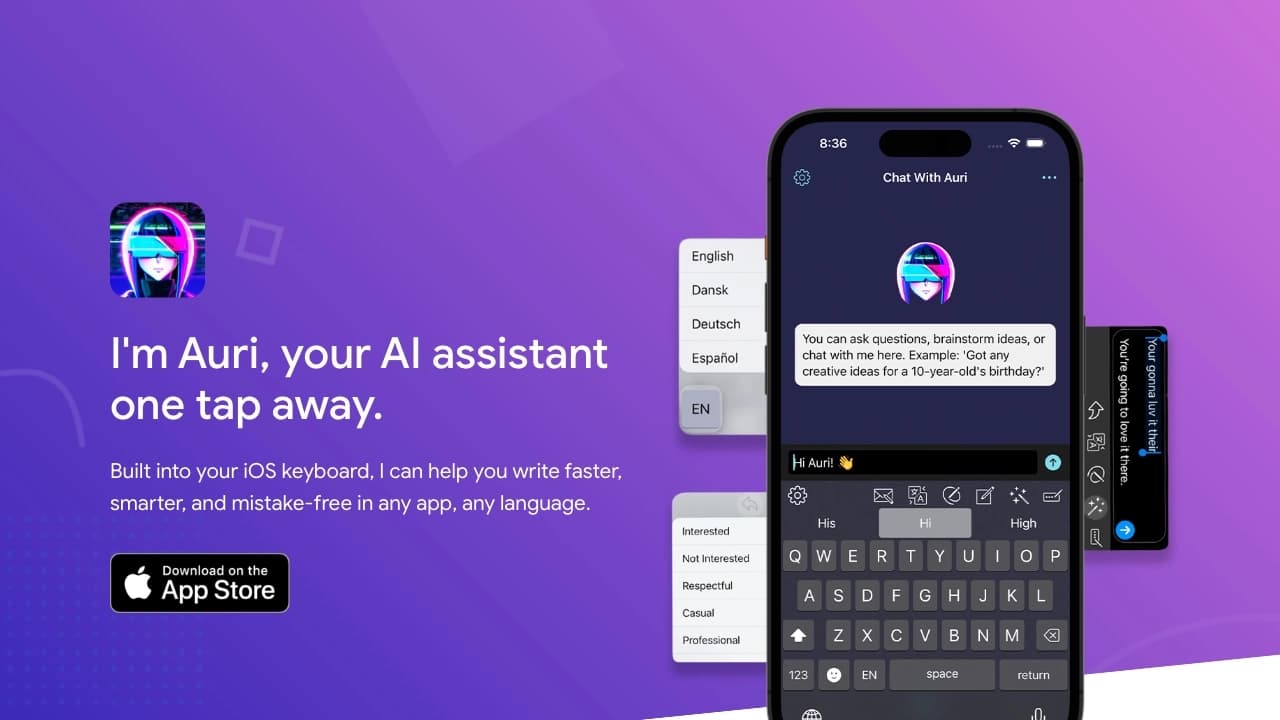
AI keyboard for Apple devices that speeds up typing with corrections, translation, and response generation.
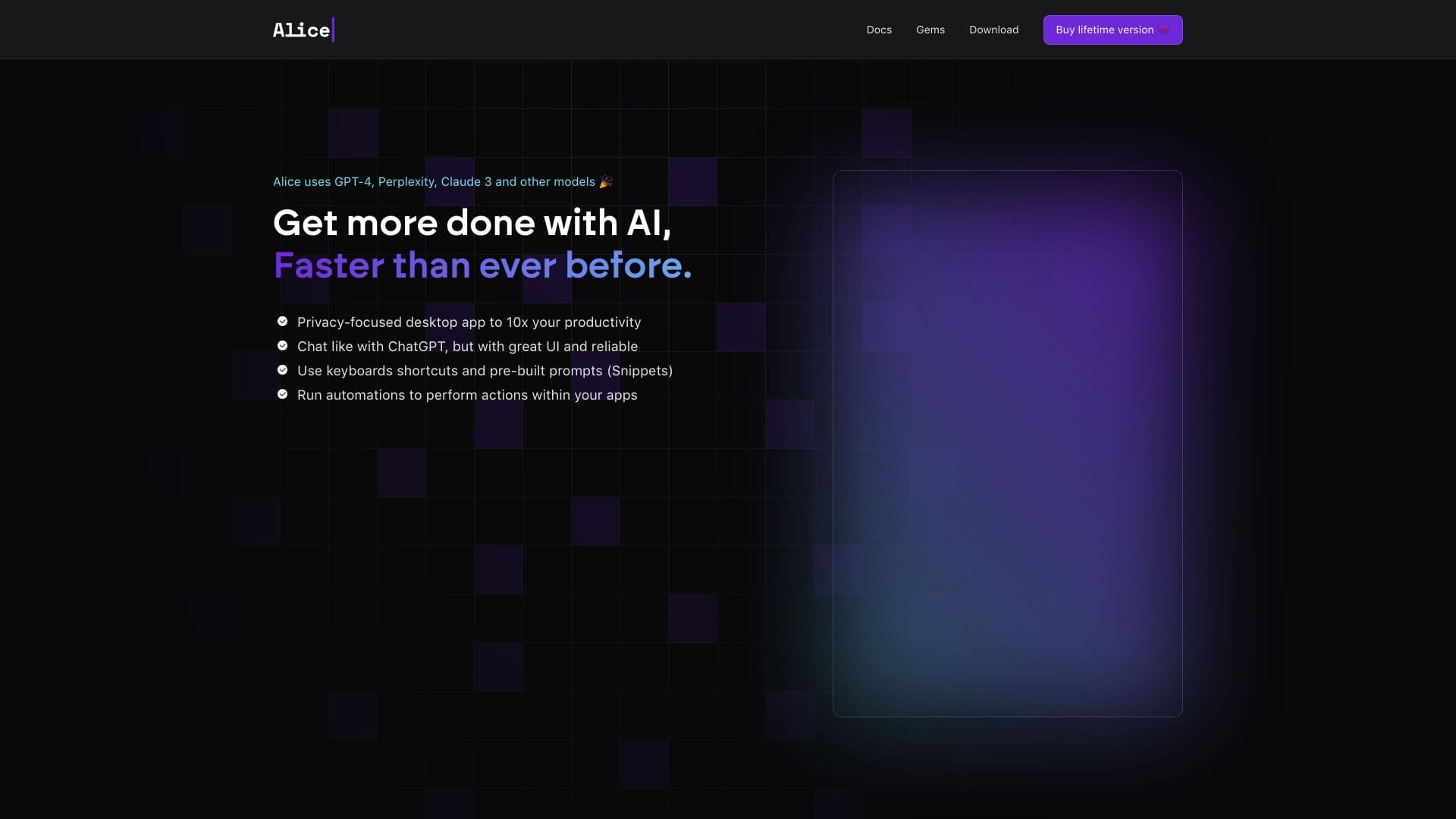

Desktop AI assistant for macOS, Windows, and Linux that launches via hotkey above all windows and combines multiple language models in one interface.


AI platform for fast website creation and small business process management.
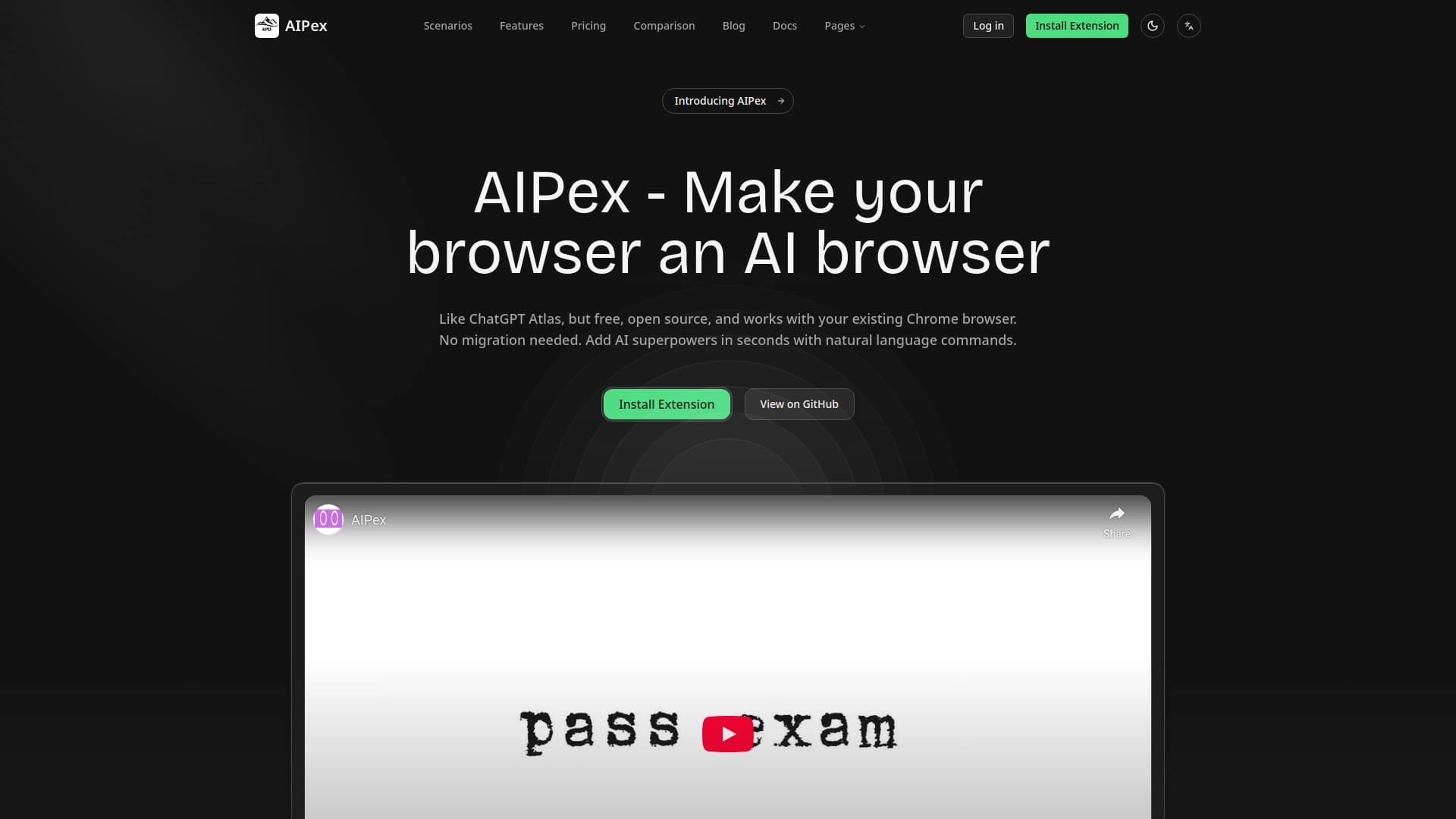

Chrome extension that helps manage tabs, history, and bookmarks with an AI assistant.

AI agent for automating customer communications and support.
AI assistant for business that helps manage tasks and automate routine through dialogue.

AI toolkit for video generation and editing, including avatars, lip-sync, and voice cloning.
AllChat is a universal platform that combines several popular language models in a single interface for communication, image generation, file analysis, and code execution.