
LangChain
Platform for developing, testing, and deploying applications based on language models.
Overview
LangChain
Description of the LangChain neural network
LangChain is a platform for developing AI agents that provides tools for building, testing, and deploying applications based on language models. LangChain's approach is based on the principle of creating complex multi-component systems that not only access a language model via an API but also interact with external data and environments. The platform includes three main components: LangGraph for agent orchestration, LangSmith for debugging and monitoring, and the LangGraph Platform for production deployment. The framework allows integrating various models, databases, and APIs, simplifying the creation of systems capable of performing complex tasks with controlled logic.
LangChain characteristics
| Characteristic | Value |
|---|---|
| Business model | Freemium |
| Categories | Developer tools, AI agent |
| First publication date | 19-07-2025 |
| Last edit date | 17-05-2026 |
| Availability | Website langchain.com |
| Target audience | Developers creating AI agents |
Who is the LangChain neural network suitable for?
AI agent developers
LangChain is primarily designed for developers who design and implement AI agents. The platform provides tools for organizing the agent creation process — from prototyping to production, including orchestration, debugging, and scaling.
Engineers working with language models
Specialists integrating language models with external data sources, databases, and APIs will find ready-made solutions in LangChain for building multi-component systems without having to write infrastructure code from scratch.
Teams deploying AI in production
For development groups that bring AI applications into industrial operation, LangChain offers a platform with support for scaling, monitoring, and managing long-term workflows.
How to use the LangChain neural network?
Free start for developers
You can get started with the free plan, which includes 5,000 traces. This is enough for prototyping, testing, and debugging agents at the initial stage. To activate it, simply register on the langchain.com website.
Transition to production
When the application is ready for industrial operation, the LangGraph Platform is used. This platform handles scaling, infrastructure management, and maintaining long-term workflows. The developer can focus on the agent's logic rather than deployment concerns.
Working with ready-made agents
The platform allows reusing ready-made agents in other projects. This speeds up development: instead of creating each agent from scratch, you can take existing components and adapt them to a specific task.
Key features of LangChain
LangGraph — agent orchestration
LangGraph provides controlled agent orchestration with built-in memory and the ability for inter-agent communication. This allows building complex sequences of actions where multiple agents interact with each other and the external environment while preserving execution context.
LangSmith — debugging and monitoring
LangSmith provides tools for tracing, performance evaluation, and application execution monitoring. Developers get detailed insights into agent behavior: which steps were performed, what data was used, where errors occurred. This simplifies testing and optimization of AI solutions.
LangGraph Platform — deployment
A platform for deploying, scaling, and managing long-term workflows. It automatically handles load growth, ensures reliability, and simplifies agent administration in a production environment.
Integration with external systems
LangChain supports integration of various models, databases, and tools without extra engineering work. The developer can connect a language model to data sources and APIs, creating systems that not only generate text but also receive up-to-date information from external sources.
Advantages of LangChain
Organized development process
The platform turns the chaotic creation of AI agents into a structured process. Instead of writing code from scratch, the developer uses ready-made components for orchestration, memory, and interaction with the outside world, which reduces the number of errors and speeds up development.
Constructor for agents
LangChain allows building agents like a construction set: the developer selects the necessary modules, defines the logic of their interaction, and configures parameters. This simplifies the creation of both simple and complex multi-component systems.
Transparency and debugging
Thanks to tracing through LangSmith, the developer gets full visibility into the agent's operation: what calls were made, what data was transferred, where failures occurred. This is critical for debugging and improving the quality of AI applications.
Automatic scaling
The deployment platform takes care of scaling. The developer does not need to configure infrastructure for growing load on their own — the system adapts automatically.
Disadvantages of LangChain
The main disadvantage of LangChain is that it is difficult to master for beginner developers. The platform provides many components and tools, which requires time to learn the architecture and operating principles. In addition, making full use of production capabilities (LangGraph Platform) requires switching to paid plans, which can be a barrier for small projects. The freemium model limits free use to 5,000 traces, which may not be enough for active development or large-scale testing.
What tasks does LangChain solve?
Organizing the AI agent creation process
LangChain solves the problem of turning ad-hoc agent development into a systematized process with a clear division of stages: design, prototyping, testing, deployment, and monitoring.
Controlled agent orchestration
The platform allows managing the sequence of agent actions, their interaction with each other and the external environment, while preserving state and execution context. This is necessary for building complex scenarios where one agent can delegate tasks to another or request data from an external source.
Debugging and monitoring agent operation
LangSmith provides tools for execution analysis: step tracking, performance evaluation, error detection. This allows developers to quickly find problems and improve the quality of AI applications.
Scaling and managing agents in production
The deployment platform solves infrastructure tasks: automatic scaling under growing load, managing long-term workflows, ensuring reliability and availability of agents in industrial operation.
LangChain pricing
LangChain uses a freemium pricing model. The free plan for developers includes 5,000 traces for testing and debugging. The Plus plan costs $39 per month and provides expanded capabilities, including an increased trace limit and access to additional features. Startups and educational institutions can receive special conditions — to get them, you need to contact support on the langchain.com website. Exact plan specifications (limits, feature sets) are provided on the platform's official website.
LangChain terms of use
LangChain terms of use include registering on the langchain.com website and agreeing to the platform's policy. The free plan is available without time limits, but with a limit of 5,000 traces. For the transition to production use, it is recommended to activate the LangGraph Platform, which provides scaling and management. Startups and educational institutions can qualify for special conditions — details are provided upon contacting the platform team.
LangChain availability
The tool is available on the langchain.com website. To get started, simply register on the platform and get access to the free plan for developers. LangChain is a cloud service that does not require installation on a local machine, although the framework for developing agents itself (LangGraph) can also be used locally within developers' projects. Full access to features, including production deployment, is provided through the platform's web interface.
How LangChain differs from analogues
The main difference between LangChain and its analogues is its comprehensive approach: the platform combines tools for orchestration (LangGraph), debugging (LangSmith), and deployment (LangGraph Platform) into a single stack. Unlike tools that focus on only one aspect (for example, only tracing or only deployment), LangChain offers an end-to-end process from creation to monitoring. In addition, LangChain is focused on building agents with controlled logic, inter-agent communication, and built-in memory, which makes it more suitable for complex multi-component systems than for simple chatbots. The freemium model with a free plan for developers (5,000 traces) also distinguishes the platform from solutions that do not have a free tier.
Conclusion
LangChain is a complete stack of tools for developing AI agents, covering all stages: from creation and testing to deployment and monitoring. The platform offers controlled orchestration through LangGraph, transparent debugging through LangSmith, and reliable scaling through the LangGraph Platform. The freemium model allows you to start for free and switch to paid plans as your project grows. LangChain is suitable for developers who build complex multi-component AI systems and need an organized process, transparency, and automation at all stages — from prototype to industrial operation.
Pricing
Frequently asked questions
Similar AI tools


See also

Platform for building AI chatbots with a visual builder that requires no coding skills.
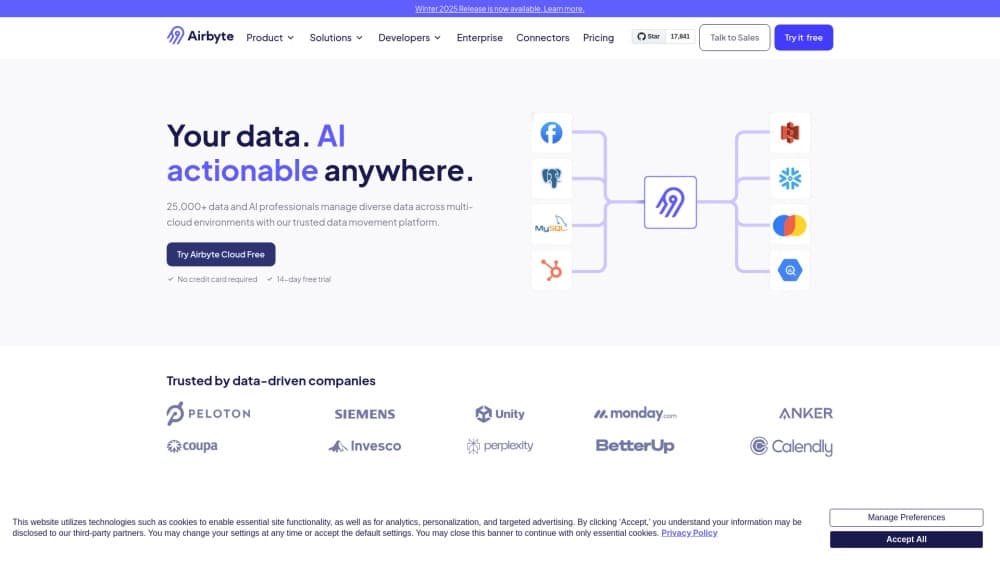
Open-source platform for integrating data from various sources into data warehouses and analytics systems.
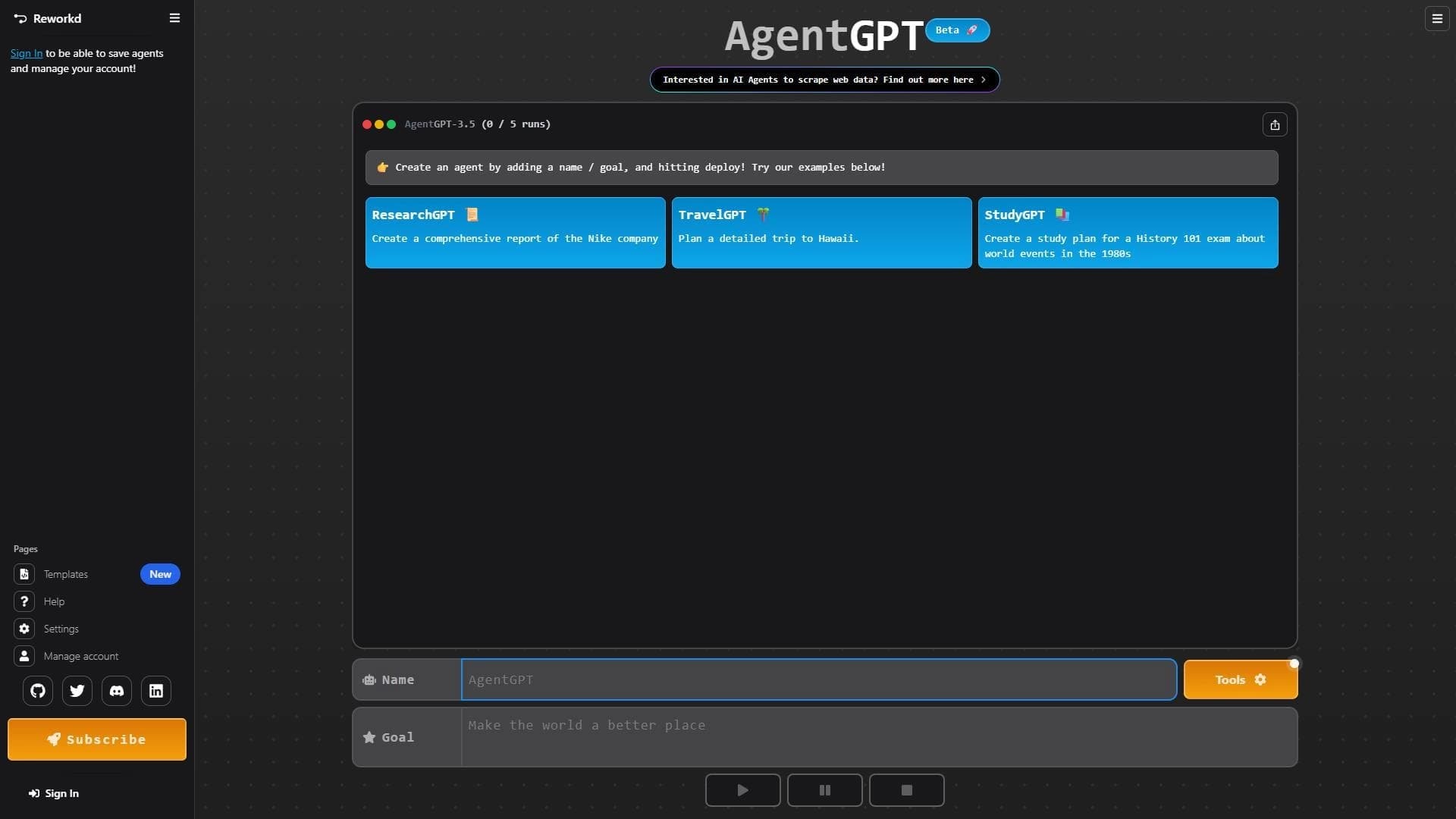

Platform for creating and launching autonomous AI agents that independently complete tasks on the internet.

Web interface for testing and prototyping based on Google's artificial intelligence models.
Enterprise language model platform focused on privacy and on-premise deployment.
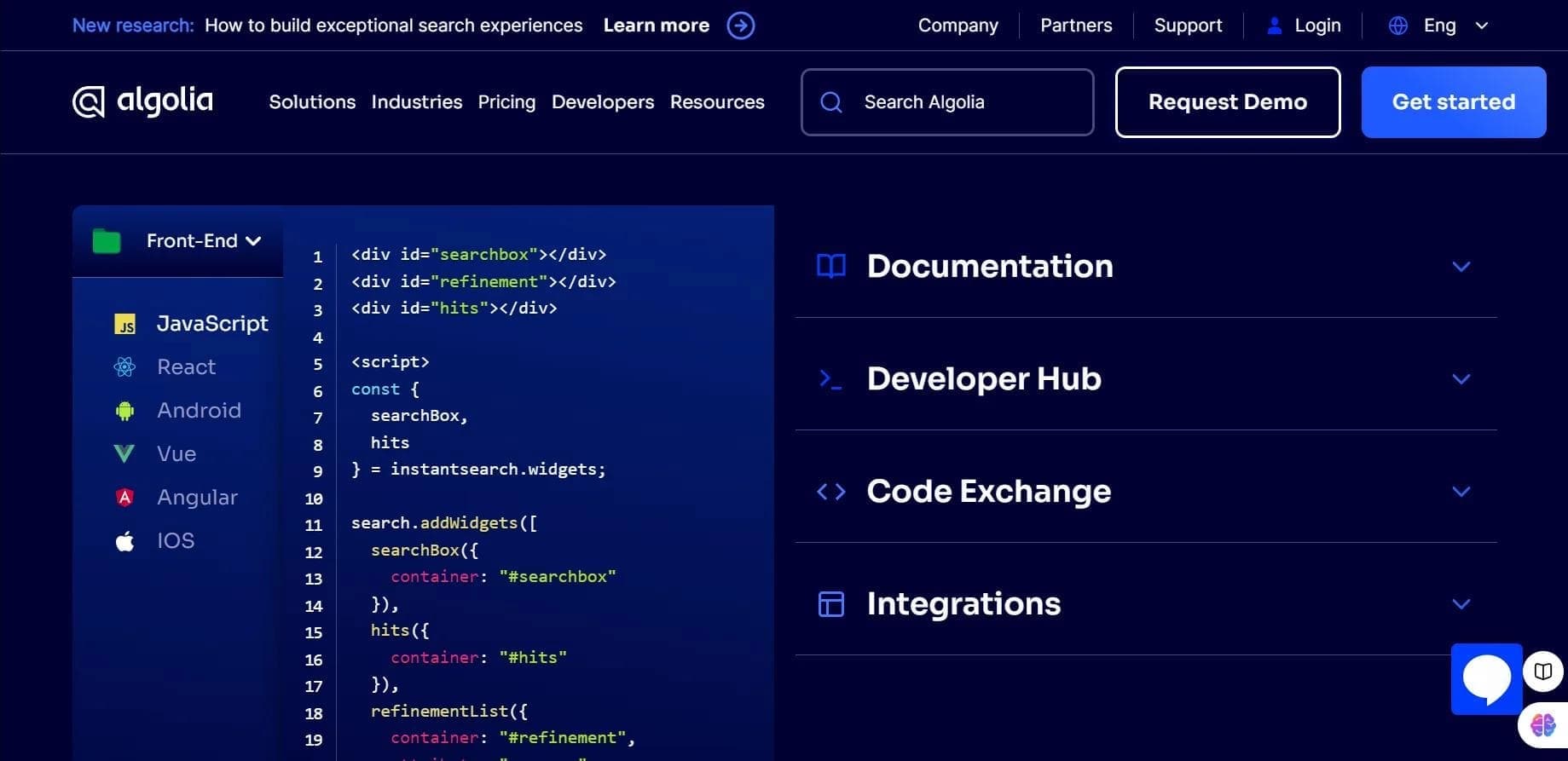

Algolia is a cloud search platform that helps add fast, relevant search with autocomplete and personalization to websites and apps.
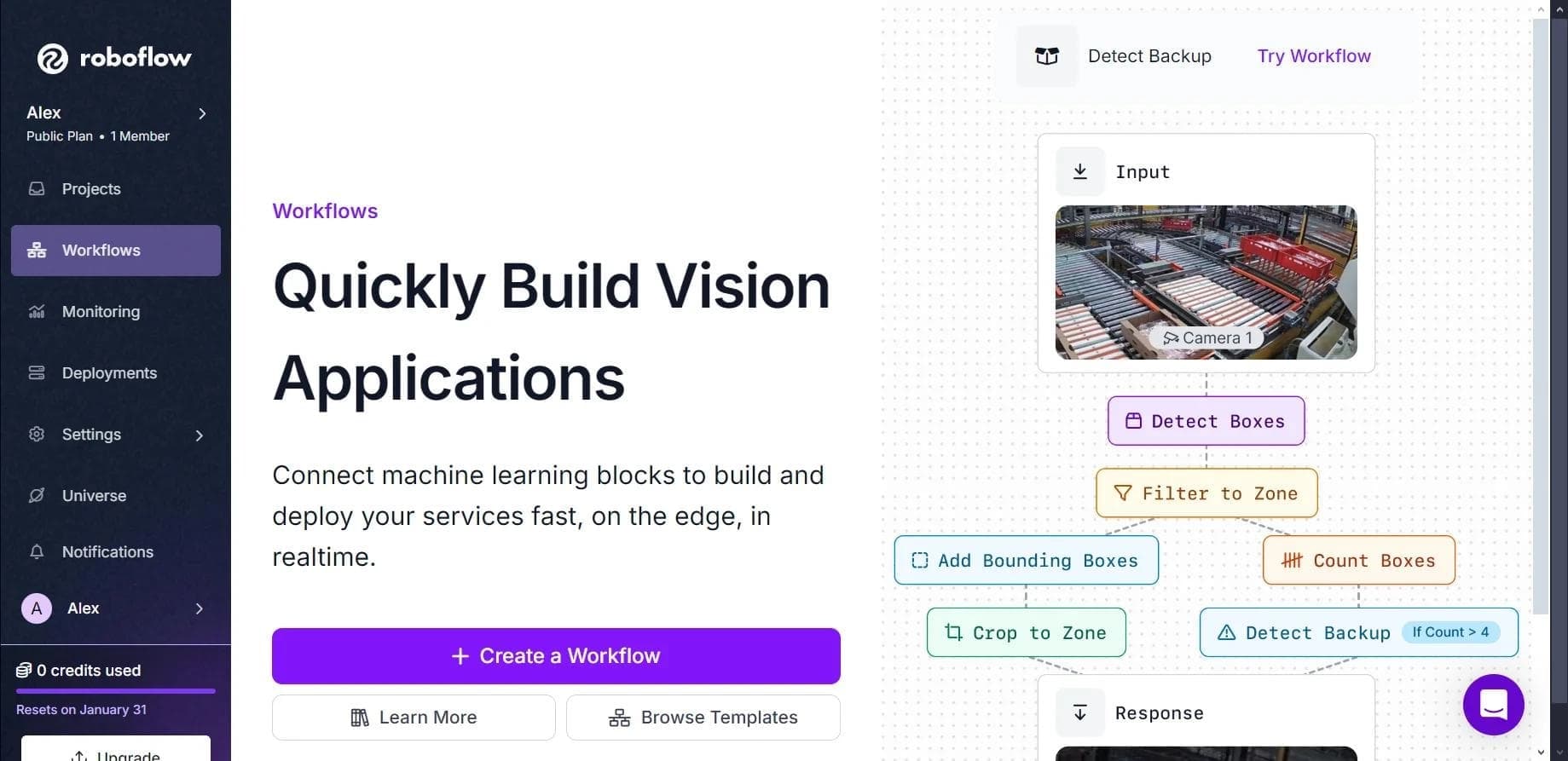

Platform for creating, training, and deploying computer vision models.

A workflow automation platform that connects thousands of apps without requiring coding.