
An agent instead of a standalone optimizer: a unified framework evolving across multiple tasks simultaneously
The authors demonstrate that a single frozen model, running on an unchanged version of the harness, first solves tasks and then edits its own code using complete execution logs. Multi-task evolution of a 49-line scaffold improved results both in-distribution and on held-out benchmarks, outperforming Codex on some of them.

What Is a Harness and Why Optimize It
A harness is the code around a language-model-based agent. It organizes prompts, tool calls, context management, and execution. The agent’s approach to solving a task depends on how this code is designed.
In most existing methods, a human creates the harness. A separate proposer modifies the solver’s harness. A separate harness evolves for each benchmark. This approach ties improvements to a single task.
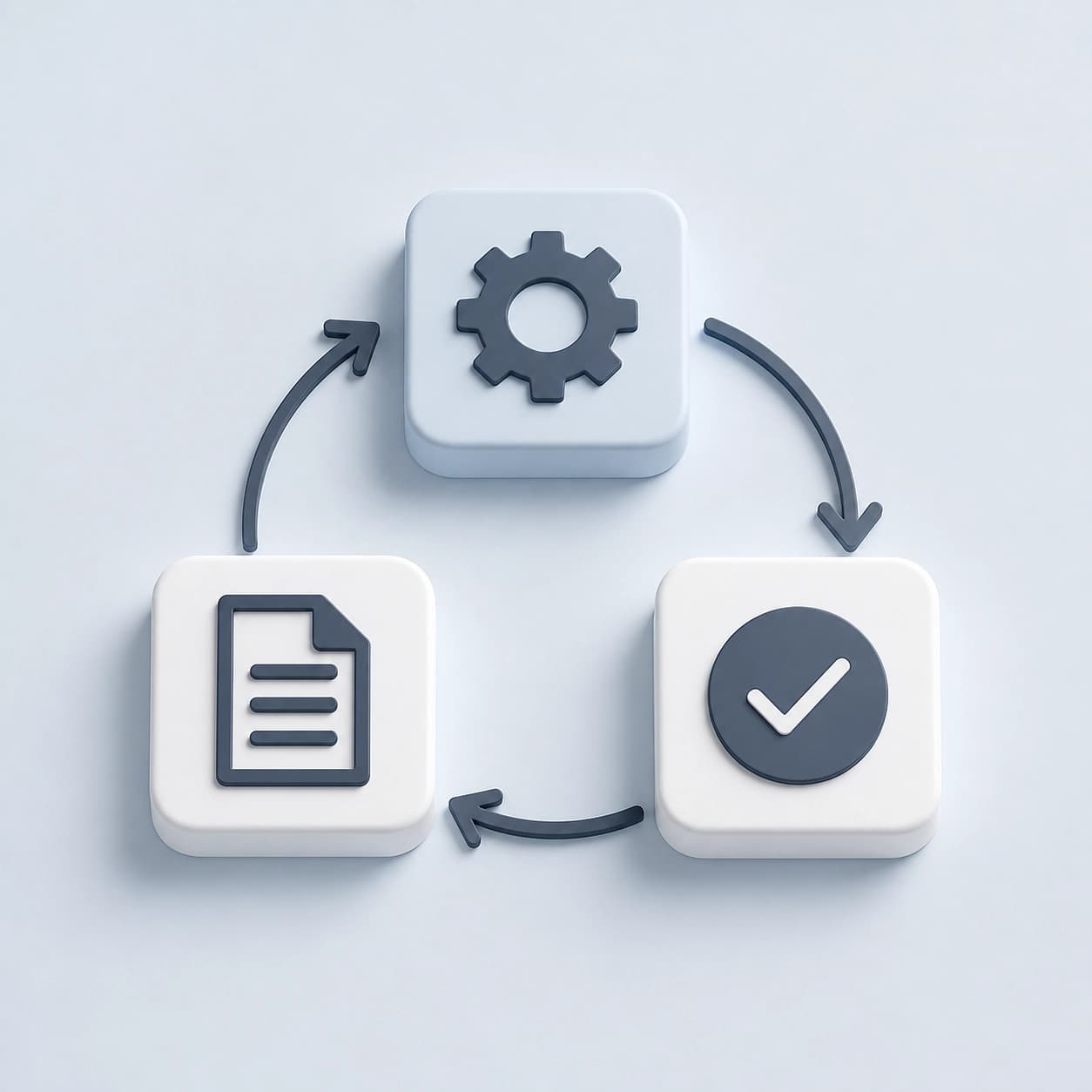
Practical criterion: a single framework evolves across multiple tasks at once, rather than separately for each benchmark.
A Unified Framework: The Agent as Its Own Optimizer
Qiankai Xu’s paper was submitted on September 29, 2026. It is titled “Self-Evolving Harness on Multiple Tasks with the Agent as Its Own Optimizer.” The approach is built around a single frozen model and a single version of the harness.
The model first solves tasks as a solver. Then it also acts as the proposer. It reads full run logs and directly edits the harness that runs it. No separate proposer is needed.
| Parameter | Typical method | Approach in the paper |
|---|---|---|
| Who modifies the harness | Separate proposer | The same frozen model |
| Initial harness | Created by a human | A single version of the harness |
| Scope | A separate harness for each benchmark | Tasks from five benchmarks across different domains |
| Roles | Proposer and solver are separate | The model first acts as solver, then as proposer |
Practical criterion: an agent that reads its own runs and edits its own harness replaces a separate optimizer.
Five Benchmarks and Data Splits
Each evolution batch includes tasks from five benchmarks across different domains. Training and held-out tasks are strictly separated.
In addition, evaluations are conducted on five out-of-distribution benchmarks. These benchmarks were not used during evolution.
Practical criterion: out-of-distribution evaluations test transfer, not just adaptation to familiar tasks.
Two Stages of Evolution
The evolution process is presented as training a deep model in two stages:
- Multitask pretraining.
- Continued training.
The initial version of the harness consisted of 49 lines. After the first stage, the average score increased by 4.48 points on in-distribution benchmarks. On out-of-distribution benchmarks, it increased by 12.64 points. On the former, it outperformed Codex; on the latter, it matched it.
In the second stage, further evolution on Claw-Eval raised the score on that benchmark from 66.17 to 68.06. The approach outperformed Codex on this benchmark.
Practical criterion: pretraining broadens transfer, while continued training further improves results on a specific benchmark.
Mechanisms That Emerged During Evolution
The authors analyze three mechanisms:
- output truncation;
- history compression;
- independent verification.
Output truncation limits the response length. History compression reduces the context. Independent verification adds a check on the result. These mechanisms emerged from harness edits rather than being specified by a human.
Practical criterion: the mechanisms that emerged provide a reference point for evaluating your own framework.
Frequently asked questions
Related materials
All materials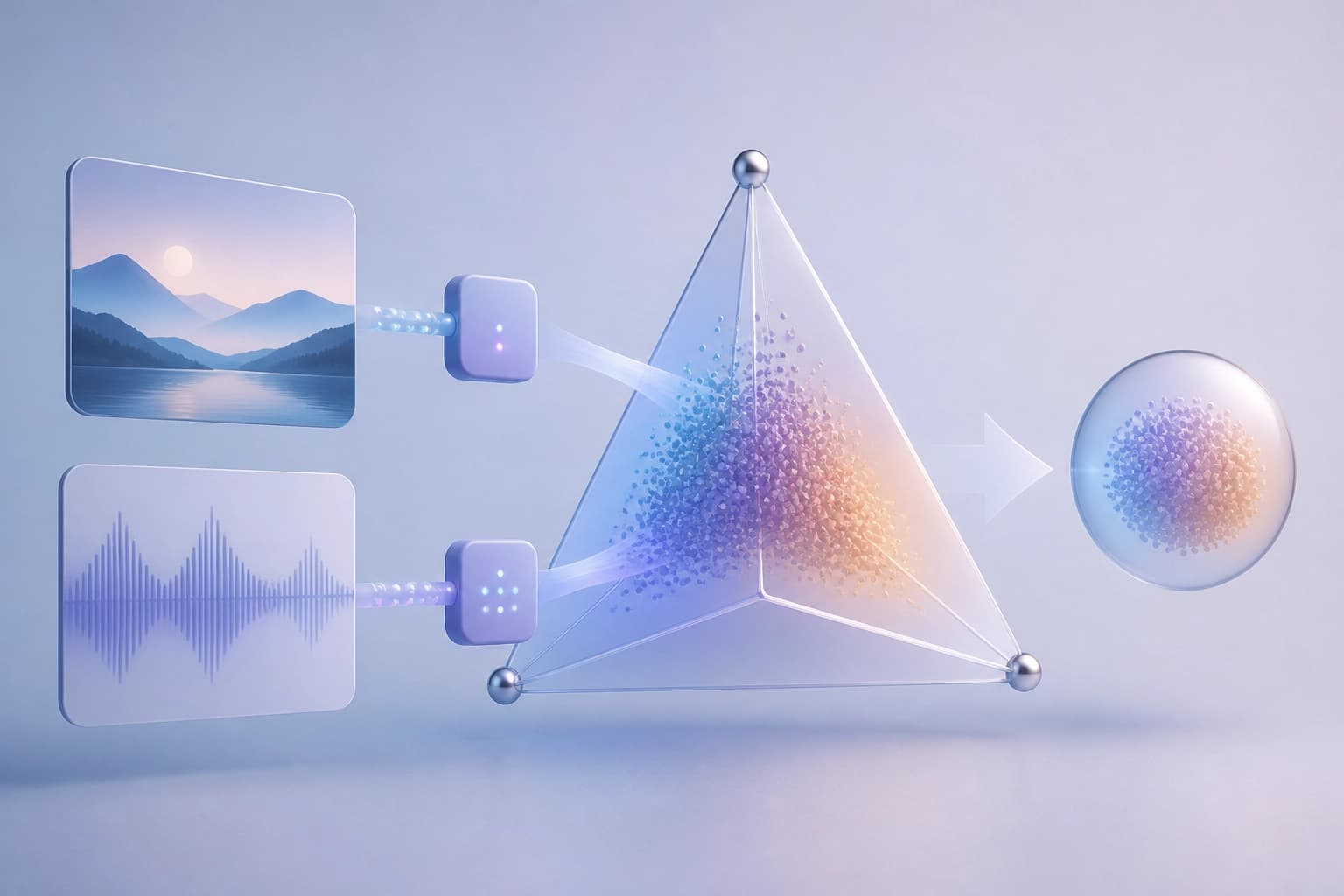
Moving to the Probability Simplex Reduces the Modality Gap in Contrastive Multimodal Models
The paper arXiv:2610.32890 proposes replacing spherical embeddings with a probabilistic simplex, adding lightweight softmax adapters and Total Variation similarity. Across five retrieval benchmarks, the cross-modal centroid ℓ2 distance decreases by 97–99% while retrieval quality is maintained or improved.
3 November 2026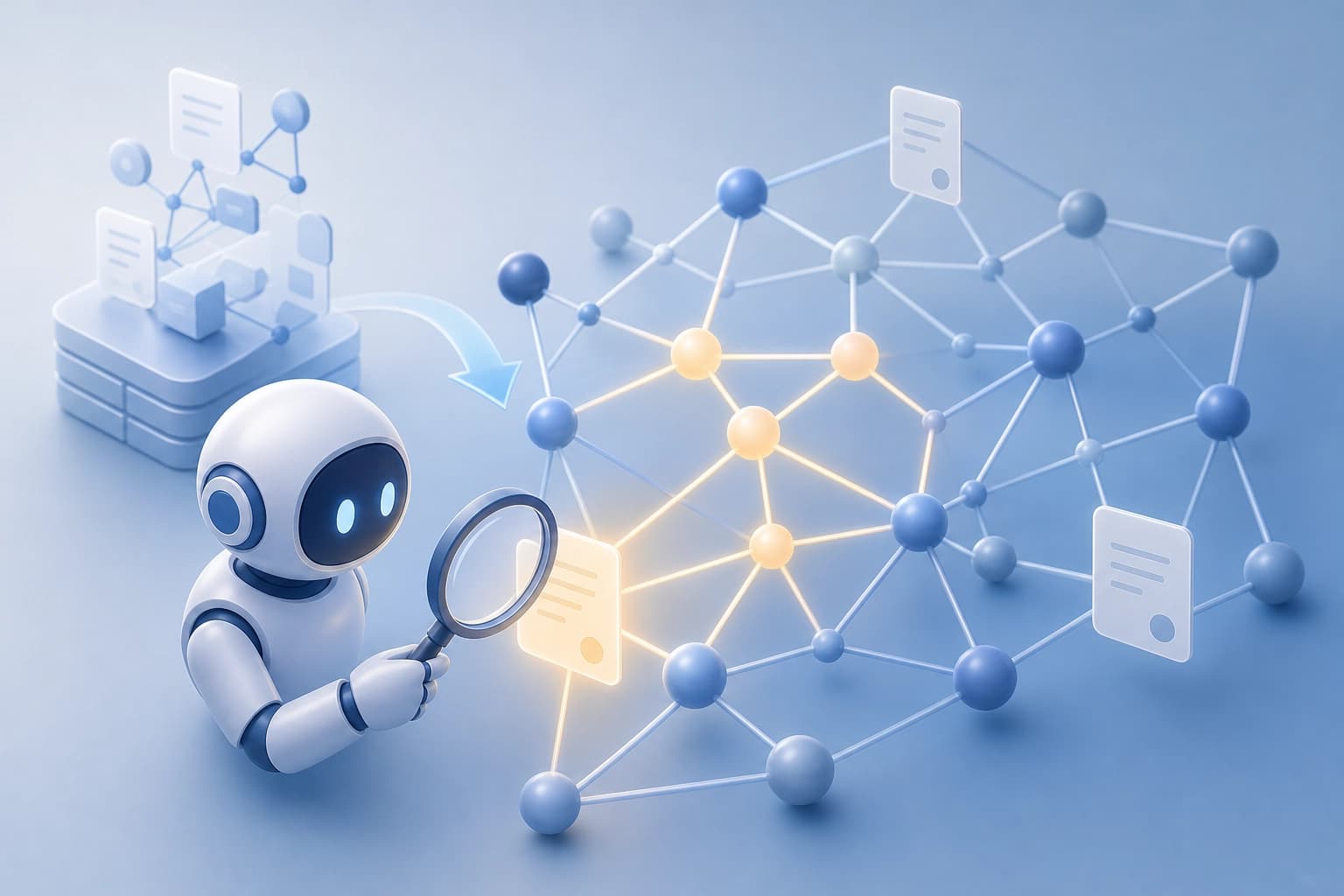
How ActionRAG Reconsiders Evidence During Diffusion Across the Memory Graph of LLM Agents
A graph-memory architecture is proposed that carefully reconciles entities during indexing and reevaluates relationships at query time based on local structure. On MemoryAgentBench, the method achieved an average accuracy of 55.1, outperforming the strongest retrieval baseline by 5.4 percentage points while keeping synthesis costs low per query.
3 November 2026
Fifteen companies backed MDK Tether for mining automation
Equipment manufacturers, mining pools, and operators have taken on the development of integrations with Tether’s open suite to standardize equipment monitoring and management; the QVAC AI agent is already built on this foundation. Independent confirmation of reduced electricity costs or increased efficiency has not yet been published.
2 November 2026