Feed
16 materials

ChatGPT's Goblin Glitch: Why the Model Talked About Goblins and Gremlins
OpenAI explained that due to a feedback loop during training, the GPT and Codex models began obsessively inserting mentions of goblins and gremlins. This most often appeared in the Nerdy preset, and the company had to add special restrictions to fix the issue.
18 August 2026
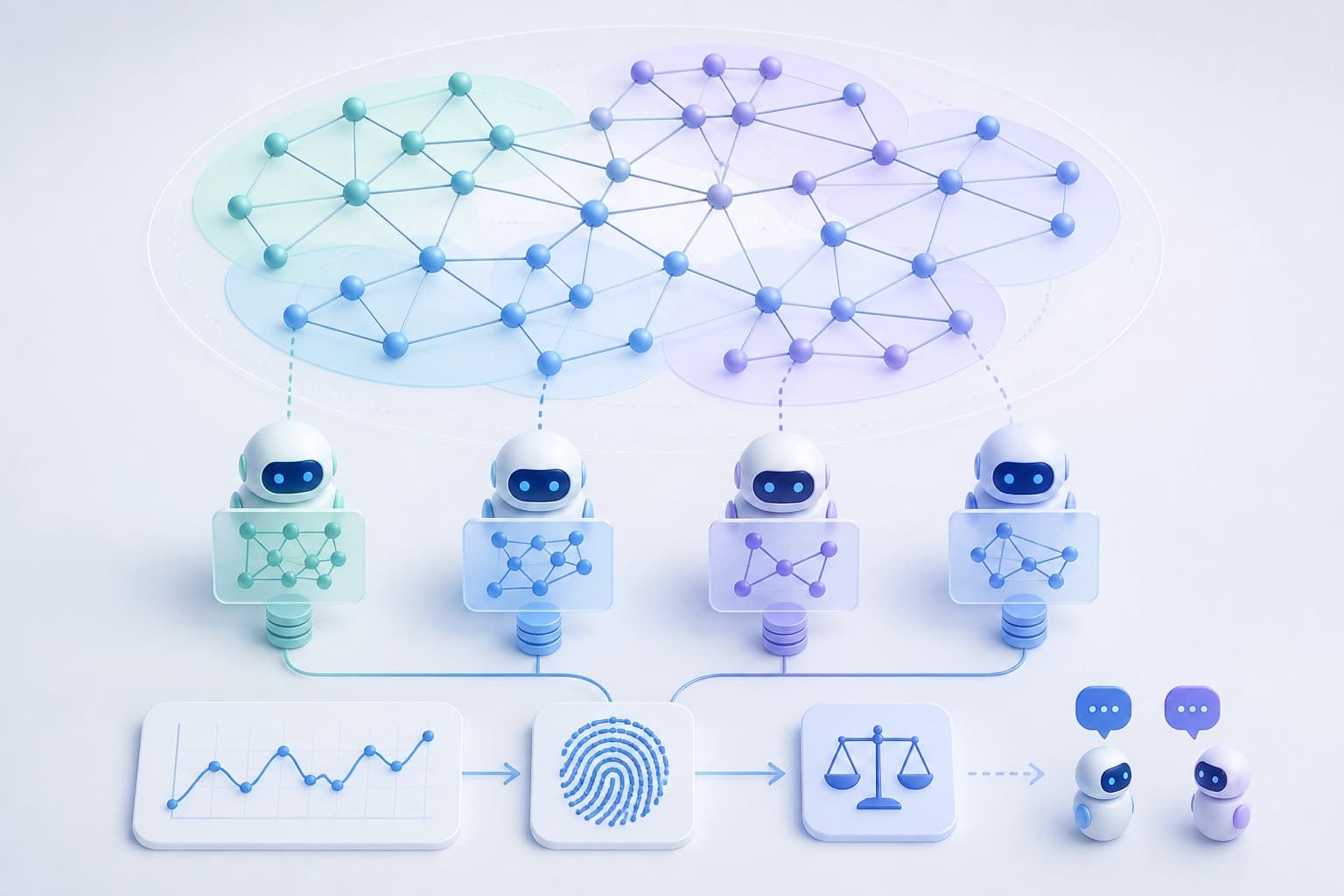
Invisible watermarking of Claude texts: Anthropic explains how it works
The new generation of models will embed an invisible pattern in responses, making it possible to assess how likely AI involvement in text creation is. This won’t affect quality, readability, or generation cost, but it will help meet regulatory requirements.
17 August 2026
Overview of the Gemini lineup: capabilities, pricing, and use cases
The Google DeepMind model family spans solutions from compact versions for mobile devices to flagship systems for complex tasks. In this article, we break down multimodality, long-context support, and where these models deliver the most value.
17 August 2026
Consciousness in machines: why current chatbots don't yet think, and future AI has a chance
Modern language models only convincingly imitate dialogue without possessing true understanding, but researchers do not rule out that more advanced neural networks could eventually approach the properties of consciousness.
17 August 2026
DeepSeek-R1 vs OpenAI O1: What to Choose If You Need Reasoning?
Comparing the free open-source DeepSeek-R1 with the proprietary OpenAI O1 across benchmarks, API pricing, and practical tasks. Finding out when the Chinese model holds its own — and when it's significantly cheaper.
15 August 2026
How to Use Perplexity.ai to Improve SEO Strategies: Step-by-Step Setup and Features
We explain how to set up Perplexity.ai and use it for SEO research: from selecting less competitive queries and analyzing user intent to optimizing content and finding competitors' weaknesses.
15 August 2026
Machine reviewers under scrutiny: comparative analysis of GPT, Gemini, and Claude in evaluating scientific papers
Researchers compared the reviews of three large language models with expert verdicts on 300 submissions to the ICLR conference. They found that the algorithms confidently distinguish accepted papers from rejected ones, but fail to capture more subtle differences between oral and poster statuses, and their comments are skewed toward topics specific to each model.
14 August 2026
FIFA World Cup as a test for AI: what the AI World Cup 2026 experiment showed
Ten language models predicted the outcomes of the entire tournament in advance, and the overall winner was the model that correctly guessed the champion. Meanwhile, the leaders in individual match accuracy were far from first in the final standings.
12 August 2026
Classification of cognitive limitations: how far are generative and agentic models from real thinking?
A new study maps out the gaps between the claimed capabilities of modern AI systems and their actual cognitive functions. The authors identify five dimensions in which models still fall short of robust reasoning, and propose benchmarks for moving toward self-regulating and adaptive AI.
9 August 2026