
Fifteen companies backed MDK Tether for mining automation
Equipment manufacturers, mining pools, and operators have taken on the development of integrations with Tether’s open suite to standardize equipment monitoring and management; the QVAC AI agent is already built on this foundation. Independent confirmation of reduced electricity costs or increased efficiency has not yet been published.
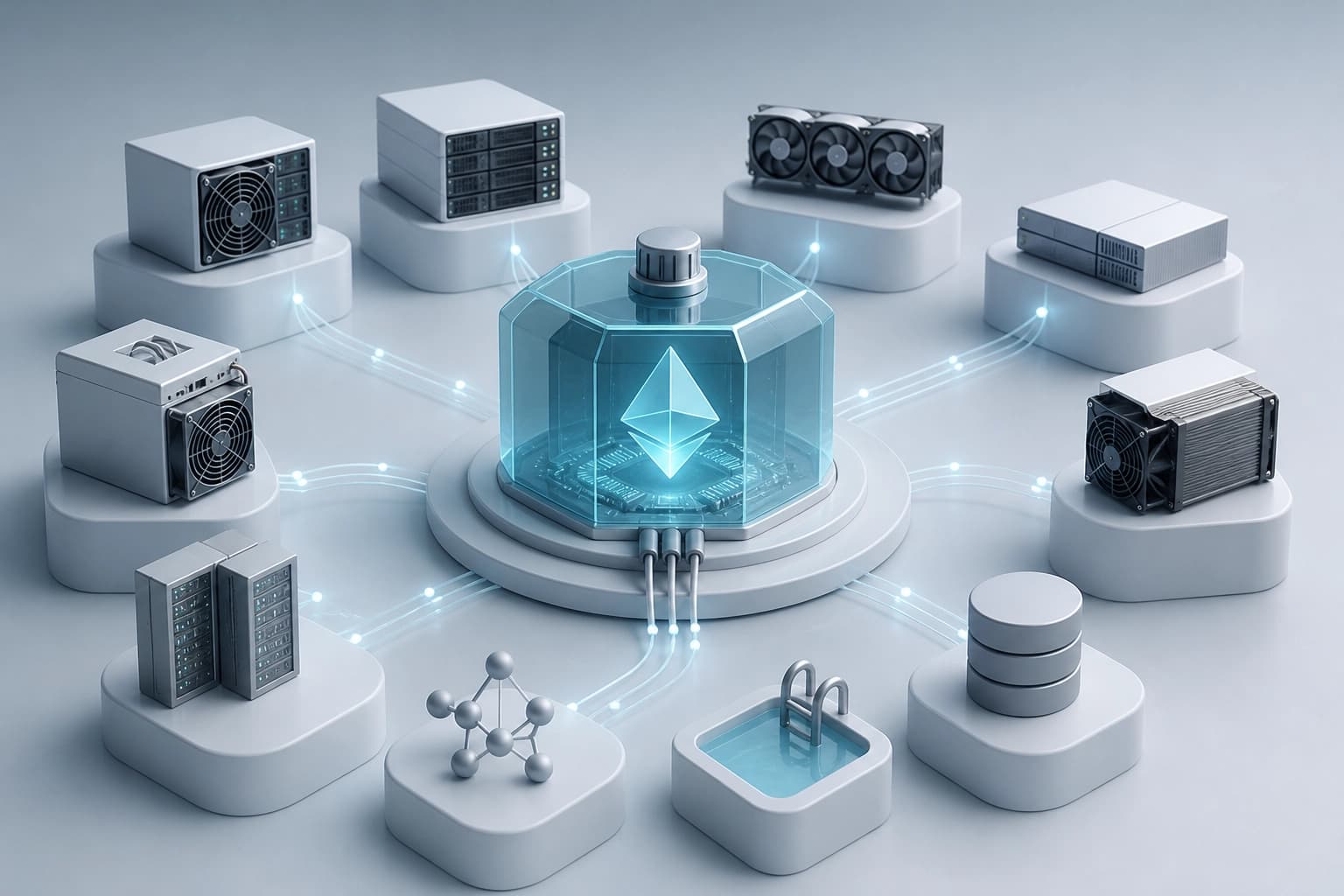
What fifteen companies supported
Tether received commitments from 15 participants: Bitcoin mining companies, hardware manufacturers, and mining pools. They will support the open-source MDK (Mining Development Kit). The list includes Bitmain, Bitdeer, Canaan, MicroBT, Foundry Digital, F2Pool, Luxor Technology, OCEAN, ACME Swisstech, Elektron Energy, EMCD, Heatbit, Proto, SpiderPool, and Stratum V2.
- Commitments: On October 24, Tether said participants would develop and maintain software integrations connecting their mining systems to MDK.
- Status: Tether has not confirmed that all 15 participants have completed their integrations.
Practical criterion: consider an integration available only after its completion is confirmed, not just announced.
How mining systems are unified
MDK (Mining Development Kit) is designed to standardize mining software. It supports automated monitoring and management of equipment across different mining operations. MDK includes Workers components. They translate information from equipment or mining services into a common format.

Practical criterion: when choosing equipment or a pool, check whether an integration is available that sends data to MDK through Workers.
The agent’s role in monitoring
The QVAC mining agent is already running on MDK. Tether expects AI tools to help operators monitor machines, identify equipment problems, and adjust mining operations. However, Tether has not published independent results showing improvements in electricity costs or mining efficiency.
Practical criterion: test AI features using data from a specific mining operation, and do not rely on independent results that Tether has not published.
Release plan and versions
Tether launched the open-source MDK framework in April 2026. Version 0.11 was planned to be presented at Plan ₿ Forum on October 23–24 in Lugano, Switzerland. Tether aims to release MDK 1.0 by the end of 2026.
Practical criterion: when planning implementation, consider the MDK version and integration status, not just the announcement.
Frequently asked questions
Related materials
All materials
MathAdv: What the Final Accuracy of Machine-Generated Proofs Conceals
A diagnostic suite of tasks spanning 13 undergraduate and graduate mathematics topics evaluates machine-proving systems in Lean 4 not only by their final results, but also by their subject-matter mastery, the quality of their informal reasoning, and their robustness to rephrased conditions. A component-by-component analysis shows that translating a problem into formal form remains the main obstacle, and that success depends heavily on the area of mathematics and how the problem is framed.
9 November 2026
Presentation Editing as Controlled Operations: The EditPPT Framework and DeckEdit-Bench Benchmark
The authors break down slide editing into specific objects, permitted actions, and checks to ensure unrelated content remains untouched, rather than relying on free-form code generation. To measure quality, they created DeckEdit-Bench (183 tasks across 28 human-made presentations), and the multi-agent EditPPT framework achieves a 66.7–74.9% task success rate across five base models while preserving over 97% of the content.
8 November 2026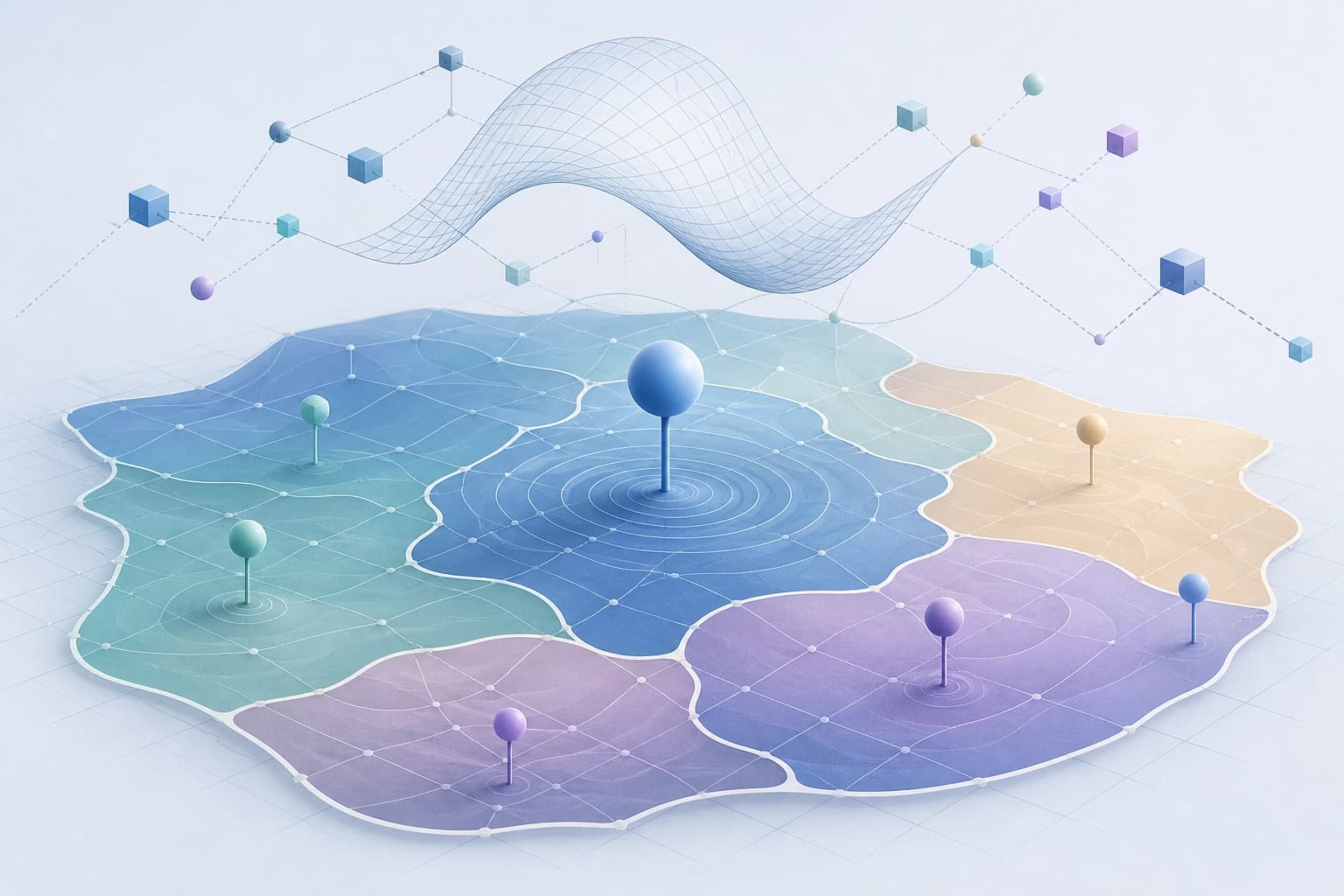
Non-Euclidean Factor Geometry: The FactoMap Map for Disentangled Representations
A method is proposed for describing factor space through regions, generator-defined identifications, and local scales, making it possible to distinguish topologically similar cases with different geometries. FactoMap trains interpretable prototypes on a structured grid and, in experiments, demonstrates more robust preservation of factor continuity and separation.
8 November 2026