Why Drone Propellers Are Hard to Monitor
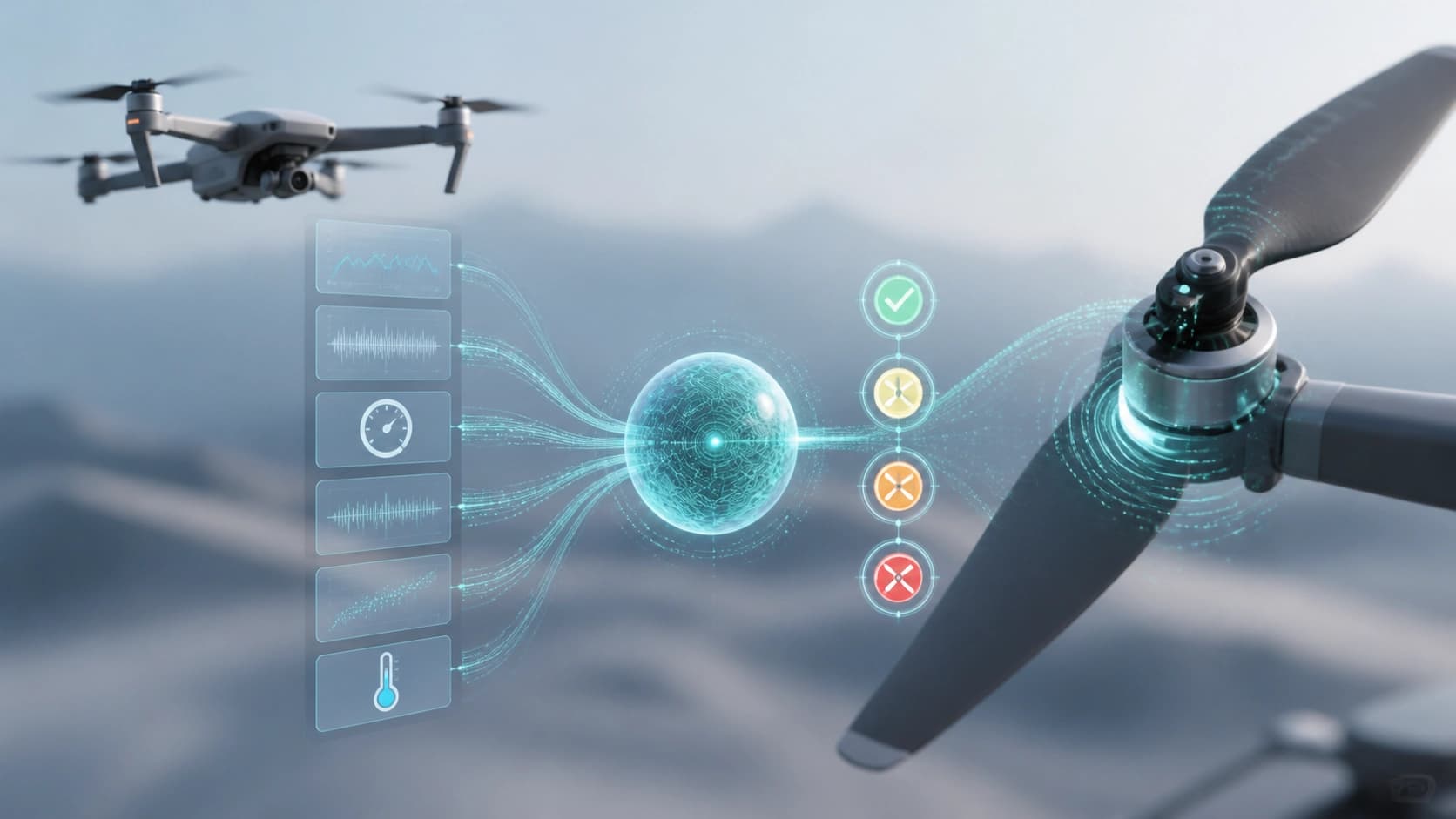
The propeller is one of the most vulnerable parts of a drone. A damaged blade can silently degrade controllability and, at a critical moment, lead to the loss of the aircraft. The challenge is that a propeller defect almost never looks like a single obvious spike on some sensor. Its traces are scattered across different channels of the flight log: route accuracy shifts slightly, the load on the electronic speed controllers grows a little, orientation "wavers" somewhere. Individually, such deviations may look like noise, and only together do they paint the picture of a real problem.
To catch such a hidden failure in time, you cannot look at each graph in isolation. You need a tool that can cross-correlate heterogeneous signals and compare them against the behavior of a known-healthy drone. This is exactly the task solved by a prototype built around the metamorphic "artificial age" of the propeller.
Metamorphic "Artificial Age": How It Works
The researchers proposed a prototype decision-support system that assesses propeller health not through a single parameter but through a dedicated metric — the Artificial Age Score. The name may sound like a metaphor from the field of biological aging, but in reality, it has nothing to do with chronology. It is a structural measure of how far the drone's current behavior deviates from a healthy "baseline" and how heavily its individual subsystems are loaded.
The prototype takes data from the flight log and sequentially computes six rotor-health-related indicators:
- trajectory tracking error — how accurately the drone followed the intended route;
- orientation instability;
- thrust command load;
- motor command imbalance;
- ESC (electronic speed controller) command instability;
- battery stress.
Each of the six indicators is then normalized against a baseline level corresponding to a healthy flight. After that, candidate scoring policies and metamorphic adequacy relations come into play — they turn the disparate signals into a final score. The formula also accounts for redundancy so that the same symptom is not "counted" twice through different channels.
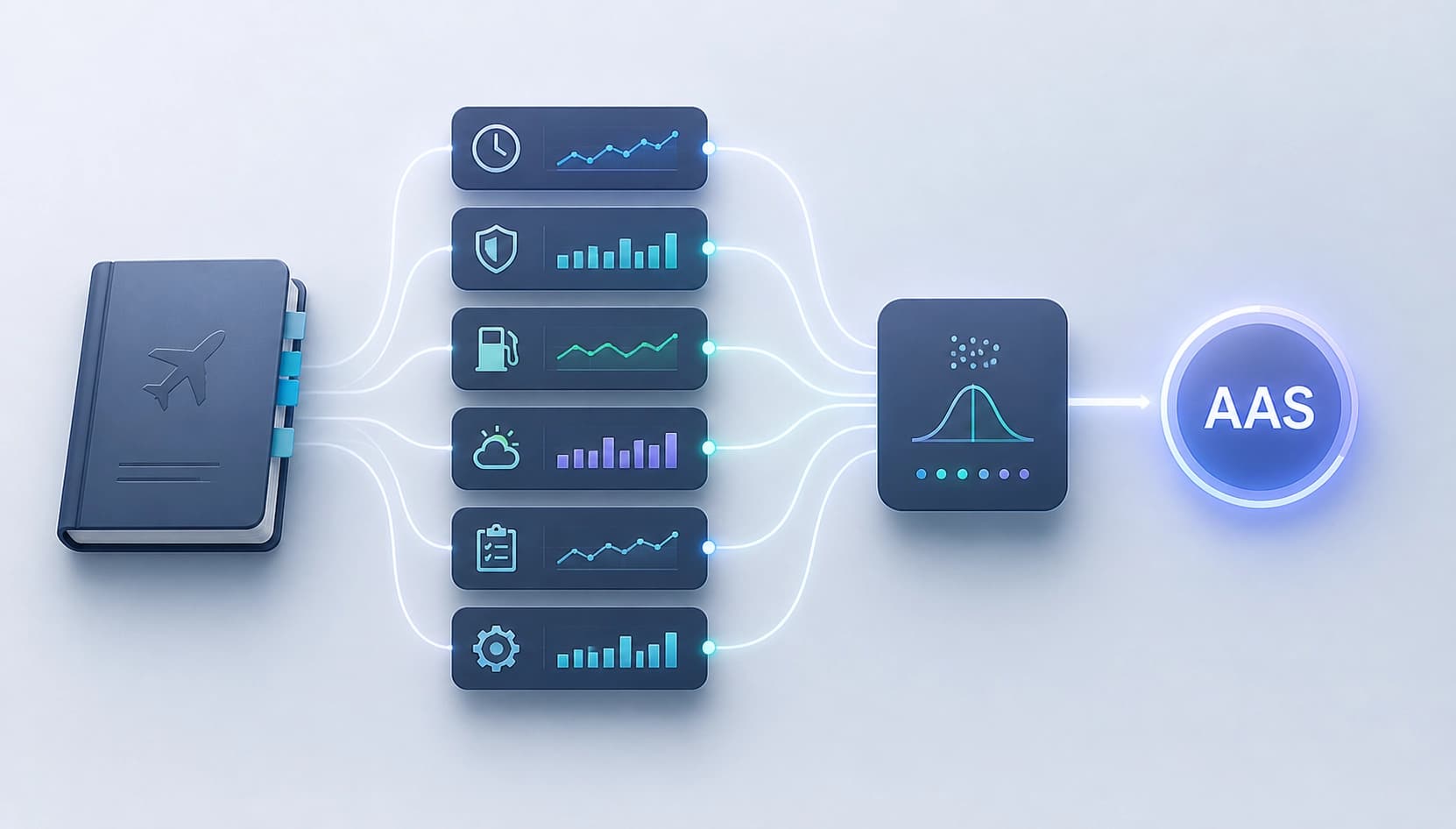
This approach moves away from chasing a single perfect diagnostic feature. Instead, the system evaluates the internal consistency of multiple channels and shows how anomalous the drone's behavior is compared to the norm.
Validation on Real Cases: One Healthy and Three Defective Propellers
To test the prototype in practice, the authors used real flight logs from the public DronePropA 2024 dataset. The experiment was retrospective and controlled: they took one healthy case and three cases with varying degrees of propeller damage. All flights followed the same trajectory with the same speed profile, so differences in the metrics could be attributed specifically to the propeller's condition.
For the healthy drone, the system saw no serious deviations and sent it to routine monitoring. In the Severity 1 case, the main symptom was ESC command instability — this aircraft was recommended for maintenance. The Severity 2 case showed maximum load across both motor commands and ESC, while the Severity 3 case exhibited the largest trajectory tracking error. The system flagged the last two cases as requiring mandatory inspection.
Interestingly, damage of different severity manifested through different operational channels. One propeller suffered more in controllability, another in speed controllers, and a third in route-following accuracy. This further confirms that there is no universal "failure indicator": a multi-indicator decision-support layer is exactly what is needed.
What This Means in Practice
The proposed prototype is a step toward intelligent post-flight analysis. Instead of manually reviewing hundreds of graphs, an engineer gets a compact assessment with a recommendation: continue flights, schedule maintenance, or perform an urgent inspection. This is especially relevant for autonomous drones, where a human often cannot inspect every blade before launch.
Here, the metamorphic "artificial age" helps view propeller health not as a list of scattered symptoms but as a single measure of functional "aging" — how far current behavior has drifted from a healthy reference. The work is still retrospective and based on selected logs from DronePropA, but the underlying approach can be extended: adding new fault types, expanding the set of indicators, and eventually turning the prototype into a tool for routine drone monitoring in real service centers.