In late November 2025, Anthropic completed its 4.5 lineup: following the smaller models in the family, the flagship Claude Opus 4.5 was released. The release took place on November 25, and the company made no bones about its target audience — developers, teams building AI agents, and anyone who needs careful work with "grown-up" interfaces like spreadsheets and documents.
In Anthropic's official X account, the newcomer is called "the best model in the world for coding, agents, and computer use." Whether that's marketing or reality — practice will tell, but the specs alone show where the company was headed: the model holds context considerably better, hallucinates less often, and handles long chains of actions.

Programming: entire projects in a single pass
The new model's main trump card for developers is the ability to work not with individual files but with a full project structure. The model is trained in modularization, refactoring, and debugging, so it can break a task into modules, connect them with imports, and assemble a working application skeleton.
In the Anthropic demo, the model generates a React dashboard with authentication, three pages, API integration, and a test suite — all in a single pass. Normally, that amount of work takes a team several iterations; here, a single request with a requirements description is enough.
The practical value is a noticeable speedup of routine work. Generating typical CRUD operations, refactoring legacy code, and creating a service skeleton can be safely handed off to the model, leaving code review and architectural decisions to humans.
Agents: memory between steps
The classic ailment of early agent scenarios is losing the thread of reasoning: after a dozen actions, the model forgets the source data and starts contradicting itself. According to Anthropic, Claude Opus 4.5 maintains coherent state between actions, which means agents can perform multi-step tasks without a manual "restart" at each stage.
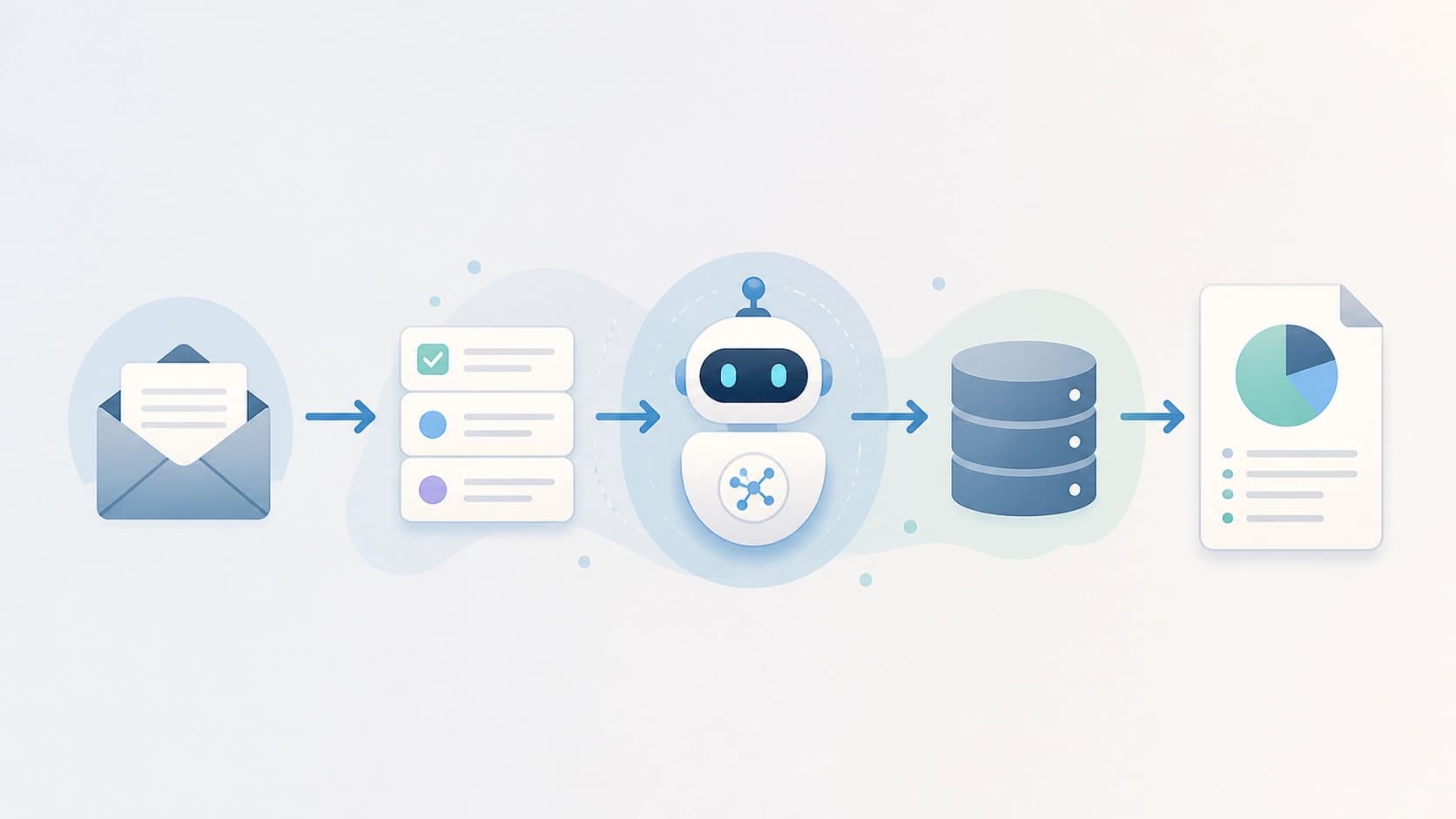
A textbook example is a daily assistant that scans incoming emails, builds a task summary, writes it to a database in Notion, and sends a report on what has been done. Each subsequent step builds on the result of the previous one, and the model requires no intervention in between. This is an important step toward the automation that both product teams and operational efficiency departments are eyeing.
Caution, however, is still in order: autonomous chains with access to email and databases should be equipped with limits, logs, and a stop for human confirmation in contentious situations.
Computer use: Excel, presentations, and the "application" scenario
One of the most intriguing directions is advanced computer use. The model doesn't just recognize file contents; it works with them like a human: it analyzes the table structure, fills in data, builds charts, and prepares materials based on the conclusions it draws.
In the Anthropic demo, the model opens a Microsoft Excel file, fills in missing cells, works through the formulas, builds charts, and then generates a presentation with the results — including a well-thought-out slide structure. In essence, this is a ready-made "data → analysis → report" pipeline that previously had to be assembled manually from several tools.
For financial and management reporting, such a scenario means direct savings of hours every week. You formulate a request — you get a completed spreadsheet and a presentation that only needs to be edited to match the corporate style.

Long context and careful reasoning
Another notable feature is the ability to hold truly large volumes of text "in mind." The test Anthropic cites is impressive: the model reads a 100,000-token technical specification and produces a security audit based on it — with a list of risks, fixes, and references to specific sections of the document. Manually, such a document would have to be split up and read in parts.
The quality of reasoning has also improved: logic steps are arranged sequentially, and the share of confident errors has decreased. For example, when explaining a physics derivation, the model checks the math at each step rather than just restating the general idea. For analysts and those who use AI in document work, this lowers the cognitive load: each reference and calculation needs to be double-checked less often.
Pricing and savings
Claude Opus 4.5 is positioned as a premium tool, so the prices are correspondingly premium: $5 per million input tokens and $25 per million output tokens. However, the final bill depends heavily on the scenario — with batch processing and heavy use of prompt caching, the cost of repeated and high-volume requests drops noticeably.
If you have similar requests with a large shared context (for example, a long system prompt or a document corpus), caching can save a significant portion of your budget. For exact rates and terms, it's best to check Anthropic's official pricing page — the numbers there are detailed.
How to switch to the new model
Migrating to Claude Opus 4.5 from previous versions doesn't require rewriting your architecture — a few careful steps are enough:
- Study the release notes and API changelog: they list the current model names and any changes to request parameters.
- Replace the model identifier in your code from the old value (for example,
claude-4.x) toclaude-opus-4-5-20251101. - Double-check the exact identifier string against the API documentation or pricing page — a single character error will cause the request to be rejected.
- Test the model on a small fixed corpus, then run unit and integration tests on a small dataset and compare the output quality with the previous version.
The flagship doesn't justify the switch in all cases: if the scenario is simple and doesn't require a long context, the smaller models in the family may be more cost-effective and faster. So the testing stage is mandatory, not optional.