
VModel
A platform for developers with an API for integrating and deploying AI models in projects.
Overview
VModel
Description of the VModel neural network
VModel is a platform created specifically for developers who need to integrate artificial intelligence into their projects. The service provides API access to AI models, allowing them to be connected to applications without lengthy setup and complex infrastructure.
Key idea of the service
The main concept of VModel is to simplify working with AI as much as possible. Instead of deploying models yourself, training them, and maintaining infrastructure, a developer can simply send HTTP requests to the API and receive ready-made results. Model launch and improvement are also performed through the platform.
Ecosystem for development
The platform enables not only using ready-made models but also deploying your own solutions. Client libraries are available for two popular programming languages — Node.js and Python, making the service convenient for a wide range of developers.
VModel Characteristics
| Characteristic | Value |
|---|---|
| Business model | Paid |
| Category | Developer tools |
| Payment type | Credit system |
| Balance top-up | from $10 to $1000 |
| Credit validity | No expiration |
| Programming languages for integration | Node.js, Python |
| Integration method | HTTP requests, API |
| Refunds | Available (within 14 days for issues) |
Who is the VModel neural network suitable for?
The service is primarily aimed at developers who need to implement artificial intelligence into their projects.
Developers integrating AI via API
If your task is to connect a language model, image generation, or other AI capabilities to a web application, mobile service, or backend system, VModel provides ready-made tools for this. API access eliminates the need to manage computing resources yourself.
Teams working with Node.js and Python
Thanks to the availability of client libraries for Node.js and Python, the service is suitable for teams using these languages in their development. Integration is done with just a few lines of code, lowering the entry barrier and accelerating AI adoption in existing projects.
How to use the VModel neural network?
Working with the platform is built on interacting with the API via HTTP requests or through official client libraries.
Using via HTTP requests
To access a model, you need to form an HTTP request to the VModel API. The request specifies the model version you want to use, as well as the input data. For example, when working with images, you will need to provide links to the source and target files.
Working through client libraries
For those who prefer a more structured approach, libraries for Node.js and Python are available. They simplify the process of interacting with the API and allow you to embed model calls directly into your application code.
Main functions of VModel
AI integration with one line of code
The platform implements connecting artificial intelligence to a project with a minimal amount of code. This significantly saves integration time and allows you to quickly get a working solution.
Launching and improving models, deploying solutions
In addition to using ready-made models, VModel enables launching your own models and improving their performance. Deploying your own solution is also done through the platform.
Access to community models and flexible payment
Models created by the developer community are available through the platform. Balance top-up is carried out through a credit system, with credits having no expiration date and no daily usage limits.
Advantages of VModel
Simplicity and speed of integration
One of the main advantages of the service is the ease of connection — only one line of code is needed to launch a model. This makes the platform attractive for rapid prototyping and integrating AI into existing architecture.
Flexible payment terms
The credit system allows you to control expenses: balance top-up ranges from $10 to $1000. Credits do not expire over time, and the service has no daily usage limits, which is convenient for projects with uneven load. Bonus credits are provided for large top-ups.
Additional guarantees for developers
The platform offers refunds within 14 days if issues that arise cannot be resolved. This reduces risks when getting acquainted with the service and testing its capabilities.
Disadvantages of VModel
Speed limitations of some models
Certain models on the platform may have speed limits for request processing. This should be considered when choosing a model for tasks requiring high performance.
No free tier
The service is fully paid — no free tier is mentioned in the available data. To get acquainted with the platform for the first time, you will need to top up your balance, which could be a barrier for some developers.
What tasks does VModel solve
AI integration into projects
The service's main task is to provide developers with a simple way to connect artificial intelligence to their applications via API without the need to build their own infrastructure.
Launching and refining models
The platform enables launching AI models and working on improving them, which is useful for teams involved in fine-tuning and optimizing algorithms.
Deploying your own AI solutions
VModel also solves the task of deploying your own AI-based solutions by providing the necessary tools and computing resources.
VModel Prices
The service operates on a paid model with a credit-based payment system. The minimum balance top-up amount is $10, the maximum is $1000. For large top-ups, users receive bonus credits, making larger deposits more cost-effective. A free tier is not indicated in the available data, so you will need to add funds to your balance to start working with the platform.
VModel Terms of Use
The service does not set daily limits on credit usage — you can spend them at your own pace. At the same time, some models may have a limit on request processing speed. If issues arise that cannot be resolved within 14 days, a refund option is provided. Information about registration requirements is not mentioned in the available data.
VModel Availability
VModel is available as a platform for developers with an API interface, allowing the service to be integrated into projects running on various technology stacks. HTTP request support provides a universal way to interact with the platform from any environment where network calls are possible. In addition, the availability of client libraries for Node.js and Python makes the service accessible to teams using these common programming languages. More detailed information about geographic availability or registration specifics is not provided in the source data.
How VModel differs from alternatives
Payment model with credits that never expire
Unlike many services where purchased credits or tokens have a limited usage period, VModel offers credits that do not expire. Combined with the absence of daily limits, this makes AI spending more predictable for developers working with irregular workloads.
Ease of integration into code
The platform's focus on one-line code integration and the availability of official libraries for Node.js and Python set it apart from solutions that require deeper configuration. For teams accustomed to rapid development, VModel offers a lower entry threshold compared to services where setup takes significant time.
No free tier
It is worth noting that, unlike some alternatives that provide free tiers for evaluation, VModel is positioned as a paid service without a free tier in the available data. This may be a significant difference when choosing a platform.
Conclusion
VModel is a practical platform for developers that simplifies integrating artificial intelligence into projects via API. The service's key advantages are ease of connection (one line of code), support for popular programming languages, and a flexible credit payment system without credit expiration or daily limits. The platform is suitable for teams that need to quickly implement AI into their products without unnecessary infrastructure. However, its fully paid nature and possible speed limitations of some models should be taken into account.
Frequently asked questions
Similar AI tools
See also
OpenAI's multimodal flagship model that works with text, images, audio, and video.
Free five-day intensive from Kaggle and Google on building AI agents using the vibe coding technique.

A workflow automation platform that connects thousands of apps without requiring coding.
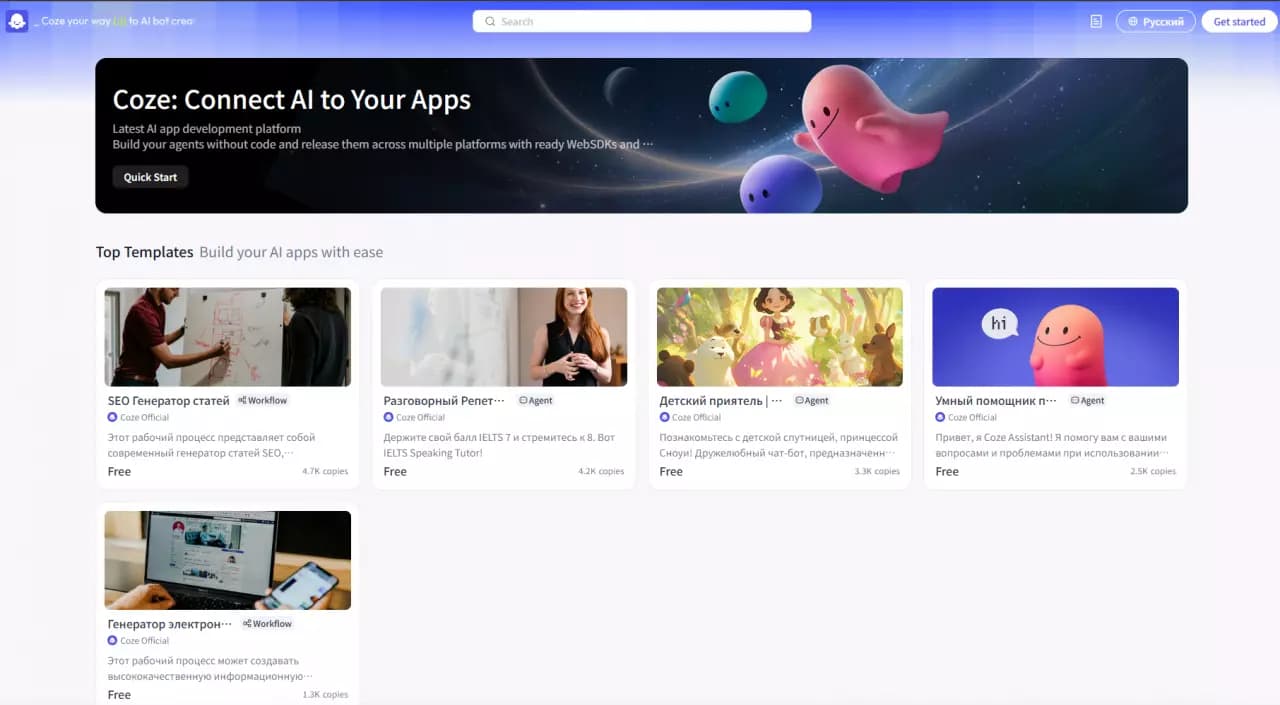

Platform for building AI chatbots with a visual builder that requires no coding skills.
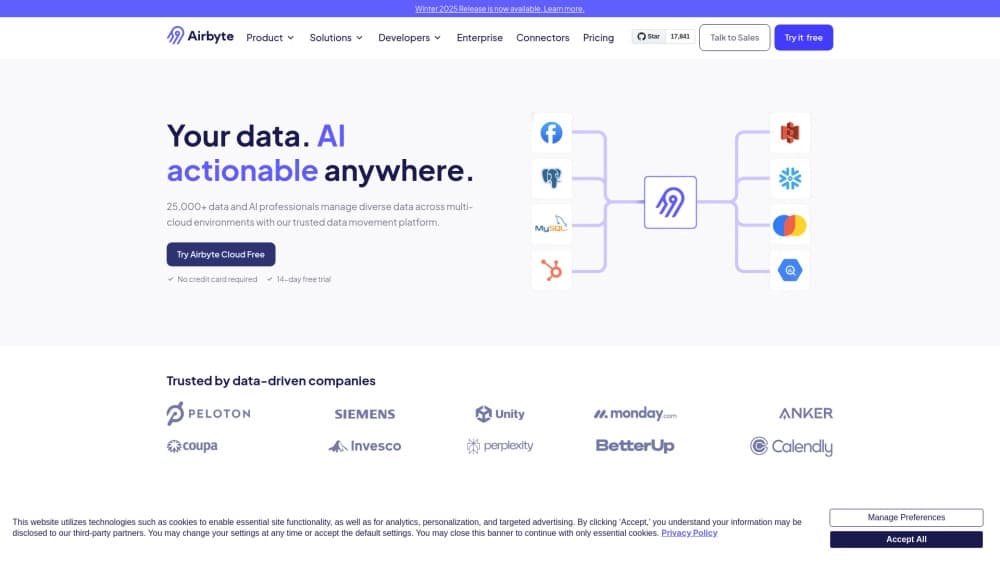
Open-source platform for integrating data from various sources into data warehouses and analytics systems.
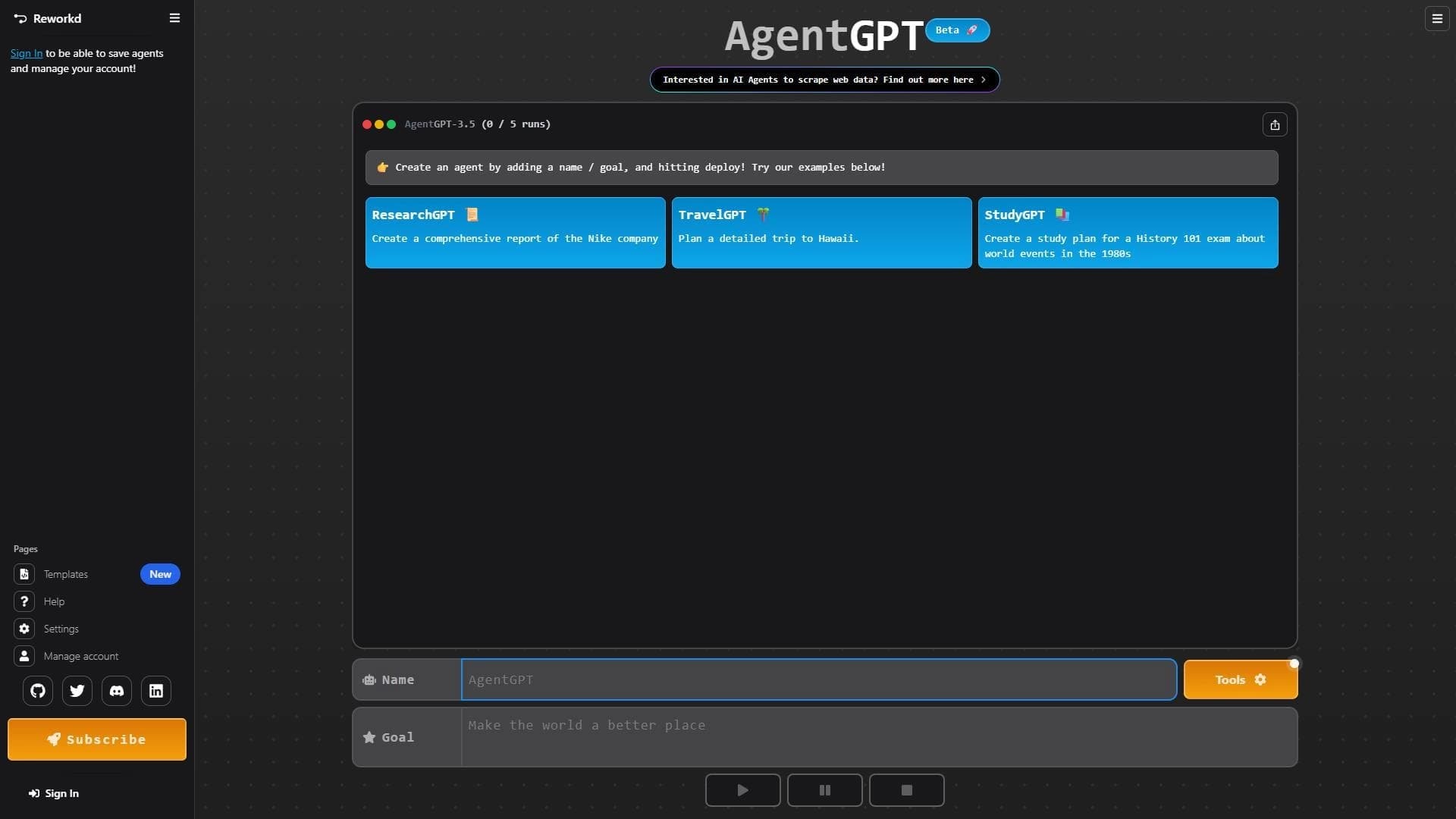

Platform for creating and launching autonomous AI agents that independently complete tasks on the internet.

Web interface for testing and prototyping based on Google's artificial intelligence models.


A service for detecting texts created by artificial intelligence, with the ability to check for plagiarism and grammar.