
Fast Stable Diffusion in free Colab with JAX
Free Colab notebook for ultra-fast Stable Diffusion image generation using JAX and TPU.
Overview
Fast Stable Diffusion in free Colab with JAX — Description
Fast Stable Diffusion in free Colab with JAX is not a standalone neural network, but a specialized tool that is a ready-made notebook for Google Colab. Its key task is to provide ultra-fast image generation using the Stable Diffusion model, leveraging the capabilities of the Diffusers library and hardware acceleration on Tensor Processing Units (TPUs).
This notebook appeared after the Diffusers 0.5.0 library added support for the JAX framework. This made it possible to run Stable Diffusion inference not on traditional GPUs, but on TPUs, which Google provides for free as part of the Colab service. As a result, image generation time is significantly reduced compared to conventional graphics cards available in standard free environments.
From a technical standpoint, the user gets ready-made code and settings that allow them to connect to a TPU, load the model, and perform generation based on a text prompt. This solution removes the entry barrier for those who do not have powerful local hardware and provides access to high-performance cloud computing.
Fast Stable Diffusion in free Colab with JAX — Features
Below are the main technical and functional characteristics of the tool, based on available information.
| Characteristic | Value |
|---|---|
| Tool type | Ready-made notebook for Google Colab |
| Primary purpose | Fast image generation from text prompts (Stable Diffusion) |
| Acceleration technology | Use of JAX and TPU (Tensor Processing Unit) |
| Required framework | Diffusers library 0.5.0 (or newer) with JAX support |
| Runtime environment | Google Colab (cloud environment with free TPU access) |
| Alternative environments | Google Cloud Platform (for production tasks) |
| Main advantage over GPU | Ultra-fast inference on TPU |
| Distribution model | Free |
Who is Fast Stable Diffusion in free Colab with JAX for?
Developers and machine learning engineers
This tool will be useful for programmers who want to integrate image generation into their projects, test models, or experiment with JAX. The ability to use a TPU without setting up your own server allows for quick experiments and performance evaluation of acceleration.
Generative art enthusiasts
Users interested in creating images with AI but lacking powerful graphics cards will find this solution convenient. The notebook eliminates the need to purchase expensive hardware. Instead, a free Google Colab account is sufficient.
Researchers and students
For studying how diffusion models and JAX work, this tool can serve as an excellent learning base. It allows you to obtain results quickly and understand how TPU acceleration works without deep infrastructure involvement.
How to use Fast Stable Diffusion in free Colab with JAX?
Step 1: Open the notebook
You need to open the provided Jupyter notebook in the Google Colab environment. This is done through the service's interface, where the .ipynb file is uploaded or opened via a direct link.
Step 2: Connect a TPU
Before running the code, you need to select the runtime environment. In Colab settings, you must specify the "TPU" hardware accelerator. The tool automatically detects and initializes it after running the first code cell. Note that access to TPU in the free tier may be time-limited, but it is usually sufficient for experiments.
Step 3: Run generation
After connecting the TPU, the code for loading the libraries and the Stable Diffusion model is executed. Then the user specifies a text prompt, parameters (e.g., number of steps, image size), and runs the generation cell. The resulting image is then displayed.
Key features of Fast Stable Diffusion in free Colab with JAX
Text-to-image generation
Basic functionality that allows creating images based on natural language text descriptions. The Stable Diffusion model understands prompts and generates unique visual images.
Using JAX for optimization
A key feature is offloading computations to the TPU via the JAX library. JAX allows compiling and optimizing the model's mathematical operations, providing a significant performance boost compared to running on CPU or standard GPUs.
Integration with Diffusers
The notebook is built on the Hugging Face Diffusers ecosystem. This ensures compatibility with many other models and pipelines, simplifies code modification, and makes updating parameters easier.
Advantages of Fast Stable Diffusion in free Colab with JAX
High speed on free hardware
The main advantage is speed. Using TPUs in Colab allows generating images in seconds, which is unattainable with free GPU quotas. This enables quickly testing dozens of prompts without long waits.
Accessibility for a wide audience
Since the tool uses the free Google Colab service, no powerful personal computer or purchase of cloud GPU servers is required. All you need is a computer with a browser and a Google account.
Flexibility and experimentation
Users can change generation parameters. Additionally, using JAX opens up opportunities for experimenting with new architectures and optimizations not available in standard pipelines.
Disadvantages of Fast Stable Diffusion in free Colab with JAX
Dependence on cloud infrastructure
The tool fully depends on the stability and availability of Google servers, as well as queues in the free version of Colab. During peak hours, getting access to a TPU may be harder than to a GPU.
Limitations of the free Colab version
Despite having TPUs, the free environment has limits on continuous runtime and total computation. For large-scale or production tasks, switching to paid plans (e.g., Colab Pro) or using Google Cloud Platform will be required.
Relative setup complexity
For beginners, launching may seem non-trivial, as it requires understanding the Colab interface and code, even despite the ready-made nature of the notebook.
What tasks does Fast Stable Diffusion in free Colab with JAX solve?
The tool solves the problem of providing high-performance computing power for neural network image generation without direct hardware costs. It allows:
- Content creators and designers to quickly test hypotheses when creating drafts.
- Reducing the iteration cycle time when developing generative models.
- Demonstrating Stable Diffusion capabilities on TPUs for educational purposes without requiring users to have a specialized workstation.
Pricing for Fast Stable Diffusion in free Colab with JAX
Free usage model
The tool is distributed under a free model. This means the notebook itself and its code are available to everyone at no cost. Usage is based on the free Google Colab quota.
Hidden costs
Despite the tool being free, users may need to pay if they exceed the limits of the free Colab tier. Paid usage is also possible when deploying the tool on Google Cloud Platform for production needs, where charges are calculated based on compute resource rates.
Terms of use for Fast Stable Diffusion in free Colab with JAX
Working in the Google environment
The tool works exclusively within Google's infrastructure (Colab or GCP). Consequently, users agree to Google Cloud's terms of service and Colab usage policies.
Technical session limitations
Each session in free Colab has a limited lifetime. Users must complete generation before the timer expires; otherwise, the virtual machine and data will be deleted. This is important to consider for long computations.
Software dependencies
For proper operation, the Diffusers library version 0.5.0 or higher is required. Typically, the notebook automatically installs the necessary components at startup, but dependency versions can affect stability.
Availability of Fast Stable Diffusion in free Colab with JAX
Platform
The tool is available through the Google Colab web interface, making it cross-platform. It works in any modern browser (Chrome, Firefox, Safari) on Windows, macOS, Linux, or even Chromebook operating systems.
Regional restrictions
Since the service is tied to Google, availability may vary in countries where Google services are blocked or where data centers providing TPUs are unavailable. This is generally a global limitation rather than a tool-specific issue.
Connection speed requirements
Loading the model (several gigabytes) and uploading results require a stable internet connection. Download speed affects the time before generation can begin.
How Fast Stable Diffusion in free Colab with JAX differs from alternatives
Comparison with GPU notebooks
The main difference from the vast majority of Colab alternatives is the use of TPUs instead of GPUs. This shifts the speed balance in favor of TPUs for Stable Diffusion tasks due to the specifics of JAX compilation. Other notebooks use conventional graphics cards (T4, V100), which JAX with TPU outperforms in inference time.
Hugging Face ecosystem
Unlike some homemade solutions, the tool is built on the official Diffusers library. This means greater reliability, regular updates, and compatibility with hundreds of other models in the Hugging Face hub.
Focus on speed
Not all free tools prioritize generation speed. Many focus on advanced features (ControlNet, Img2Img). Fast Stable Diffusion focuses specifically on maximum inference performance with minimal resource costs.
Conclusion
Fast Stable Diffusion in free Colab with JAX is an efficient technical solution for anyone who wants to achieve maximum image generation speed without investing in expensive hardware. Using free TPUs and the JAX framework opens up capabilities previously available only to owners of powerful GPUs. Despite the limitations of the free Colab environment (session time and possible queues), this tool is an excellent choice for quick experiments, learning, and prototyping. It is a practical way to get acquainted with modern neural network acceleration technologies.
Frequently asked questions
See also


AI platform for fast website creation and small business process management.
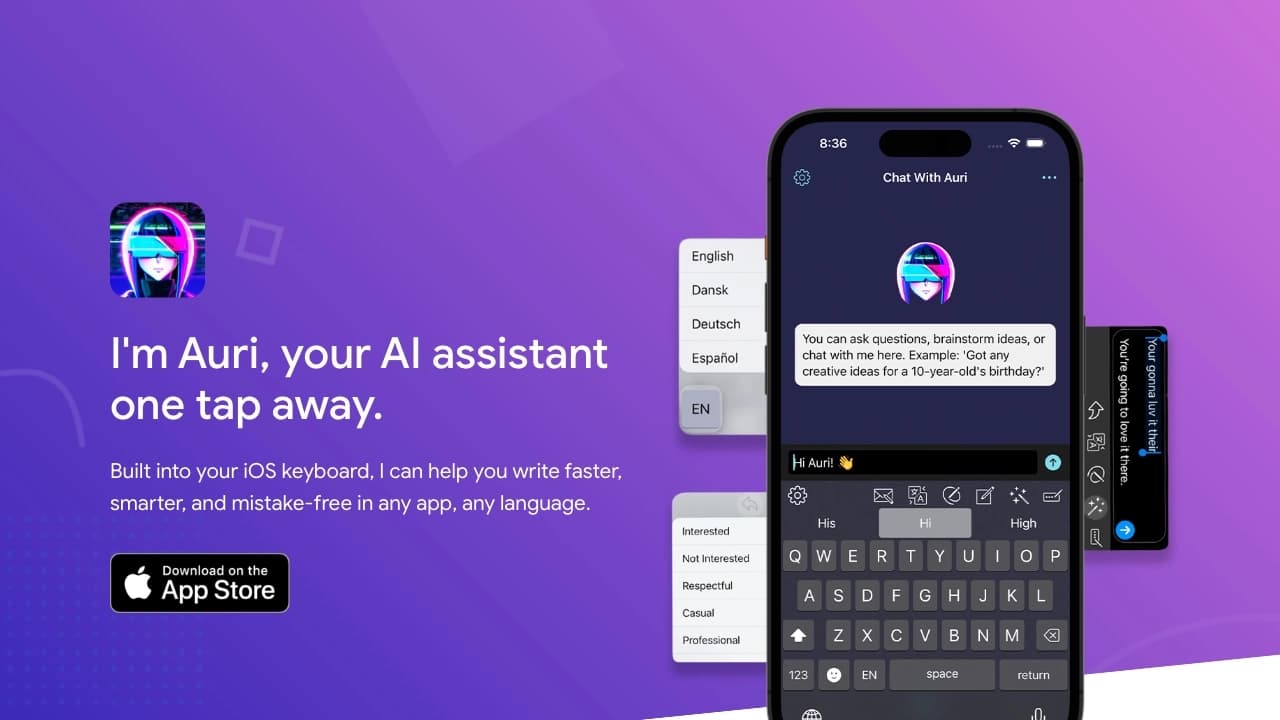
AI keyboard for Apple devices that speeds up typing with corrections, translation, and response generation.

A multimedia AI toolkit for editing and enhancing photos, videos, and PDF documents.

Cloud platform for creating videos using AI avatars, synthesized speech, and automatic translation of clips into dozens of languages.
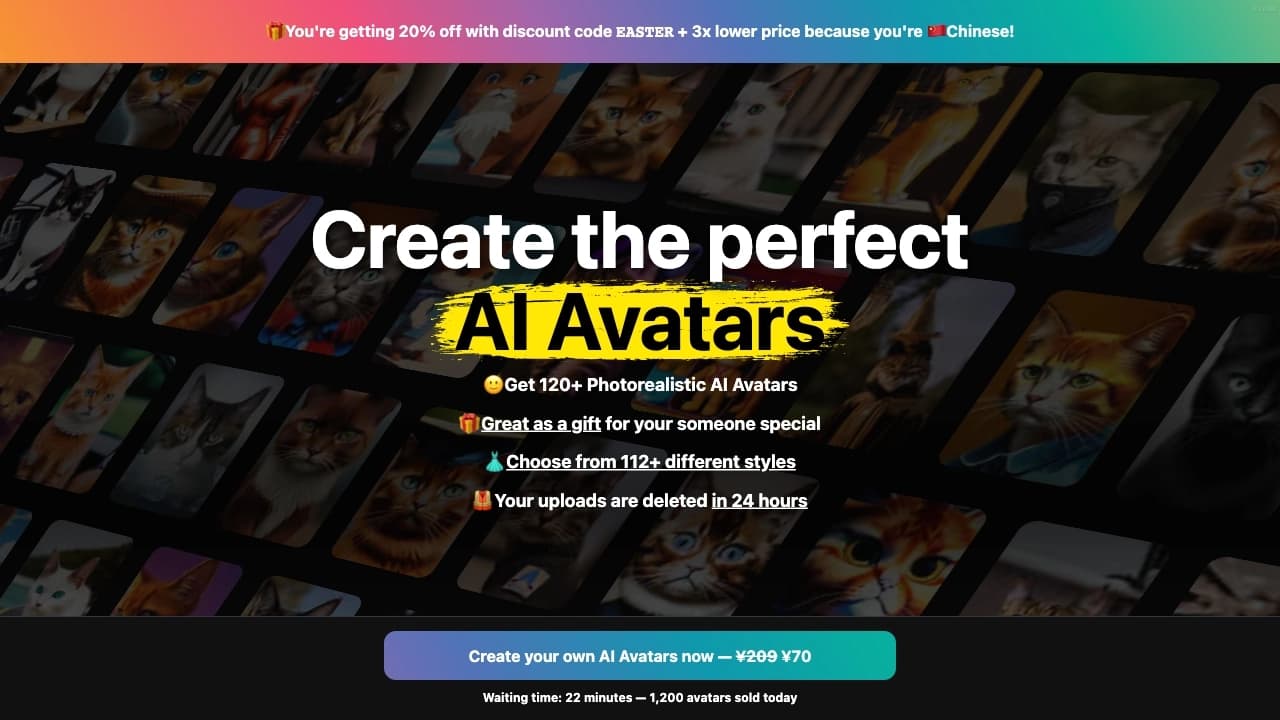
Service for creating personalized avatars and photo shoots using AI based on uploaded selfies.

Online service for creating and customizing birthday invitations and congratulations using artificial intelligence.


Desktop AI assistant for macOS, Windows, and Linux that launches via hotkey above all windows and combines multiple language models in one interface.
AllChat is a universal platform that combines several popular language models in a single interface for communication, image generation, file analysis, and code execution.