
Devra
Desktop AI agent for development that helps write, debug, and test code.

Overview
Devra is a desktop AI agent designed to help developers write, debug, and test code. Its key feature is that it doesn't work "blindly" — instead, it connects directly to the project, analyzing its structure, architecture, and change history. This dynamic-context approach allows the agent to generate edits and new code fragments that fit naturally into the existing codebase, reducing the risk of conflicts and errors.
How dynamic context works
Rather than relying solely on the current file or user input, Devra examines the entire repository. This includes loading necessary files, analyzing logical connections between modules, and accounting for prior changes. Thanks to this, the agent gains a better understanding of the overall project picture and can propose solutions that match its style and architecture. The developer retains control over the process and remains the author of decisions, trusting Devra with the mechanical work of code integration.
Devra's characteristics
| Characteristic | Value |
|---|---|
| Type | Desktop AI agent for development |
| Categories | Code assistants, Debugging and error detection |
| Platforms | Desktop application |
| Website | devra.ai |
| Publication date | December 18, 2025 |
Who is Devra suitable for?
Developers working with large codebases
First and foremost, the tool will be useful for professionals who work daily with large, complex projects. In such systems, manually tracking all connections between modules, change history, and dependencies can take considerable time. Devra automates this analysis, allowing the developer to focus on solving more important tasks.
Programmers looking to speed up routine work
The agent is also suitable for those who want to reduce time spent on routine operations: writing repetitive functions, creating unit tests, or finding logic errors. Devra takes on these mechanical tasks, which is especially valuable for small teams where every hour matters.
How to use Devra?
Connecting to a project and analysis
First, you need to install the Devra desktop application and launch it. The agent connects to your project and begins analyzing the repository context. It examines the folder structure, existing modules, architecture, and change history to build a complete understanding of the tasks facing the developer.
Setting tasks and voice control
After connecting, you can assign tasks to the agent. Both text input and voice control are supported. You can simply speak a task — for example, "fix the error in the data loading module" or "add an email validation function" — and Devra will get to work, using the built context to find and fix inconsistencies.
Key Devra features
Code writing automation
- Function autocompletion: The tool can automatically complete started code or generate entire functions based on task and context analysis.
- Creating new modules: Devra can generate new project modules, ensuring their correct integration with the rest of the codebase.
Debugging and testing
- Unit test generation: The agent automatically creates unit tests for written code, helping verify its functionality and prevent errors.
- Finding and fixing errors: Devra searches for logic errors and library incompatibilities and suggests fixes, simplifying the debugging process.
Context management and interaction
- Dynamic context: The tool loads the necessary files, change history, and project structure to understand tasks.
- Voice control: The ability to set tasks by voice speeds up interaction with the agent.
Devra's advantages
Deep project integration
Devra's main advantage is its context-aware operation. The agent doesn't just execute requests — it analyzes the repository, allowing it to generate solutions that fit better into the existing architecture. This reduces the number of conflicts and errors when integrating changes.
Time savings on mechanical tasks
The developer remains the author of decisions, while Devra takes on a significant portion of the mechanical work. This significantly speeds up routine tasks such as refactoring, extending functionality, generating tests, and finding errors, especially in large codebases.
Devra's disadvantages
Information about obvious drawbacks of the tool is absent from available sources. Like any specialized desktop tool, Devra requires installation on a workstation and may likely need sufficient computing resources to analyze large projects. Exact system requirements and possible limitations should be checked on the official website devra.ai.
What tasks does Devra solve
Accelerating everyday development
Devra aims to automate routine tasks that a programmer faces every day. This includes:
- Refactoring: Improving code structure without changing its functionality.
- Extending functionality: Adding new capabilities to existing modules.
- Code autocompletion: Generating continuations for started functions or expressions.
Ensuring code quality
The second group of tasks relates to code reliability and correctness:
- Creating new modules: Generating entire structural units of a project.
- Unit test generation: Automatically creating tests to verify code operation.
- Finding and fixing errors: Identifying logic errors, library incompatibilities, and other issues with their subsequent correction.
Devra pricing
Currently, information about Devra's pricing policy is absent from available sources. The cost of using the tool has not been disclosed, so to get up-to-date details on plans or license purchase terms, it is recommended to visit the product's official website devra.ai.
Devra terms of use
Detailed terms of use, license agreement, and user requirements have not been officially published in the available data. The agent is distributed as a desktop application, which implies its installation on the developer's local machine. Detailed operating rules may be presented on the devra.ai website when attempting to download or purchase the product.
Devra availability
Devra is available to users as a desktop application. This means the tool must be installed and run locally on the developer's workstation. Information about supported operating systems (Windows, macOS, Linux) is not specified in the source data. The product's official publication date is December 18, 2025, and the product's main website is devra.ai.
How Devra differs from alternatives
In-depth context analysis
Many AI coding tools work based on a single file or a small code fragment, limited to the user's request. Devra differs by going beyond these boundaries and analyzing the entire project — its architecture, change history, and interconnections between modules. This allows the agent to generate more "thoughtful" and accurate suggestions that better fit the existing code.
Desktop format and voice control
Unlike many other solutions that are web services or plugins, Devra is a desktop application. This can provide deeper integration with the developer's work environment. A unique advantage is also voice control support, allowing tasks to be set without switching context — you just need to speak what needs to be done.
Conclusion
Devra is a desktop AI agent designed to automate a programmer's mechanical work. Its key feature lies in using dynamic context: it connects to the repository, analyzes the project architecture and change history, allowing it to generate code and tests that fit naturally into the existing codebase. The tool helps with writing functions, creating modules, debugging, and testing, speeding up routine tasks and improving overall development efficiency.
Frequently asked questions
See also

Chrome extension that helps manage tabs, history, and bookmarks with an AI assistant.

Side AI panel that helps answer questions, work with documents, and generate images.

AI toolkit for video generation and editing, including avatars, lip-sync, and voice cloning.

AI agent for automating customer communications and support.


Platform for creating multi-agent AI systems and chatbots to automate customer support and lead generation.

Project management platform with task assignment, time tracking, and employee workload monitoring features.
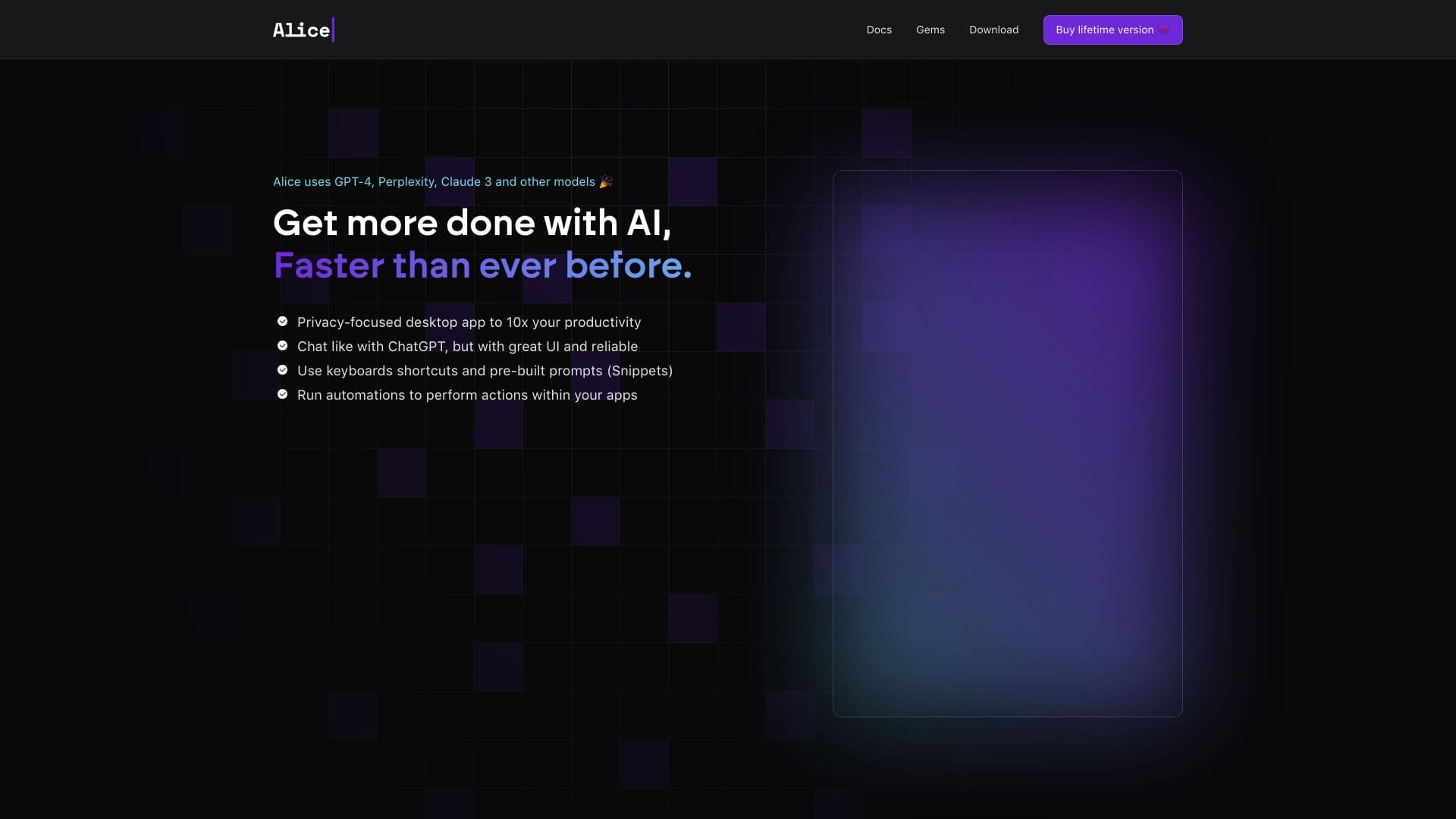

Desktop AI assistant for macOS, Windows, and Linux that launches via hotkey above all windows and combines multiple language models in one interface.
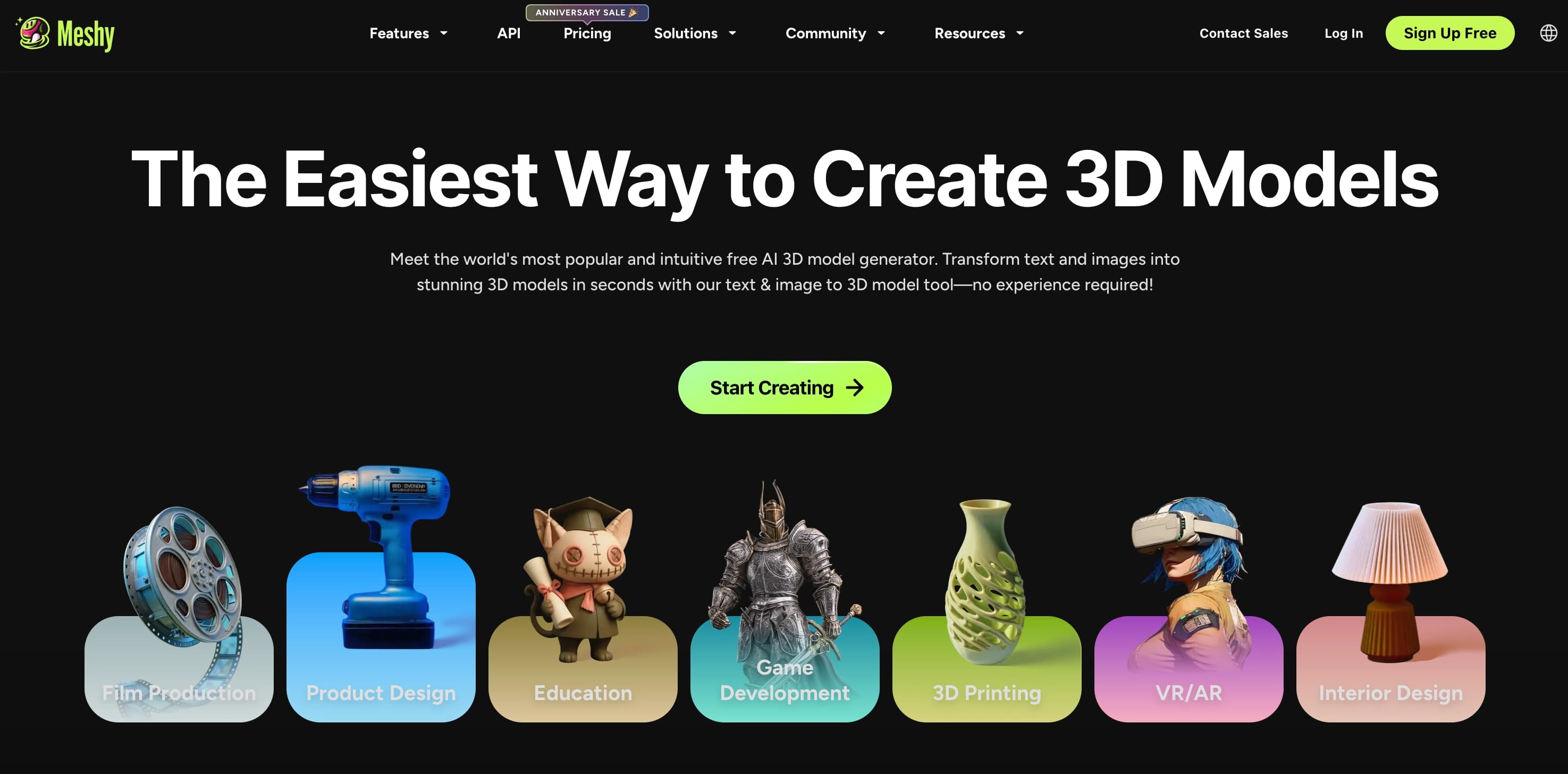
A neural network-powered cloud service for generating 3D models, textures, and animations from text descriptions or images.