
BitNet.cpp
Framework for efficient inference of 1-bit large language models from Microsoft.
Overview
BitNet.cpp is an open-source framework created by Microsoft. Its main purpose is to enable efficient inference of so-called 1-bit large language models (LLMs). While conventional LLMs use 16 or 32 bits to store weights, 1-bit models radically reduce this figure, making them extremely lightweight.
Thanks to this optimization, BitNet.cpp allows running advanced neural networks on standard central processing units (CPUs) without the need for powerful graphics cards. This opens up new possibilities for local deployment of AI systems, making them accessible for a wide range of tasks.
BitNet.cpp Features
| Feature | Value |
|---|---|
| Developer | Microsoft |
| Type | Framework for LLM inference |
| Distribution model | Free |
| Key feature | Optimization for 1-bit (binary) LLMs |
| Target hardware | CPU |
| License | Open source |
| Main advantage | Low power consumption and memory requirements |
Who is BitNet.cpp for?
Developers and machine learning engineers
This tool will be indispensable for professionals who develop and deploy AI solutions. It allows them to experiment with the latest binary neural network architectures without worrying about expensive server hardware.
Professionals in local deployment
BitNet.cpp is designed for those who need to run AI models on their own devices or at the edge. Thanks to its low resource requirements, it can be used on devices with limited power, such as laptops, mini-PCs, or embedded systems.
How to use BitNet.cpp?
Download and installation
Since BitNet.cpp is an open-source project, it can be freely downloaded from official repositories. The installation process is standard for such frameworks — you need to clone the repository and build the project according to the instructions.
Running 1-bit models
After installing the framework, developers can load 1-bit LLMs and run them on a CPU. The framework handles the optimization of computational processes, ensuring fast and efficient inference. All you need is a working environment and a chosen binary model.
Key features of BitNet.cpp
Inference of 1-bit models
The framework's main function is to directly run and execute computations for 1-bit large language models. It makes this process possible on standard processors.
Resource optimization
The framework is designed to use memory as efficiently as possible and reduce power consumption. This is achieved through specialized handling of 1-bit matrices and binary operations, which significantly reduces the load on the system.
Advantages of BitNet.cpp
- Resource efficiency: Ability to run LLMs with minimal memory and energy consumption compared to traditional approaches.
- CPU operation: No need to purchase expensive GPUs for inference tasks.
- Locality: Full local model execution without sending data to third-party servers.
- Open source: Free access and the ability to modify the source code for your own needs.
Disadvantages of BitNet.cpp
Limited model selection
The framework is exclusively focused on 1-bit (binary) LLM models. This is still a developing area, so the selection of ready-made and available 1-bit models may be significantly narrower than the selection of classic LLMs.
Technical knowledge requirements
To use BitNet.cpp effectively, developers need to understand LLM architecture, quantization principles, and be able to work with build tools for compiling projects from source code. This can be a barrier for beginners in the AI field.
What problems does BitNet.cpp solve?
BitNet.cpp solves the main challenge — making large language models more accessible for use. It removes hardware-related limitations, allowing AI to run on devices where it was previously impossible or too slow.
This is especially relevant for tasks that require on-device data processing (on-device AI), where privacy, response speed, and autonomous operation without constant connection to cloud servers are important.
BitNet.cpp Pricing
BitNet.cpp is distributed under the Free model, meaning it is completely free to use. This means any developer or company can download, use, and modify the framework without any financial costs.
BitNet.cpp Terms of Use
The use of BitNet.cpp is governed by the terms of an open license. This means its code is available for study, use, and modification. Developers can freely integrate the framework into their products and contribute to its improvement by contributing to the project's development.
BitNet.cpp Availability
The framework is a public open-source project. It is available for download to a wide audience of developers worldwide. There is no information about any regional restrictions, making it a globally accessible tool.
How BitNet.cpp differs from alternatives
The main difference between BitNet.cpp and similar solutions is its narrow specialization and deep level of optimization specifically for the architecture of 1-bit (binary) neural networks. While many other frameworks support quantization down to 4 or 8 bits, BitNet.cpp targets the extreme case — 1 bit.
This achieves outstanding energy efficiency and CPU performance metrics that are unattainable for frameworks not designed with such aggressive compression in mind. It is built to fully unlock the potential of binary models, prioritizing performance on modest hardware.
Conclusion
BitNet.cpp from Microsoft is a promising tool that paves the way for the democratization of artificial intelligence. By blurring the line between the need for powerful computing and everyday devices, this framework allows developers to deploy LLMs where it was previously unthinkable. With its focus on energy efficiency and open source, BitNet.cpp provides the community with a unique opportunity to accelerate the transition to lightweight and autonomous AI systems.
Frequently asked questions
See also
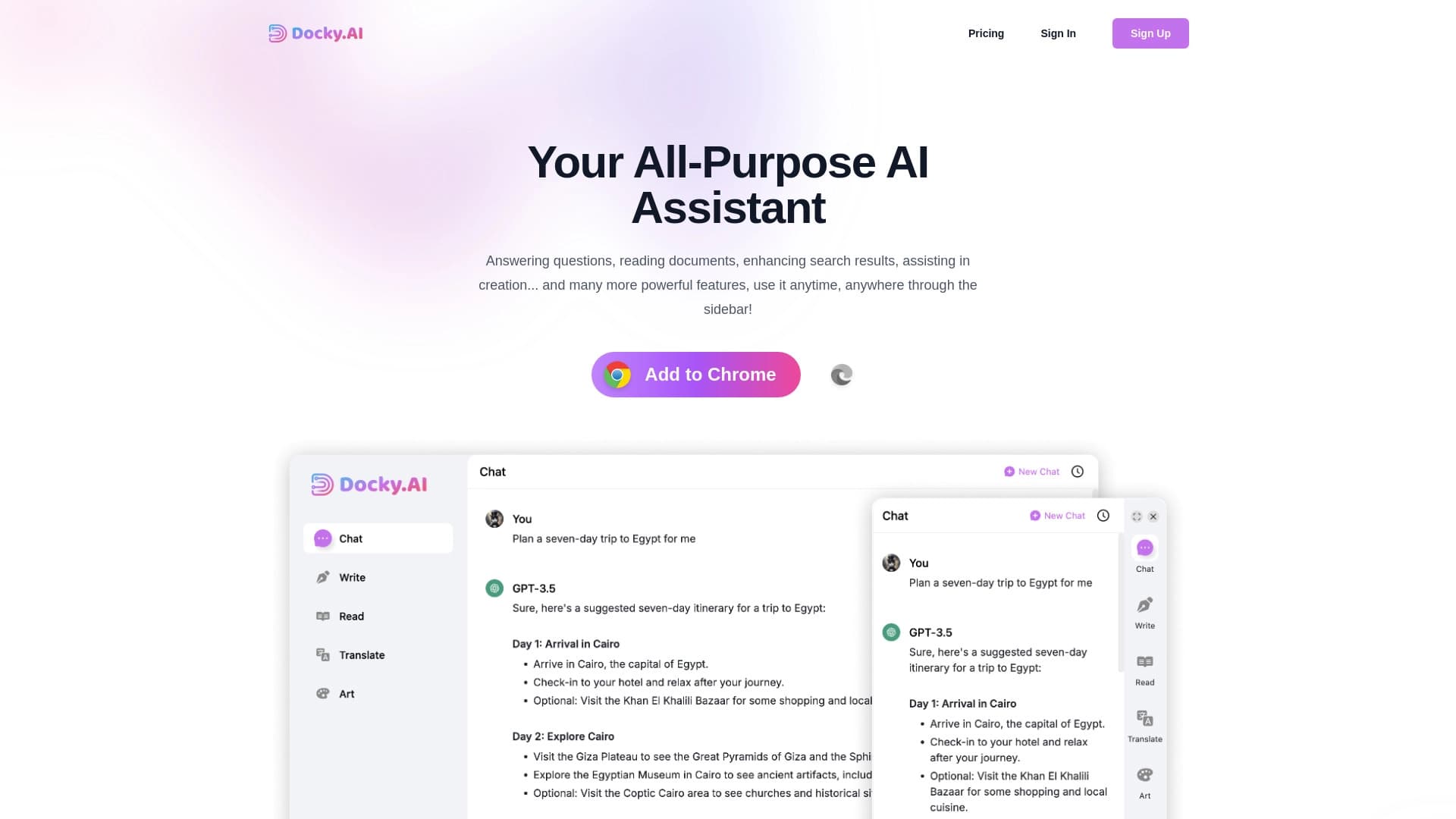

Side AI panel that helps answer questions, work with documents, and generate images.
AllChat is a universal platform that combines several popular language models in a single interface for communication, image generation, file analysis, and code execution.

AI toolkit for video generation and editing, including avatars, lip-sync, and voice cloning.

Chrome extension that helps manage tabs, history, and bookmarks with an AI assistant.

Open-source tool for quickly converting a single image into a 3D model.

Platform for creating multi-agent AI systems and chatbots to automate customer support and lead generation.

Project management platform with task assignment, time tracking, and employee workload monitoring features.
A community platform for discovering, publishing, and sharing open AI image generation models.