
Backmesh
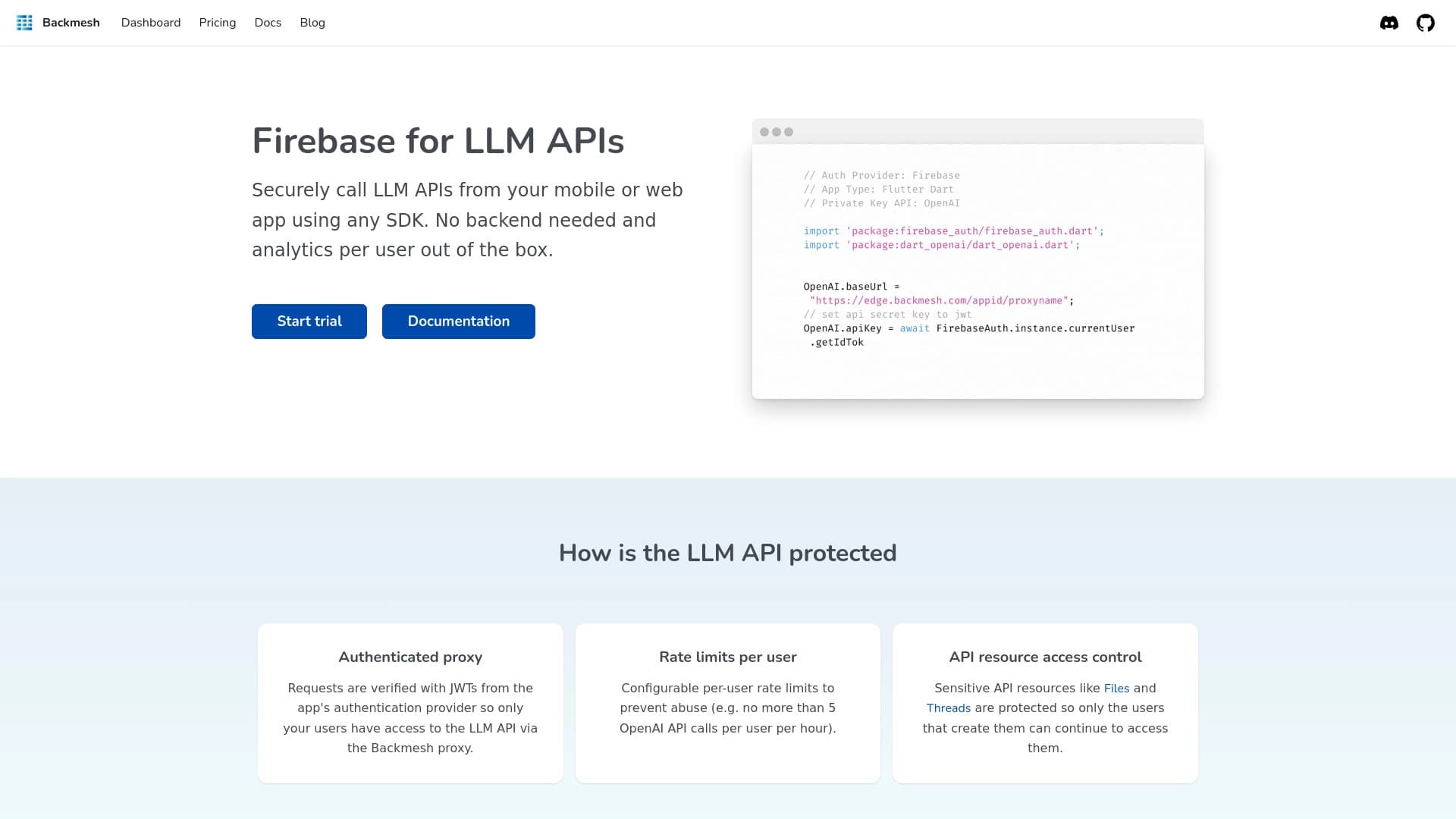
Backmesh is a proxy service for secure access to language model APIs without the need to build your own backend.
Overview
Backmesh AI Description
Backmesh is a proxy service that acts as an intermediary layer between your application and language model (LLM) APIs. Instead of deploying and maintaining your own backend for handling requests, protecting keys, and managing access, developers can connect their application directly to Backmesh. The service handles authentication, channel encryption, and routing of requests to the selected LLM.
The core idea is security. When working with mobile or frontend applications, it's impossible to hide secret API keys inside the code — they will be visible to users. Backmesh solves this problem: you provide the keys only to the service, and the application communicates with the proxy via JWT tokens. As a result, developers don't need to build their own server infrastructure just for one AI integration.
How proxy access works
Backmesh accepts requests from client applications, verifies the authenticity of the JWT token, and forwards the request to the language model API. The response is returned back along the same path. For the end user, the entire process looks like a direct API call — the only difference is that access keys remain protected on the service side.
What types of applications it suits
The service is primarily aimed at mobile applications, web frontends, and other client-side scenarios where deploying your own server is impossible or undesirable. Backmesh allows you to quickly add AI features — chatbots, text generation, data analysis — without the need to set up infrastructure and maintain it.
Backmesh Characteristics
| Characteristic | Value |
|---|---|
| Type | Online proxy for secure access to LLM APIs |
| Categories | Text processing tools, Data analysis tools |
| Developer | Backmesh |
| Free tier | Yes, available |
| Monthly visits | 32.4K |
Who is Backmesh suitable for?
Mobile and web application developers
The primary target audience is developers who build client-side applications and want to embed language model features into them. Backmesh eliminates the need to design and maintain a separate backend, reducing development time and infrastructure costs.
Startups and small companies
Young products need to ship features to market quickly. Backmesh allows LLM integration in minimal time, without deep server expertise. Flexible request limits are useful at the stage when you need to control costs and test the product with real users.
Teams working with private data
Organizations that need control over access to LLM APIs (for example, when processing personal or corporate data) can use Backmesh for centralized rights management. Authentication via JWT tokens and separate limits for users simplify compliance with security policies.
How to use Backmesh?
Connecting a project
To get started, you need to connect your project to the Backmesh proxy server. Instead of the direct URL of the language model API, you specify the proxy address, and you provide the access keys to the service once — during setup.
Making requests from the application
After connecting, the application can directly make requests to the LLM API through Backmesh. Authentication and channel protection are already built in — a JWT token is used for each request. You don't need to implement request signing logic or secret storage yourself.
Configuring access and monitoring
An administrator can set request limits for each user individually through the control panel, as well as track API usage analytics: request frequency, user activity, and popular features.
Key Backmesh Features
Secure proxy for API calls
The service acts as an intermediary between the application and the LLM API, ensuring data encryption during transmission. You can call language models without exposing private keys directly from client code.
JWT token-based authentication
Each request to the proxy is accompanied by a JWT token that verifies the identity of the user or application. This ensures that only authorized requests reach the language model API.
Per-user request limits
Backmesh allows you to set restrictions on the number of requests for each user. For example, you can limit access to a certain number of calls per hour, helping to manage costs and prevent abuse.
Flexible access management
Administrators can configure permissions for different user groups and change access configurations at any time, adapting the service to current needs.
API analytics
The analytics panel shows how often users access the LLM, which features are most in demand, and how active the audience is. This data helps make decisions about product development and cost optimization.
Backmesh Advantages
No own server required
The main benefit is that you don't need your own backend. Setup takes minimal time, and infrastructure concerns (maintenance, scaling, updates) remain on the service side.
Data encryption
All data transmitted between the application and the proxy is protected by an encrypted channel. This reduces the risk of sensitive information being intercepted when accessing the LLM API.
Flexible access configuration
The ability to set individual limits and manage access for each user is an important advantage for products with different subscription tiers or internal policies.
Backmesh Disadvantages
Limited configuration flexibility
The service may not suit non-standard scenarios or complex configurations. If your project requires special API handling conditions that aren't available in Backmesh's standard settings, this could be an obstacle.
Dependence on service stability
By using a proxy, you depend on Backmesh's availability and policies. If the service experiences technical issues or changes its terms of use, this will directly affect your application's operation.
Additional latency
The proxy layer adds one extra network hop, which in some cases can increase response time. For applications where minimal latency is critical, this should be taken into account.
What problems does Backmesh solve?
Secure connection of applications to LLM APIs without a backend
The service's main task is to give applications direct and secure access to language model APIs, eliminating the need to create and maintain your own server-side component.
API access control
Backmesh allows you to restrict LLM access for individual users, which is especially relevant when working with private data or in corporate scenarios requiring strict control.
Usage monitoring and analytics
The service provides data on how the API is used: call frequency, user activity, popular features. This helps track load and make management decisions.
Backmesh Pricing
Backmesh offers three pricing plans:
- Free — available for small projects with basic capabilities. Suitable for testing and limited use.
- Basic — paid monthly subscription.
- Premium — paid monthly subscription with expanded limits and functionality.
Backmesh Terms of Use
The exact terms of use, including fair use rules and restrictions on the free tier, are currently not publicly detailed. As with any proxy service, users should carefully review the service's policy when registering. It's recommended to keep in mind that the free tier is typically intended for small volumes of requests, while paid plans expand limits and functionality. Before connecting, it's worth reviewing the service's current documentation yourself.
Backmesh Availability
Backmesh is available as an online service — to get started, you simply need to register and connect your project. The service is aimed at a global audience, although the specific list of countries where it operates is not officially stated. Support is available through the standard channels provided for platform users. The service's website receives approximately 32.4 thousand visits per month, indicating a relatively compact but active user base.
How Backmesh differs from alternatives
There are many tools on the market for working with language models, but most of them are designed for end users rather than developers. Backmesh occupies the niche of an infrastructure solution: it's not an interface for communicating with AI, but a technical layer that ensures secure LLM integration into third-party applications.
Unlike platforms that provide their own models or conversational interfaces (ChatGPT, Jasper AI, Albert AI), Backmesh focuses on proxying access to existing LLM APIs. This approach makes it closer to developer tools than to user-facing products.
Compared to data analysis services such as Julius AI, Polymer, or Powerdrill AI, Backmesh is also fundamentally different: it doesn't process or visualize data, but provides a secure channel for programmatic model calls. Its task is connecting an application to an API, not analysis itself.
The key difference of Backmesh is deployment speed. Integration comes down to connecting the proxy and configuring tokens, while alternatives require either deploying your own logic or using their closed environments. However, this comes at the cost of dependence on service stability and limited flexibility for non-standard scenarios.
Conclusion
Backmesh is a proxy service that solves the relevant problem of securely connecting applications to language models without deploying your own server. It's suitable for developers, startups, and companies that need to quickly integrate AI features into client products while maintaining control over access and costs. The use of JWT tokens, configurable limits, and built-in analytics covers the basic needs of most scenarios. At the same time, the service has limitations in configuration flexibility and involves dependence on the provider's stability and policies, which should be considered when making a choice.
Frequently asked questions
See also
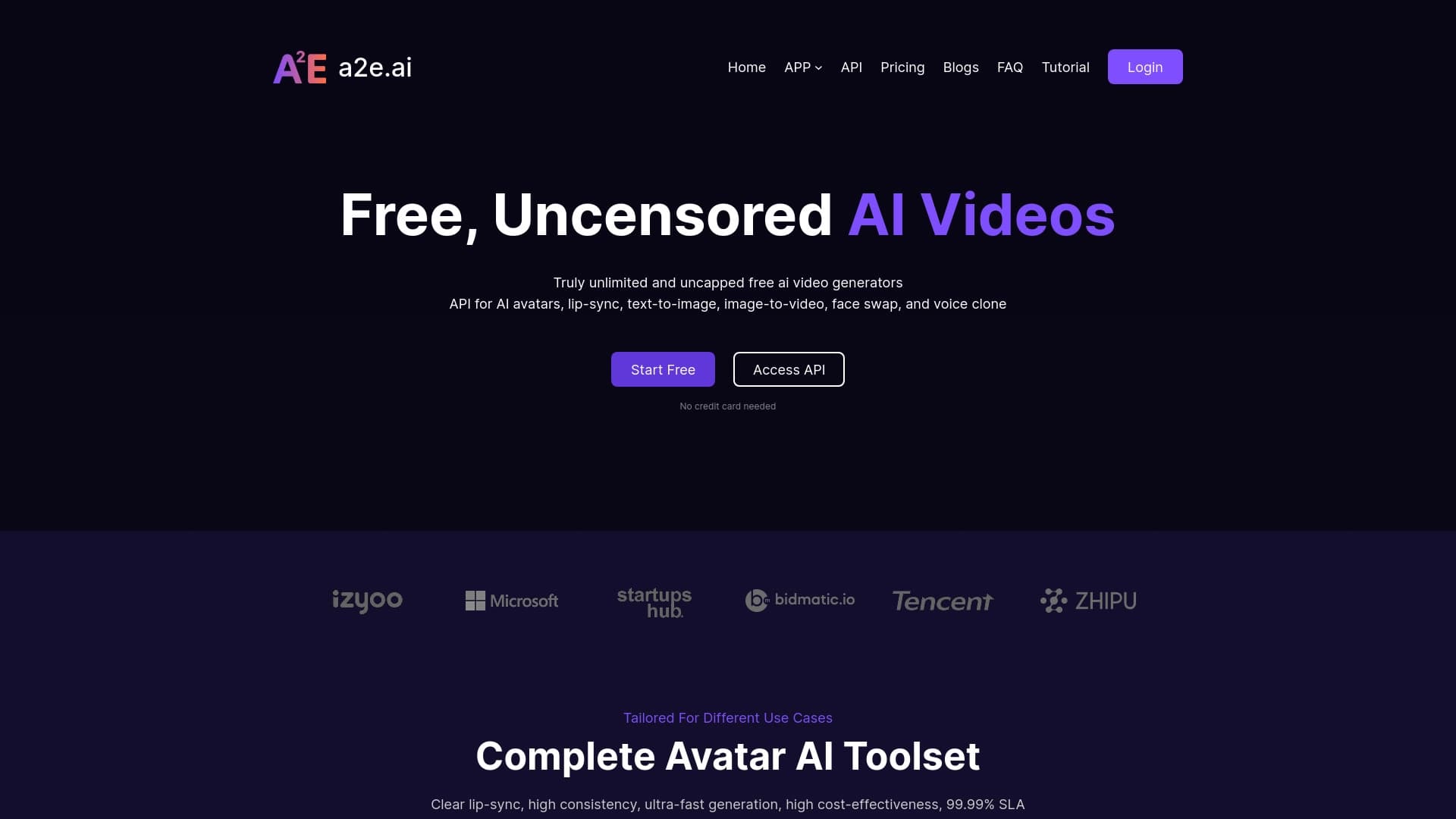

AI toolkit for video generation and editing, including avatars, lip-sync, and voice cloning.
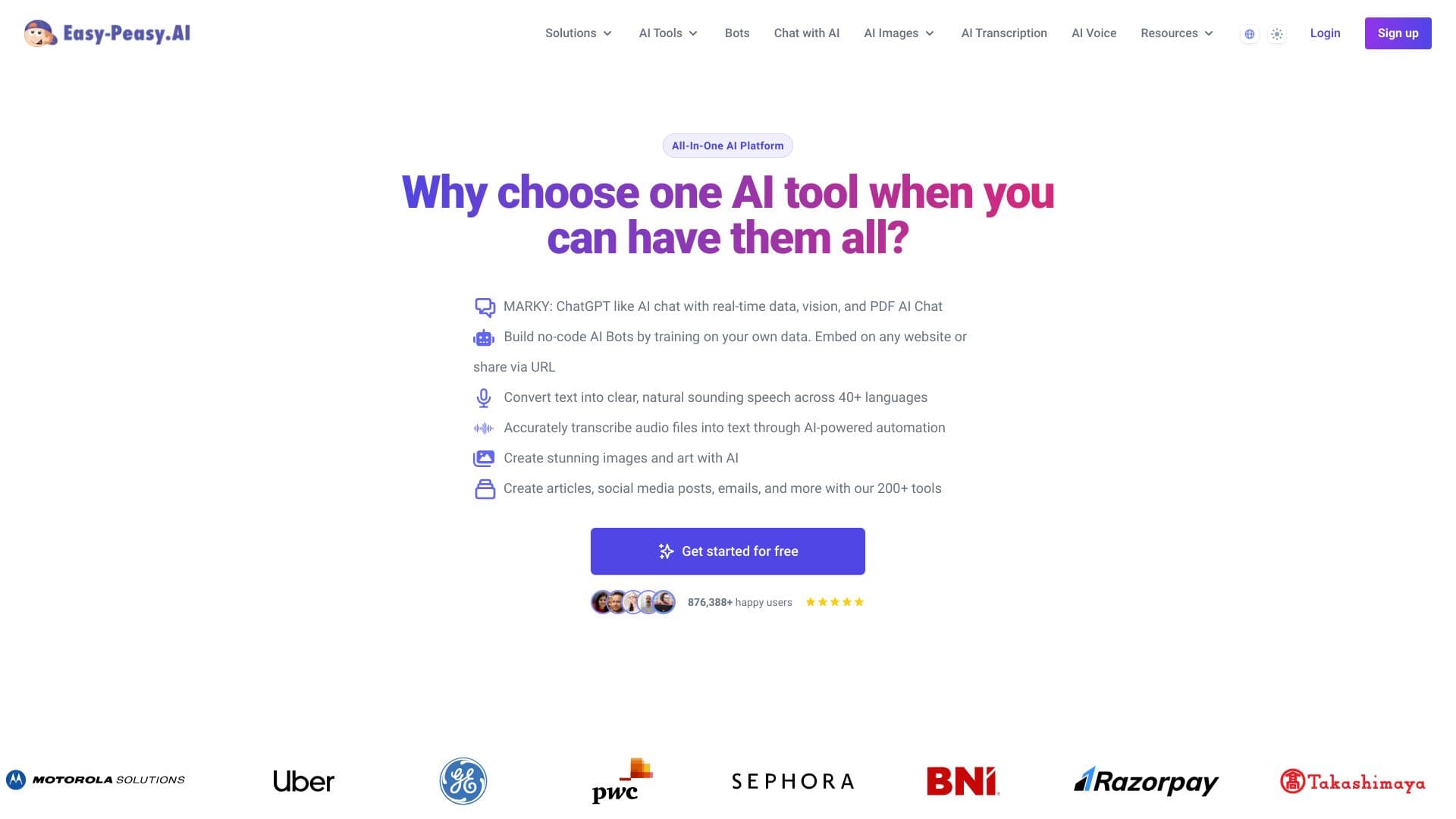

A multifunctional AI assistant for generating texts, images, and audio.
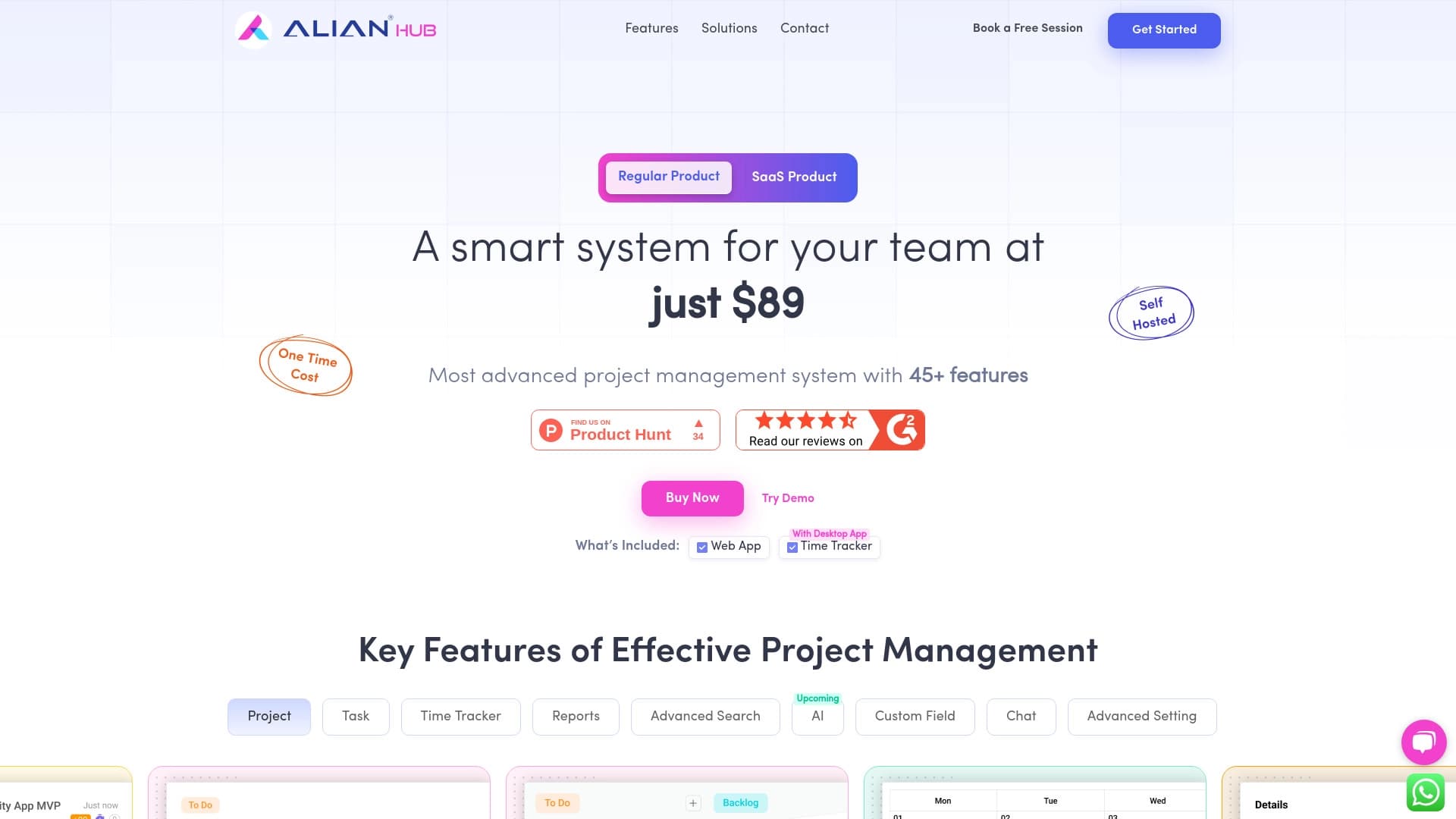

Project management platform with task assignment, time tracking, and employee workload monitoring features.
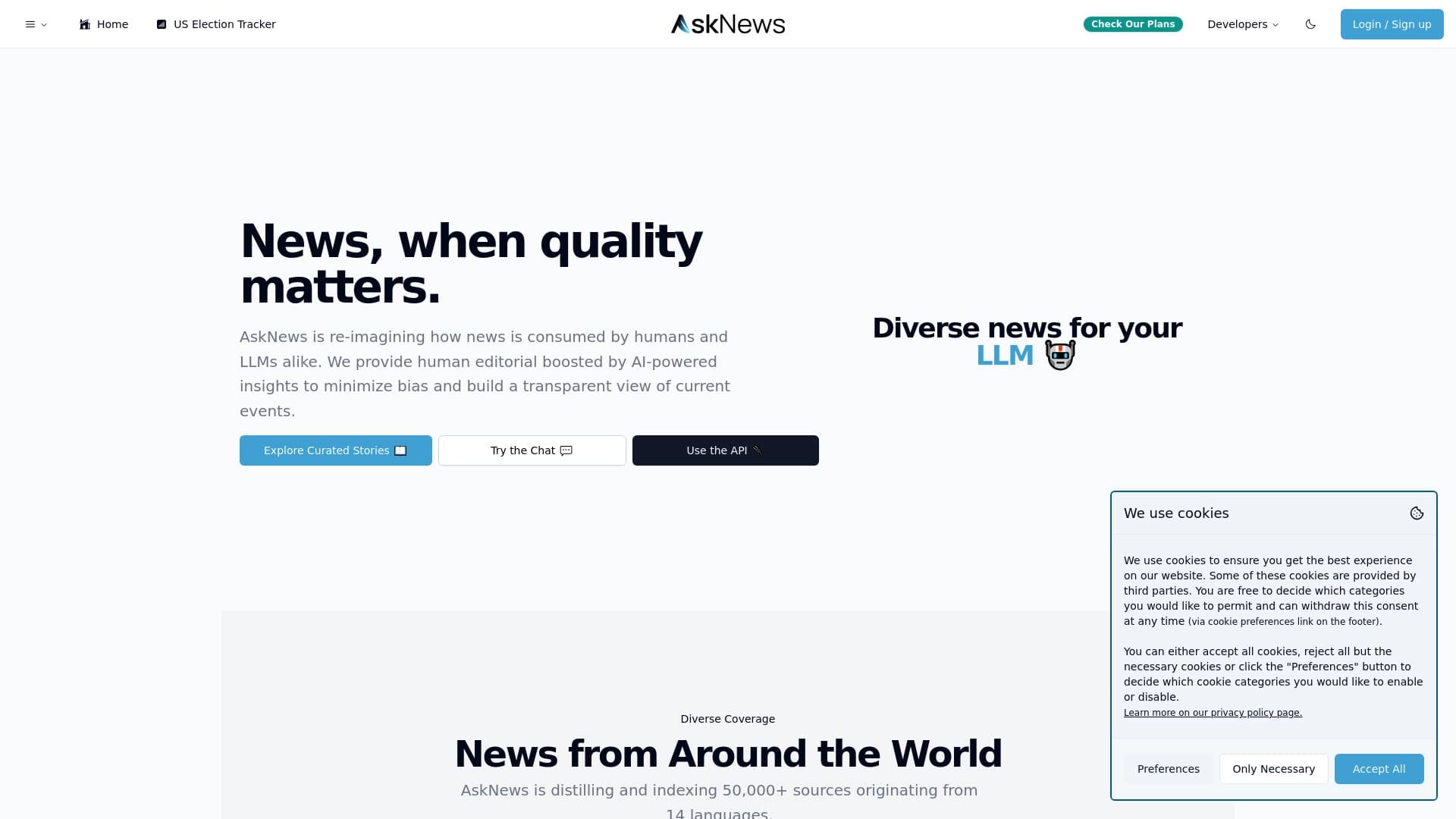
A platform for aggregating world news using AI to analyze and reduce bias.
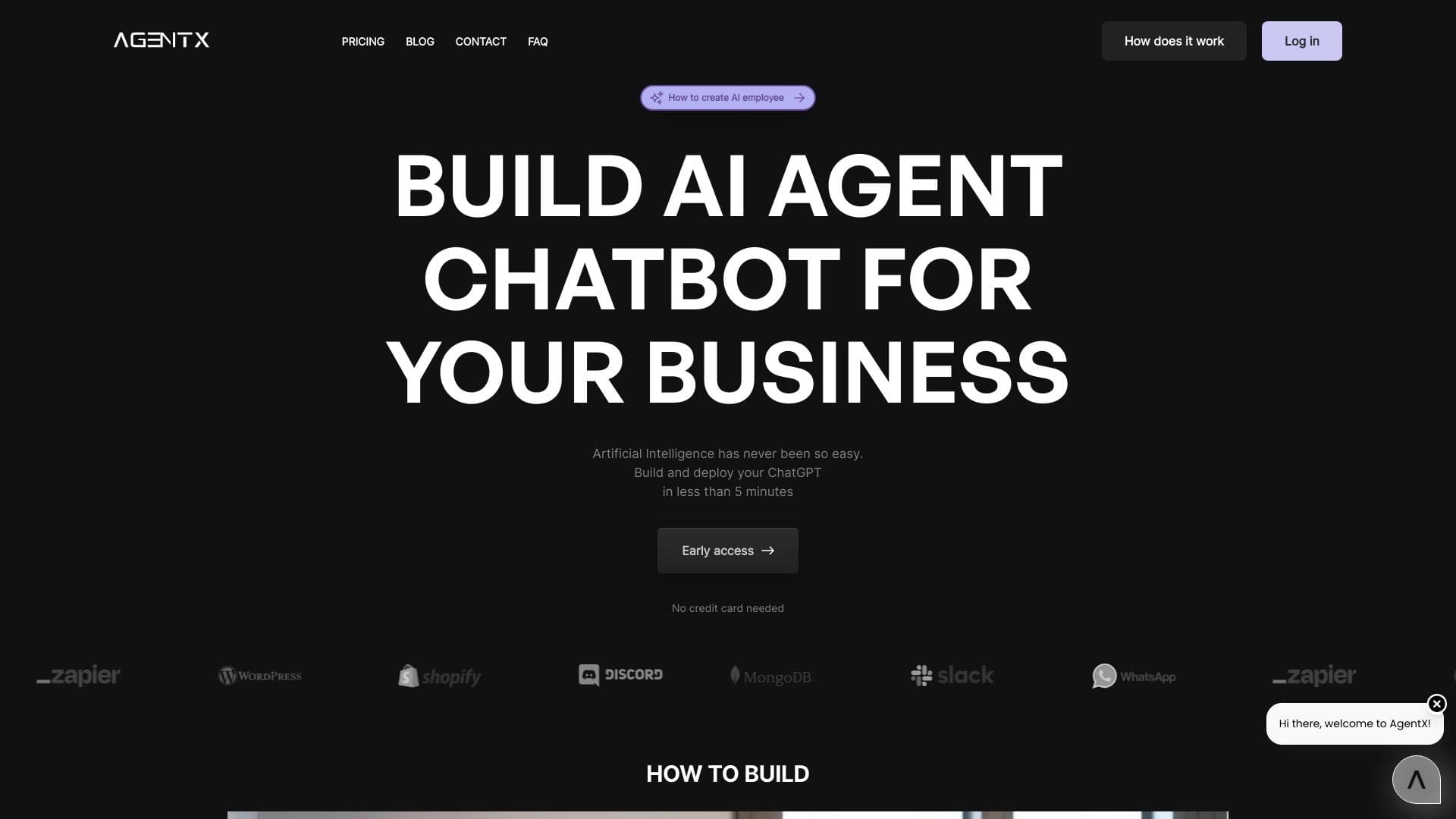

Platform for creating multi-agent AI systems and chatbots to automate customer support and lead generation.
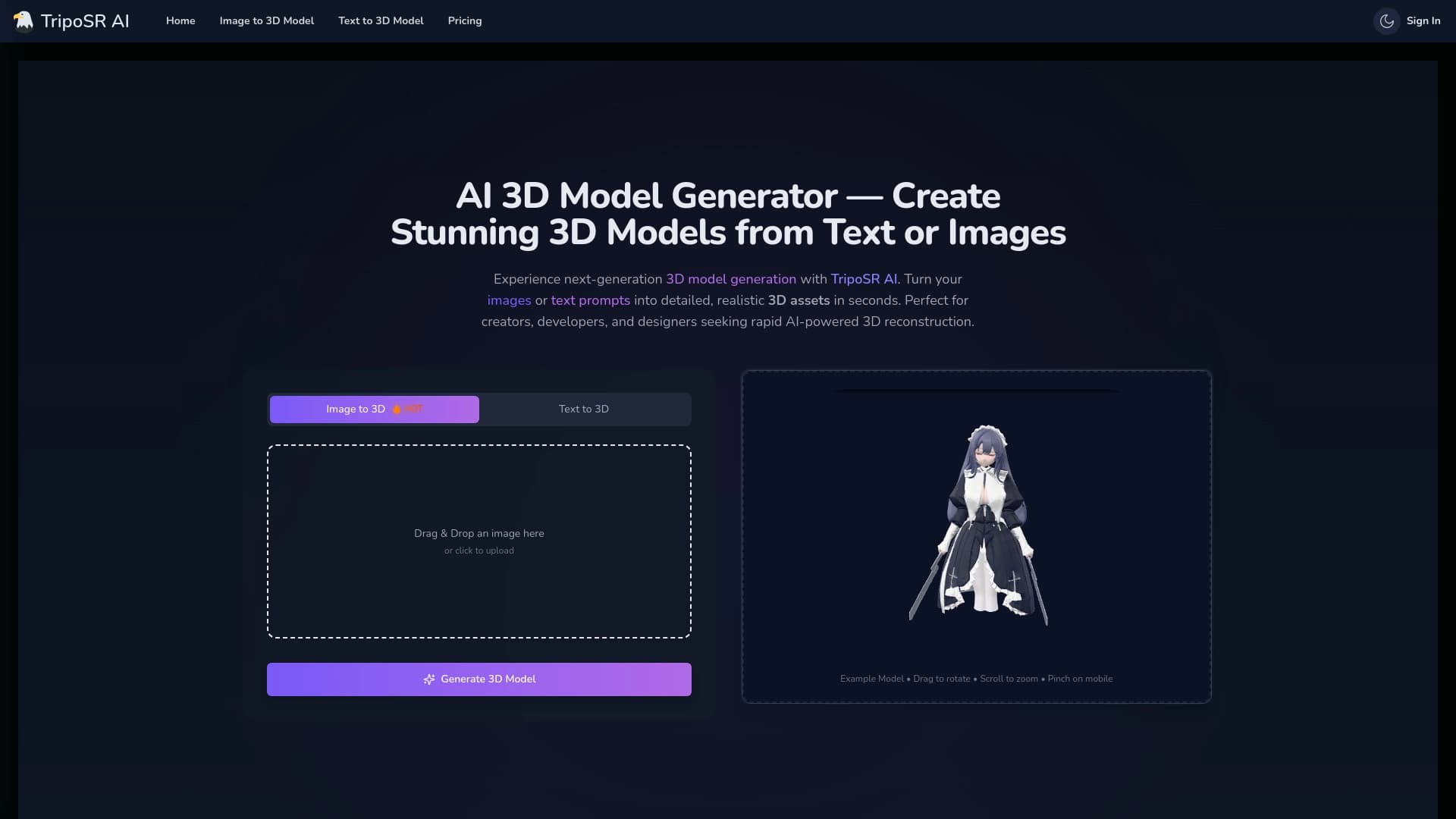

Open-source tool for quickly converting a single image into a 3D model.
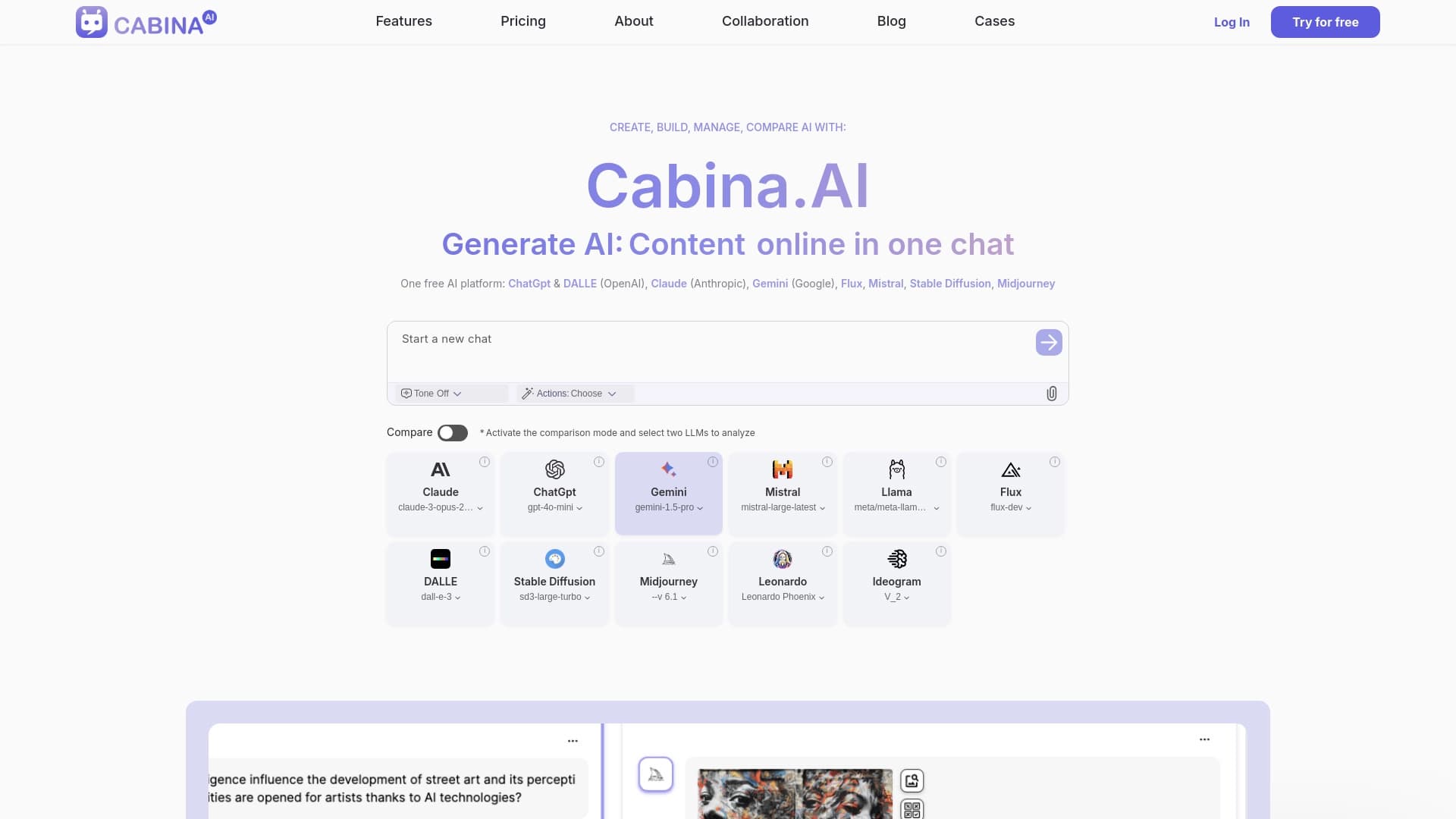
Cabina AI is a unified platform for working with various generative neural networks, enabling you to create texts, images, and videos.

Chrome extension that helps manage tabs, history, and bookmarks with an AI assistant.