
Attack Agent
Automated red team agent that generates and executes malicious prompts to uncover vulnerabilities in NLP models.
Overview
Attack Agent is an automated agent for conducting red-teaming exercises in the security of artificial intelligence systems. The tool is designed to test NLP applications for resilience against malicious queries and unconventional interaction scenarios.
Core Technology
The underlying mechanism relies on large language models that act as an "attack generator." The agent autonomously creates sets of unconventional and potentially dangerous queries, sends them to the target API, and analyzes the responses received. The main goal is to identify anomalies in model behavior: incorrect responses, data leaks, violations of set constraints, or other unforeseen reactions.
Workflow
The testing process is structured as a cycle: query generation → submission to the target NLP system → interception and parsing of the response → identification of deviations from the norm. The tool is aimed at a targeted approach: query formulations are adapted to the specific API and its characteristics. This distinguishes Attack Agent from simple brute-force attempts with random strings.
Attack Agent Characteristics
| Characteristic | Value |
|---|---|
| Purpose | Finding vulnerabilities in NLP models and applications built on them |
| Core mechanism | Agent-based approach leveraging large language models |
| Attack creation | Automatic generation of unconventional queries tailored to a specific API |
| Response analysis | Parsing and identification of anomalies and unexpected model behavior |
| Customization | User-defined attack modules, configurable fuzzing depth, dynamic constraints |
| Scenario handling | Batch execution mode for attacks |
| Reporting | Automatic generation of reports on detected issues |
| Integration | Support for CI/CD pipelines |
| Extensibility | Pluggable plugins |
| Analytics | Built-in analytical tools |
Who is Attack Agent suitable for?
Security Specialists
The tool is aimed at researchers in AI security. It automates routine tasks of finding weak spots, allowing specialists to focus on analyzing discovered vulnerabilities rather than manually iterating through queries.
NLP Application Developers
Development teams building products on language models can use Attack Agent during the testing phase. The tool helps verify how the system will behave when receiving incorrect or hostile input and assess its resilience before going into production.
How to use Attack Agent?
Configuring Test Parameters
The user defines the attack configuration: specifies the target API, adjusts attack modules to their tasks, and controls the fuzzing depth. Dynamic constraints can also be set for fine-tuning the testing process.
Running and Obtaining Results
The tool performs batch processing of predefined attack scenarios, automatically collecting results. Upon completion, a report is generated listing the detected issues and anomalies in the tested model's behavior.
Key Features of Attack Agent
- Automatic generation of malicious queries — creating unconventional input data that goes beyond typical usage.
- Executing attacks via API — sending generated queries directly to the NLP system under test and receiving responses.
- Response parsing and analysis — intelligent processing of results to identify anomalies, errors, and potential vulnerabilities.
- Custom attack modules — the ability to define your own attack types specific to a particular application.
- Batch processing — executing multiple attack scenarios automatically.
- CI/CD integration — embedding security checks into the continuous development and delivery process.
- Plugins and analytics — extending functionality through pluggable modules and gathering analytical data.
Advantages of Attack Agent
- Automation of work — the tool relieves humans of the routine task of manually iterating through queries, saving time and resources.
- Adaptability — attack queries are generated with consideration for the specific target API, increasing the relevance of tests.
- Configuration flexibility — the user controls the depth of checks and can adjust the agent's behavior to their tasks.
- Scalability — batch processing allows running a large number of scenarios in a short time.
- Integration into development processes — the ability to connect to CI/CD ensures continuous security monitoring at all stages.
- Transparency of results — automatic reports record all found issues and simplify their communication to the team.
Disadvantages of Attack Agent
The tool is designed for finding vulnerabilities, which requires the user to have a certain level of expertise in NLP system security. It should also be noted that full-fledged work with Attack Agent requires access to the target APIs. Information about the tool's performance and limitations under load is not available in public sources.
What problems does Attack Agent solve?
- Finding weak spots in NLP models — identifying scenarios where the model behaves incorrectly or violates set rules.
- Testing resilience to hostile inputs — checking how the system reacts to deliberately distorted or provocative queries.
- Continuous security assessment — automating regular security checks of AI systems.
- Compliance and regulatory adherence — helping to confirm that systems meet reliability requirements.
- Anomaly analysis — systematically identifying unexpected model behavior and documenting these cases.
Attack Agent Pricing
The cost of using Attack Agent is not disclosed in the source data. Information about available pricing plans, paid and free tiers, is absent. For current pricing, it is recommended to contact the tool's official developer channels.
Terms of Use for Attack Agent
Detailed terms of use, including the license agreement and possible restrictions, are also not presented in available sources. Based on the description, the tool is aimed at professional use, which may imply specific requirements for users and their access levels.
Attack Agent Availability
The tool is available as a security solution that can be integrated into your own development processes. Given the presence of CI/CD integration, it is distributed as software deployed in the user's infrastructure or connected to their pipelines. Whether it is a cloud service, an on-premises application, or an open-source project is unclear from the available data.
How Attack Agent differs from alternatives
The key difference is the full automation of the attack creation and execution process. Many LLM security testing tools offer a manual query builder or a static database of malicious patterns, whereas Attack Agent uses large language models as the generation engine. This allows for creating an unlimited number of unique, context-dependent queries tailored to a specific system.
Another distinguishing feature is the agent-based mechanics: the agent does not just send strings but "understands" the goal, selects input data accordingly, and interprets the received response. Combined with modularity (custom attack modules) and CI/CD integration capabilities, this makes the tool more flexible and comprehensive compared to most solutions that only offer a set of templates for testing.
Conclusion
Attack Agent is a specialized tool for automated security testing of NLP applications. It shifts the focus from manual vulnerability hunting to a systematic agent-based approach, where the generation of malicious queries and response analysis are performed without human intervention. This solution is suitable for technical specialists who want to regularly and extensively test their language systems for resilience to unconventional input and have the technical foundation to configure and integrate the tool into their processes.
Frequently asked questions
See also

Side AI panel that helps answer questions, work with documents, and generate images.

AI Slide Studio is an AI-powered service for quickly creating customizable presentations on a given topic.
AI-powered online service that automatically converts bank statements from PDF into structured CSV files.
Anakin.ai is a low-code platform that combines various AI models for content creation and workflow automation without coding.
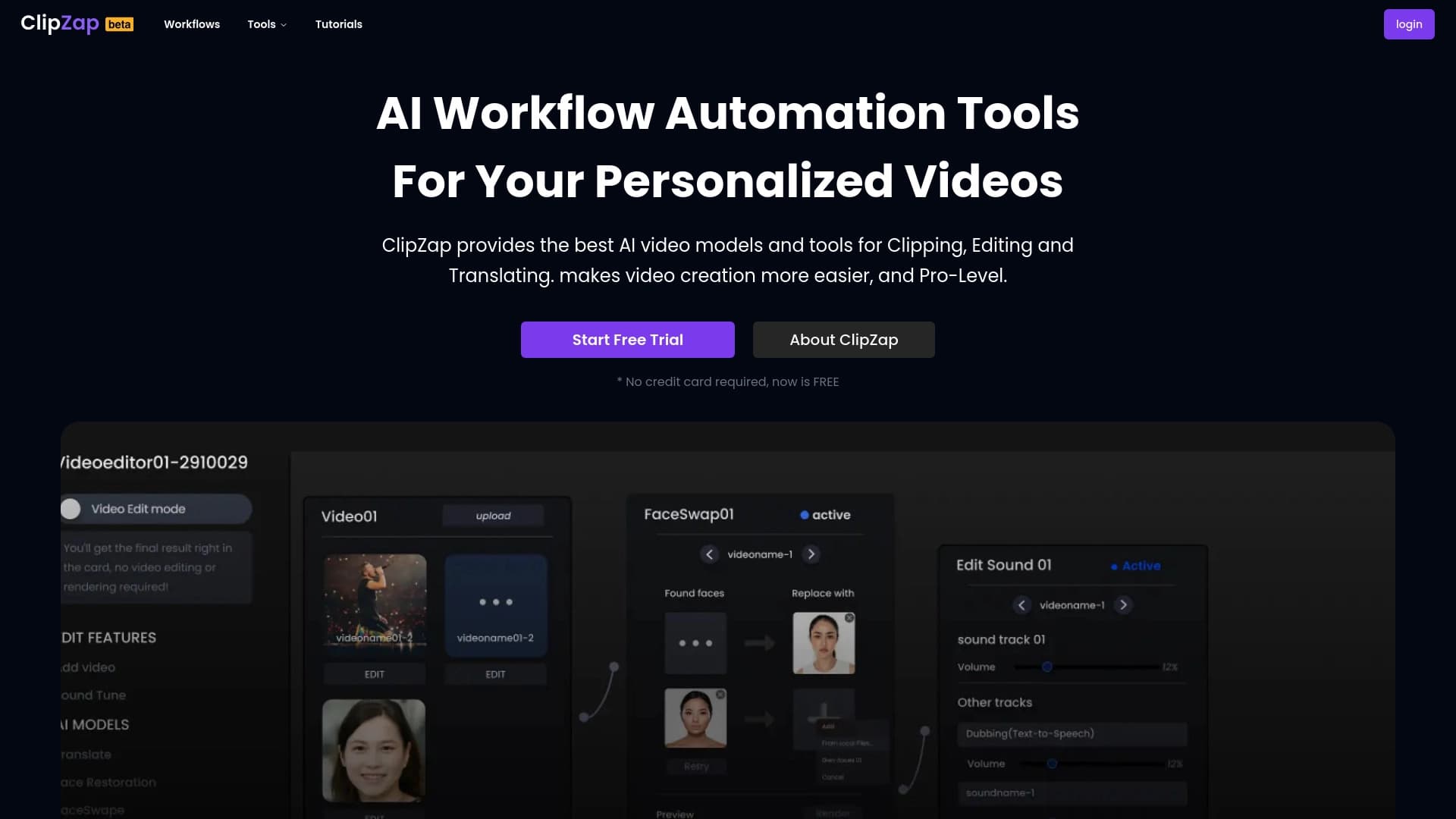

AI-powered platform for automated video clip creation, editing, and translation.


AI-based platform for creating logos and brand identity.
AllChat is a universal platform that combines several popular language models in a single interface for communication, image generation, file analysis, and code execution.
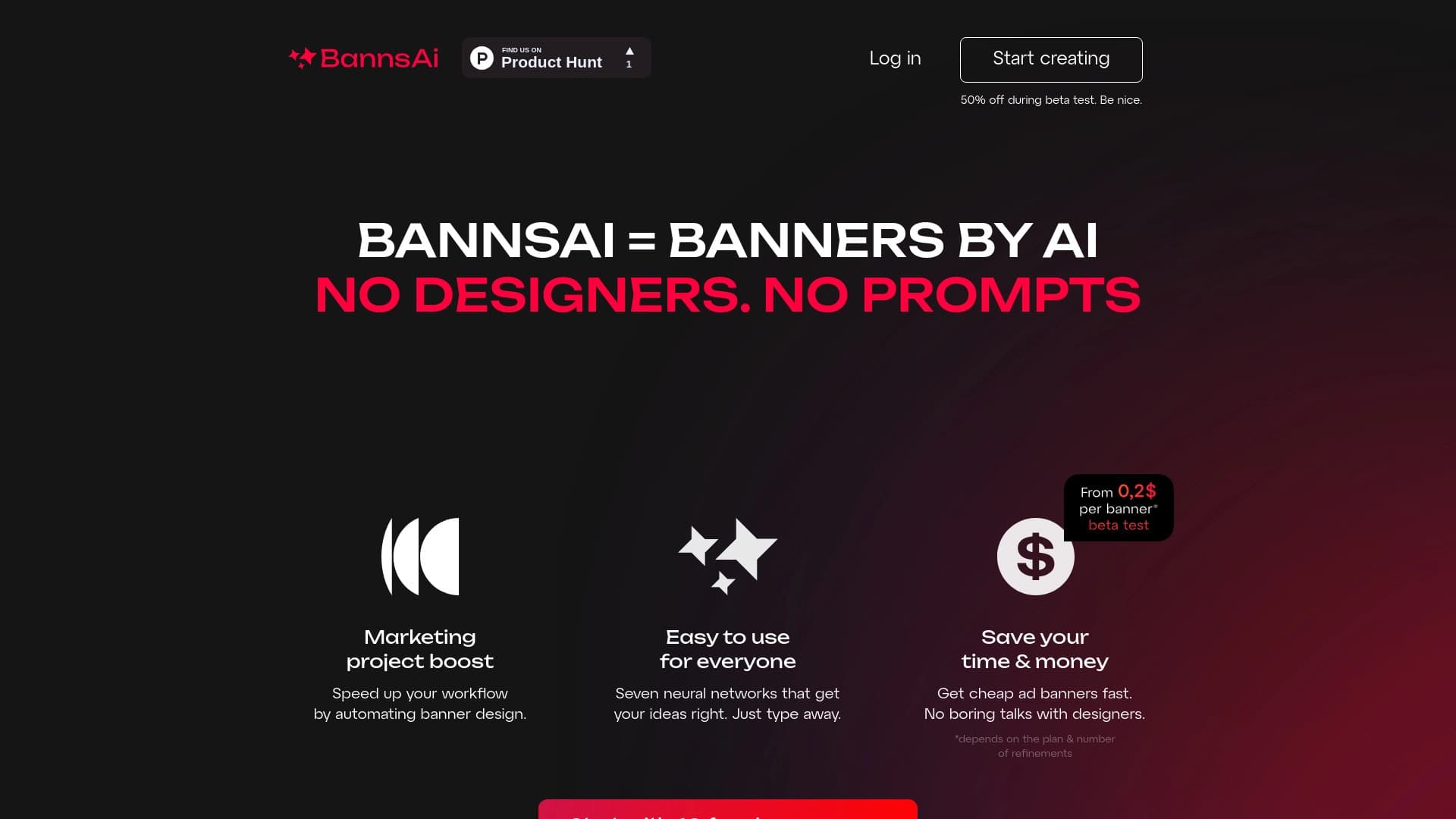

BannsAi is an AI-powered service for quickly creating ad banners based on a text description or reference.