

APIPark
Open platform for managing AI services and APIs, providing centralized access and control.
Overview
APIPark AI Description
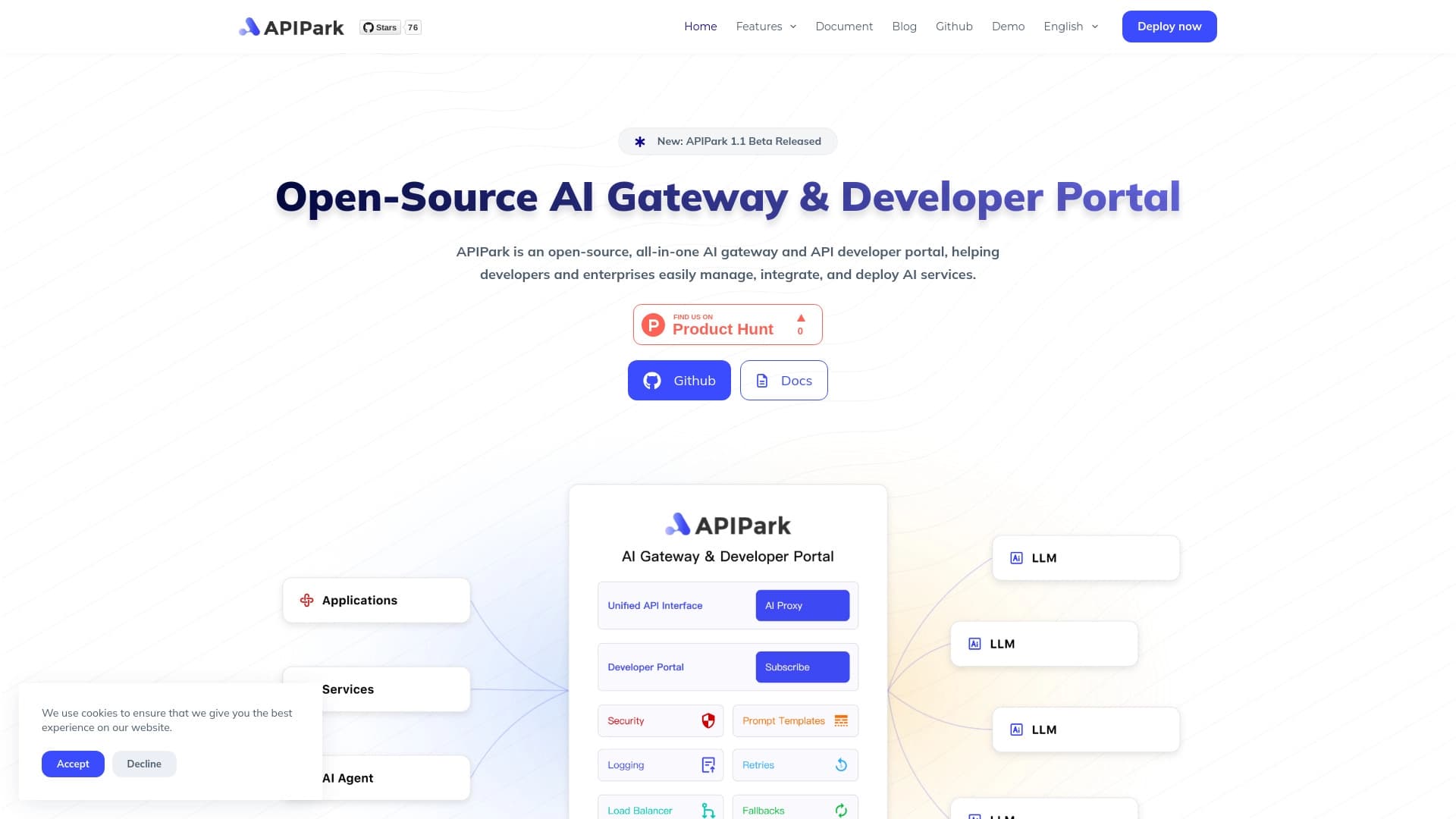
APIPark is an open-source platform designed for centralized management of AI services and APIs. Essentially, it is a single access point that allows companies to organize an internal developer portal where they can connect, configure, and control various services — from large language models to standard REST APIs.
The platform solves the typical problem of integration chaos: instead of multiple scattered access keys, different request formats, and a lack of unified analytics, APIPark provides a unified interface. Developers get a gateway for working with LLMs, traffic monitoring tools, prompt management, and data protection — all in one window. The product suits both small startups and large corporate structures that want to bring order to their API ecosystem without spending significant time on deployment.
APIPark Characteristics
| Characteristic | Value |
|---|---|
| Type | Portal for managing and deploying AI and API services |
| Category | Miscellaneous |
| Platform | Website (Web, Linux, Windows) |
| Developer | Eolink Inc. |
| Distribution Model | Open source |
| Free Tier | Yes (Community version) |
| Publication Date | September 23, 2025 |
| Monthly Visits | 22.4K – 30.6K |
| LLM Support | 200+ large language models |
| Interface Language | Not specified |
| Credit Card Required | No |
Who is APIPark suitable for?
Small teams and startups
APIPark is a good option for small companies that need to quickly organize an internal API portal without hiring a dedicated development team. Thanks to simple installation via the command line, a startup can have a working tool within minutes and immediately start connecting AI services. The Community version with basic functionality covers the needs of small projects without requiring financial investment.
Medium and large enterprises
For large organizations, APIPark provides broader capabilities: centralized control over all APIs, user access management, service usage monitoring, and permission differentiation. The Enterprise tier is designed for companies with high loads that need advanced integration and scaling features. The platform integrates into the corporate network and allows tracking the performance of each connected service.
How to use APIPark?
Quick start via the command line
To launch your own API portal, you only need to run one command in the terminal. Within five minutes, the internal developer portal will be ready for use. No lengthy documentation study or extensive coding is required — the process is maximally simplified for rapid deployment.
Step-by-step LLM gateway setup
- Go to the APIPark website and open the installation page.
- Follow the LLM gateway deployment guide.
- Configure connections to the desired language models (more than 200 options available).
- Use visual tools for traffic monitoring and management.
- Implement load balancing and access control.
- Configure data masking for security.
- Organize API sharing through the internal portal.
Key APIPark Features
AI and API service management
The platform allows managing all services from one window: connecting new APIs, tracking their performance, configuring subscriptions and access for different users. The modular architecture makes it easy to extend functionality with new modules.
Monitoring and observability
Built-in analytics tools allow real-time tracking of API requests, viewing service usage statistics, and quickly responding to failures. Load balancing and semantic caching of requests ensure stable operation even under high load.
Security and data protection
APIPark includes data masking and API authentication features. Administrators can manage access rights, differentiate user permissions, and control who uses connected services and when. This is especially important when working with sensitive data in a corporate environment.
Prompt management and API transformation
The platform allows flexible management of prompts for language models and creating custom APIs based on them. The API transformation feature simplifies integration with existing infrastructure, and the unified API signature reduces integration time.
APIPark Advantages
Fast deployment and flexibility
One of the key advantages is installation speed: the portal is set up in minutes via the command line. The platform allows managing both AI services and regular APIs, configuring portals for specific tasks, adding users, and differentiating their rights without writing code.
Convenient control and monitoring
Administrators can easily track user activity: who uses APIs, when, and how. This helps quickly identify service issues and take timely action. Visual tools make the management process intuitive.
Open source and community support
Thanks to the open code, users can customize the platform to their needs and rely on support from an actively growing community. Support for over 200 language models makes the platform a universal solution for the AI field.
APIPark Disadvantages
Limited customization options
Despite the open source code, the standard version of the platform has limited options for customizing the design and functional modules. If a company needs a unique portal appearance or specific modules, it will need to involve its own developers to refine the system.
Dependence on third-party services
APIPark works in conjunction with external AI services and APIs. If a connected service starts experiencing outages or changes its terms of use, this could negatively impact the portal's overall operation. Companies should consider potential risks when choosing providers.
Scaling difficulties
Significant increases in the number of users or connected services may lead to technical challenges. In some cases, infrastructure changes will be required to ensure stable platform operation under high load. This is an important factor for rapidly growing organizations.
What tasks does APIPark solve?
Creating an internal API portal
APIPark solves the problem of quickly deploying an internal developer portal. Instead of building infrastructure from scratch, a company gets a ready-made solution that launches in minutes and is immediately ready for use.
Connecting and launching AI services
The platform allows connecting and launching AI services through a unified interface. Developers don't need to understand the specifics of each language model — APIPark handles the technical side of integration, including unifying API requests.
Centralized management and resource optimization
APIPark helps bring order to API infrastructure: managing traffic, allocating resources between models, controlling access, and protecting data. This is especially relevant for companies working with many AI models simultaneously.
APIPark Pricing
Free tier (Community)
APIPark provides a free Community version with basic functionality for small and medium enterprises. This tier includes the platform's core features and free support. Limitations apply to advanced features and the level of technical support.
Business tier
The business tier costs 2,999 rubles per month. It includes all platform features, priority technical support, and the ability to customize settings. This option suits companies that need full functionality and prompt issue resolution.
Enterprise tier
For large enterprises, a custom tier is available — upon request. It includes advanced integration and scaling capabilities and premium support. Pricing is calculated individually based on the organization's needs.
APIPark Terms of Use
No special terms of use are specified on the official website. To get started, simply open the service at apipark.com and follow the installation instructions. The platform does not require a credit card, which lowers the barrier for initial testing. The free tier allows evaluating the product's capabilities before moving to more expensive plans.
APIPark Availability
The platform is available through a web interface and supports installation on Linux and Windows operating systems. Whether a VPN is required or regional restrictions exist is not specified. According to analytics data, the main traffic comes from the United States, Singapore, Indonesia, Vietnam, and India. The average visit duration is about 43 seconds, indicating visitor interest in exploring the product.
How APIPark differs from alternatives
No direct comparisons with alternatives are provided on the source page. However, conclusions can be drawn based on available data: APIPark is positioned as an open-source solution supporting over 200 language models, making it a flexible tool for AI infrastructure. Unlike typical API gateways, it offers visual management, built-in load balancing, semantic caching, and prompt management. The key difference is versatility: the platform suits both classic APIs and LLMs.
Conclusion
APIPark is a practical solution for companies that want to centrally manage their APIs and AI services without lengthy deployment of complex infrastructure. Open source code, support for numerous language models, monitoring and security tools make the platform a tool worth considering. A flexible pricing structure — from a free Community version to a corporate Enterprise plan — allows choosing the right option for any business scale. At the same time, customization limitations and potential scaling difficulties under high loads should be taken into account.
Frequently asked questions
See also
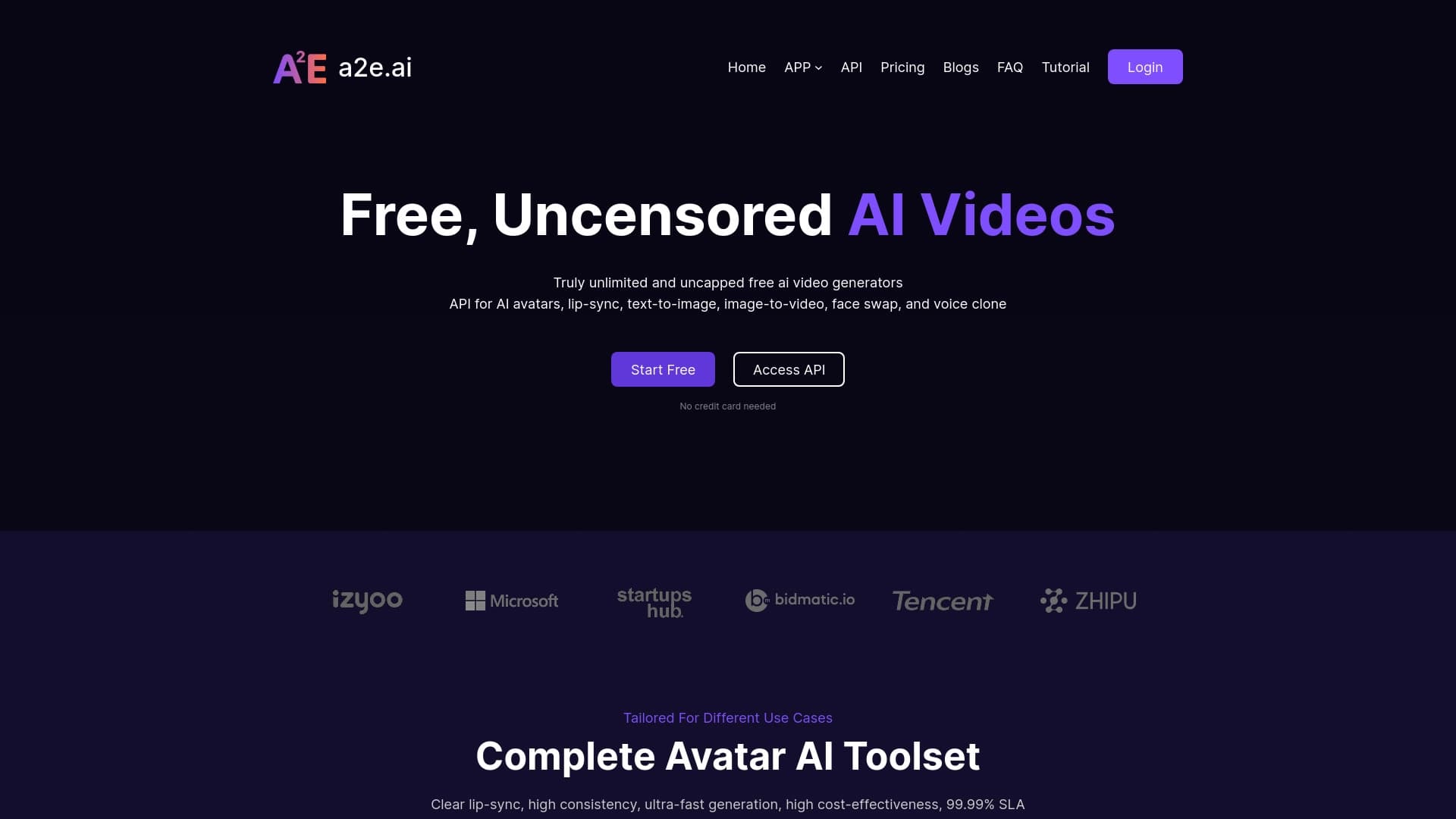

AI toolkit for video generation and editing, including avatars, lip-sync, and voice cloning.
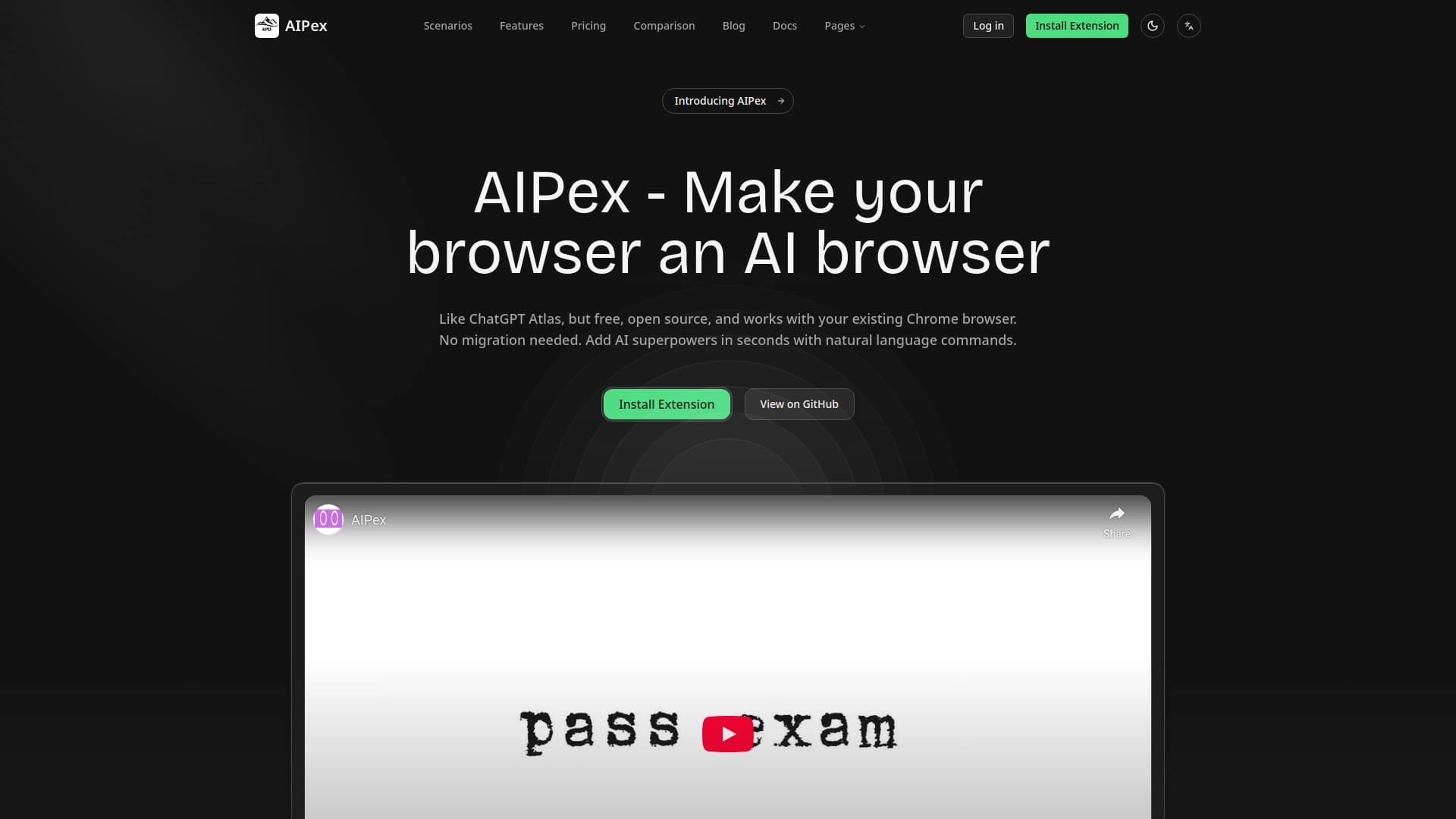

Chrome extension that helps manage tabs, history, and bookmarks with an AI assistant.
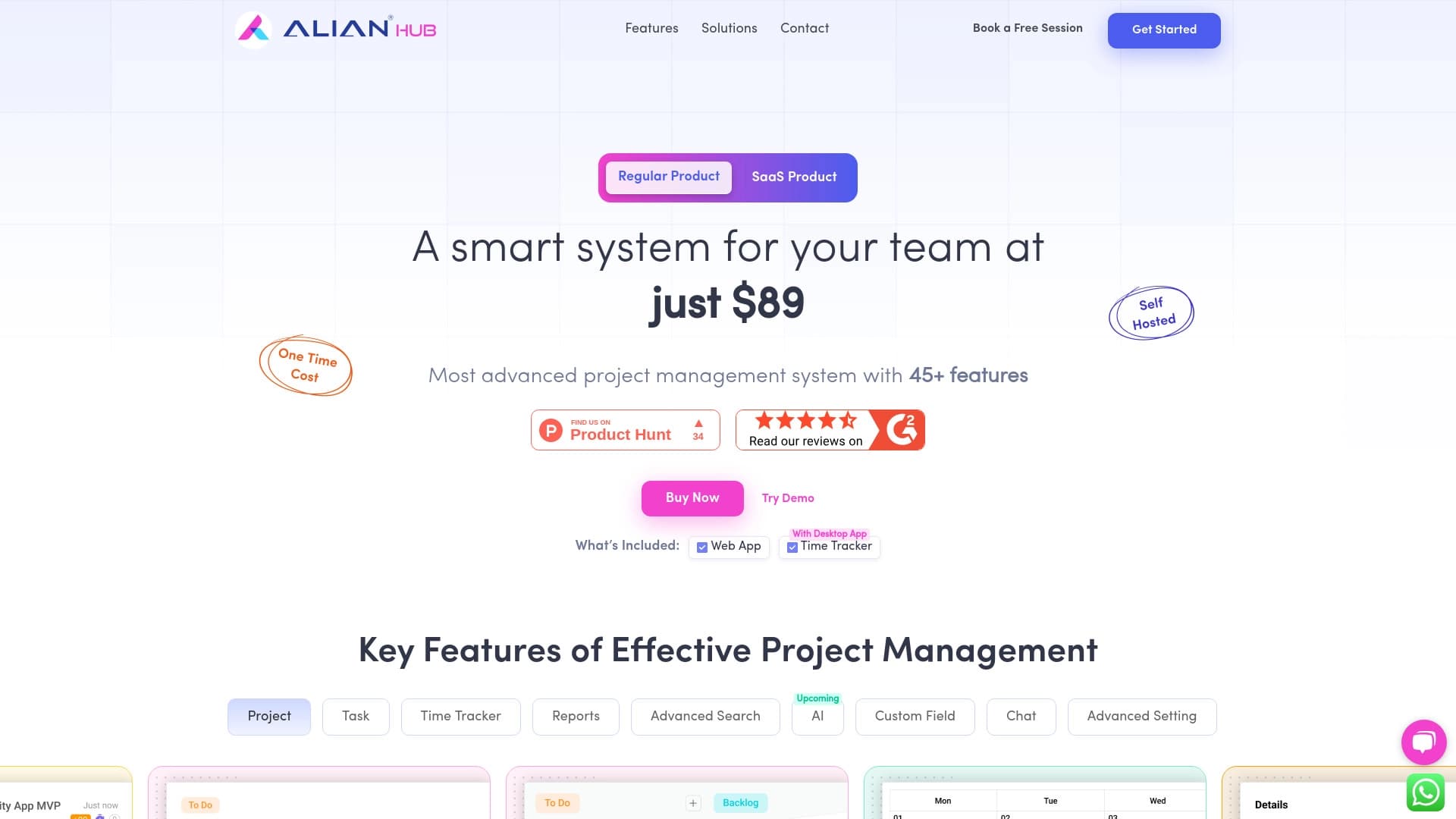

Project management platform with task assignment, time tracking, and employee workload monitoring features.
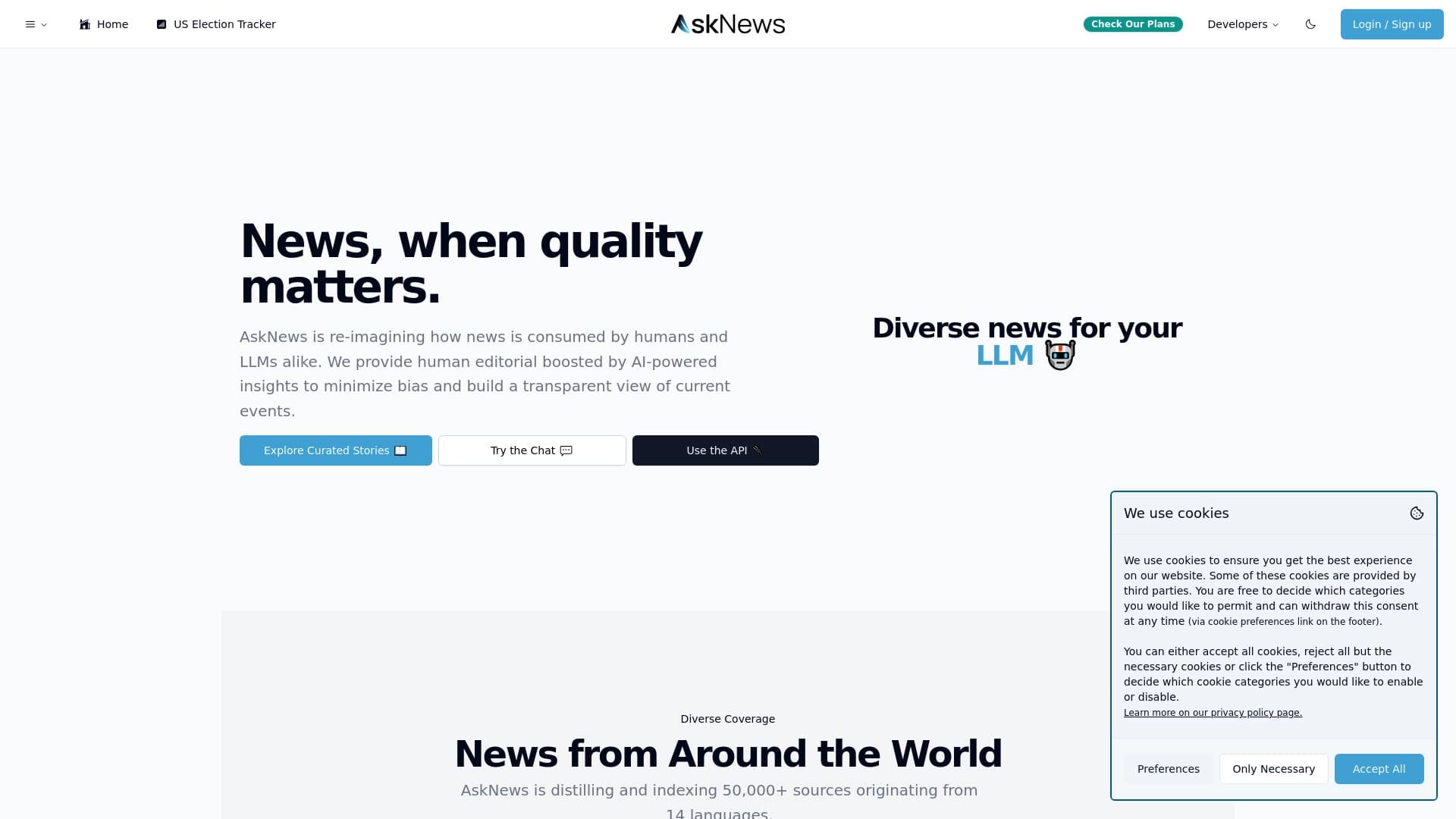
A platform for aggregating world news using AI to analyze and reduce bias.


Platform for creating multi-agent AI systems and chatbots to automate customer support and lead generation.
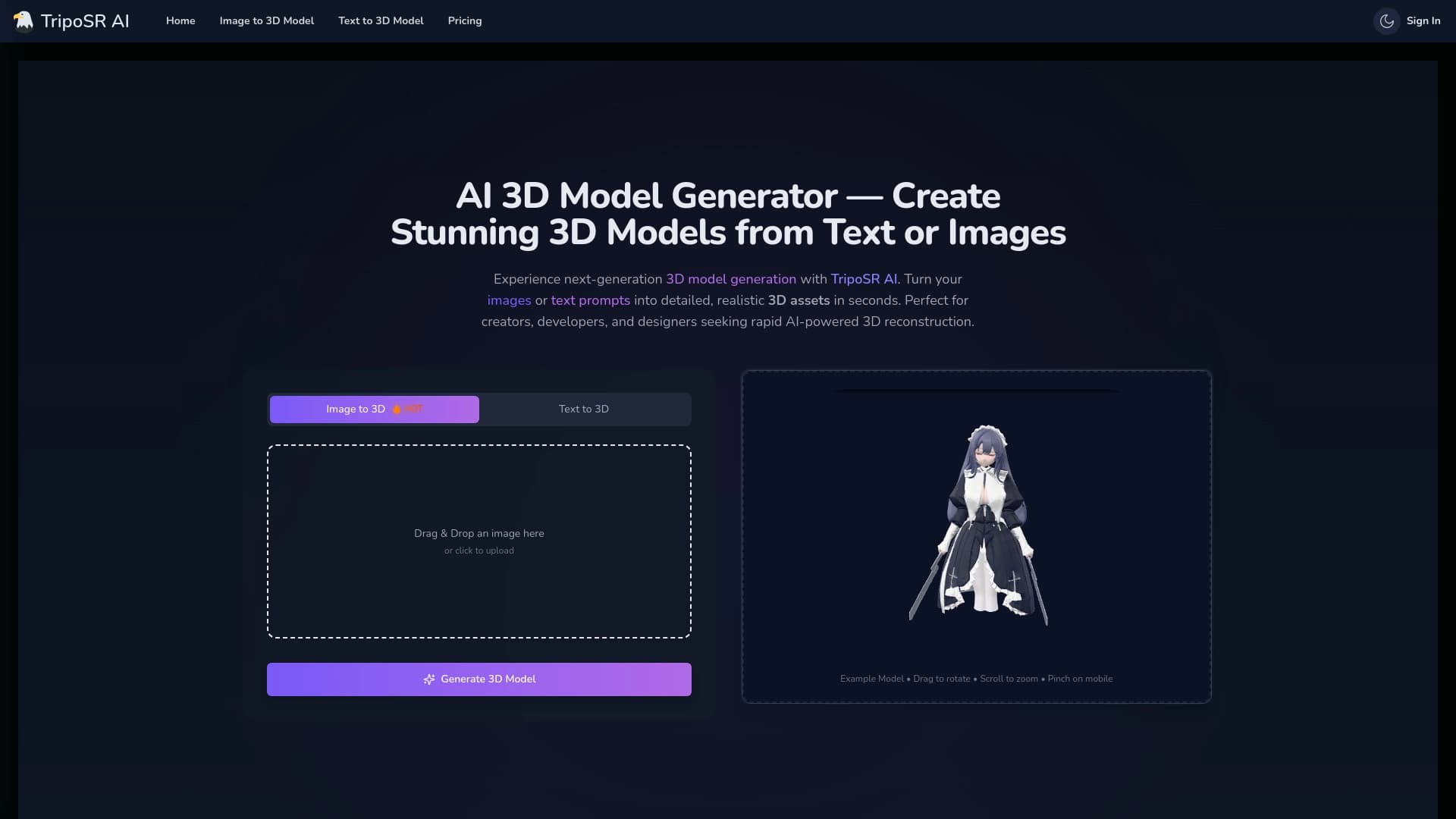

Open-source tool for quickly converting a single image into a 3D model.
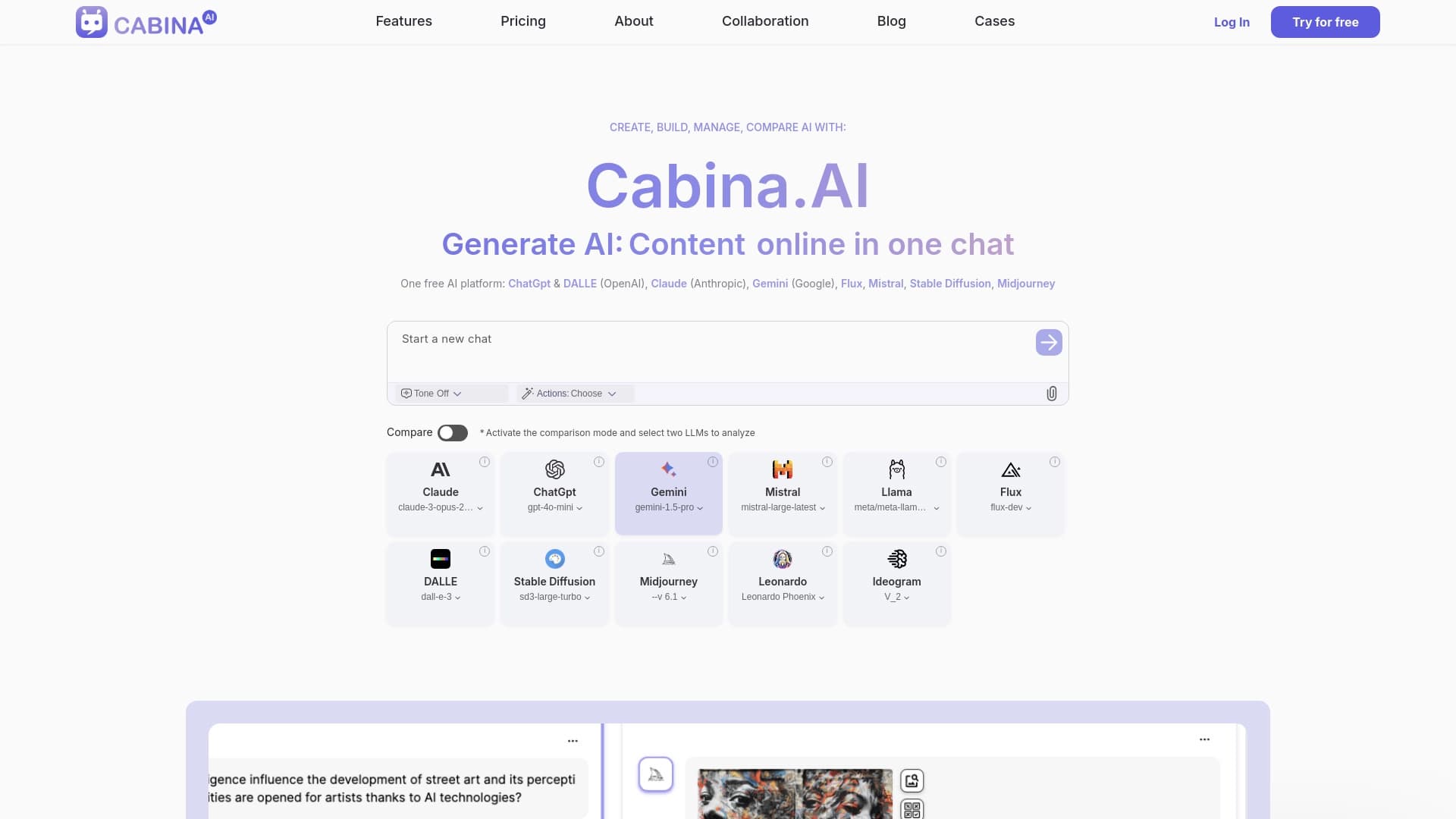
Cabina AI is a unified platform for working with various generative neural networks, enabling you to create texts, images, and videos.
AllChat is a universal platform that combines several popular language models in a single interface for communication, image generation, file analysis, and code execution.