

Anchor Browser
Cloud infrastructure for launching AI agents that automate actions on websites without using APIs.

Overview
Anchor Browser is a cloud platform that provides a managed environment for running AI agents that perform operations in a web browser. The service allows automating interactions with web interfaces even in cases where a website has no open API or it is incomplete. Agents are capable of imitating real user actions: logging into personal accounts, clicking elements, filling out forms, and extracting data from resulting pages.
The key idea of Anchor Browser is turning complex sequences of browser actions into repeatable, clearly managed operations. The system is oriented toward production environments where reproducibility and stability are required, not just writing a local script. It handles infrastructure concerns, allowing teams to focus on task logic rather than maintaining multiple browser sessions.
Cloud-based approach to automation
Instead of running browsers on each developer's local machine, Anchor Browser offers centralized cloud infrastructure. This ensures environment consistency and simplifies scaling the number of active agents. Users get a tool for orchestrating browser sessions without delving into the technical details of virtualization and resource allocation.
Automation without an API
The service's main value is revealed when working with platforms that lack programmatic access to data. Filling out forms, navigating protected sections, monitoring changes on websites — all these operations that previously required manual effort can now be performed by AI agents. This opens up opportunities for automating routine tasks that were previously considered difficult to automate.
Anchor Browser characteristics
| Characteristic | Value |
|---|---|
| Type | Cloud infrastructure for browser-based AI agents |
| Categories | AI browsers, Web scraping and parsing, No-code and Low-code platforms |
| Website | anchorbrowser.io |
| Publication date | June 11, 2026 |
| Key feature | Managed browsers for performing web tasks without using an API |
| Primary purpose | Turning complex browser actions into repeatable API endpoints |
Who is Anchor Browser suitable for?
Anchor Browser is built for teams tasked with automating web processes at a professional level. The service will be useful for those who have already outgrown the stage of one-off scripts and need a reliable tool for performing critical operations.
Teams focused on scaling
The platform is designed for users who need to run a large number of parallel sessions. Instead of building their own complex pipeline for managing browsers, teams can use ready-made cloud infrastructure. This allows them to focus on business logic and tasks rather than maintaining infrastructure.
Professionals who value control and security
For companies working with sensitive data or critical operations, process manageability is a priority. Anchor Browser provides tools for session control, which is critical in a corporate environment. The ability to track and manage agent actions reduces risks associated with unpredictable behavior of automated systems.
How to use Anchor Browser?
The approach to using Anchor Browser is built around "turning actions into API endpoints." Instead of writing code for each specific website, you configure an agent to perform a sequence of browser actions and then use it as a standard programmatic interface.
Configuring agents for a task
The process begins with defining the task the agent must perform: whether it's price monitoring, contact collection, or regular data entry. Next, the agent's behavior logic in the browser is configured. Once the scenario is refined, this set of actions becomes available for invocation via the API.
Integration into workflows
After creating an agent, it can be called on demand to perform specific work. This allows embedding complex browser manipulations into a company's overall business processes. For example, you can set up automatic report generation based on data collected from interfaces that are not accessible for direct programmatic connection.
Core features of Anchor Browser
Anchor Browser provides a set of features that turn the browser into a managed tool for performing tasks under AI control.
Providing managed browsers to agents
The platform provides AI agents with dedicated browser environments that can be controlled remotely. This is the foundation of the entire system, enabling any web task — from simple navigation to complex scenarios with authentication. The infrastructure handles all technical nuances.
Automating websites with incomplete APIs
This feature makes the service indispensable for working with legacy or closed systems. If an existing API does not provide all the necessary data or actions, Anchor Browser allows "filling in" the missing functionality through direct work with the web interface. Agents perform clicks, data entry, and result extraction just as a human would.
Converting actions into repeatable endpoints
The most valuable feature is the ability to package a complex multi-step process into a simple call interface. After configuring an agent, all its actions become available as a single API endpoint. This allows using browser automation alongside other services and applications by invoking their functions programmatically. This approach simplifies maintenance and code reuse.
Advantages of Anchor Browser
Using Anchor Browser gives teams several tangible advantages compared to building their own solutions based on local libraries.
Scalability without the headache
The service makes it easy to increase the number of working agents as needs grow. The cloud architecture eliminates the need to purchase and administer your own servers for browser automation. You simply increase the load, and the infrastructure ensures tasks are completed.
Enhanced security and session control
For businesses, it is critical to be able to control what automated systems are actually doing. Anchor Browser provides tools for session management, ensuring transparency and security of processes. This allows tracking task execution and intervening in agents' work when necessary.
Disadvantages of Anchor Browser
The key drawback of the service is related to its market positioning. Anchor Browser is an infrastructure solution oriented toward reliability and mass use. For simple one-off tasks, such as collecting data from a single website for personal purposes, using a cloud platform may seem excessive. In such cases, it is simpler and cheaper to use local scripts or one-off tools that do not require cloud environment setup.
It is also worth noting that working through cloud infrastructure implies dependence on this platform, while local use of open-source tools provides full autonomy.
What tasks does Anchor Browser solve?
Anchor Browser aims to solve two main categories of tasks related to web interaction automation.
Working with web interfaces without an API
The main task is automating work with websites that have no convenient, complete, or any API at all. The service allows bypassing this limitation by interacting with the site directly through the browser. This makes it possible to integrate data from such systems into your processes.
Performing routine browser actions
The platform excels at standard operations that take up a lot of employees' time: logging into websites, navigating sections, clicking elements, filling out forms, and subsequently retrieving results. By automating these processes, companies free up resources for more important tasks. Regular monitoring and information collection all become part of an automated pipeline.
Anchor Browser pricing
Information about Anchor Browser pricing is not available in the source data. The service's official website (anchorbrowser.io) presents technical details and feature descriptions, but specific pricing plans and subscription costs are not disclosed. To obtain up-to-date information about prices and available plans, potential users are recommended to contact the development team directly or submit a request on the website.
Anchor Browser terms of use
No data on legal aspects, license agreements, or privacy policies is available in the provided source materials. As a rule, cloud services of this kind require accepting a user agreement and creating an account. However, without official data provided by the company, it is not possible to make assumptions about specific user obligations. It is recommended to review the terms on the service's official website before starting work.
Anchor Browser availability
Anchor Browser is a cloud solution, meaning the service is accessible through a web interface. The exact list of supported operating systems and browsers is not specified. Since it is a cloud product, access is likely provided through the user's modern web browser. The publication date of information about the service is June 11, 2026, indicating its relative novelty in the market.
How Anchor Browser differs from alternatives
The main difference between Anchor Browser and its alternatives lies in scale and purpose. The product is positioned not as a local script for a single developer, but as a full-fledged industrial infrastructure.
Difference from Stagehand
If we compare Anchor Browser with the Stagehand development framework, the key difference is in infrastructure. Stagehand provides tools for writing code that a developer runs in their own environment. Anchor Browser, on the other hand, offers a ready-made execution environment, taking over the management of browser sessions. This makes Anchor Browser more suitable for tasks that require high reliability and readiness for scaling, rather than just the ability to quickly write code.
Difference from Browser Use
A comparison with the open-source agent Browser Use also highlights the choice between autonomy and infrastructure. Browser Use is an open tool that can be independently configured for local runs. Anchor Browser is chosen when a managed service with guaranteed stability, control, and security is needed. While a local script can provide freedom, cloud infrastructure ensures consistency and prevents chaos in a corporate environment.
Conclusion
Anchor Browser is a cloud platform created for teams that need reliable and scalable automation of web processes. The service solves the problem of interacting with websites that lack a convenient API, turning complex browser scenarios into simple and manageable API endpoints. The main advantage over local frameworks lies in the provided infrastructure, security, and session control. This makes the product a suitable choice for organizations ready to move from experiments to industrial deployment of browser-based AI agents.
Frequently asked questions
See also

Chrome extension that helps manage tabs, history, and bookmarks with an AI assistant.
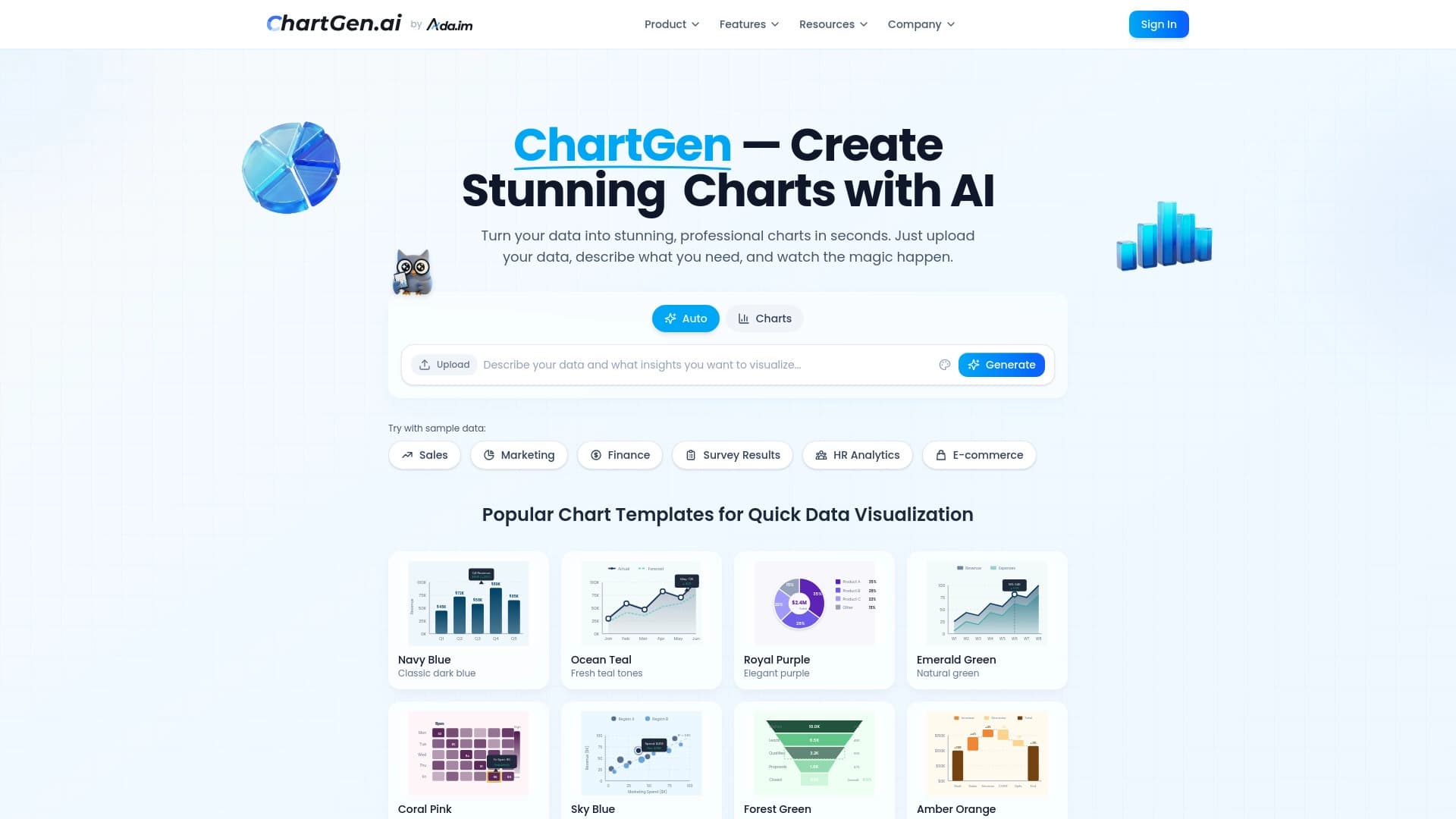

Diagram and chart generator from uploaded data based on a natural language text description.

AI platform for fast website creation and small business process management.

AI agent for automating customer communications and support.


Desktop AI assistant for macOS, Windows, and Linux that launches via hotkey above all windows and combines multiple language models in one interface.

AI agent for assisting with programming and optimizing the development workflow.

AI assistant for business that helps manage tasks and automate routine through dialogue.


Video editor with neural network support for video editing on Windows and Mac.