

Agent Nexus
Open-source Python framework for building and managing multiple AI agents using configurable pipelines and real-time messaging.
Overview
Agent Nexus Description
Agent Nexus is an open-source Python framework designed for creating, configuring, and managing multiple AI agents simultaneously. Instead of running a single bot with a fixed scenario, developers can build an entire ecosystem of interacting entities.
The project's core idea is configurable pipelines and real-time message routing. This means agents don't work in isolation—they exchange data and tasks according to defined rules. The framework supports dynamic registration of new agents "on the fly," integration of custom Python logic, and detailed logging of all processes.
At its core, Agent Nexus is an orchestrator: it handles coordination of scenarios that require multiple AI models to work together. This can include research simulations, automation of multi-step tasks, or testing communication protocols between neural networks.
Agent Nexus Features
| Feature | Value |
|---|---|
| Type | Open-source Python framework |
| Categories | AI Platforms & Frameworks, Workflow Automation, General Purpose Assistants |
| Platforms | Linux, Mac, Windows |
| Catalog addition date | May 20 2025 |
| Developer | kristofferv98 |
| Rating | 0 reviews, score 0 |
| Distribution model | Free |
Who is Agent Nexus for?
AI Researchers
Agent Nexus provides a convenient sandbox for experimenting with multiple AI agents. Researchers can quickly build prototypes of systems where agents exchange information, compete, or complement each other. The ability to configure message routing rules makes the framework suitable for studying collective behavior of neural networks.
Developers and Machine Learning Engineers
For engineers working on automating complex processes, Agent Nexus becomes a tool for decomposing a large task into subtasks executed by individual agents. Integration with popular AI libraries simplifies model integration and allows embedding multi-agent logic into existing Python projects.
Technology Educators
The framework's educational potential lies in visually demonstrating the principles of multi-agent interaction. Students can create demo systems, debug communication protocols, and observe in real time how task distribution affects the final result.
How to use Agent Nexus?
Working with the framework follows the standard scenario for open-source Python projects.
Installation and initial setup
First, clone the repository from GitHub. Then install dependencies via pip—the standard Python package manager. After that, you can proceed to configuration.
Configuring agents and pipelines
Agent configuration is done through a YAML template. It defines agent roles, their parameters, and interaction logic. Custom agent logic needs to be implemented in Python in separate modules, then connected to the framework. After configuring agents, you should set up message pipelines and routing rules—that is, who sends data to whom and under what conditions.
Running and monitoring
The system is launched through the Nexus server, which manages orchestration of multiple agents. After startup, developers can observe real-time logging, track agent states, and make iterative changes to improve system behavior.
Key Features of Agent Nexus
- Modular multi-agent orchestration: Modular system organization where each agent is an independent component, with centralized management of their operations.
- Configurable messaging pipelines: Customizable message transmission pipelines that define data movement routes between agents.
- Dynamic agent registration: Ability to add or update agents in a running system without a full shutdown.
- Real-time logging and monitoring: Event logging and agent activity monitoring in real time.
- Support for custom AI models: Support for pluggable custom AI models, providing flexibility in choosing specific algorithms.
Advantages of Agent Nexus
Flexibility and extensibility
The framework's architecture is designed so developers can adapt the system to their needs—from a simple pair of interacting agents to a complex network with branched routing. The open-source code allows modifying the core for non-trivial tasks.
Prototyping speed and integration
The framework is designed for rapid prototyping of multi-agent scenarios. The community-driven approach implies active project development by the community. Notably, seamless integration with popular AI libraries lowers the barrier to using custom models.
Disadvantages of Agent Nexus
Based on available data, no clear disadvantages can be identified, as the framework has no public reviews or user ratings. The tool's catalog rating is 0 reviews with a score of 0, which doesn't allow conclusions about stability, documentation quality, or the presence of "teething problems" in the code. The project is fresh (added in May 2025), which may mean a limited community and few ready-made usage examples.
What problems does Agent Nexus solve?
Simulating collaboration and research
Agent Nexus is suitable for simulating a collective "workforce" of AI agents. The framework is also effective for prototyping experimental multi-agent systems and research simulations.
Testing and education
The tool can be used for testing inter-agent communication protocols and verifying hypotheses about how agents should exchange information. For machine learning and engineering teams, benchmarking capabilities—measuring agent performance on target tasks—are useful. In educational settings, the framework is used to demonstrate the principles of multi-agent systems.
Agent Nexus Pricing
Agent Nexus is completely free to distribute. The project has an open-source codebase, meaning no fees for use, copying, or modification. The free distribution model allows using the framework in both commercial and non-commercial projects without license fees.
Agent Nexus Terms of Use
To get started, users need to clone the repository from GitHub and install the required dependencies.
Technical requirements:
- Basic Python skills for writing custom agent logic
- Understanding of YAML file structure for correct pipeline configuration
- Familiarity with the command line and version control systems
No specific license restrictions beyond standard open-source terms are specified in the source data.
Agent Nexus Availability
The framework is available for three major operating systems: Linux, Mac, and Windows. This platform coverage makes the tool universal for most developers regardless of their working environment.
The source code is hosted on GitHub, providing free access to downloads, change history, and development participation. The interface and documentation language is not specified on the catalog page; however, given that the project description and technical documentation are in English, the framework interface is likely also English-language.
How Agent Nexus differs from alternatives
Among the closest alternatives to Agent Nexus are platforms such as LangChain, Microsoft Semantic Kernel, Ray RLlib Multi-Agent, and Microsoft Bonsai.
The main difference between Agent Nexus and LangChain lies in specialization: LangChain is a broad toolkit for working with LLMs, while Agent Nexus focuses specifically on orchestrating multiple agents. Microsoft Semantic Kernel is more integrated into Microsoft's .NET ecosystem, whereas Agent Nexus is a fully standalone Python product.
Agent Nexus's key feature is its focus on configurable pipelines and dynamic message routing. Unlike Ray RLlib, which specializes in reinforcement learning, Agent Nexus is designed for a broader range of automation tasks. Simple YAML configuration and management through the Nexus server make it an attractive alternative for quickly building multi-agent systems without deep immersion in distributed computing framework infrastructure.
Conclusion
Agent Nexus is a young open-source framework for orchestrating multiple AI agents, built on Python. Its key value lies in the ability to quickly create multi-agent systems with flexible message routing configuration and dynamic agent registration. The tool suits researchers, developers, and educators who need to organize collaborative work of multiple neural networks. However, the project has no public reviews or data on industrial use, which should be considered when choosing. Nevertheless, the free distribution model and open-source code make the framework accessible for study and experimentation to any specialist with basic Python and YAML skills.
Frequently asked questions
See also

Generative platform for creating realistic images and short videos from text or images with control over style and camera movement.
Online service for creating a realistic voice clone from a short audio recording and text-to-speech.
A presentation creation service that uses multiple AI agents for information gathering, design, and data analysis.

Chrome extension that helps manage tabs, history, and bookmarks with an AI assistant.
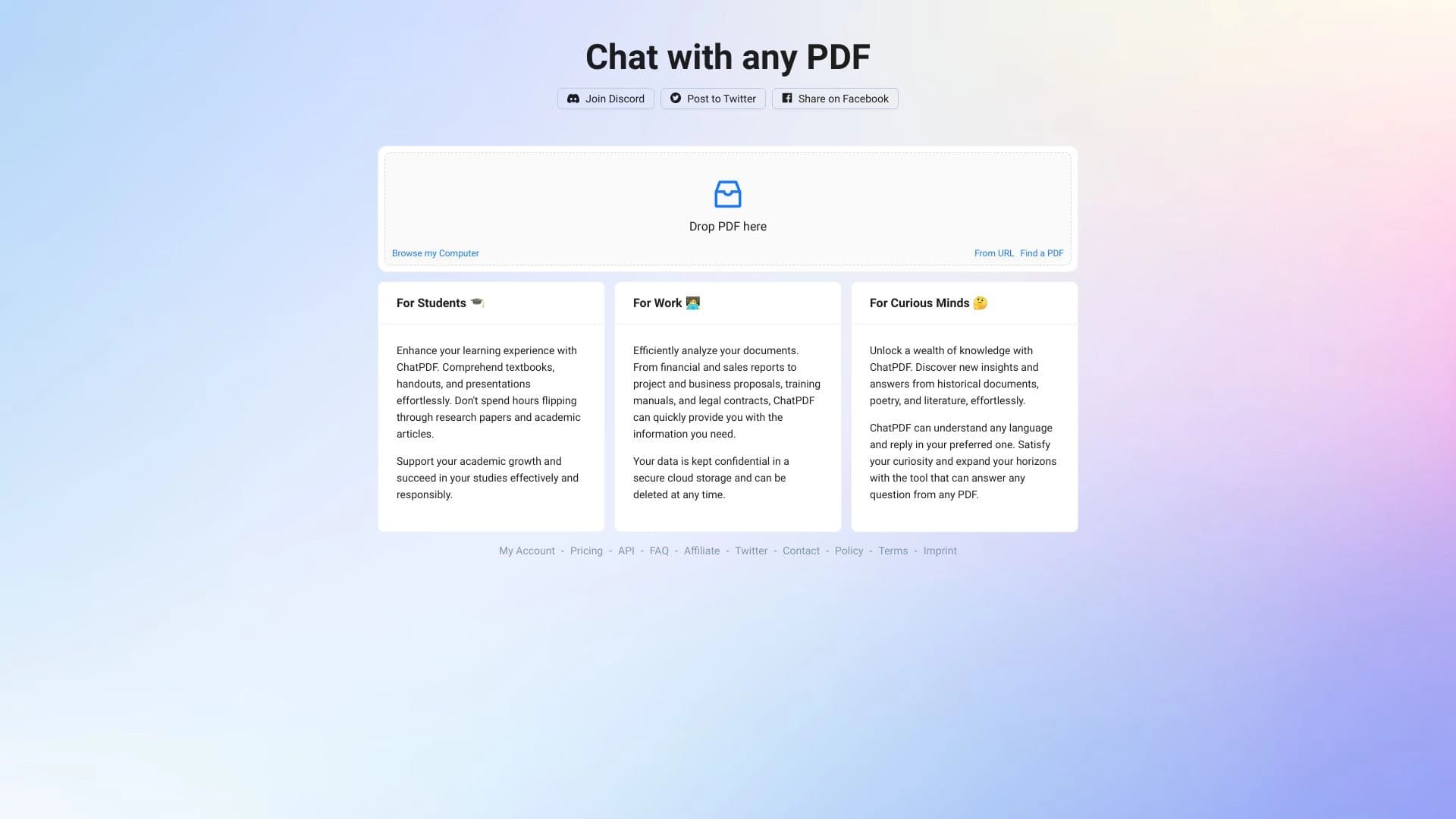
An online service that lets you chat with PDF documents: ask questions and get concise answers with source attribution.
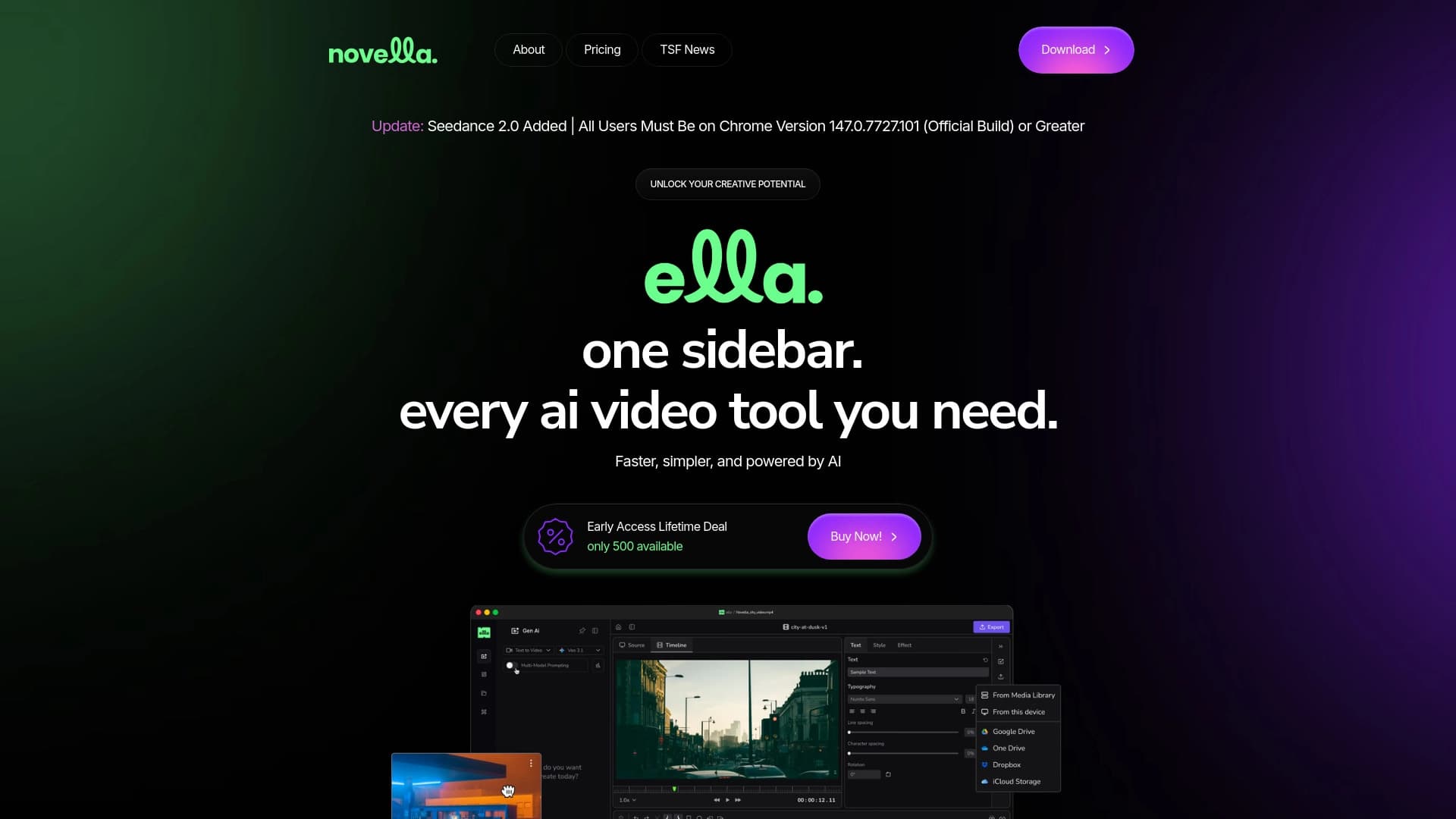

AI platform for creating and editing videos, working directly in the Chrome browser.
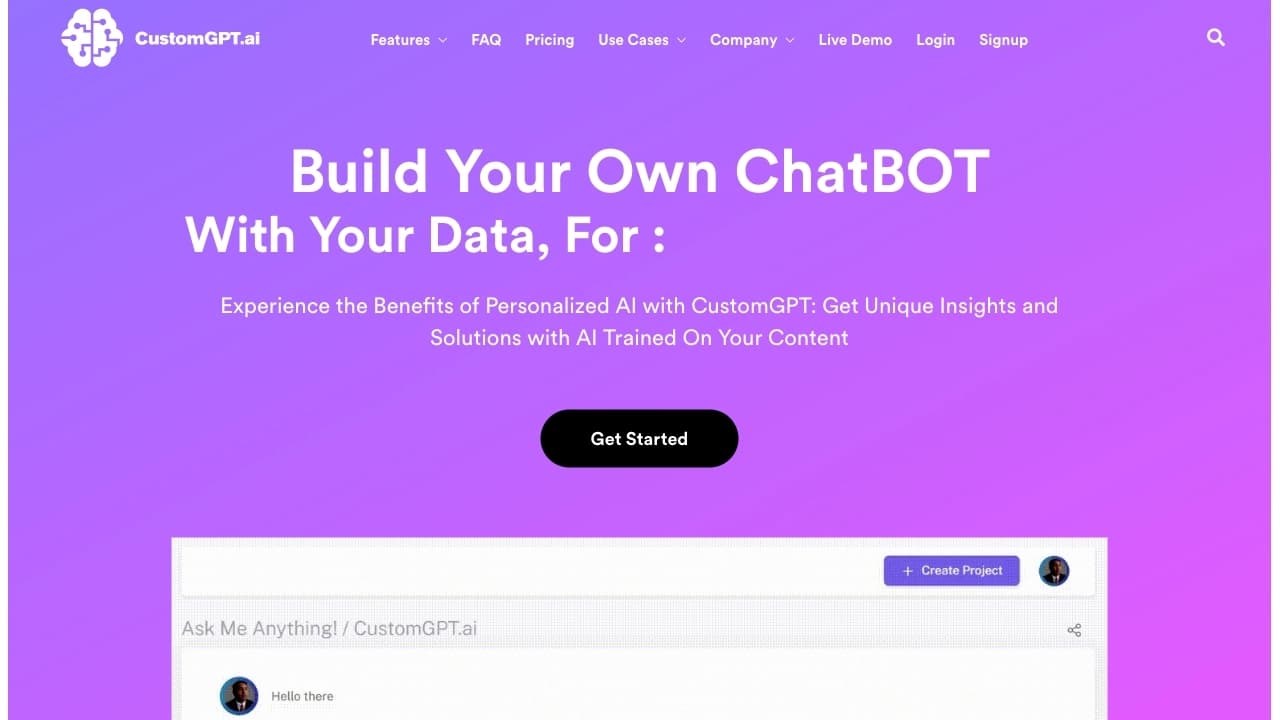

A platform for creating corporate chatbots based on your own documents without coding.
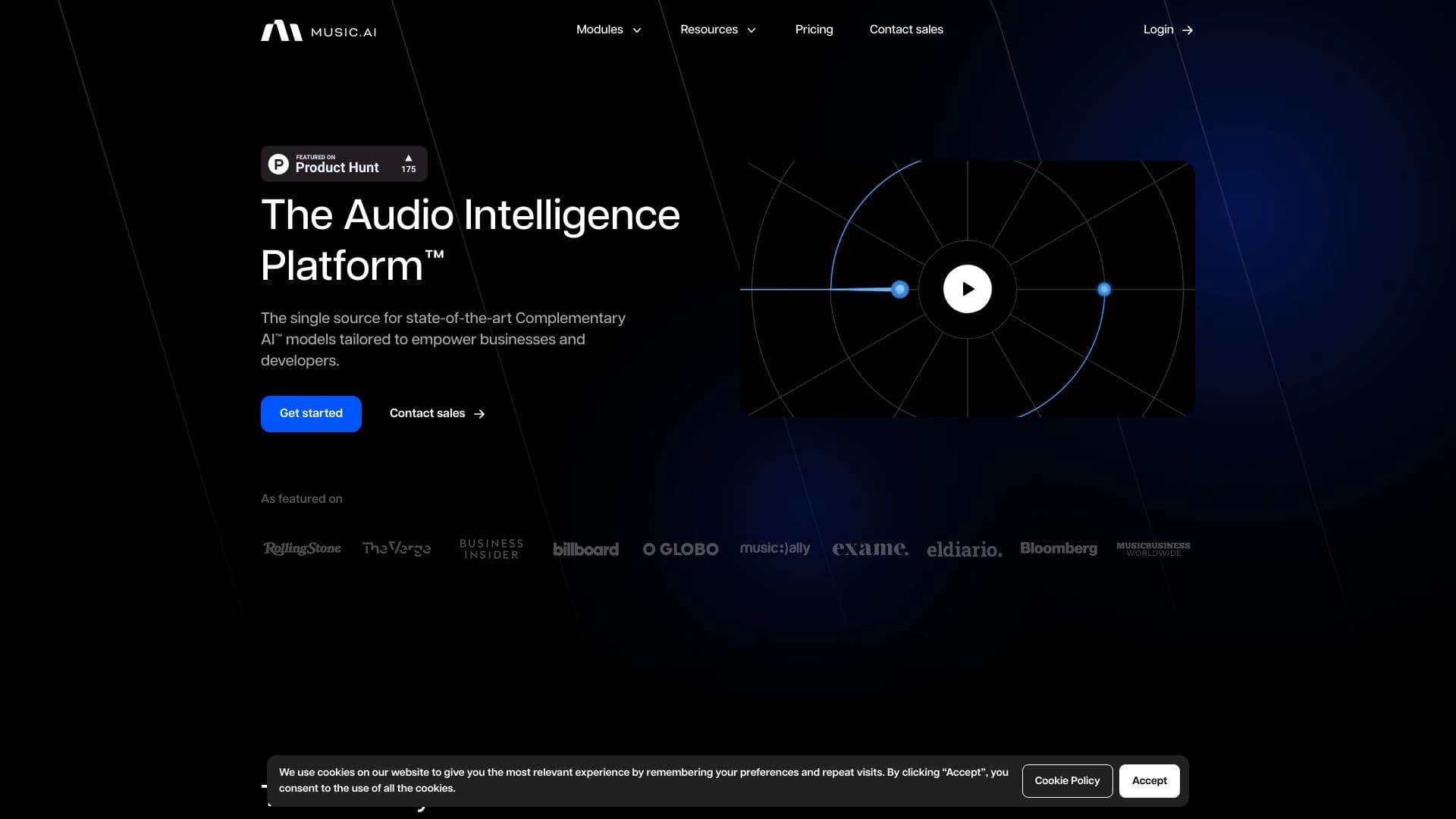
A platform for professional audio processing with AI features for track separation, mastering, and voice changing.