

PromptLayer
Platform for managing prompts and analyzing neural network performance via API.
Overview
I'll write the article directly.
PromptLayer
Description of PromptLayer neural network
PromptLayer is a platform for managing prompts and analyzing neural network performance. It connects via API, records every request sent to the neural network, and lets you track all interactions in one place.
The main goal of the tool is to give developers and product teams systematic control over generation quality. Instead of chaotic one-off requests, PromptLayer helps build an organized process: record requests, compare different versions of formulations, analyze responses, and gradually improve results.
The tool is suitable for those who are not just experimenting with neural networks but building workflows around them — whether it's internal products, services, or business tasks where predictability and stability of output matter.
PromptLayer Characteristics
| Characteristic | Value |
|---|---|
| Type | Platform for managing prompts and analyzing neural network performance |
| Category | Prompt |
| Developer | PromptLayer Inc. |
| Monthly visits | 512K |
| Free plan availability | Yes (Free — basic request tracking) |
| Pro plan price | from ~$29 / month |
| Enterprise plan price | upon request |
| Distribution model | Freemium |
Who is PromptLayer neural network suitable for?
Developers
PromptLayer is primarily aimed at developers who integrate neural networks into their products and services. They need a tool for tracking requests, diagnosing errors, and monitoring generation quality directly in code and via API.
Product teams
Teams responsible for AI functionality in a product will find a way to centrally manage prompts here. You can store templates, test hypotheses, and implement the best wording options instead of having each team member keep their own versions.
Business
The platform also suits businesses. For companies that need to control generation quality and build stable processes around neural networks, PromptLayer helps streamline and systematize this work.
How to use PromptLayer neural network?
Connecting and tracking requests
PromptLayer connects to the neural network via API or ready-made integrations. After connection, every request is automatically recorded and saved. This lets you see which formulations are sent and what results they produce.
Comparison and analysis
Based on the collected data, you can compare different versions of prompts and determine which ones yield the best results. Analyzing responses helps understand why one formulation works better than another and gradually improve generation quality.
Storage and implementation
The platform allows you to store prompt templates for reuse, test new hypotheses, and implement the best options into a product or business process. This creates a unified knowledge base for the team on working with neural networks.
Main features of PromptLayer
Tracking all requests
The platform records every prompt and neural network response, providing data for analysis and comparison of results. It collects a complete picture of how the neural network is actually used.
Testing prompt variants
Built-in tools let you run different formulations and compare them to find the most effective options. This removes guesswork and replaces it with objective data.
Template management
PromptLayer enables storing and organizing prompt templates for reuse. Proven formulations remain available to the entire team and can be applied to various tasks.
Advantages of PromptLayer
Full control over AI work
The platform shows which requests are used and what results they produce. This is transparency that's missing when working "blind" with neural networks.
Systematic approach and quality
Instead of chaotic individual requests, there is an organized process with testing and analysis. For product development, this ensures stable generation quality and reduces the number of errors.
Convenience for teams
Prompts are managed centrally, which is convenient for multi-person work. Each team member sees current versions and can rely on a shared base instead of scattered notes.
Continuous improvement
Thanks to testing and analysis, results can be systematically improved over time — each iteration builds on previous data, not intuition.
Disadvantages of PromptLayer
Difficulty for beginners
Working with the tool requires understanding of neural networks and APIs. For beginners just starting with AI, mastering the platform may seem challenging.
Limited scope of application
For simple one-off tasks, PromptLayer is excessive — its potential is revealed only with systematic, continuous work on a large volume of requests.
Setup time
Full use requires time to configure processes. You need to plan in advance how the team will record and analyze requests.
Cost for teams
Advanced features are available on a paid plan, so full use by teams may require financial investment.
Dependence on prompt quality
It's important to understand: the tool itself does not improve prompts. It only helps analyze and compare them, and the quality of results still depends on the original formulations.
What tasks does PromptLayer solve?
- Prompt management and performance analysis — the platform collects data on how requests work and allows evaluating their effectiveness.
- Comparing prompt variants — multiple formulations can be compared and the best one chosen based on facts, not assumptions.
- Improving AI features in products — the tool helps refine neural network services, drawing on real data about generation quality.
- Systematic team work with prompts — a unified process appears in which all participants use the same current versions of requests.
- Analyzing generation quality and finding errors — collected responses can be checked for errors and problem areas in neural network operation can be identified.
PromptLayer pricing
PromptLayer operates on a freemium model. There is a free plan that includes basic request tracking — enough to get familiar with the tool and its main capabilities.
For advanced analytics and prompt management, a paid Pro plan is available from about $29 per month. For teams and large-scale projects, an Enterprise plan is available, with pricing calculated individually upon request.
Terms of use for PromptLayer
To get started, you need to register on the service website. After that, the platform connects to the neural network via API or ready-made integrations, and all requests begin recording automatically.
Availability of PromptLayer
PromptLayer is a web service accessible through a browser. The platform is used by both developers and businesses for systematic prompt management and generation quality control.
How PromptLayer differs from analogs
The main difference of PromptLayer is its focus on analysis and management. Unlike tools that directly improve prompt formulations (for example, PromptPerfect), PromptLayer does not edit requests for the user. Instead, it records, stores, and compares requests, helping the team choose the most effective options based on data.
These are fundamentally different tasks: one platform improves the prompt, the other helps analyze its performance and manage the processes around it. PromptLayer is suitable where it's important to establish systematic control and build a long-term process of working with neural networks.
Conclusion
PromptLayer is a tool for systematic prompt management and analysis of neural network performance, aimed at developers, product teams, and businesses. It is not designed for one-off tasks, but for building sustainable processes around AI: recording requests, comparing formulations, testing hypotheses, and controlling generation quality. For those who want to replace chaotic work with neural networks with an orderly, manageable approach, PromptLayer becomes a practical assistant at every stage of this process.
Frequently asked questions
Similar AI tools








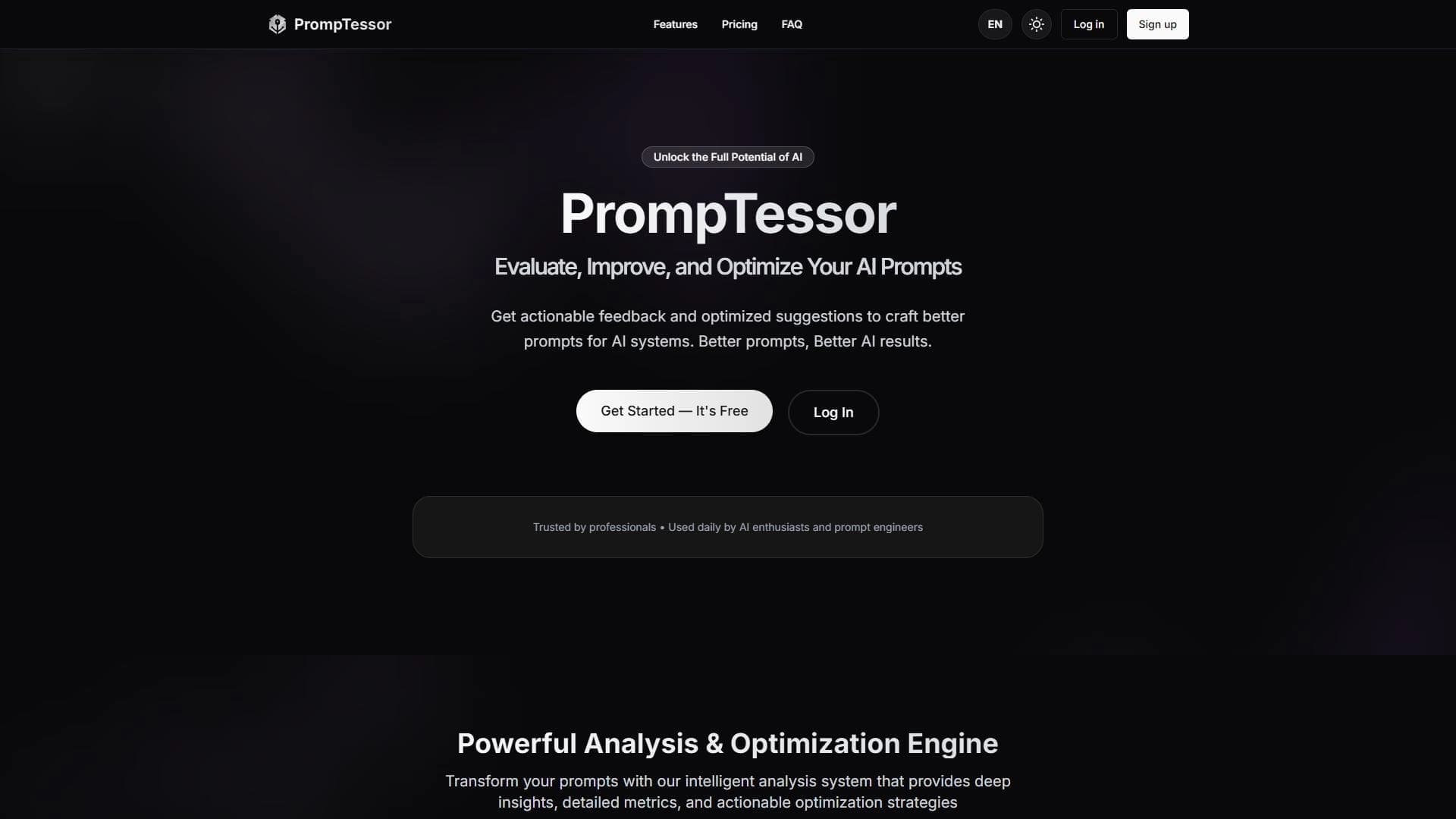

See also
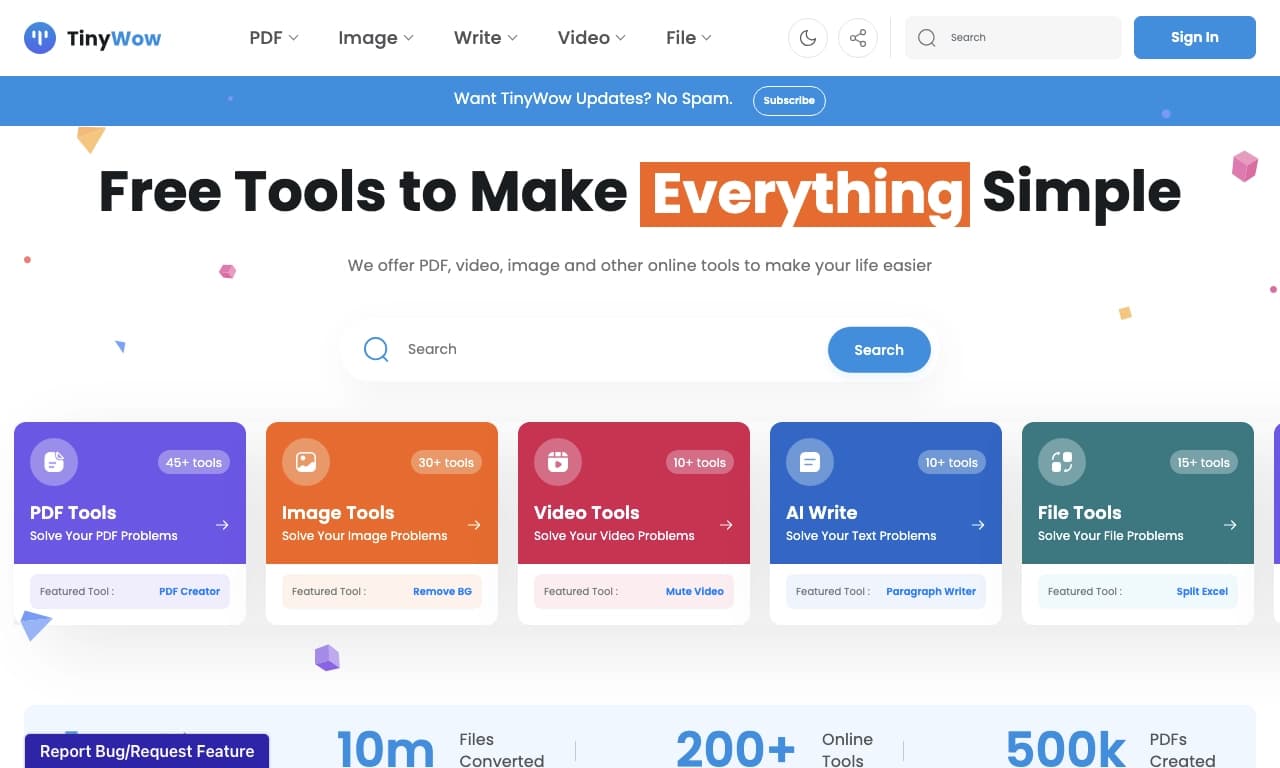

Free online platform with over 150 AI tools for working with PDFs, images, videos, and text.
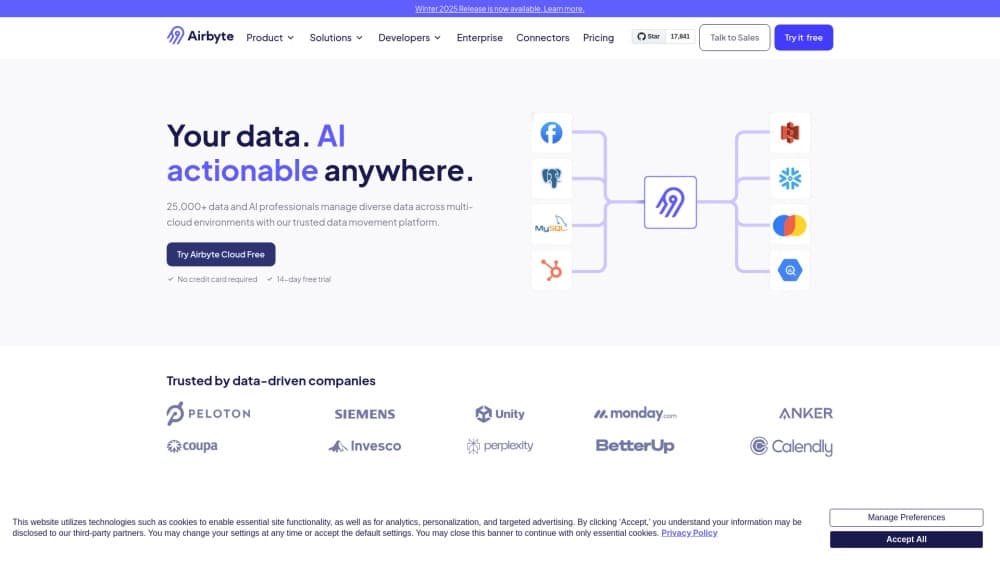
Open-source platform for integrating data from various sources into data warehouses and analytics systems.
A sales automation platform that combines customer prospecting, deal management, and AI-powered forecasting.
AI editor for creating, editing, and publishing content with templates and prompts.

Financial platform with an AI assistant for managing accounting, taxes, and budgets.

Platform for interview preparation with AI mock interviews and real-time support.
Enterprise language model platform focused on privacy and on-premise deployment.

A workflow automation platform that connects thousands of apps without requiring coding.