
SPO++: How advantages are aligned by action tokens in asynchronous agentic RL
The authors show that centering the reward at the level of an individual trajectory does not center the token-weighted quantity that the actor actually operates on, and they propose normalizing terminal outcomes by the number of action tokens. In paired runs on ALFWorld (two model sizes) and on Math-TIR, the improved SPO++ variant outperforms the original SPO in online learning speed, and an ablation identifies this normalization as the most significant of the tested changes.

Why group-relative advantage estimation is expensive in agentic RL
Classic group-relative methods (the GRPO family and its relatives) are simple: for a single prompt, several sibling trajectories are generated, their rewards are compared, and from that comparison an advantage is born — a signal showing which answer is better than the group average. The scheme works well on short answers in chat tasks, where all siblings finish quickly and almost simultaneously.
Agentic scenarios break this idyll. A trajectory here is not a single answer but a chain: the model calls a tool, gets a response from the environment, decides what to do next, calls again. The length of such a chain varies by factors and even orders of magnitude from task to task, and the time to completion is poorly predictable at best. Training that must wait for all siblings of a single prompt starts to idle: while one rollout is "catching up" at step twenty, the others are already done and waiting. You pay for this both in time and in infrastructure complexity.
Hence the interest in single-stream approaches, which require no group at all.
What SPO already did and where the gap remained
Single-stream Policy Optimization (SPO) removes the dependence on sibling rollouts differently: instead of comparing within a group, it maintains a persistent value estimate at the prompt level — it accumulates between updates and serves as the basis for computing the advantage. The "wait for your siblings" requirement disappears, and the pipeline becomes streaming.
But the SPO recipe has a subtlety that the authors of the new work noticed. Before optimizing the actor loss, averaged over tokens, SPO whitens a single advantage per trajectory — that is, it centers and scales the signal under the assumption "one trajectory = one unit of measurement."
The problem is that the actor does not consume a per-trajectory quantity. A trajectory's contribution to the gradient is proportional to the number of tokens it contains: a long chain with thousands of action tokens pulls the update harder than a short one. Centering per trajectory, as the authors argue, does not in general center the token-weighted quantity that the optimizer actually works with. A systematic bias remains — and it is the more pronounced the greater the spread in trajectory lengths, that is, precisely in agentic tasks.

SPO++: normalization under the measure of action tokens
Per-trajectory centering is replaced by the action measure
The key fix in SPO++ is to standardize advantages by terminal outcome not "per trajectory" but in the measure of action tokens. Put simply, the statistics (mean and spread) used to align the signal are computed taking into account exactly how many action tokens the policy produced — those are the tokens that form the gradient. Tokens the policy did not choose (the prompt, environment responses, service markup) do not enter this measure: they are only context, not a decision.
The logic here is the same as in any weighted averaging. If you normalize observations under "one observation = one vote" and then average by weights, the result is not obliged to be centered. For the alignment to match what is being optimized, normalization must be done in the same system of measures in which the loss is computed. For agentic trajectories, that measure turns out to be action length, not "trajectory count."
Evidence is tied to the policy event
The second part of the work concerns not statistics but metadata. The authors propose organizing prompt evidence — the accumulated material the computation relies on — by the policy event that produced that portion of data, rather than by the order in which the learner received it.
The difference is fundamental for asynchronous training. When the generator and the training process run in parallel, data arrives in order of readiness, not in the order of the policy versions that produced it. A fast short sample can overtake a slow long one, even though it was generated by a fresher or older policy. If everything is mixed into one pile, stale data looks current, and advantage estimation relies on the wrong context. Tying to the policy event restores to data provenance the status of part of the algorithm rather than a service annotation.

What the experiments showed
The authors compare SPO++ with SPO in matched runs — runs where everything except the change being tested is identical. The testbed was two tasks: ALFWorld — an environment with text-based interactive tasks where the agent manipulates objects — at two model scales, and Math-TIR, a tool-calling scenario for math problems. On both grounds SPO++ wins on online training efficiency: the same level of quality is reached with fewer interactions.
A paired ablation answers the question "what exactly worked." The strongest of the tested components turned out to be normalization in the measure of action tokens. This is not a sensation, but a useful sanity check of intuition: in asynchronous agentic RL, the subtleties of where statistics are computed weigh more than many architectural add-ons.
The work is compact — nine pages, two figures, three tables — and that is rather a good thing: one clear fix in an important place instead of a scattering of small tricks.
What follows from this in practice
- The measure of normalization is not a detail. If advantage alignment is computed per trajectory while the loss is computed per token, part of the signal systematically drifts. You can check this without fully rewriting your pipeline: just compare the two normalization schemes on your own data.
- The longer and more heterogeneous the trajectories, the more it hurts. In chat tasks with answers of comparable length, the discrepancy is masked. In tool-use scenarios where one trajectory is two steps and another is forty, it comes to the fore.
- Asynchrony requires accounting for data provenance. The order of arrival and the order of generation are not the same thing, and if the algorithm does not distinguish between them, it optimizes a mixture of policies pretending to be one.
- Group methods do not have to be thrown out entirely. SPO and its successor show that the sibling-rollout requirement can be dropped while preserving quality — at the cost of more careful handling of statistics and metadata.
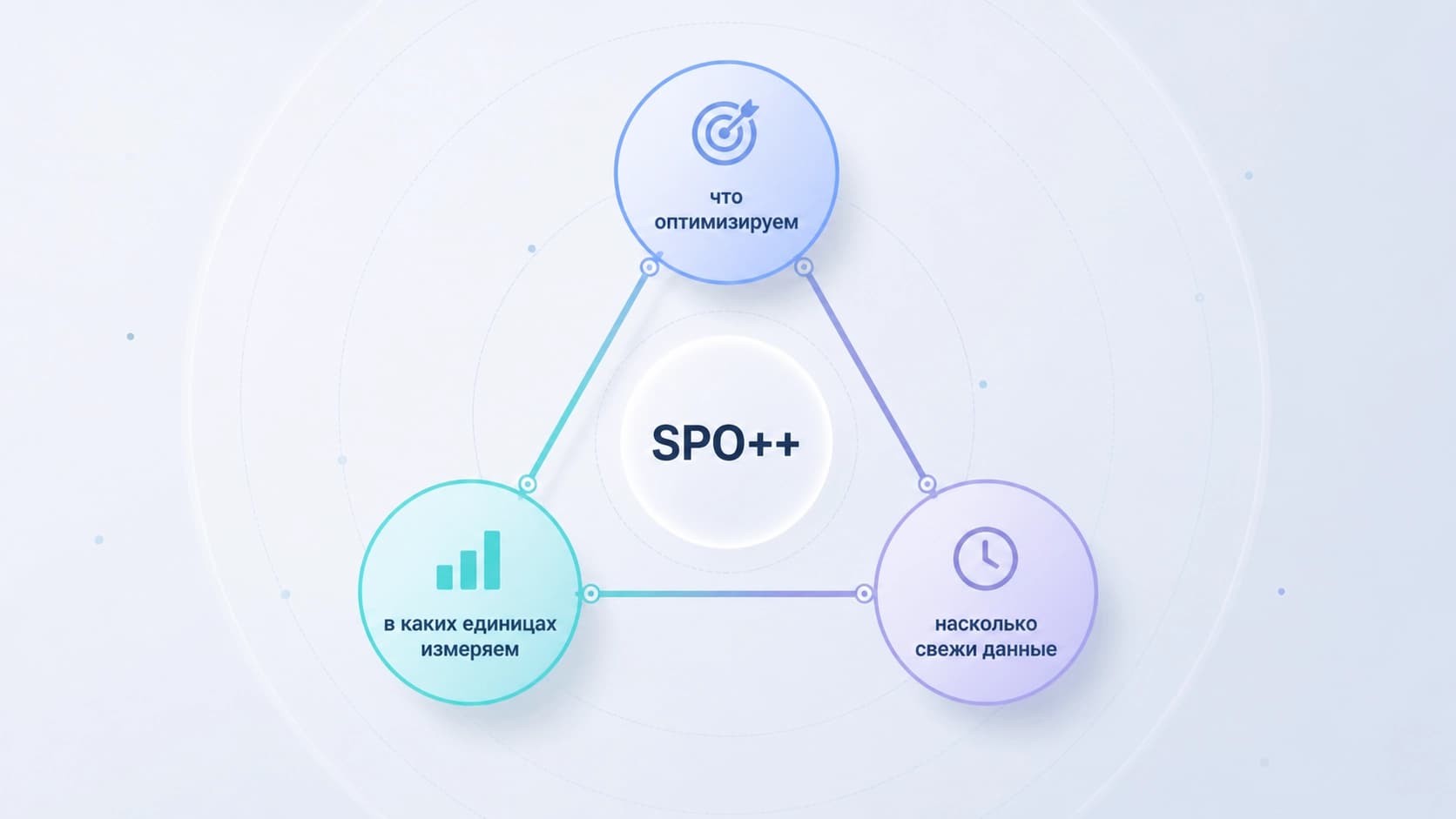
The general moral is simple: in agentic RL, where the reward comes at the end of a long chain and is smeared across actions, the winner is not whoever devised a cleverer architecture, but whoever honestly aligned three things with one another — what exactly is being optimized, in what units it is measured, and how fresh the data from which the signal is drawn is.
Frequently asked questions
Related materials
All materials
Validating Candidates Costs More Than Generating Them: Honeypots Against LLM Vulnerability Hunting
The study examines the cost asymmetry in agentic vulnerability discovery: generating candidate versions is cheap, while confirming them through reachability analysis, execution, and PoC development consumes most of the budget, making verification a potential standalone target for defense. The proposed RedHerring—repository-adapted decoys with a hidden certificate—reduced the number of real vulnerabilities found by 38.7–60.4% at equal cost across 33 OSS-Fuzz projects; even after the agent was warned, the reduction remained at 37.2%.
9 November 2026
Checking LLM Hallucinations via SQL-Based Source Representation Without Fine-Tuning
The study examines whether an LLM can apply a basic symbolic skill—building a SQL database from source documents—to ground its outputs in sources without supervision when detecting hallucinations. On RAGTruth and DiaHalu, this neuro-symbolic pipeline proves more accurate than direct prediction and comparable to state-of-the-art methods, without requiring domain-specific fine-tuning.
9 November 2026
MathAdv: What the Final Accuracy of Machine-Generated Proofs Conceals
A diagnostic suite of tasks spanning 13 undergraduate and graduate mathematics topics evaluates machine-proving systems in Lean 4 not only by their final results, but also by their subject-matter mastery, the quality of their informal reasoning, and their robustness to rephrased conditions. A component-by-component analysis shows that translating a problem into formal form remains the main obstacle, and that success depends heavily on the area of mathematics and how the problem is framed.
9 November 2026