
SOS-LoRA: Static Orthogonalization of Input Directions While Distributing Rank Among Experts
The method represents rank updates as a sum of several always-active low-rank experts: rank is distributed among them, scales are set in advance, and orthogonal initialization and soft regularization reduce interference. The paper reports improvements over LoRA baselines at a comparable budget; after merging, there are no additional parameters or latency.
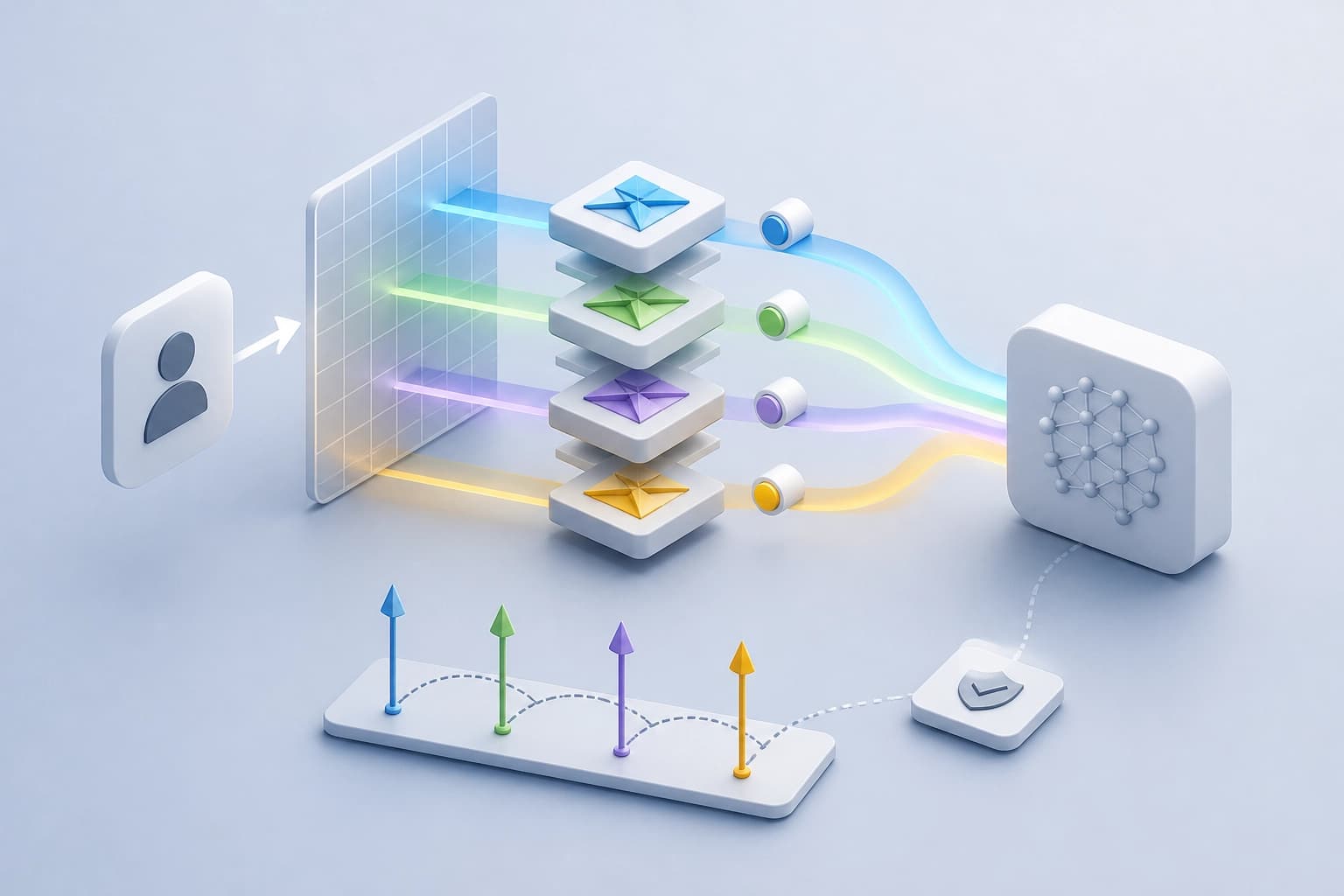
The Role of SOS-LoRA in the LoRA Family
SOS-LoRA extends LoRA. The method represents an update of rank rtot as the sum of K low-rank experts. The total rank is distributed among the experts. This preserves the low-rank update while dividing it into components.

Practical criterion: this approach is useful when a LoRA update needs to be divided among several components. Conclusion: the method is an extension of LoRA that splits rank.
Static Expert Mode
The experts in SOS-LoRA are static. They are always active. There is no routing: experts are not selected on the fly.
- experts are static;
- all experts are active;
- routing is not used.
Conclusion: the set of active components is fixed. Criterion: this setup is suitable when a predictable structure without a router is needed.
Orthogonalization of Input Directions and Fixed Scaling
Orthogonal initialization across experts and a lightweight regularizer promote diversity in input directions. Fixed multiscale scaling encourages scale-separated optimization dynamics. These mechanisms relate to different aspects of training.
| Mechanism | What it does, based on the facts |
|---|---|
| Orthogonal initialization across experts | Promotes diversity in input directions |
| Lightweight regularizer | Promotes diversity in input directions |
| Fixed multiscale scaling | Encourages scale-separated optimization dynamics |
Conclusion: orthogonalization and the regularizer work with input directions. Scaling creates differences in optimization dynamics. Criterion: if diversity in input directions is the priority, the first block matters. If scale-separated optimization dynamics are the priority, the second one matters.
Inference After Merging
After merging, SOS-LoRA adds no parameters. It adds no inference latency. This is stated in the method description.
Practical criterion: verify that merging adds no parameters or latency. According to the method's description, it adds neither.
Conclusion: merging incurs no parameter or latency overhead at inference.
Experiments and Selection Criteria
The experiments cover several task classes:
- reasoning and knowledge with Llama 2 and Llama 3;
- encoder-based NLU on GLUE;
- mathematical reasoning tasks on GSM8K/MATH.
The abstract reports consistent improvements over LoRA-based methods. The budget is comparable. The comparison includes recent variants.
Conclusion: the method is presented for the specified task classes. Selection criterion: a comparable budget and the need for consistent improvements in reasoning, knowledge, encoder-based NLU, or mathematics. The facts do not support generalization beyond these tasks.
Frequently asked questions
Related materials
All materials
MathAdv: What the Final Accuracy of Machine-Generated Proofs Conceals
A diagnostic suite of tasks spanning 13 undergraduate and graduate mathematics topics evaluates machine-proving systems in Lean 4 not only by their final results, but also by their subject-matter mastery, the quality of their informal reasoning, and their robustness to rephrased conditions. A component-by-component analysis shows that translating a problem into formal form remains the main obstacle, and that success depends heavily on the area of mathematics and how the problem is framed.
9 November 2026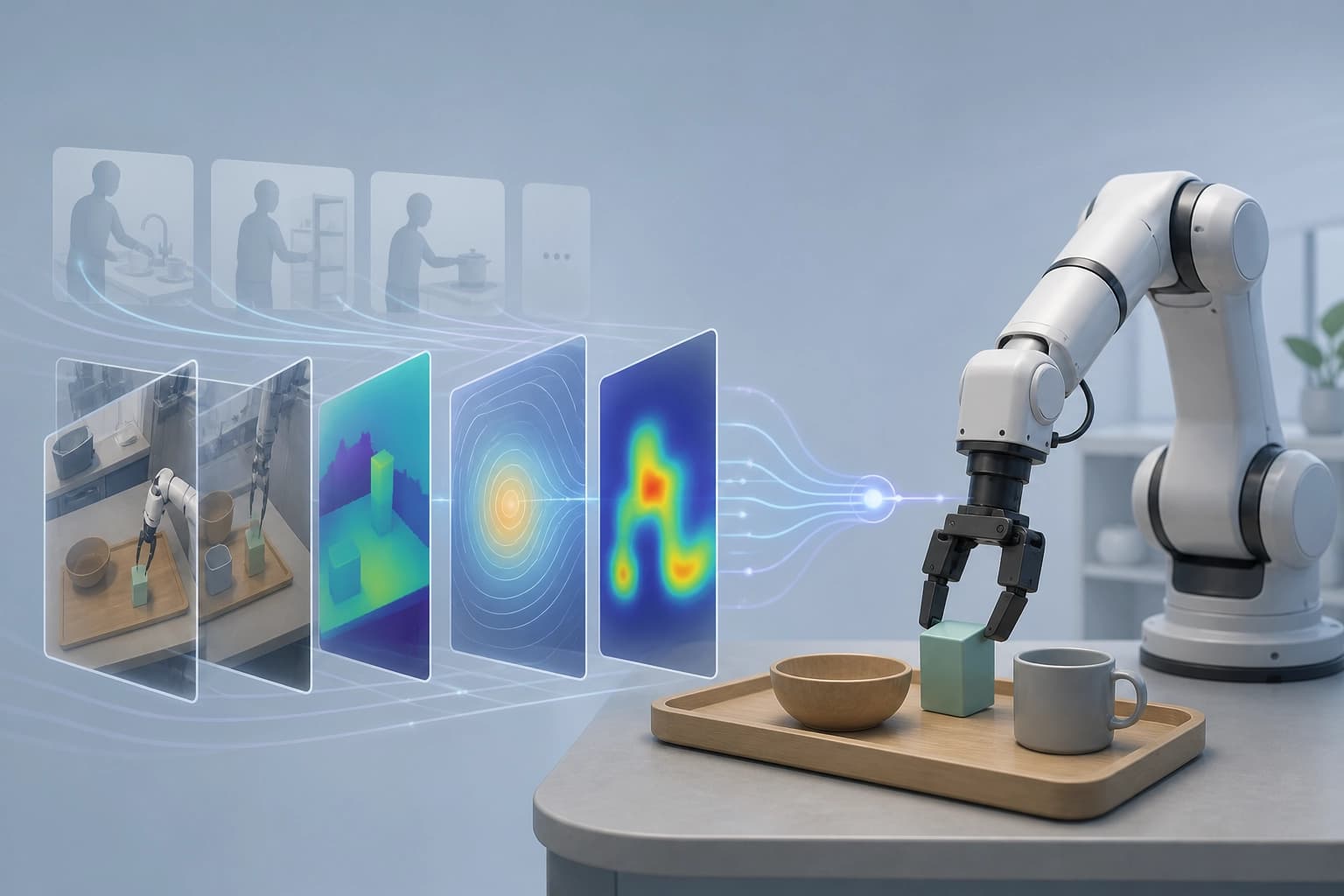
AffordanceWAM: Affordances as an intermediary between scene prediction and manipulator control
The work describes a generative model that jointly predicts future RGB observations, scalar fields, affordance heatmaps, and continuous robot commands, using human videos to broaden interaction diversity without action annotations or retargeting. On RoboCasa, CALVIN ABC→D, and real-world tasks, the approach delivers consistent gains over RGB-only and robot-data-only baselines.
9 November 2026
Presentation Editing as Controlled Operations: The EditPPT Framework and DeckEdit-Bench Benchmark
The authors break down slide editing into specific objects, permitted actions, and checks to ensure unrelated content remains untouched, rather than relying on free-form code generation. To measure quality, they created DeckEdit-Bench (183 tasks across 28 human-made presentations), and the multi-agent EditPPT framework achieves a 66.7–74.9% task success rate across five base models while preserving over 97% of the content.
8 November 2026