
Rabbit shifts its bet from gadgets to agents for familiar screens
OS3 brings together work across browsers, messaging apps, and computers: the agent can perform actions in software and on the web, and the R1 device is not required. Instead of a subscription fee, the system uses the user's API keys or connected local models.
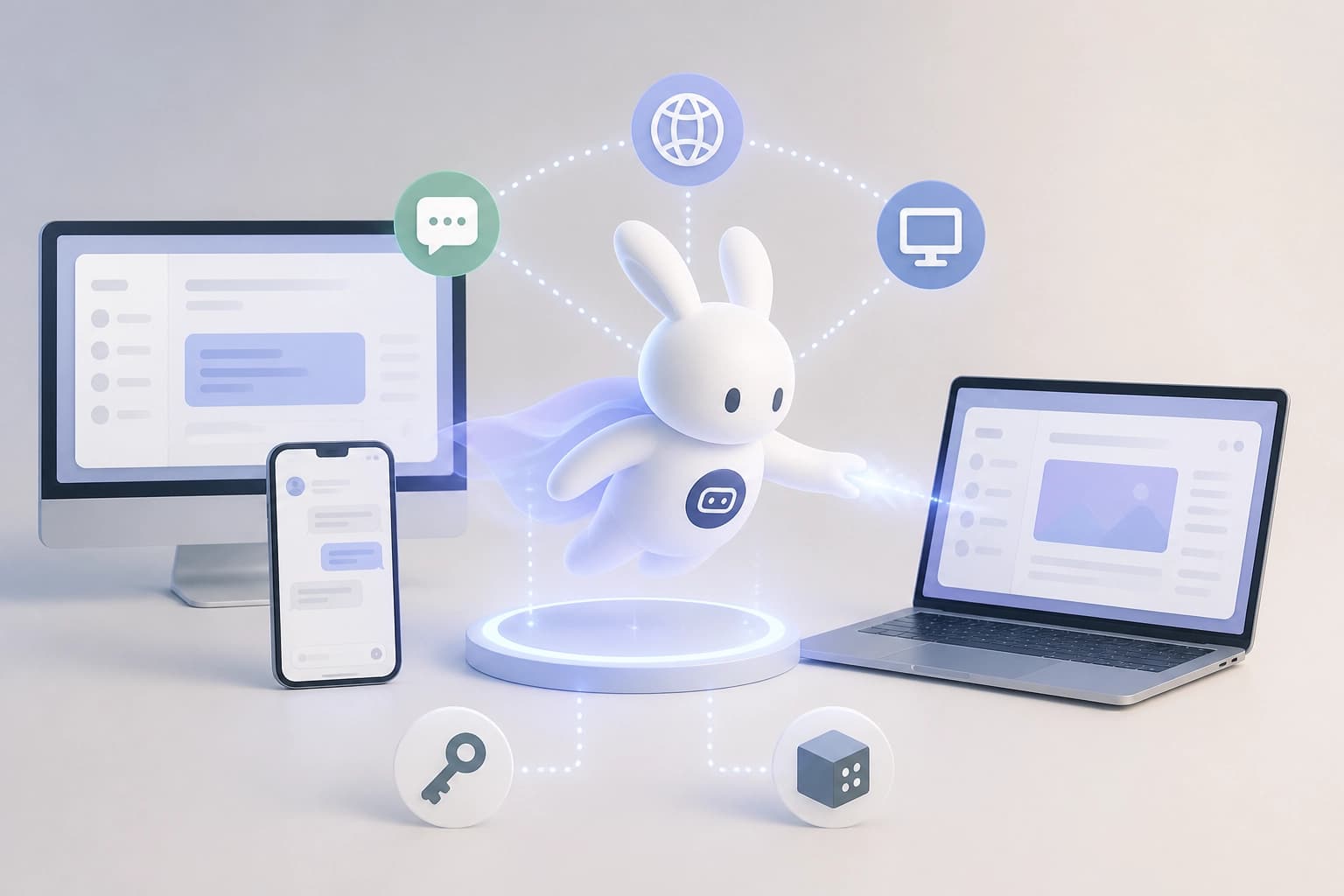
Access across screens
Rabbit is shifting its focus from a dedicated gadget to a software platform for existing devices. The company announced OS3, a standalone agentic operating system for multiple screens.
Rabbit R1 is not required. OS3 is available in a computer browser, on Telegram on a phone, and in iMessage.

R1 owners will also receive OS3 as a software update. The device will be able to serve as an input and output device.
Practical criterion: OS3 is designed to work through a computer and phone, not just a dedicated Rabbit device.
How OS3 works with a computer
OS3 runs in the cloud and connects to computer programs, files, and web pages through a local agent. The agent can be installed on Windows, Mac, or Linux.
- The system uses DLAM technology — Direct Large Action Model.
- It performs tasks in local applications, as well as writes and debugs code.
- One account connects up to five computers; OS3 chooses which one to use for a task.
Practical criterion: This setup is suitable for tasks that require access to programs and files on a computer.
Chat and third-party skills
The OS3 interface is one continuous chat with no separate conversation threads. Users can paste a public link to a third-party agent skill into it.
OS3 then installs the skill automatically. The interaction stays in the main chat instead of moving to a separate thread.
Practical criterion: The interface’s key distinction is a single conversation and skill installation via a public link.
Keys and payment
OS3 uses the Bring Your Own Key (BYOK) model: there is no monthly subscription fee. To use it, users provide their own API keys, for example, from OpenAI or Anthropic.
Instead of API keys, users can connect local open-source models. In either case, users provide their own chosen method of accessing a model.
Practical criterion: The model requires users to provide their own API key or connect a local model; there is no monthly subscription fee.
What Rabbit has planned for its devices
Rabbit no longer manufactures Rabbit R1, and supplies of the device are dwindling. The company has no plans to release Rabbit R2.
Rabbit has named Cyberdeck as its next hardware device — a dedicated machine for vibe coding that runs on OS3. Jesse Lyu said it should arrive within “months.”
Practical criterion: Rabbit is shifting its focus to a software platform; the next device the company has announced is Cyberdeck, not a new version of R1.
Frequently asked questions
Related materials
All materials
Checking LLM Hallucinations via SQL-Based Source Representation Without Fine-Tuning
The study examines whether an LLM can apply a basic symbolic skill—building a SQL database from source documents—to ground its outputs in sources without supervision when detecting hallucinations. On RAGTruth and DiaHalu, this neuro-symbolic pipeline proves more accurate than direct prediction and comparable to state-of-the-art methods, without requiring domain-specific fine-tuning.
9 November 2026
MathAdv: What the Final Accuracy of Machine-Generated Proofs Conceals
A diagnostic suite of tasks spanning 13 undergraduate and graduate mathematics topics evaluates machine-proving systems in Lean 4 not only by their final results, but also by their subject-matter mastery, the quality of their informal reasoning, and their robustness to rephrased conditions. A component-by-component analysis shows that translating a problem into formal form remains the main obstacle, and that success depends heavily on the area of mathematics and how the problem is framed.
9 November 2026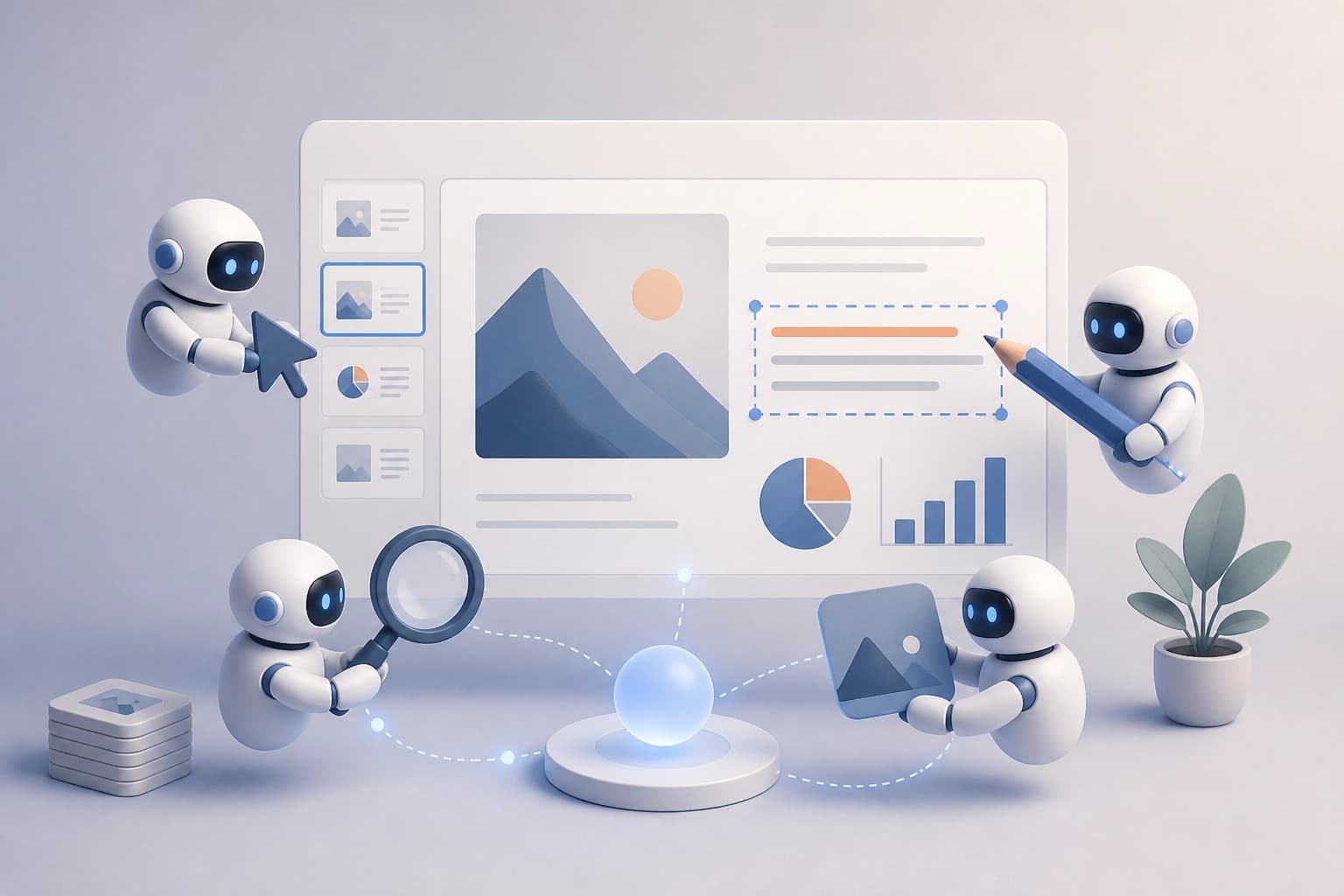
Presentation Editing as Controlled Operations: The EditPPT Framework and DeckEdit-Bench Benchmark
The authors break down slide editing into specific objects, permitted actions, and checks to ensure unrelated content remains untouched, rather than relying on free-form code generation. To measure quality, they created DeckEdit-Bench (183 tasks across 28 human-made presentations), and the multi-agent EditPPT framework achieves a 66.7–74.9% task success rate across five base models while preserving over 97% of the content.
8 November 2026