
PizzaGPT: how it works and how to get started
Explaining how to use PizzaGPT: from language selection to useful scenarios — exam preparation, work emails, and image generation. The service is available without registration, while logging in unlocks additional features.

What is PizzaGPT and why do you need it
PizzaGPT is a free alternative to ChatGPT, created as a response to a temporary ban on ChatGPT in the country where the local regulator questioned the safety of personal data processing. An anonymous software engineer decided to build a service that does not store user data, and built it on top of the OpenAI Turbo 3.5 model API.
The launch took place in early April 2023, and within the first month the audience exceeded one million people. Such success is easy to explain: no accounts, a familiar chat interface, and support for five languages — English, French, German, Italian, and Spanish. Just open the website and start a conversation.
How to get started
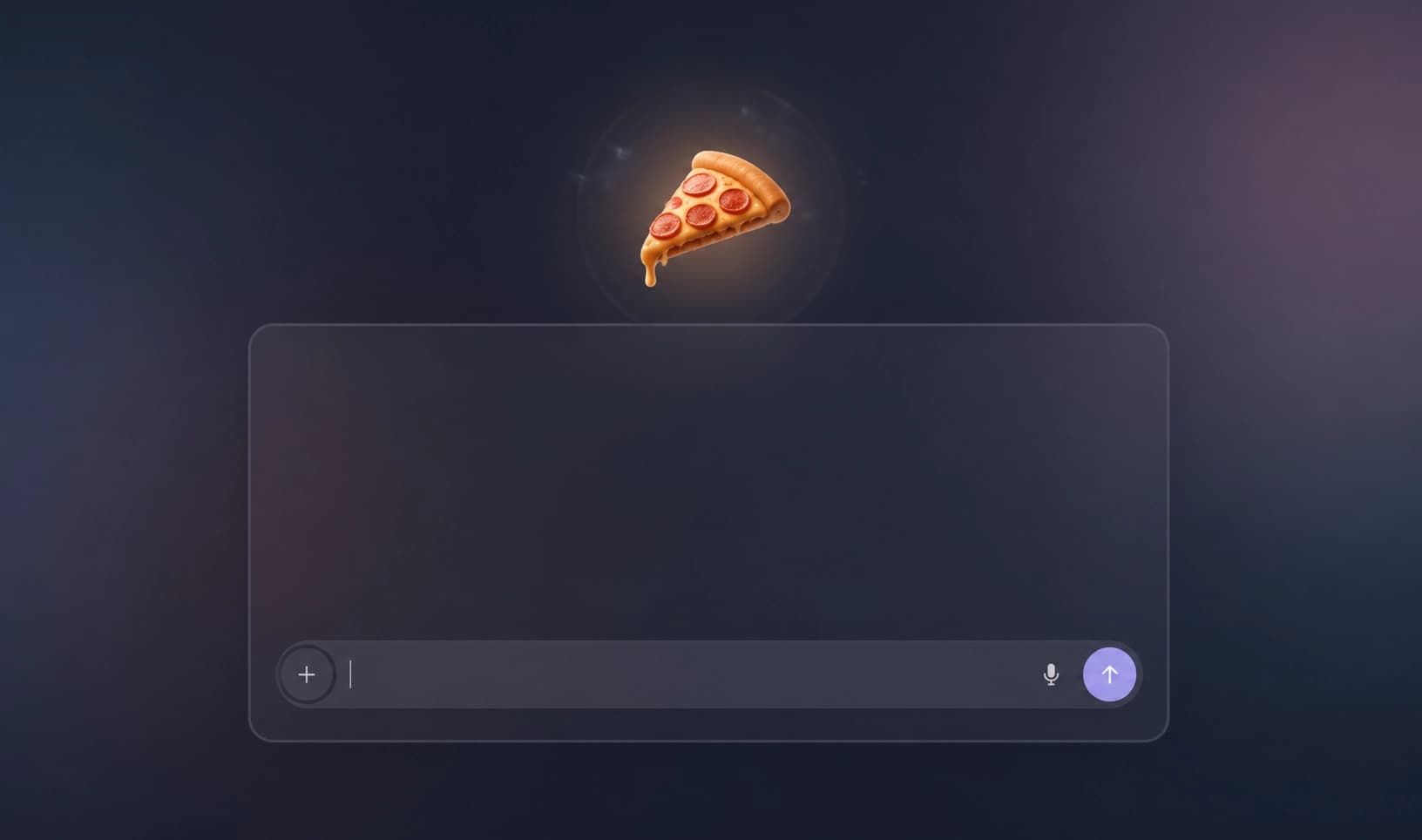
PizzaGPT does not require creating an account: simply go to the official website, choose your language from the available options, and type your question into the chat bar at the bottom of the page. Pressing Enter sends the message, and the model responds immediately.
If you want more features, you can click the Login button and sign up. This unlocks additional tools: image generation, translation services, and Instagram caption creation. For those who need maximum speed, there is a paid subscription called Chat Plus — it promises faster responses and exclusive features. At the bottom of the site, there is also a feedback form.
What you can do with PizzaGPT
PizzaGPT is not just a toy for chatting. The service can easily replace a whole set of assistants in everyday tasks.
Learning a new language
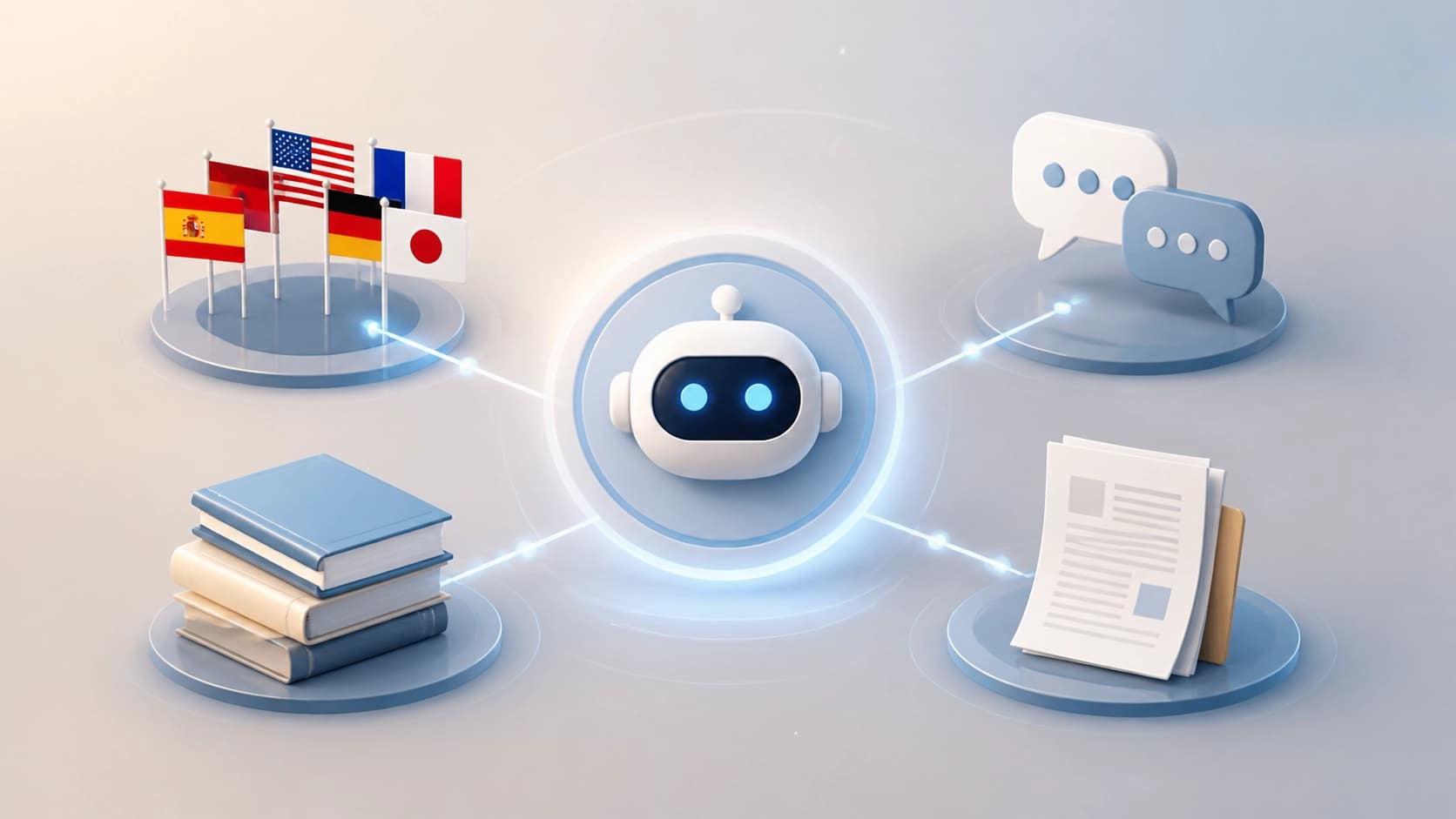
With the chatbot, you can practice dialogues, ask it to correct grammar mistakes, expand your vocabulary, and break down idiomatic expressions. It explains rules clearly and helps you master a living language.
Tourism and local culture
The service works as a travel guide: it can point out regional specifics, customs, historical facts, and even recommend restaurants. For travelers, it is a handy cheat sheet that is always at hand.
Study and work
For students, PizzaGPT is a helper with homework and exam preparation, and the level of explanations adapts to the user's education. In the business sphere, the bot can draft an email, report, or presentation in formal language, as well as help with translation for international correspondence.
Creative writing
If writer's block strikes, the chatbot will suggest plot ideas and give feedback on your text. You can use it as a co-author for stories, posts, and other materials.
Limitations and conclusions
It is important to understand: PizzaGPT is a wrapper around a third-party model, so the quality of answers depends on OpenAI. However, its main advantages — anonymity and no data storage — make it especially attractive to those who care about privacy. Compared to the original ChatGPT, the functionality is a bit more modest, but for privacy-conscious users it is a great free tool that filled an important niche and proved that restrictions can lead to useful solutions.
Frequently asked questions
Related materials
All materials
Hybrid Image Annotation: Automation Accelerates Computer Vision Model Training
The article describes how pre-labeling with algorithms reduces manual work and improves the cleanliness of training datasets, as well as why selective human verification remains essential. It covers the method’s limitations in challenging shooting conditions and with rare object types.
5 November 2026
GoldiMask Method for Fine-Tuning Diffusion Language Models: Context Selection and Target Weighting
This paper presents GoldiMask, a supervised fine-tuning approach for discrete diffusion language models that selects visible tokens via approximate maximization of a submodular function and assigns weights to remaining targets based on their training utility. Experiments across several models and datasets demonstrate improved average accuracy, gains on reasoning and coding tasks, and fewer parallel decoding iterations on GSM8K and MATH-500 at comparable quality.
30 October 2026
Transformers adds support for running quantized GGUF models on Apple Silicon
The article describes integrating the GGUF format from llama.cpp into Transformers: local inference on Mac, loading models via the library API, and running an OpenAI-compatible server. Using Qwen3.5-4B as an example, it shows how the choice of quantization level affects weight size and memory requirements.
18 October 2026