
Jalapeño by OpenAI: early tests show why the chip promises to outpace NVIDIA on inference
At the Hot Chips conference, OpenAI for the first time revealed performance measurements for Jalapeño: in SemiAnalysis tests, it delivered more tokens per user and a better result per kilowatt than current systems at the Nvidia Blackwell level. Small shipments of the chip are expected as early as late 2026, with significant expansion in 2027.
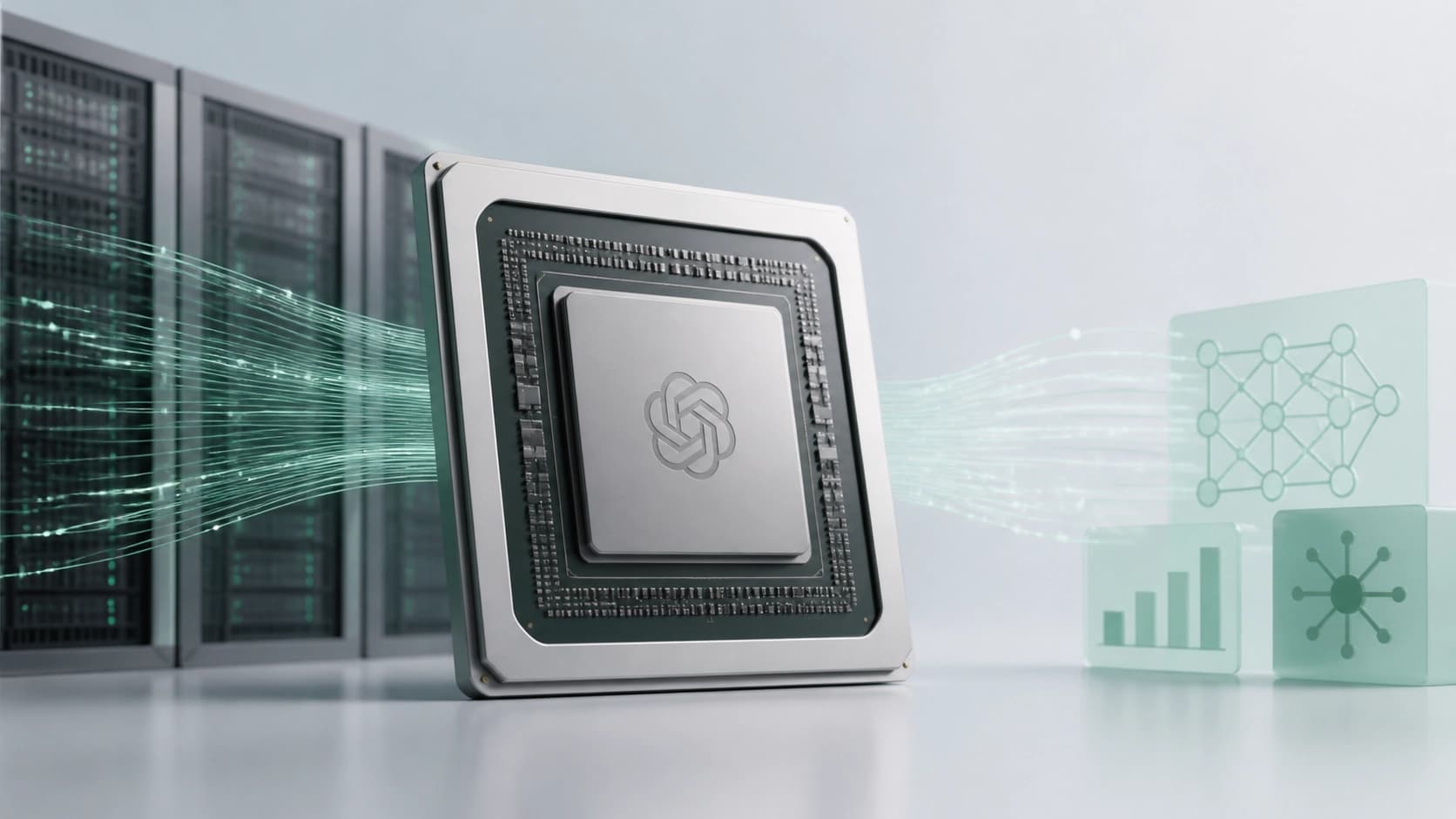
OpenAI continues to reveal its hand in the hardware race. At the Hot Chips conference, the company gave a detailed first look at its inference chip, Jalapeño, and shared fresh test results that surprised many. If these numbers hold up under real-world workloads, the balance of power in the model inference market could shift noticeably.
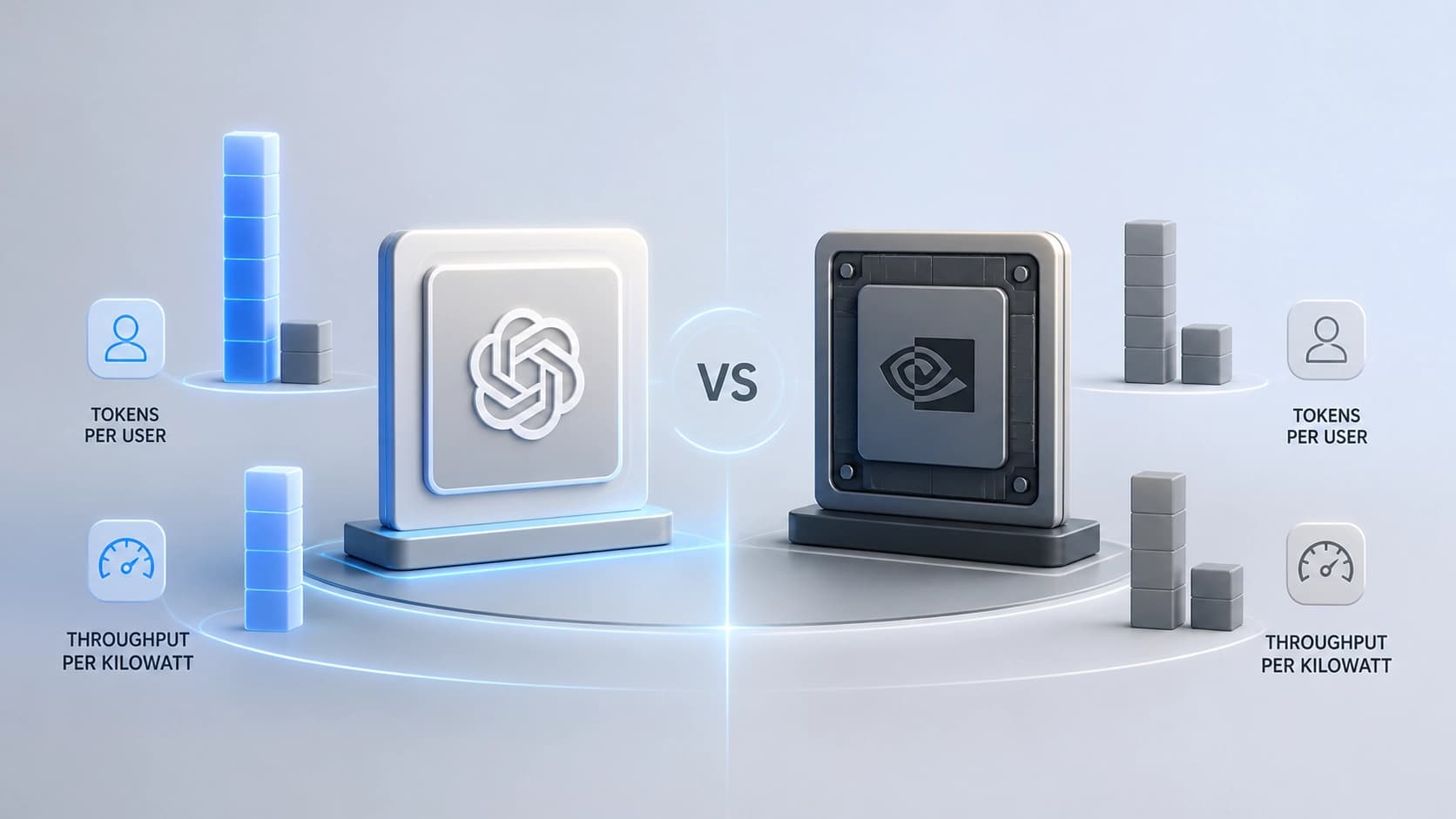
What the tests showed
In the SemiAnalysis InferenceX benchmark, the new processor outperformed currently available state-of-the-art inference solutions on two key metrics: tokens per user and throughput per kilowatt of power consumed. The comparison was made against NVIDIA's Blackwell system, which is currently considered one of the reference points for neural network inference tasks.
OpenAI's head of hardware, Richard Ho, called the results a significant improvement over the current state of the art. However, he was quick to add an important caveat: by the time Jalapeño is available in significant volumes, competitors may have had time to seriously update their platforms. So today's gap is no guarantee for the future.
Still, the choice of metrics is telling. For data centers focused on inference, the key factors are not peak performance but the cost per token and behavior under load from many users. This is exactly where the new chip aims to prove its strength.
What the advantage is based on
Jalapeño is not an attempt to build yet another general-purpose GPU. The chip was announced last October and developed in collaboration with Broadcom, using OpenAI's own models. This approach allowed engineers to identify real bottlenecks as early as the design stage.
The main issues are not the computations themselves but latency in the preparatory stages and during data exchange between blocks. For example, prefill — the stage where the model processes input data and builds context — often takes noticeably longer than desired. Jalapeño aims to minimize precisely these kinds of delays, while also reducing data movement between memory and compute cores.
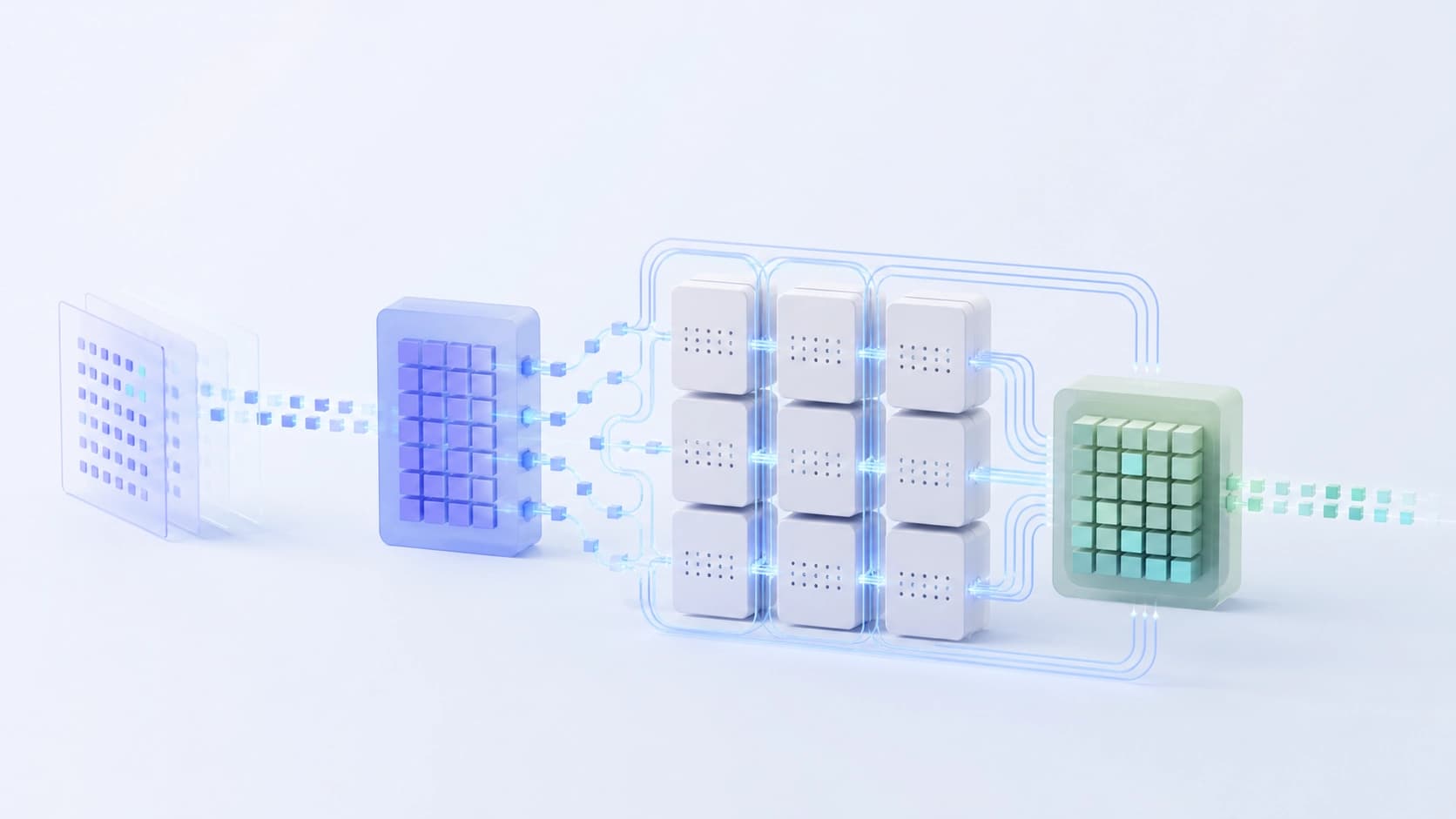
OpenAI explains that the chip can explicitly place and hold the model state locally, including the KV cache. At each stage of inference, the required combination of compute, memory, and network is activated, rather than the entire system running at once. This is somewhat reminiscent of a pipeline where each station is prepared specifically for its own operation.
When to expect it on the market
OpenAI makes no secret of treating the chip as a long-term platform: according to Ho, the company plans to develop Jalapeño across several generations. This means the current architecture is not a one-off experiment but a foundation for future iterations.
Widespread adoption, however, is still a long way off. According to OpenAI's estimates, the chip will appear in very small volumes at the very end of 2026 — more as a pilot delivery. More significant deployment is expected in 2027.
By that time, NVIDIA will most likely not be sitting idle either and may release updated versions of Blackwell. So the top spot in benchmarks today is merely an advance. What is far more interesting is whether Jalapeño can maintain its edge when it comes to mass deployment.
Frequently asked questions
Related materials
All materials
Checking LLM Hallucinations via SQL-Based Source Representation Without Fine-Tuning
The study examines whether an LLM can apply a basic symbolic skill—building a SQL database from source documents—to ground its outputs in sources without supervision when detecting hallucinations. On RAGTruth and DiaHalu, this neuro-symbolic pipeline proves more accurate than direct prediction and comparable to state-of-the-art methods, without requiring domain-specific fine-tuning.
9 November 2026
MathAdv: What the Final Accuracy of Machine-Generated Proofs Conceals
A diagnostic suite of tasks spanning 13 undergraduate and graduate mathematics topics evaluates machine-proving systems in Lean 4 not only by their final results, but also by their subject-matter mastery, the quality of their informal reasoning, and their robustness to rephrased conditions. A component-by-component analysis shows that translating a problem into formal form remains the main obstacle, and that success depends heavily on the area of mathematics and how the problem is framed.
9 November 2026
AffordanceWAM: Affordances as an intermediary between scene prediction and manipulator control
The work describes a generative model that jointly predicts future RGB observations, scalar fields, affordance heatmaps, and continuous robot commands, using human videos to broaden interaction diversity without action annotations or retargeting. On RoboCasa, CALVIN ABC→D, and real-world tasks, the approach delivers consistent gains over RGB-only and robot-data-only baselines.
9 November 2026