What the demonstration showed
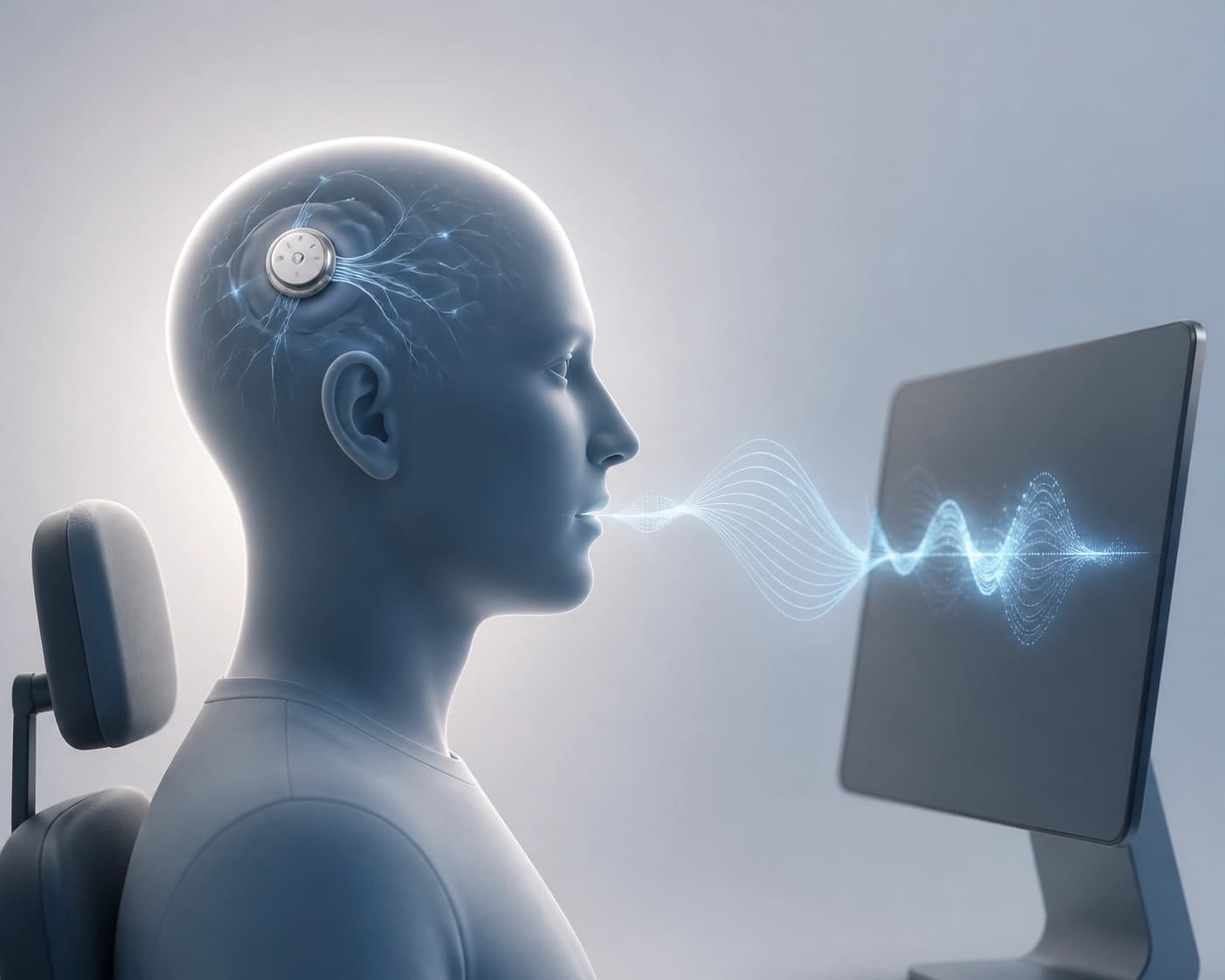
Neuralink demonstrated a brain-computer interface with a clinical trial participant who had lost the ability to speak. The system interpreted neural signals and reproduced the participant’s intended speech using a computer-generated voice.
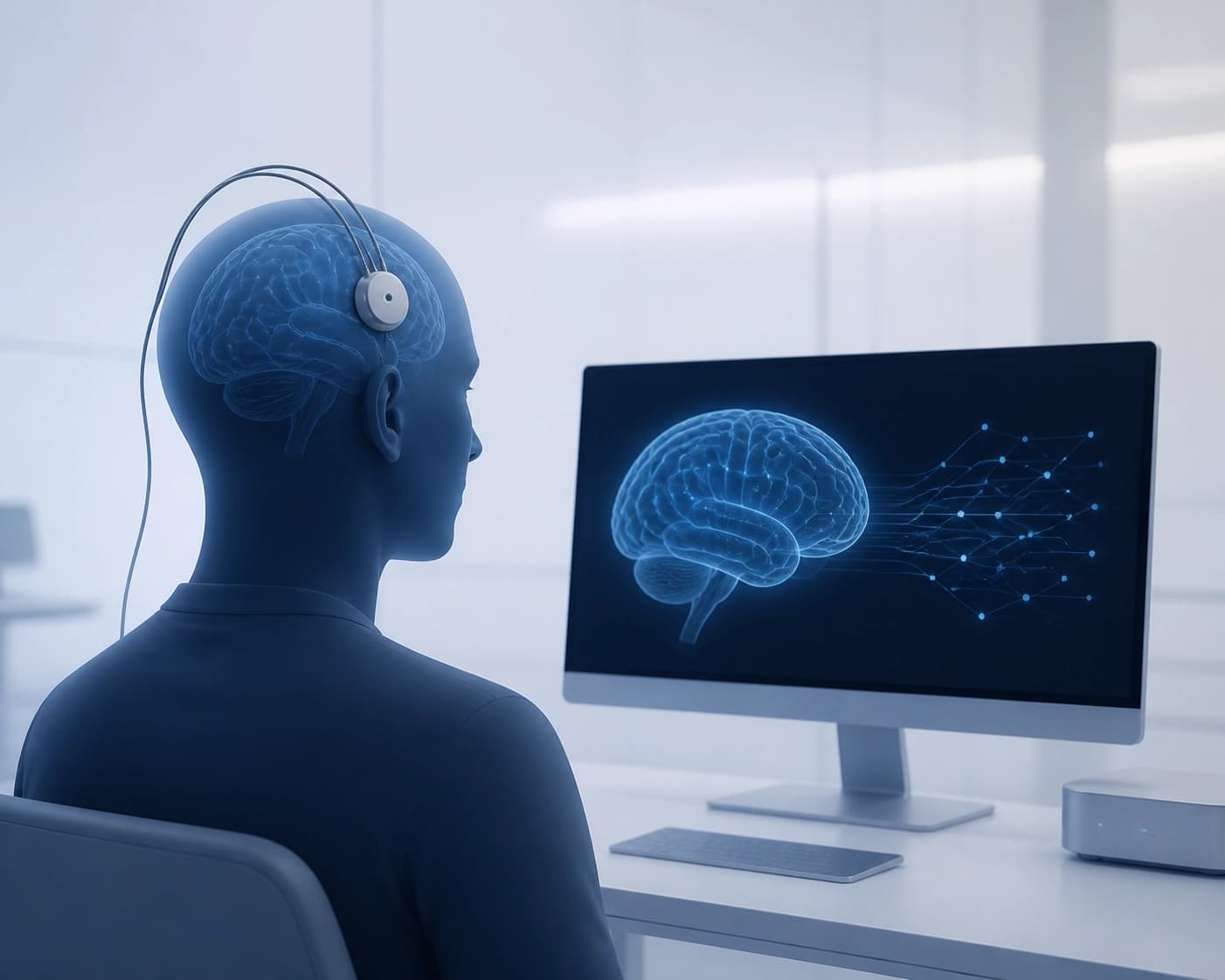
The participant sent a personal message to their partner using the implanted system. The demonstration shows intended speech being conveyed through a computer-generated voice, but does not in itself confirm the restoration of natural speech.
Practical takeaway: It is important to distinguish a voice generated by the system from the return of the ability to speak.
How the system is described as working
Neuralink records brain activity and converts the user’s intended speech into an audible voice. According to the source, the system could potentially bypass damaged pathways involved in natural speech.
This is a description of a possible operating principle, not evidence that the system restored natural speech. In the demonstration, a computer reproduced the participant’s intended speech.
Evaluation criterion: Distinguish between converting neural signals into speech and restoring an impaired function.
What potential Musk described
Neuralink’s Elon Musk called the technology’s long-term potential “Jesus-level miracles.” He spoke about the possibility of helping people with paralysis regain movement and restoring sight to blind people.
After the demonstration, Musk wrote on X: “The latest development was a wonderful surprise.” These words reflect his assessment of the technology’s potential, not a confirmed treatment outcome.
Practical takeaway: Regaining movement and restoring sight should be regarded as future goals, not clinical results that have already been achieved.
What the demonstration does not yet prove
Neuralink demonstrated the reproduction of a participant’s intended speech. However, experts say that individual demonstrations do not prove the reliable restoration of neurological functions in a broader group of patients.
| Confirmed in the demonstration described | Not confirmed by this demonstration |
|---|---|
| The system interpreted neural signals and reproduced the participant’s intended speech. | Reliable restoration of neurological functions in a broader group of patients. |
| The participant sent a personal message to their partner using the implanted system. | Restoration of movement for people with paralysis or sight for blind people. |
News evaluation criterion: Distinguish demonstrated results from future goals and claims about potential benefits.