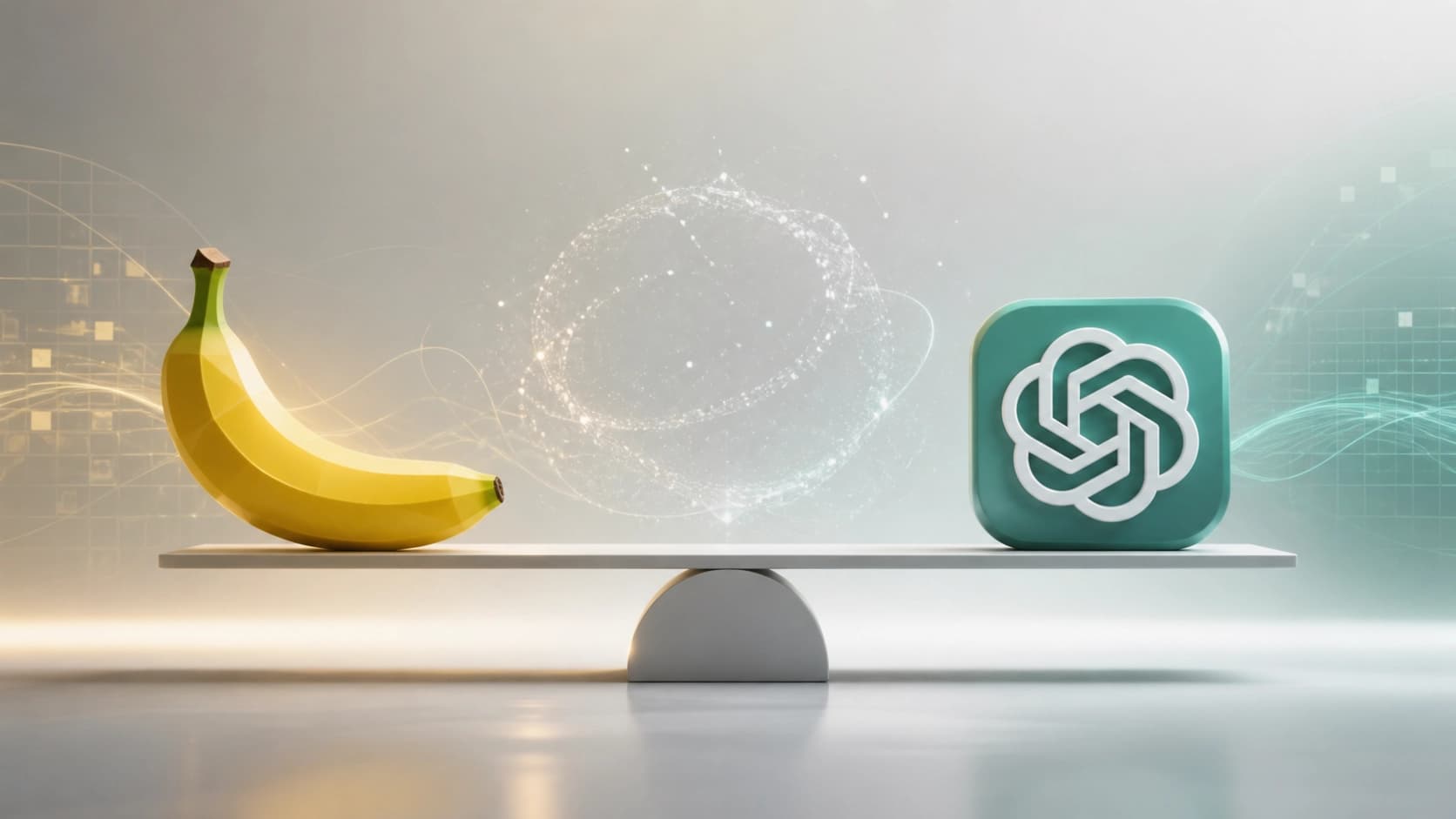
Face-off of generators: Nano Banana Pro vs ChatGPT Image 1.5
The end of 2025 was a hot time for everyone following generative models. Google and OpenAI almost simultaneously rolled out their flagship image generation solutions: Nano Banana Pro and ChatGPT Images. The first looks like a confident professional with extensive experience, while the second is an ambitious newcomer trying to carve out its place in the sun.
Let's figure out which of them is actually good at the job, not just on paper, and compare them across five key areas: from photorealism to commercial packaging design.
Starting positions: specs and price tags
Before moving on to creative tests, it's worth looking at the bare numbers. The difference in design philosophy is already visible here.
Basic model parameters:
| Criterion | ChatGPT Image 1.5 | Nano Banana Pro |
|---|---|---|
| Developer | OpenAI | |
| Release date | December 17, 2025 | November 21, 2025 |
| Free access | Limited in ChatGPT | Limited in Gemini / AI Studio |
| API | OpenAI API | Gemini / Google AI API |
| Aspect ratios | 1:1, 3:2, 2:3 | 1:1, 3:2, 2:3, 3:4, 4:3, 16:9, 9:16, 21:9 |
| Maximum resolution | 1K, 1.5K | 1K, 2K, 4K (via upscaling) |
| Speed (1K) | 30–45 seconds | 10–15 seconds |
Notice the difference in resolutions and formats. Google's model supports more aspect ratios and can scale images up to 4K, while the competitor stops at 1.5K in base quality. In terms of base image generation speed, Google also pulls ahead, producing results several times faster.
API pricing is interesting: both companies charge roughly the same for 1K generation ($0.15–$0.17). But Google's higher tier—4K—will cost around $0.26–$0.28. OpenAI doesn't offer such volumes yet, so from the standpoint of choosing for specific tasks, Nano Banana Pro looks more preferable.
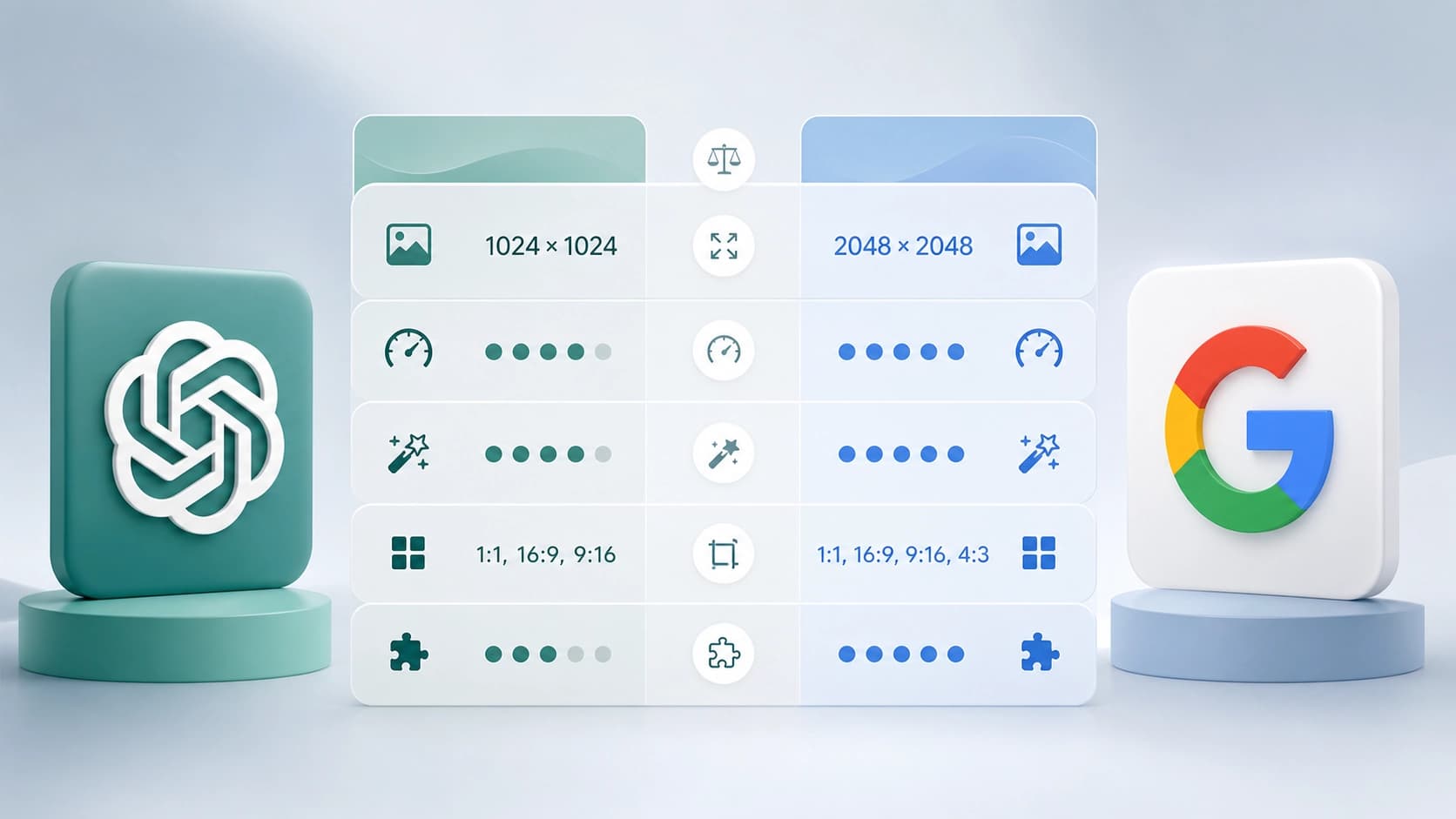
The description card for ChatGPT Images states that the new version is four times faster than its predecessor, with improved instruction following and more accurate editing that preserves details. On paper, however, as the numbers show, OpenAI's countermove still doesn't look strong enough. It's worth noting that Google also has a lighter version, Nano Banana 2, based on Gemini 3.1 Flash Image, which offers Flash speed with Pro-level quality, but our comparison focuses on the higher-end model.
Photorealism: who gets closer to a real photo?
The first and most obvious test is the ability to generate photos indistinguishable from ones taken with a real camera. Here, Google's Nano Banana Pro sets a very high bar: its images feature natural light play, correct depth of field, and convincing detail in skin and materials. It's not just "looks like a photo," but rather "looks like the work of a professional photographer."
OpenAI is trying to keep up but still relies more on versatility. The images come out high-quality and clean, but sometimes show an artificial "polished" look. In direct comparisons on lmarena.ai, Google more often came out on top specifically in the realism category, making it the primary choice for tasks where authenticity is critical.
Text rendering and typography: the battle for lettering
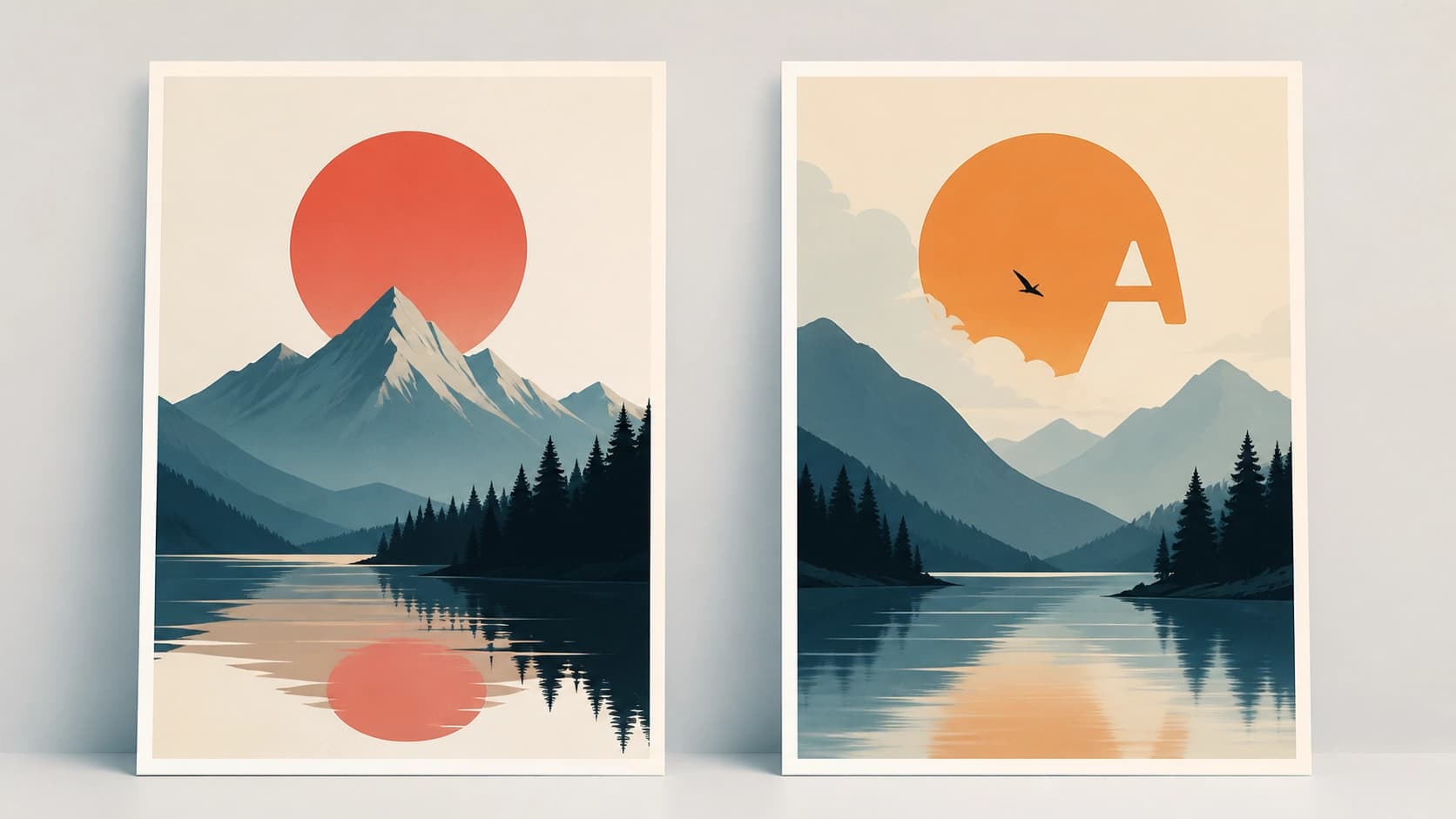
One of the hardest challenges for neural networks is embedding long, correctly spelled text into an image. Letter errors and distorted words remain the Achilles' heel of most generators.
Nano Banana Pro pays special attention to this aspect. The model handles posters beautifully, placing headlines, subheadings, and small print without spelling mistakes. For ad creatives and any materials where text is the main character, this is a real lifesaver.
ChatGPT Image 1.5 has taken a step forward compared to the old version: the number of artifacts and "letter mush" has noticeably decreased. However, in complex multi-line layouts, it can still alter the font, slant, or letter spacing, breaking the composition the designer intended. In the typography contest, the advantage again goes to Google's model.
Anime and manga: the cultural test
Fans of Asian visual culture are a separate and very demanding audience. Generating in anime style requires not just beautiful art, but precise adherence to styling, anatomy, and atmosphere.
Both models can draw in anime and manga style, but their approaches differ. Google bets on artistic quality: complex poses, detailed backgrounds, and light work. The result often looks as if an experienced illustrator drew it.
ChatGPT Image 1.5 also delivers solid results in this genre, offering its own take on stylization. While OpenAI produces very dynamic and colorful characters, in tests the model sometimes simplifies facial features or loses fine details in complex angles. If you're choosing between the two for creating a full-fledged comic, Google's option looks preferable.
Editing and local retouching: getting it just right
An important skill for any workflow is not just drawing a new image, but modifying an existing one. This isn't about text prompts, but about targeted edits: removing an unwanted object, changing the background, or moving an element.
ChatGPT Images handles in-context modifications well. You can circle an object and give the command "replace this with that," and the model will correctly insert the new element while leaving the rest of the image untouched. Style changes also work well: turning a photo into an oil painting is no trouble.
Google's model goes even further. Nano Banana Pro offers advanced local editing capabilities, including control over lighting and virtual camera position. This means you can change not just an object, but the entire mood of a frame, affecting shadows and highlights. This level of control matters for professionals working with product photography or architectural visualizations.
Commercial use: the battle for packaging
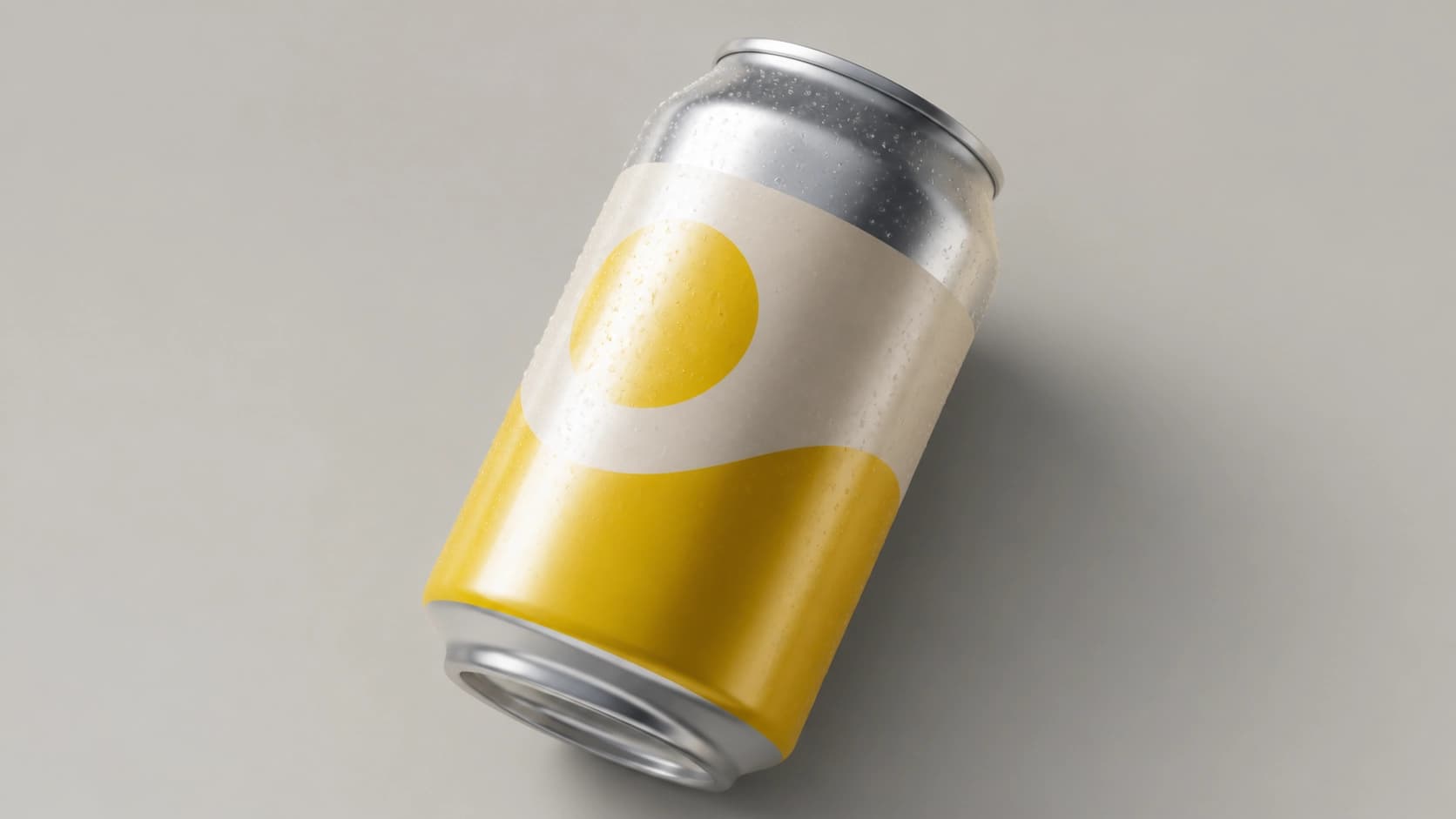
The last, but by no means easiest, test for neural networks is creating packaging designs. It's not enough to generate a pretty image: you need to leave room for the logo, product name, and standard legal disclaimers.
Nano Banana Pro feels right at home in this task. The model understands the physical properties of the object: it correctly "wraps" the design around a can, box, or bottle, creating a realistic 3D effect. Text stays clean and undistorted across curves, which is critical for real production work.
ChatGPT Image 1.5 is making progress in this area, but it lacks a bit of precision when conveying distortion on complex shapes. Lettering on the sides of cylindrical objects can look slightly "floating." For tasks that demand maximum print-readiness and high detail, Google's product deserves the preference again.
Final verdict
Across all tests and specs, Nano Banana Pro looks stronger on paper, and real-world testing confirms it. It's faster, more flexible in formats, handles text better, and offers more advanced tools for professional work. This is especially noticeable in commercial applications and photorealism.
However, it's too early to count OpenAI out. ChatGPT Image 1.5 is a fast and responsive tool that fits seamlessly into the ChatGPT ecosystem and lets you create creative visuals in a conversational mode. Ease of use and intuitive functionality can be the deciding factor for bloggers, marketers, and anyone who needs results "here and now," rather than for complex production pipelines. The choice should be based on your specific tasks: if you need maximum precision and control, it's Google; if you need speed and convenience in everyday work, it's OpenAI.