
Midjourney 6.1 vs FLUX.1 Schnell and FLUX.1 Pro: Which to Choose for Image Generation
We break down how three popular models differ: image quality, speed, price, and ease of use. We help you understand which version is best suited for creative tasks and which one for local experiments.

August update: Midjourney 6.1 vs FLUX.1
On July 30, 2024, Midjourney 6.1 was released, and on August 1, Black Forest Labs unveiled three models in the FLUX.1 series. Both releases drew attention, but their approaches differ: Midjourney focuses on prompt adherence and aesthetics, while FLUX.1 offers open and fast options for different use cases.
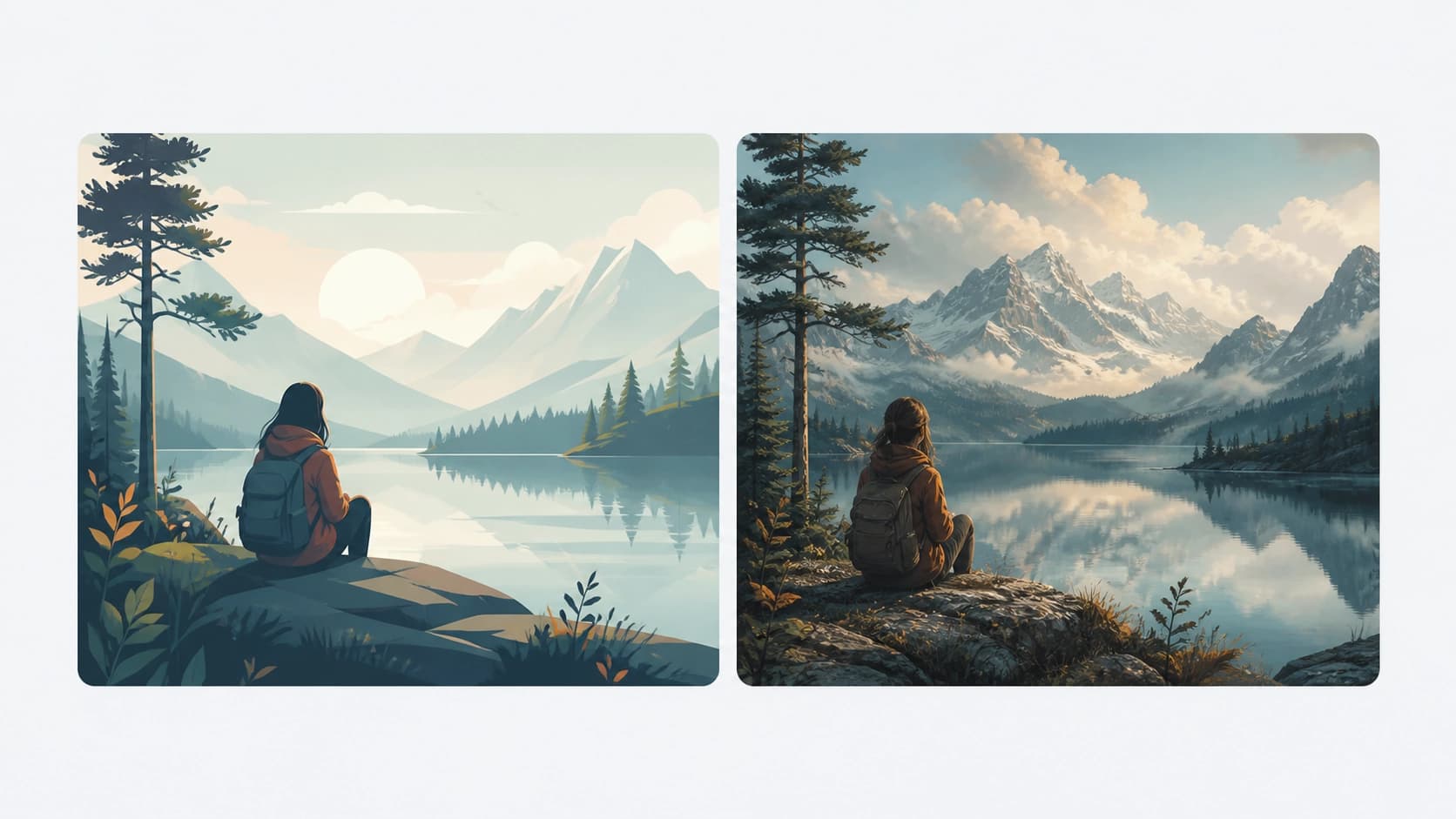
Who's behind FLUX.1: the new hope of open source
The FLUX.1 project was developed by Black Forest Labs, a team founded by Robin Rombach, who previously held a key position at Stability AI. The company raised $32 million in investments to launch the new models. The series includes three versions: the fastest FLUX.1 Schnell, the flagship FLUX.1 Pro, and the open FLUX.1 Dev for non-commercial use. The latter is based on distillation from FLUX.1 Pro, so at a similar size it works more efficiently than standard generative models.
What Midjourney 6.1 can do
The main Midjourney 6.1 update brought a noticeable improvement in image quality, more coherent visuals, and cleaner text rendering within images. Personalized models were introduced — they adapt to user preferences. In practical tests, Midjourney showed the best understanding of complex prompts. For example, when a scene required depicting a candy house, only this model drew all the candies exactly as described.
Two FLUX.1 versions: Schnell and Pro
FLUX.1 Schnell is the speed-focused option. It is distributed under the Apache 2.0 license, so it can be freely used in local development and personal projects. The model is compatible with ComfyUI, making it easy to integrate into pipelines. However, speed comes at the cost of quality: images are less detailed, and stylistic requests like ink-wash techniques are handled worse by Schnell than by competitors.
FLUX.1 Pro is the flagship of the series. It was built for maximum performance and handles prompt adherence best within the lineup, delivering high detail and greater variety of outputs. When compared to Midjourney 6.1 in terms of visual quality, composition, and color harmony, Pro holds its own against the leader and sometimes even surpasses it in detail.
Hands-on comparison: eight prompts
To gauge the real difference, we used eight varied prompts — from a candy house to an autumn landscape and a portrait of three girls. Midjourney 6.1 was run from Discord, FLUX.1 Schnell generated with the output_quality 90 parameter, and FLUX.1 Pro with 25 steps, guidance 3, and interval 2. For the sake of a clean experiment, we did not change default settings beyond those specified.
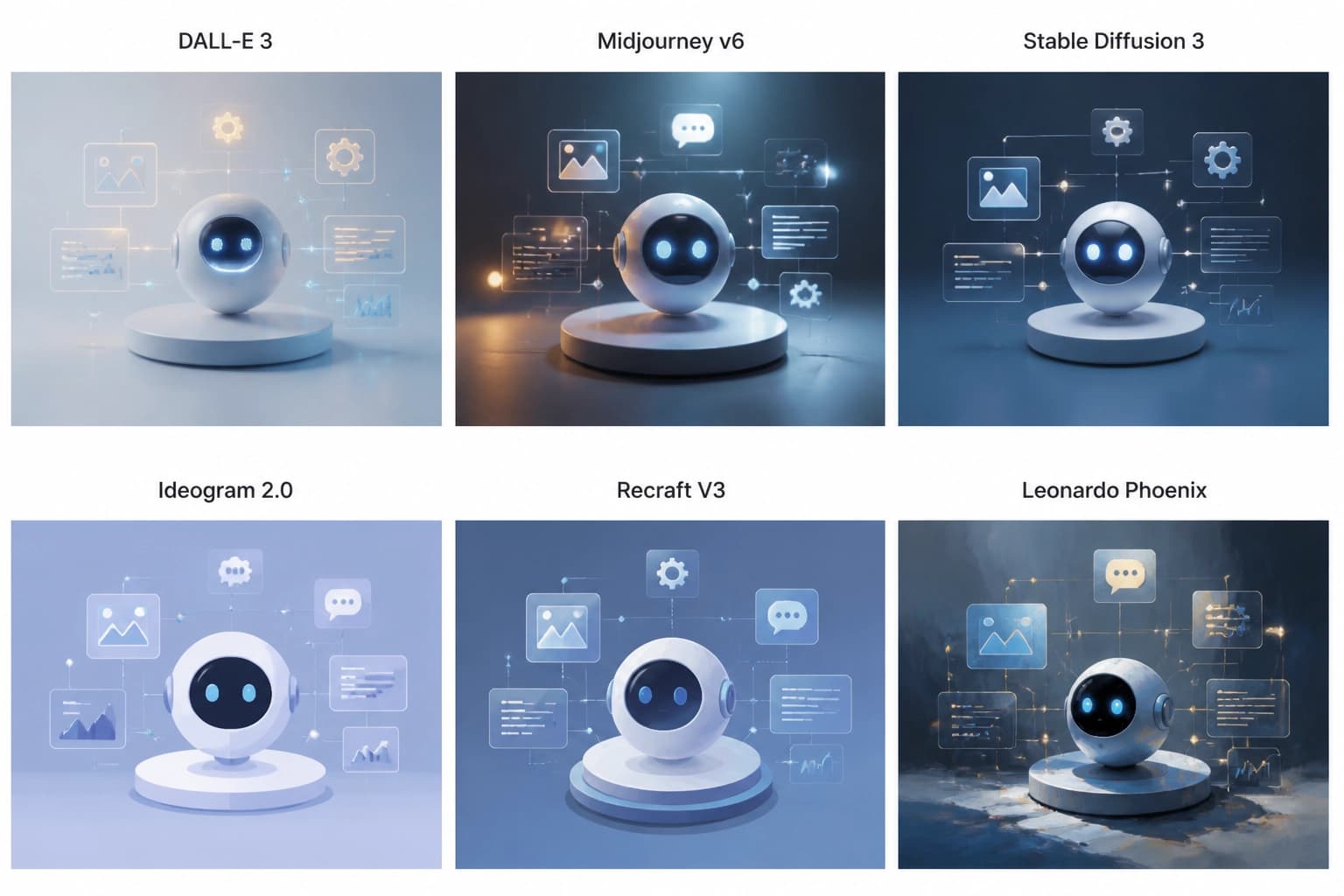
Prompt understanding — unequivocally Midjourney 6.1: it follows descriptions more accurately and distorts details less often. In aesthetics and overall harmony, two tools lead: Midjourney 6.1 and FLUX.1 Pro. FLUX.1 Schnell, however, noticeably lags in color and composition.
Conclusions: how to choose for your needs
So, if your priority is accurate prompt interpretation and beautiful images, go with Midjourney 6.1. For unrestricted local work and high speed, FLUX.1 Schnell is a good fit. And when you need Pro-level quality without being tied to Discord, pick FLUX.1 Pro. Keep in mind that Schnell and Dev have open licenses, while Pro and Midjourney work via subscription or API.
Frequently asked questions
Related materials
All materials
CARAT: Testing Whether Materials Science LLMs Generate Structure or Paraphrase the Prompt
This work proposes a protocol that fixes the question and gold-standard answer across eight ways of presenting structure, while separately marking links in GraphSpace. Experiments with pairwise fine-tuning, target-field masking, and evidence augmentation show that the model can learn both how to apply a relation and how to follow a link, although removing the link reduces accuracy below that of heuristic traversal methods.
27 October 2026
Muse’s launch outperformed ChatGPT’s debut in mobile app stores
According to Apptopia estimates, during its first 12 days on iOS in the US and Canada, Muse received 1.8 million downloads, compared with 1.3 million for ChatGPT; Muse also had more daily users in the US. The comparison is based on third-party estimates and covers different launch conditions: ChatGPT launched internationally from the outset, while Muse was available only in the US and Canada.
15 October 2026
The Vocci Ring Offers a New Way to Record Meetings—with Caveats About Price and Privacy
Testing the device shows that it handles transcribing long conversations, but is less convenient for short notes; the app also has its drawbacks. The article explores privacy concerns and why a ring might suit some people better than other wearable recording devices.
13 October 2026