
When the "Forgotten" Returns
The unlearning mechanism of large language models usually looks impressive: after the procedure to remove unwanted information, the model stops producing texts on the forbidden topic. But such cleansing is rarely stable. If, after it, you perform ordinary fine-tuning on a small fragment of that very data, the knowledge returns almost effortlessly. Experiments with the TOFU dataset show that fine-tuning on just twenty forgotten examples can significantly restore metrics on the target set for all known unlearning methods. The issue here is not the quality of a specific technique, but the properties of the optimization process: after the forgetting procedure, a special loss geometry is created, through which retraining easily paves the way back.

Margin Cliff: A Unified Scenario for Knowledge Return
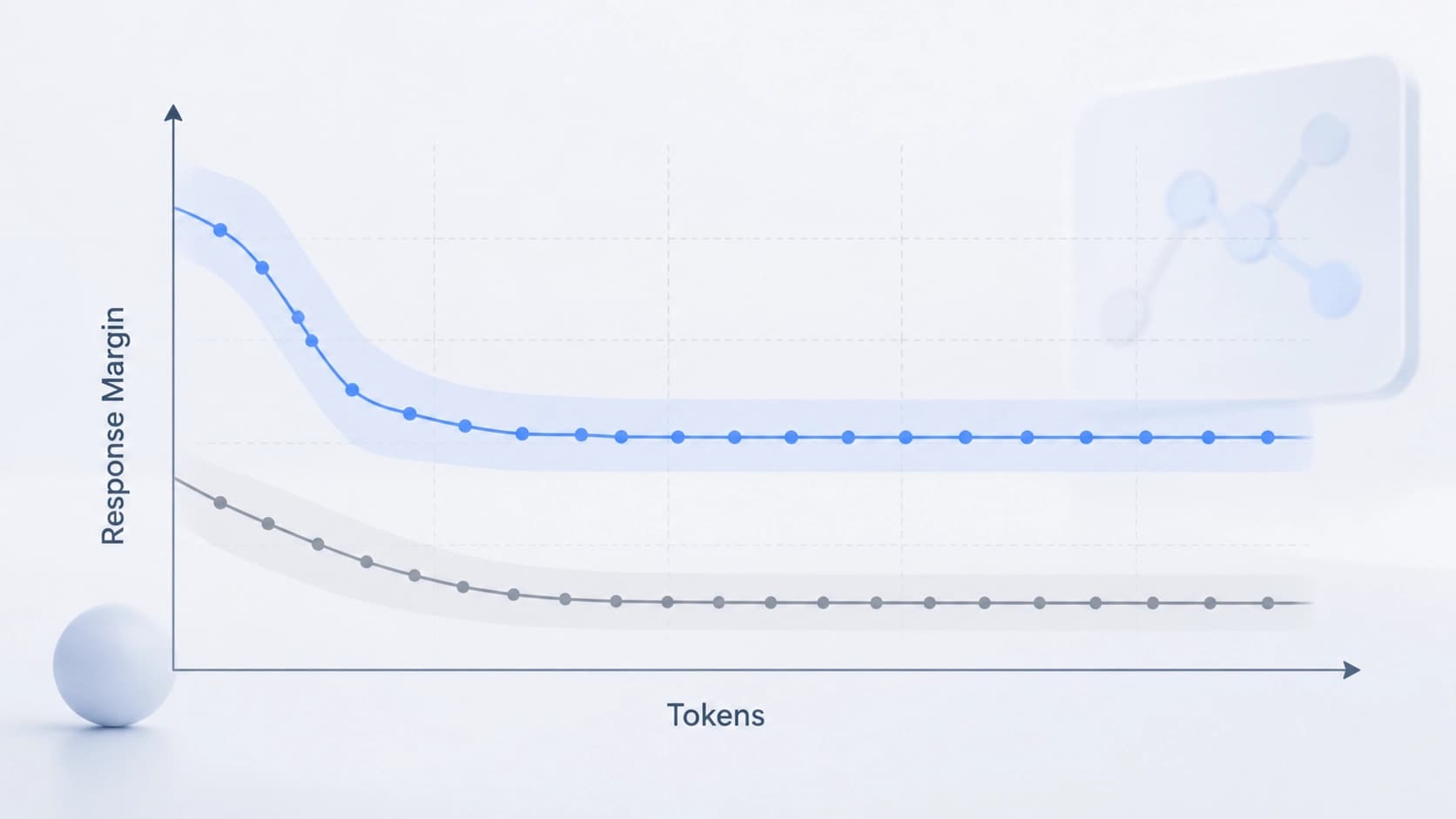
The researchers analyzed the behavior of fourteen post-hoc unlearning methods—gradient-based, preference-based, and distillation-based—and discovered a strange pattern. For each method and model size, one can measure the answer margin at the level of individual tokens, that is, the headroom with which the model prefers one token over another. It turned out that after unlearning, this margin almost always converges into a narrow band located just above the level set by the retained dataset. This phenomenon appeared in 41 out of 42 possible method-model size combinations, earning it the name "margin cliff"—by analogy with a geological cliff, beyond which there is nothing.
Why the Cliff Occurs
Mathematically, it was possible to show that the cliff appears when connections with the retain set hold the diagnostic logits of the forgotten content above a certain threshold. This is enough for optimization to stop: the original loss function of token-saturating methods reaches a stationary point, although forgetting is not yet guaranteed. Verification on 34 of the 42 experimental cells confirmed that it is precisely loss saturation that creates that very "false success," which makes the return of knowledge trivial.
Margin Calibration: How to Fix the Cliff
The authors of the work propose a plugin-polish called Margin Calibration (MC). This is not a standalone unlearning method, but an additional module that is attached on top of any existing approach. Instead of relying on a saturating loss, MC adds a non-saturating margin hinge: it compares the per-token margin of a specific token with the margin of a reference response obtained on retain data. Additionally, a KL probe is applied on an instruction corpus unrelated to the original training distribution. Thanks to this hybrid pressure, it is possible to restore the signal strength on the forgetting side precisely in those places where the original loss "got stuck" at a stationary point.
The theoretical part adds confidence: if the gradients from different components are aligned in terms of dominance, then the stationary set of MC lies on the side of intersection with the cliff. This makes it possible to estimate an upper bound on the attack budget for raising the margin: if an attacker tries to repeat the training, they will have to go through serious resistance, rather than slip along a polished slope.
Results: Victory over Attacks and the Price of the Question
The effectiveness of MC was tested on three benchmarks: TOFU with three Llama-3 model sizes and three forgetting levels, MUSE-News on Llama-2-7B-hf, and a separate Phi-3.5 panel. Without changing the configuration for a specific case, the plugin-polish won all 14 pairwise comparisons of forget aggregates and filled all available cells of the retraining test. The numbers speak for themselves: the panel-average ROUGE-L metric after the attack dropped from 0.41 to 0.18—that is, the model almost stopped reproducing forgotten texts, even when attempts were made to "retrain" it. In addition, MC reduced the raw membership AUC (a metric for determining whether data was in the training set) in 13 of 14 cases.
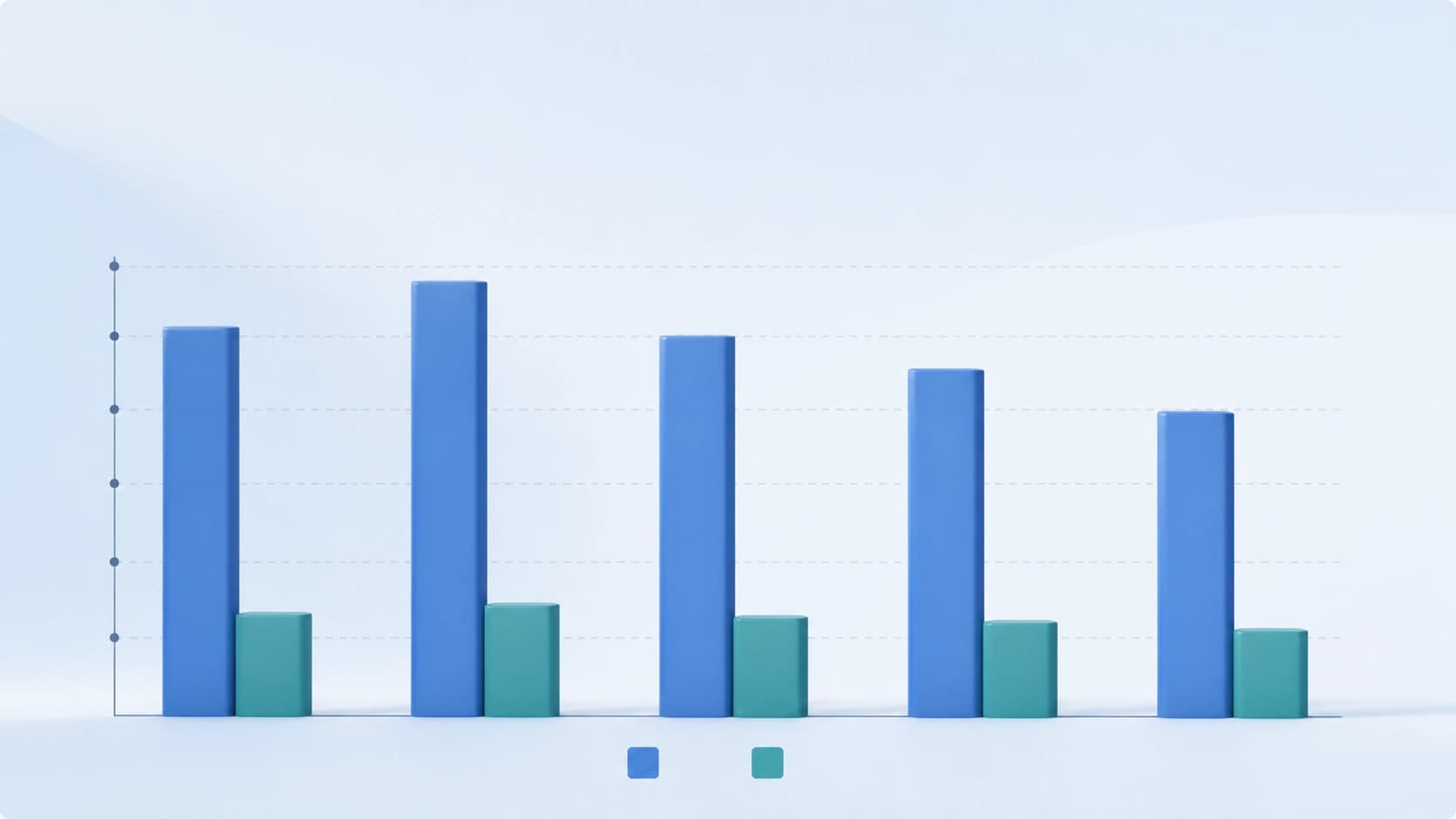
However, there is also a downside. In all experiments, a decrease in model utility on the retain side was recorded: the plugin makes unlearning deeper, but the model copes worse with tasks related to retained knowledge. This trade-off must be factored into the application scenario: for tasks where performance on retain data is critical, fine-tuning of thresholds or lighter regularization will be required.
Production Variant without a Retain Reference
The MC scheme described above relies on reference margins obtained from a "golden" response trained on retain data. But in practice, there is often no access to the original training distribution. For such cases, a separate deployment variant is provided: it allows achieving the same improvements without using a retain-trained reference, replacing it with a priori set thresholds or control margins from a general instruction corpus. This makes the method applicable in real products, where the data for unlearning has already been removed from the system and restoring the reference is impossible or prohibited by privacy policy.
Conclusions
The main practical takeaway from the study: unlearning in language models cannot be considered reliable until the optimization geometry is taken into account. The "margin cliff" explains why many elegant methods on paper do not withstand even weak retraining attacks and points the direction for further work. Margin Calibration is one of the first plugins that purposefully combats this phenomenon, and although it does not yet solve the problem without side effects, it sets the right framework: instead of "once forgotten—forgotten forever," one should think about creating a loss landscape where the return of the forgotten is unprofitable and energetically costly.