Two AI researchers — Animashree Anandkumar and Benedict Yenik — turned down an offer to lead Project Prometheus, which is being developed with support from Jeff Bezos. Instead, they launched their own startup, Accelerated Understanding, focused on modeling the physical world at industrial scale. Their idea is not another chatbot, but systems that understand space, time, materials, and energy.
At first glance, the decision seems surprising: the terms of joining Prometheus looked lavish. However, the researchers chose independence — and now they explain why.

Why not Prometheus?
Prometheus was founded by Jeff Bezos together with investor and biotech entrepreneur Vik Bajaj. The project has been ambitious from the start: it focuses on automating the production of complex physical systems. Prometheus later raised $12 billion in a Series B round, but the arrival of that amount no longer influenced Anandkumar and Yenik's choice.
It's not about finances. The researchers were offered a 35% stake in the company, salaries of up to $2 million a year, and more than $2 billion in funding through Series B. But under the hood, Prometheus apparently followed a different technological logic. The scientists concluded that they could achieve more by going their own way and focusing on a fundamentally different AI architecture.
Technology: from language to physics
Anandkumar describes the Accelerated Understanding concept as a shift from a "language model of intelligence" to a nature-centric approach. Unlike conversational systems such as ChatGPT, which operate on text, the new platform attempts to predict physical phenomena in space and time. This is not an attempt to improve existing generative models, but rather the creation of a different class of tools.
The key technical foundation is neural operators. Anandkumar helped advance this field during her research work at Caltech and Nvidia. The system deliberately does not rely on the Transformer architecture on which almost all modern large language models are built. The developers claim that their solution can process up to five trillion data fragments in a single query — roughly five million times more than the typical capacity of flagship models from Anthropic and Google.
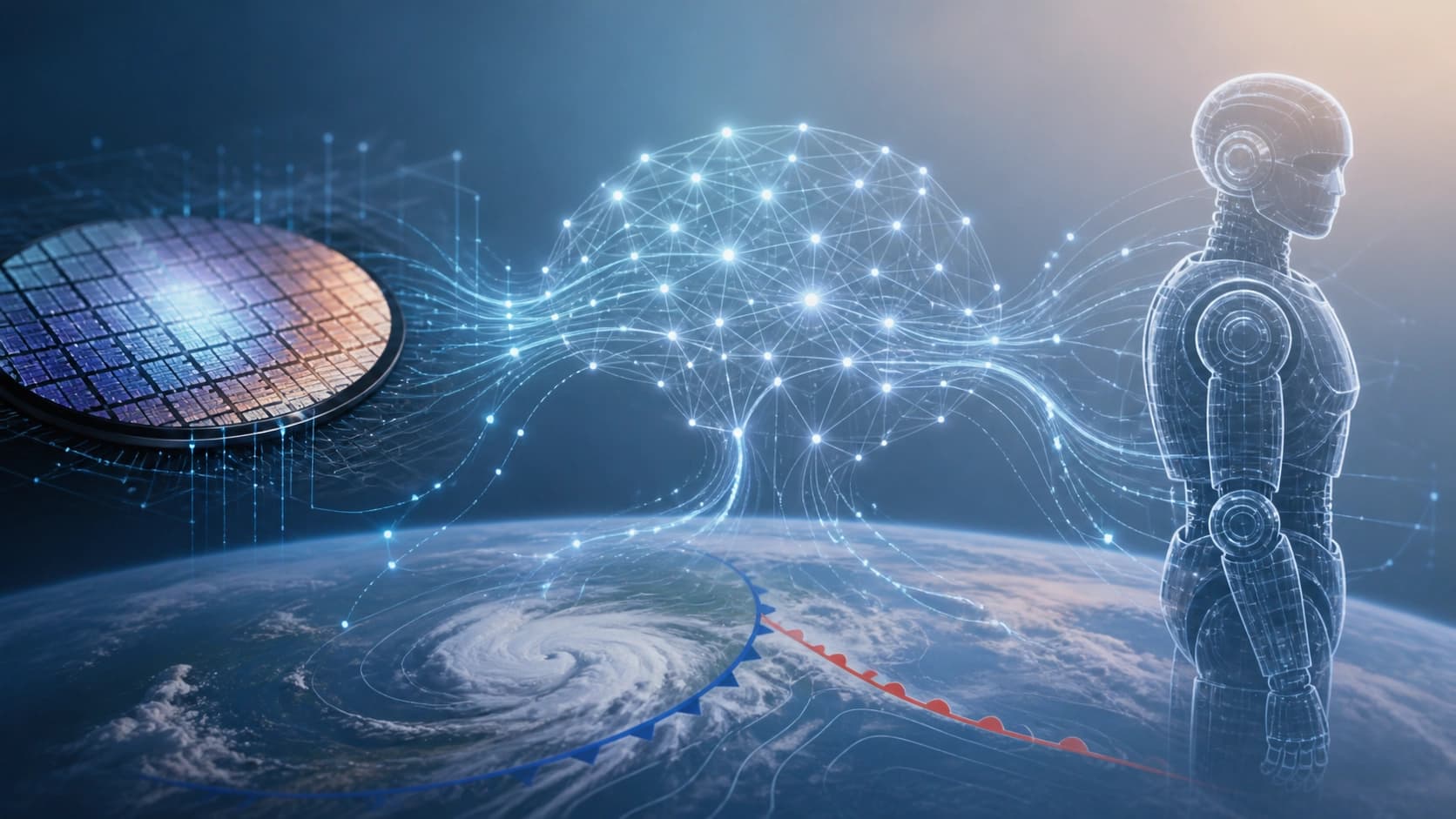
Such context headroom is needed not for long dialogues, but for full-fledged modeling of complex systems — for example, how silicon behaves when heated or how an atmospheric front forms.
Where it will be useful
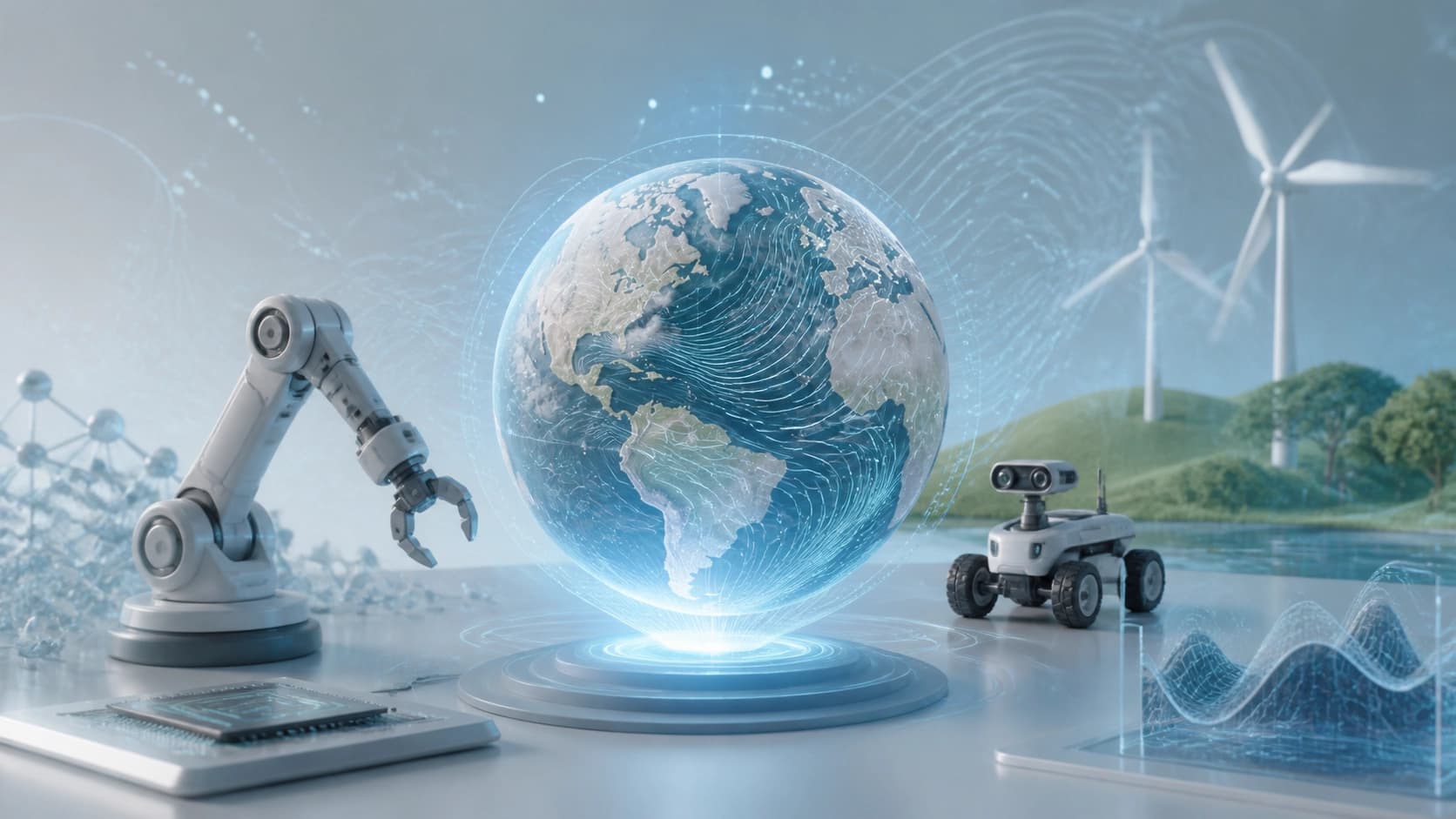
The startup plans to work with enterprise clients rather than release a consumer product. Priority areas include the semiconductor industry, robotics, weather forecasting, and energy.
For chip manufacturers, the technology could predict how different materials and temperature regimes affect the final performance of components — before costly physical testing. In meteorology, the new model could describe complex physical events without the need to build separate simulations for each scenario. In effect, the company offers a universal "physics engine" around which industry-specific solutions can be built.
Anandkumar has solid experience for such a task: she is a professor of computing and mathematical sciences at Caltech, and previously spent five years as a director of research at Nvidia, where she worked on GPUs and advanced AI applications. According to her, Nvidia CEO Jensen Huang encouraged the development of precisely this broader idea. Now she and her co-founder have the opportunity to realize it in full, without looking back at the investors of a major project.