In brief: what this is all about
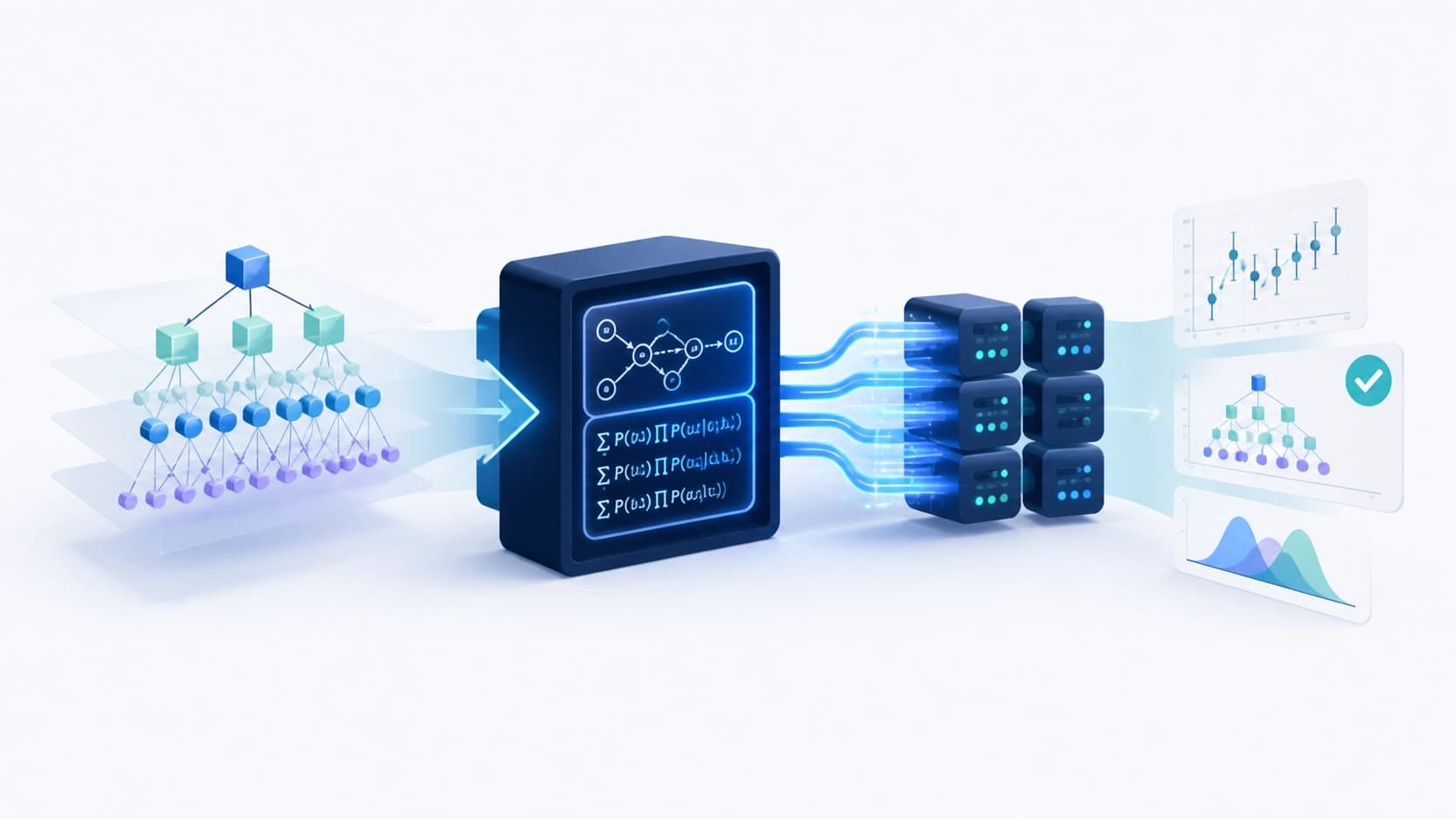
In August 2026, a paper appeared on arXiv with an almost mundane title — "Software Defined Dataflow System for Large-scale AI Acceleration." Behind it lies a description of the Maia 200 accelerator, and this is not just another iteration of "more flops per watt." The main idea here is architectural: the authors propose shifting the emphasis in how an AI chip is structured altogether.
The material was submitted on August 25, 2026, to the cs.AR section, by Torsten Hoefler, with 17 people in the author list (Sherry Xu and sixteen other researchers). The paper is tagged under several categories at once: hardware architecture, artificial intelligence, distributed and parallel computing, emerging technologies, and machine learning. So this is not pitched as a "hardware" note but as a concept that touches the entire stack.
Data instead of commands: the essence of the shift
A classic accelerator is built around an instruction stream. There are cores, there is a scheduler, there is a cache hierarchy — and this entire structure serves instruction execution. Memory in such a model plays a supporting role: deliver the data on time, and we'll handle the rest.
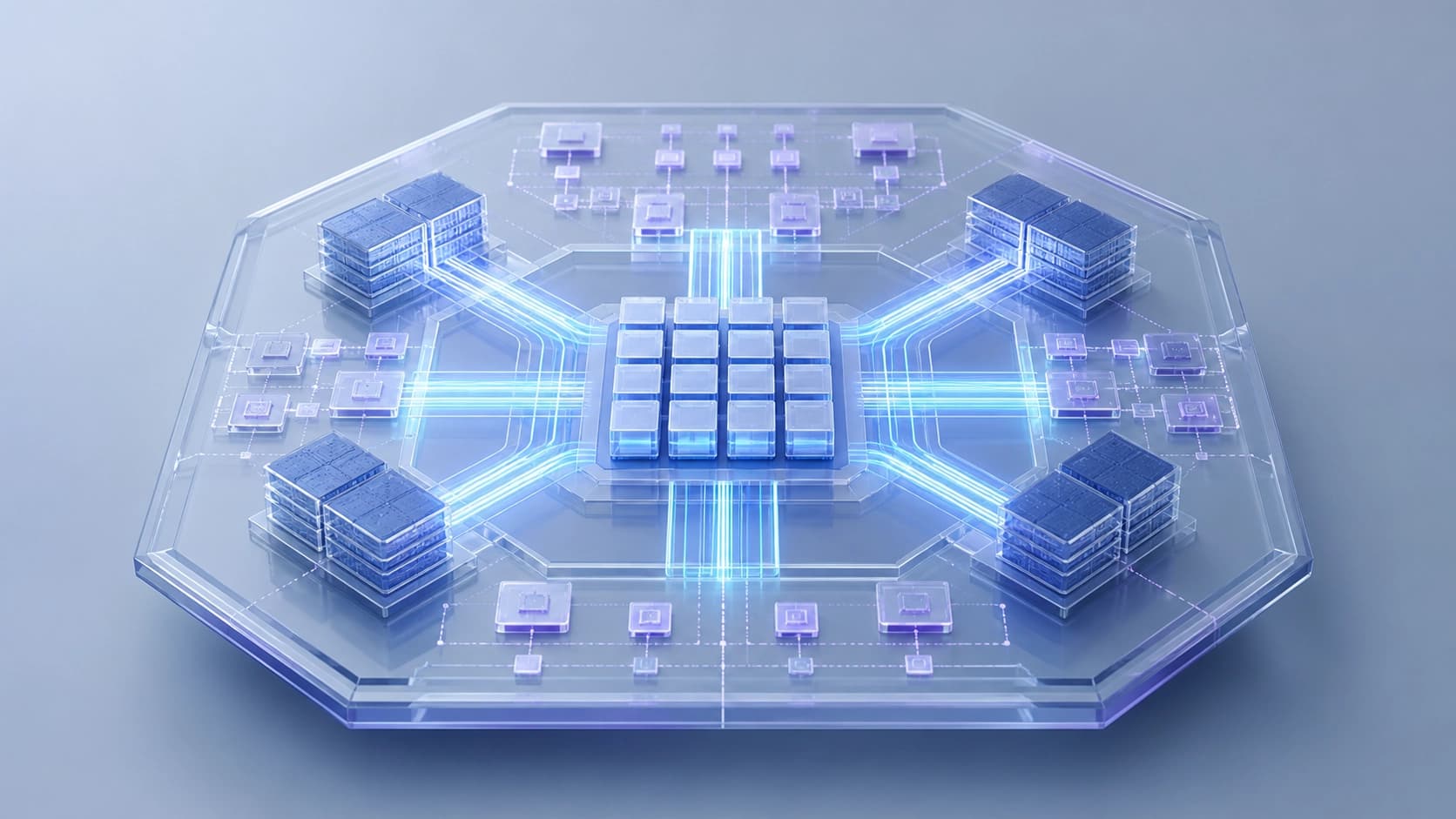
In Maia 200, the logic is inverted. The authors classify the chip as a new class — Software Defined Locally Accessed Dataflow Architectures, or SDLA for short. The key word here is "software defined": dataflow engines don't just exist in silicon, they are explicitly programmed. The programmer describes exactly how specialized memory blocks and data movement engines should be orchestrated. Control becomes explicit rather than a side effect of the pipeline.
Hence the shift in focus: not thread-centric, but data-movement-centric. The question "how many instructions per cycle" gives way to "how fast and losslessly data arrives where it will be computed." For modern workloads, these are fundamentally different problem statements.
The numbers
The dry specs from the abstract look like this:
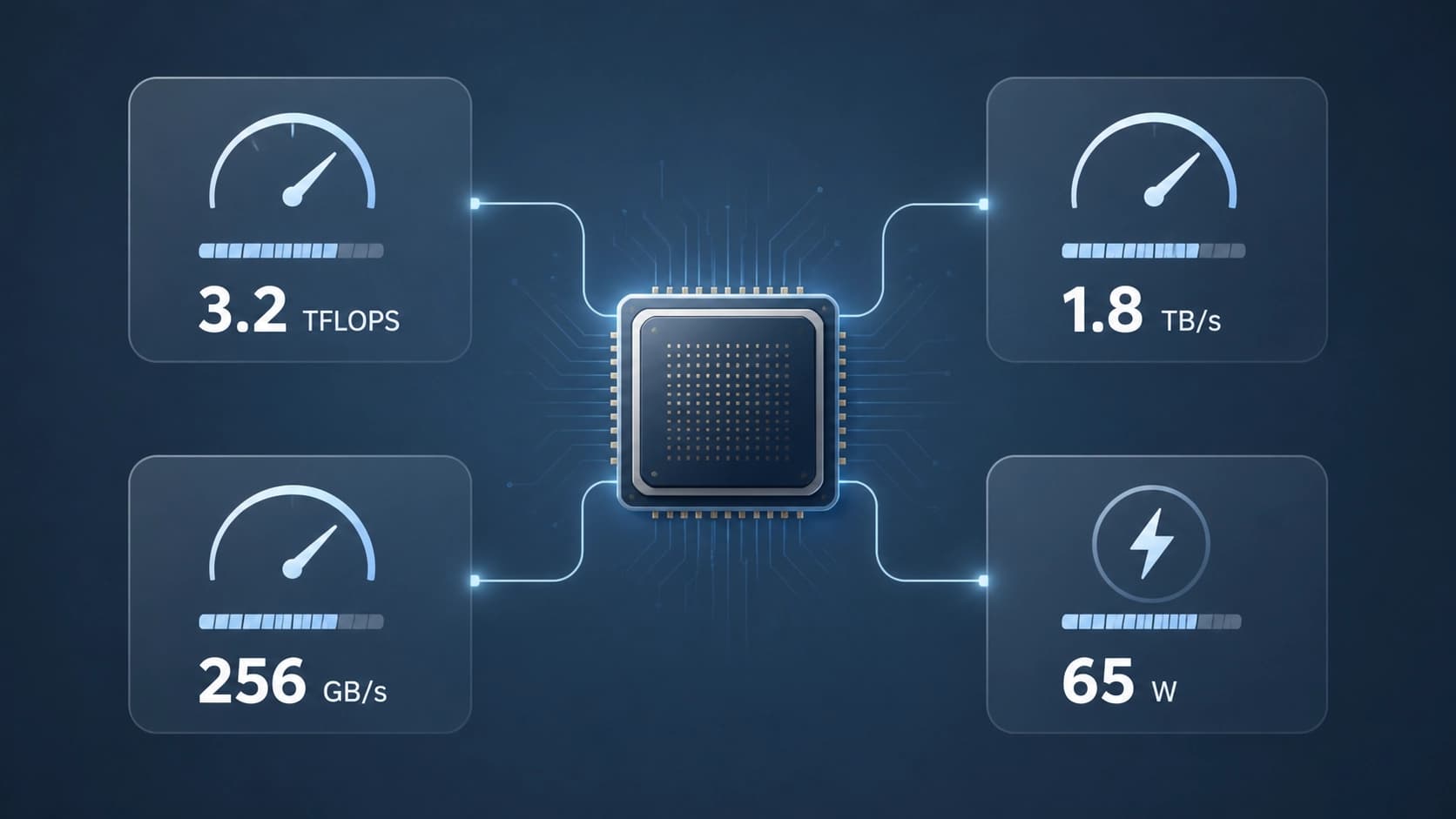
- 10,145 Tflop/s in FP4 format;
- 5,072 Tflop/s in FP8;
- HBM memory bandwidth — 7 TB/s;
- thermal design power — 750 W.
What these numbers mean — and what they don't
The temptation to immediately compare 10,145 Tflop/s in FP4 with something familiar is strong, but there's nothing to compare it to correctly: the authors don't publish benchmarks on specific models, and different precision formats and different measurement methodologies yield incomparable numbers. Separately, it's worth keeping in mind that very low precision (FP4) is always a trade-off in quality, and a gain in numbers doesn't equal a gain in useful work.
What's far more interesting here is 7 TB/s. It's this characteristic that rhymes with the paper's main idea: if the architecture is built around data movement, then memory bandwidth is not a secondary parameter but a load-bearing structure. And 750 W is a reminder that we're talking about a rack, not a desktop card.
SDLA and the new taxonomy
To explain how such a chip differs from conventional ones, the authors build a taxonomy of data management. Their reference point is the long-standing Flynn classification, which divided machines by the number of instruction and data streams. That was a convenient language for an era when the bottleneck lay in execution.
Now, according to the authors, a different language is needed — one about how a system manages data. The classification ends up being not about "how much" but about "how it's organized." And within this framework, SDLA occupies its own cell: an architecture where memory and data movement are first-class citizens, not background.
The practical value of such a taxonomy isn't a love of diagrams. It gives engineers a vocabulary: you can meaningfully debate which class a particular piece of hardware belongs to and what tasks suit it, instead of measuring everything with a single number.
Why this matters for inference
Inference is largely about pushing enormous volumes of weights and activations through a chip with minimal latency. The larger the model, the more everything runs into memory and inter-block connections rather than arithmetic. Efficiency here is determined by how well the system can move data.
The authors claim that Maia 200 delivers significant savings in cost and energy, supporting massive parallelism specifically on inference workloads. If this is confirmed on real tasks and not just synthetic ones, we'll be talking about a different balance: not "the fastest chip" but "the chip that's cheaper to feed for the same volume of requests." For data centers where the count is in megawatts, this is exactly the kind of argument that tips the scales.
What's left unsaid
Accuracy demands caveats. The work is a preprint: arXiv:2608.24664, DOI 10.48550/arXiv.2608.24664, with PDF, an experimental HTML version, and TeX sources available. Peer review, independent benchmarks, and reproduction of results are still ahead. Promises about energy and cost savings should be read as the authors' claim, not as a measured fact from a third party.
The second question is the cost of transition. Programmable dataflow requires a different mindset: developers need to explicitly describe data routes, and compilers and frameworks need to learn to use this. Until the ecosystem catches up, the hardware's advantages won't be visible to everyone or immediately. That's how any architectural shift has gone: first the concept, then the tools, then mass adoption.
And yet the main thing in this story isn't the specific teraflops. More important is the framing itself: the bottleneck of AI computation has shifted to where data travels, not where instructions execute. If this idea is correct, next-generation chips will be designed differently — and perhaps this paper will mark the starting point.