
Where the LLM Judge Gets It Wrong: Testing the Reliability of Automated Evaluation for Voice Agents
The authors of an arXiv preprint compared how human raters and the GPT-4.1 and GPT-5 models judge the same voice agent conversations in telecom and retail — across 10 efficiency and safety metrics in three evaluation setups. The conclusion: automation isn't suitable everywhere, and some indicators (such as Recovery Turn Count and safety-recall) can't yet be handed over to a machine without human oversight.
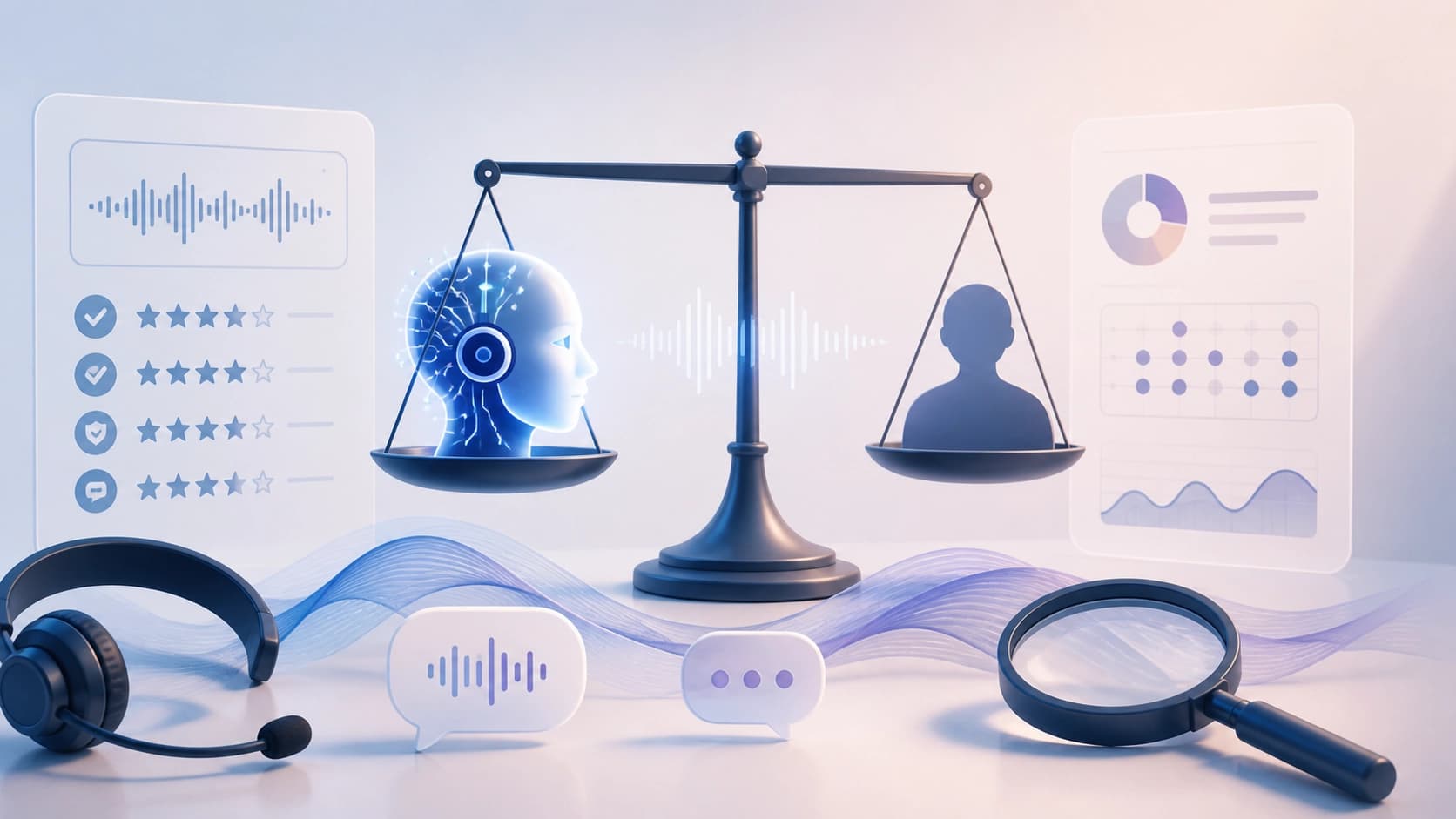
Why evaluating voice agents is so hard to automate
A conversational voice agent is not a single model but a pipeline: speech recognition, reasoning, tool calling, response generation, synthesis, and audio streaming. A failure at any stage does not stay local — it propagates down the chain and surfaces in the dialogue itself. That is exactly why judging interaction quality only makes sense end-to-end, rather than by individual links.
Keeping a staff of human evaluators is expensive and inconvenient: you cannot scale them to hundreds of thousands of conversations, and their attention drops off toward the end of a shift. The natural way out is to hand evaluation over to a language model. A recent arXiv preprint 2608.24314 (Anupam Purwar, Shashank Singh, Kritika Srivastava) examines just how justified that way out is and where it breaks down.
How the authors tested LLM judges
The experiment is built on real conversations from voice agents in two industries — telecom and retail. Human ratings were compared against verdicts from GPT-4.1 and GPT-5, and not on a single generalized scale but across ten metrics: some describe the quality of the conversation itself, others describe safety.
Three configurations instead of one
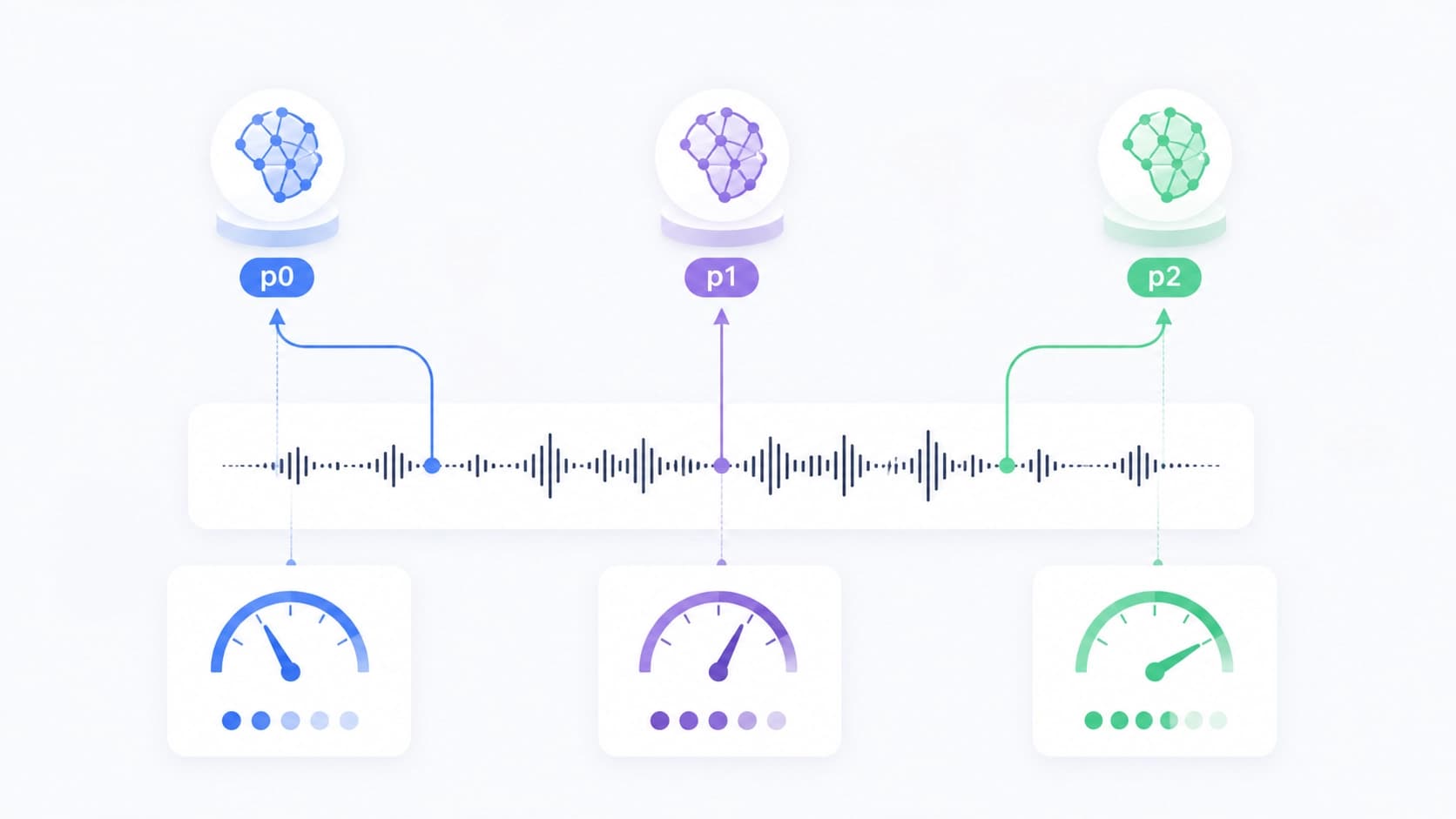
The same dialogues were run through three evaluation schemes — p0, p1, and p2. The point of the exercise is simple: if the verdict changes depending on how the rubric is composed, then the judge is measuring the form of the instruction, not the quality of the conversation. Any metric that "drifts" between configurations is unsuitable for automation — at least without caveats.
What exactly was compared
Aggregate agreement — the percentage of matches between human and model — is only the top layer. The authors dig deeper: they look at correlations for each metric separately, check how stable the ratings are within a group of people, and analyze systematic discrepancies between humans and the LLM. This kind of breakdown makes it possible to understand which attributes of a conversation lend themselves to automatic evaluation and which run up against context and interpretation.
Where the LLM judge gets it wrong
The key takeaway sounds more like a warning than an advertisement for the method: the reliability of automatic evaluation is not uniform — it depends on the specific metric and on the configuration. The same judge models deliver solid results on some scales and fall off noticeably on others.
Recovery Turn Count
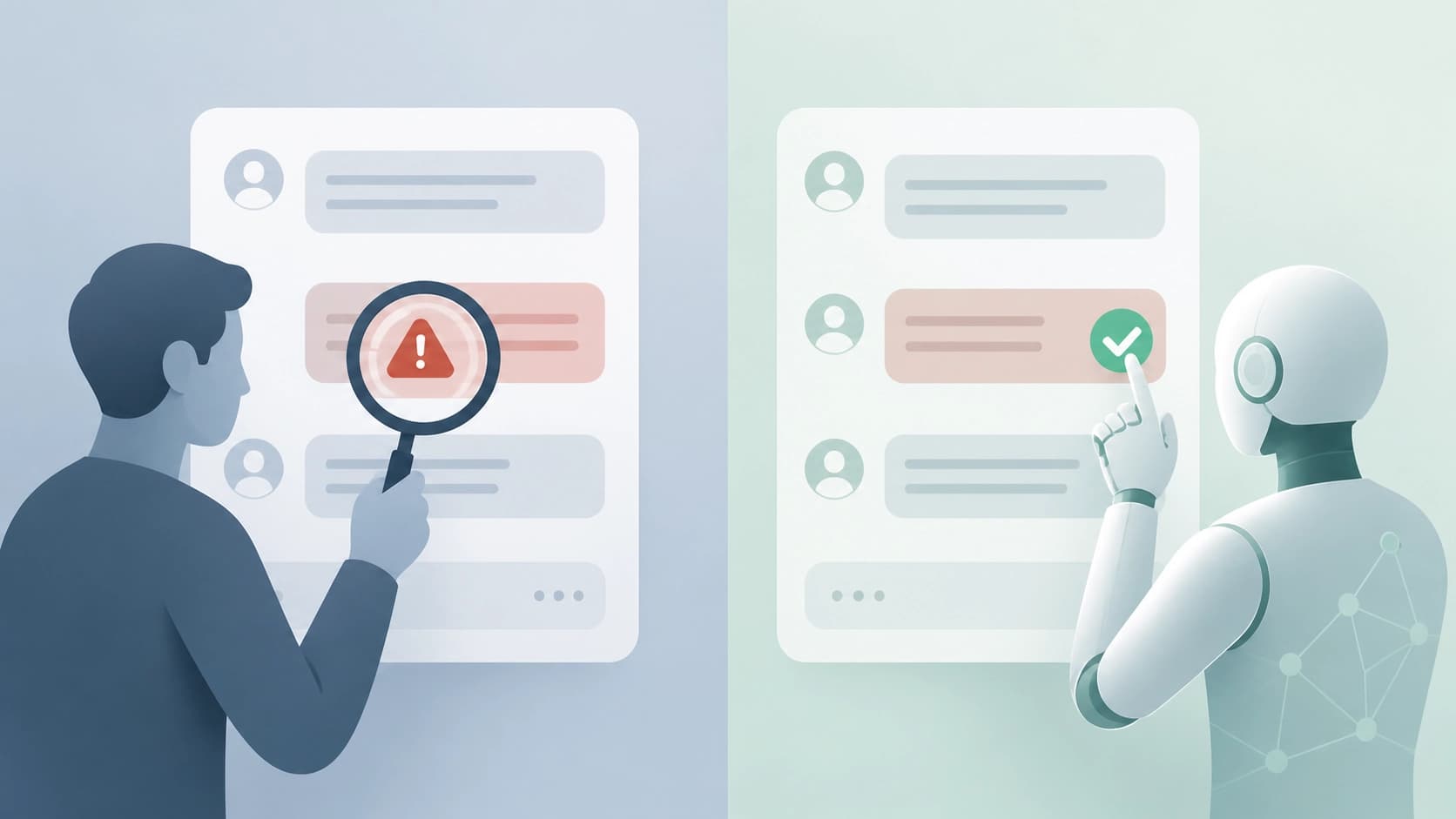
This metric counts how many turns the agent needed to pull the conversation out of a failure. Automatic evaluation here is unreliable: the judge does not always distinguish meaningful recovery from a lucky turn of phrase. A dialogue a human would call rescued, the model will easily mark as a failure — and vice versa.
Safety metrics by recall
Safety-recall is the second problem area. The logic of the error is predictable: the judge sees a dialogue where the agent said nothing dangerous and gives a high score, without asking whether there was even an opportunity to violate policy. A missed violation is the most expensive type of error, and that is exactly where automation is weakest.
Domain changes the calibration
Judge reliability differs between telecom and retail. The practical takeaway: thresholds and rubrics cannot be mechanically transferred from one industry to another — what is calibrated on one domain will drift on another.
Calibration matters more than the agreement percentage
A single agreement number lulls your vigilance. A model can match humans on average across large numbers while being systematically more lenient on borderline cases — and that bias is invisible behind the overall percentage. That is why correlation analysis of calibration and a breakdown of discrepancies by each class of cases is more useful than a single summary metric: it shows not "how close we are" but "in which direction and on what we are lying."
How to build this into a real pipeline
The authors do not propose abandoning automation — they propose a hybrid scheme. The LLM judge takes on bulk evaluation, while humans remain where context and high confidence in the verdict are needed. The working rules look like this:
- run the rubric in at least two or three configurations and compare the results, not just the final score;
- calculate agreement for each metric separately, rather than as a single number for the whole dataset;
- keep a human on safety-recall and on failure-recovery metrics;
- check calibration on your own domain before setting automatic thresholds;
- save the cases where human and model disagree — they are ready-made material for fine-tuning the rubric.
The bottom line
The LLM judge is a workable tool for large-scale evaluation of voice agents, but not a replacement for a human evaluator. Its reliability is distributed unevenly: some metrics can safely be handed to automation, while others require a human eye. The value of the study is that it provides an empirical framework for this division of labor — and reminds us that the question "should we trust a model to evaluate" is incorrect until you specify which metric and which domain.
Frequently asked questions
Related materials
All materials
Toollery: Choose tools for LLM agents from tens of thousands of options without fine-tuning
Toollery builds a search index from descriptions of skills and tools, then passes the model only a limited set of candidates for each query. In experiments with libraries containing tens of thousands of functions, the approach helps maintain selection quality at a fixed top-K, although the overall effect depends on the workload profile and the provider’s caching.
11 November 2026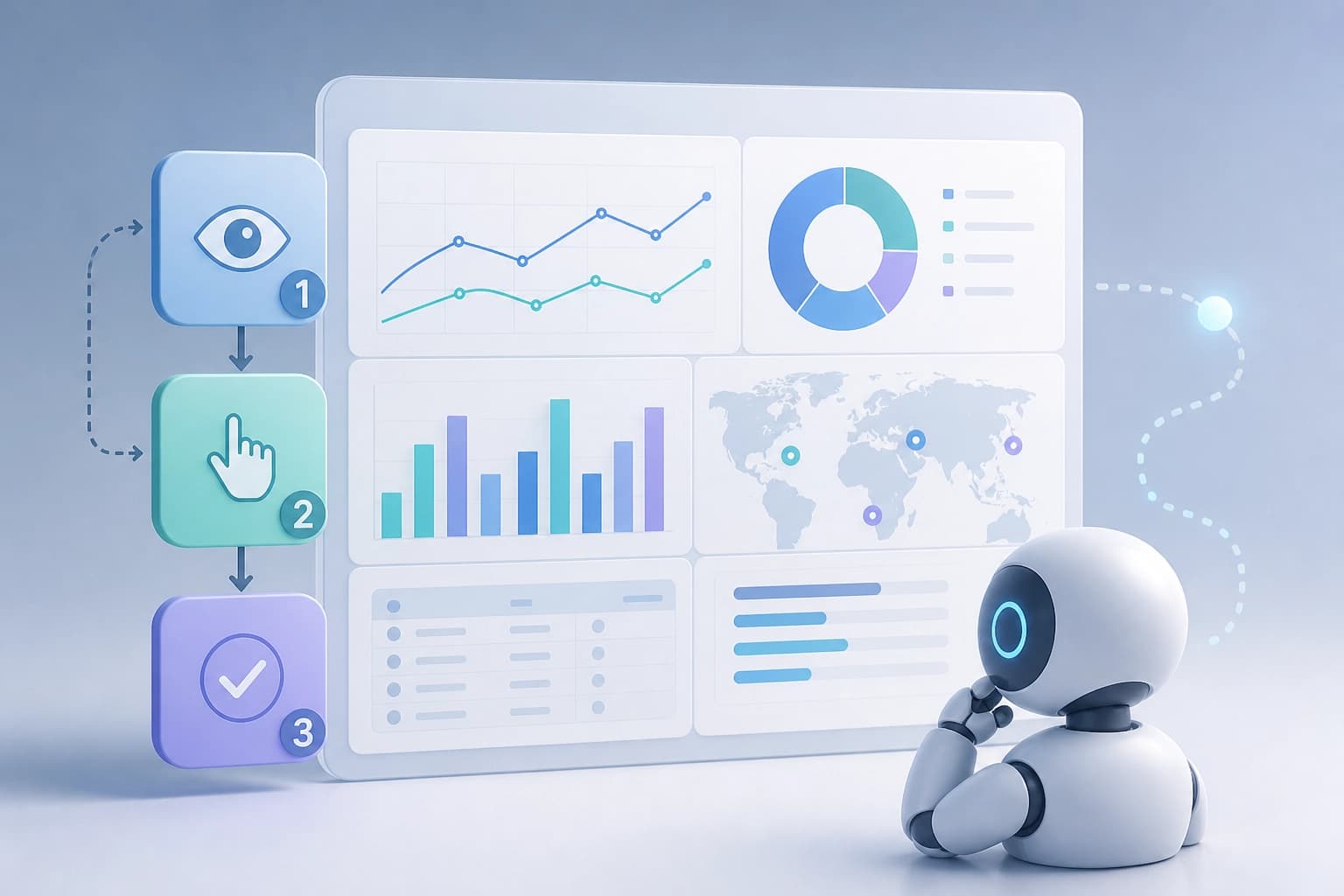
Step-by-Step Evaluation of GUI Agents for Dashboard Analysis: The DashAct Benchmark
Introducing DashAct, a benchmark of 348 human-verified trajectories that breaks down GUI agents’ work with interactive dashboards into three stages and four visual conditions. The results reveal persistent issues with action prediction and visual target grounding, as well as agents’ reliance on contextual and spatial support.
11 November 2026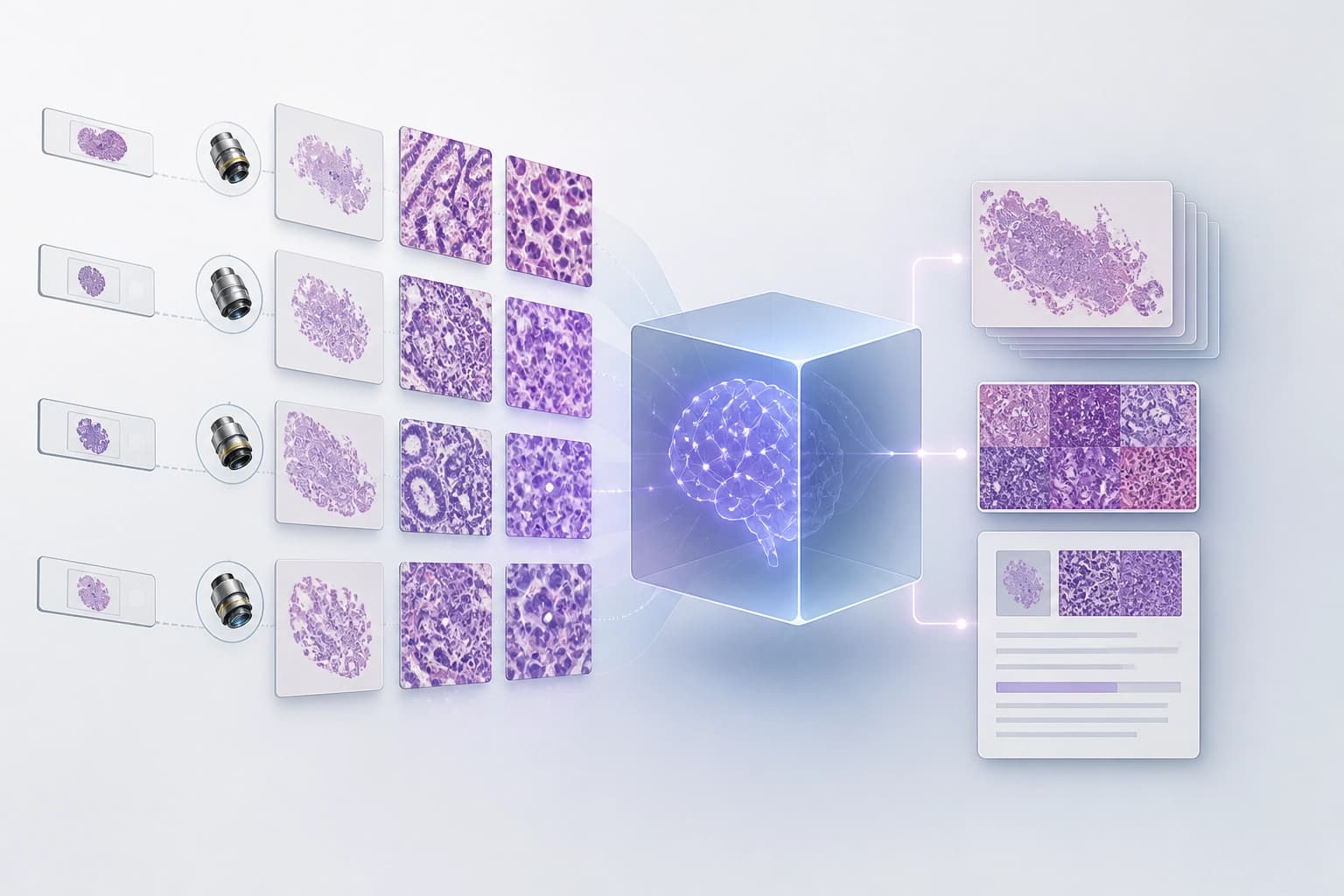
WILSON: combining magnifications and patient slides for pathomorphological analysis and report generation
The preprint introduces WILSON, a vision-language model that encodes images of whole slides and series of slides from a single patient at different magnifications, rather than just a single “best” slide. Without task-specific fine-tuning, it outperforms specialized and larger slide models on a range of metrics while requiring substantially less compute, and its diagnostic descriptions received higher ratings from pathologists.
11 November 2026