
LiveHouse-TS: how a "live" benchmark tests time series models in real time
Researchers have introduced an open platform that evaluates time series foundation models not on fixed historical data, but on continuously arriving real-world values. Tests on 17 datasets showed that conventional rankings shift noticeably under this dynamic approach.

From snapshots to continuous monitoring
Time series models, especially Time Series Foundation Models (TSFM), are increasingly seen as a universal solution for forecasting across a wide range of domains. Their key value lies in their ability to work with new data without additional training—that is, in zero-shot mode. However, for a long time, the quality of such models was assessed using static benchmarks: a fixed set of historical data, pre-selected test windows, and a one-time accuracy measurement. The result resembled a photograph—a moment torn out of context.
The problem is that real-world data does not stand still. It changes under the influence of seasonality, external shocks, and gradual distribution drift. A model that performed excellently on one snapshot can fall apart on the next. A static benchmark does not see this: it evaluates average accuracy on a fixed history but does not answer the question of whether the model will remain useful tomorrow, in a month, or in a year. It is precisely this gap that the authors of a new study set out to close—they proposed a "living" alternative to classical tests.

How LiveHouse-TS works
The infrastructure, named LiveHouse-TS, is the first open system for "live" testing of TSFMs. Its core idea is simple and radical at the same time: instead of running models on old data, it lets them predict what will actually happen. Evaluation is performed prequentially—that is, the model continuously receives new observations, makes a forecast, then checks it against reality, and this cycle repeats endlessly. This approach shifts the focus from a one-off leaderboard to continuous validity.
It operates in an "open-world" setting, meaning the system is not shielded from surprises. Sharp demand changes, anomalous weather events, equipment failures—none of this is filtered out in advance; it all enters the data stream. The model must handle unexpected events on its own, and the benchmark records how successfully it does so.
Streaming evaluation as a philosophy
The traditional approach measures a model once and for all. A "live" benchmark asks a different question: does quality hold up over time? LiveHouse-TS does not provide a ready-made answer but offers infrastructure for long-term observation. This makes it possible to study how model rankings evolve, which algorithms are truly robust to distribution drift, and which merely happened to perform well in a static test.
Open data, honest experimentation
Importantly, the infrastructure is open. Any researcher can connect their model and see how it behaves in real time. This is not just another dataset but a continuously operating testing ground. Instead of fitting a model to a fixed window, researchers are forced to think about long-term adaptation.
First results: rankings get reshuffled
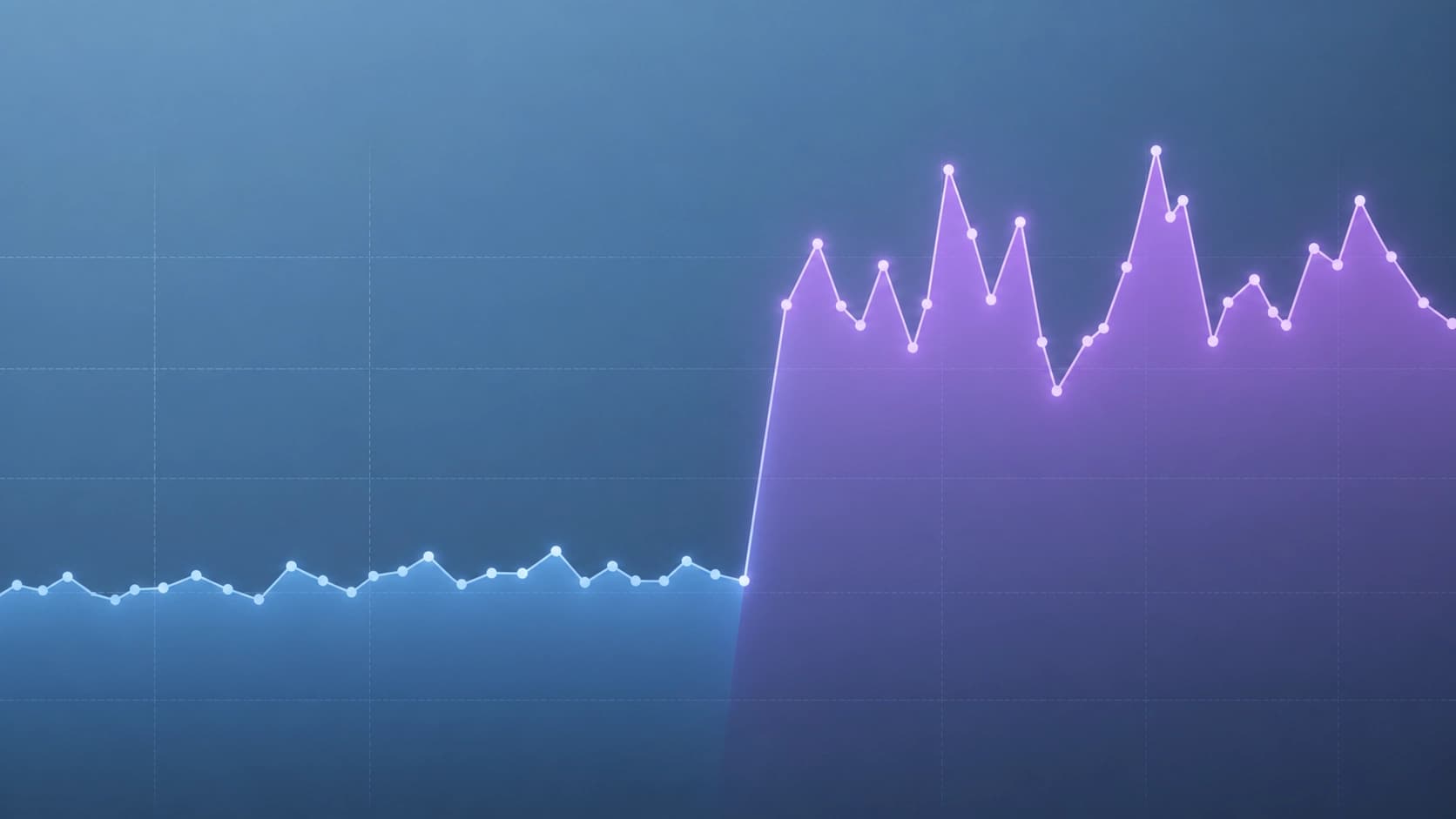
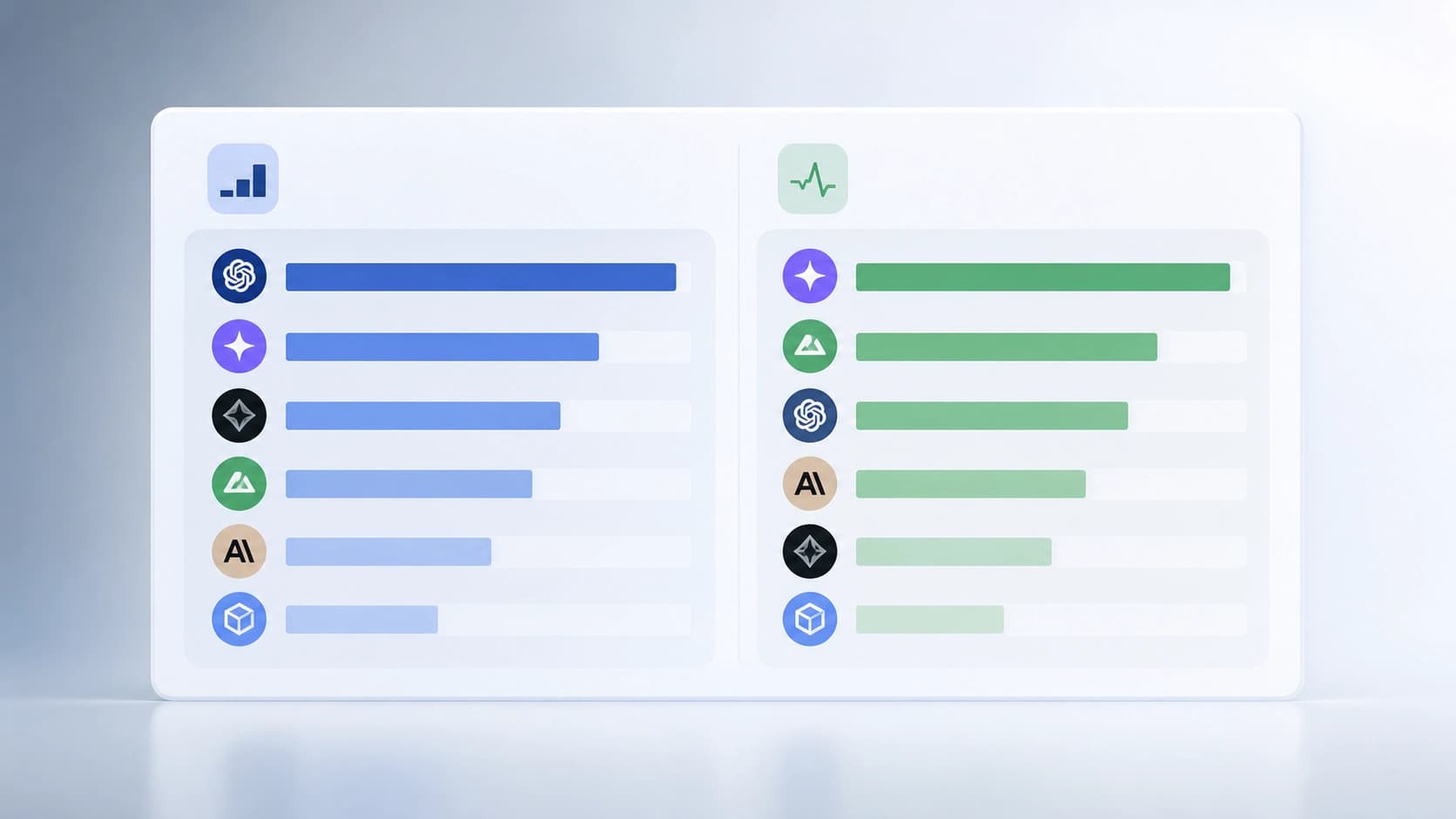
To test the system, the authors conducted streaming evaluations across 11 domains and 17 datasets—from energy to transportation. The scale is impressive, but the key takeaway is not the amount of data but the conclusions drawn. It turned out that static rankings are significantly "reshuffled" when moving to a live protocol. A model that was a leader on a fixed history can sharply lose ground when encountering new patterns, and conversely—a modest middle-of-the-pack model demonstrates stability where others stumble.
This is an important signal. If results on static benchmarks cannot be directly transferred to real-world deployment, then model selection for practical tasks must rely on different criteria. A "snapshot" of past accuracy does not guarantee future accuracy. This is why continuous evaluation is not a whim but a necessary part of the technology's maturation.
Why this matters for the future of TSFM
The emergence of "live" benchmarks changes the very approach to model comparison. Instead of evaluating average performance on a frozen snapshot, researchers gain a tool for studying the long-lived properties of models: adaptability, robustness, and the ability to learn in a stream. This is especially critical for TSFMs, which are positioned as universal solvers for a wide range of tasks. If such a model cannot withstand contact with reality, its value drops sharply.
LiveHouse-TS is not just another set of tests. It is a response to the growing need for honest and dynamic evaluations. It makes it possible to ask questions that were previously nearly impossible: "How long does a model remain accurate?", "At what point does it break?", "Which types of drift are fatal to it?" Answers to these questions will help create truly reliable forecasting systems that work not only in ideal laboratory conditions but also in a noisy, changing world.
Perhaps it is precisely such infrastructures that will become the standard for evaluating future models. After all, any tool claiming to be "foundational" must stand the test of time. And now we have a way to do this systematically and openly.
Frequently asked questions
Related materials
All materials
Checking LLM Hallucinations via SQL-Based Source Representation Without Fine-Tuning
The study examines whether an LLM can apply a basic symbolic skill—building a SQL database from source documents—to ground its outputs in sources without supervision when detecting hallucinations. On RAGTruth and DiaHalu, this neuro-symbolic pipeline proves more accurate than direct prediction and comparable to state-of-the-art methods, without requiring domain-specific fine-tuning.
9 November 2026
MathAdv: What the Final Accuracy of Machine-Generated Proofs Conceals
A diagnostic suite of tasks spanning 13 undergraduate and graduate mathematics topics evaluates machine-proving systems in Lean 4 not only by their final results, but also by their subject-matter mastery, the quality of their informal reasoning, and their robustness to rephrased conditions. A component-by-component analysis shows that translating a problem into formal form remains the main obstacle, and that success depends heavily on the area of mathematics and how the problem is framed.
9 November 2026
AffordanceWAM: Affordances as an intermediary between scene prediction and manipulator control
The work describes a generative model that jointly predicts future RGB observations, scalar fields, affordance heatmaps, and continuous robot commands, using human videos to broaden interaction diversity without action annotations or retargeting. On RoboCasa, CALVIN ABC→D, and real-world tasks, the approach delivers consistent gains over RGB-only and robot-data-only baselines.
9 November 2026