
LEMMA-RCA: an open dataset that teaches how to find root causes of failures in IT and OT
Researchers from the University of Illinois and NEC Labs have introduced LEMMA-RCA — a public multimodal dataset collected from real failures in microservices, water supply, and water treatment systems. The dataset covers hundreds of entities and allows comparing offline and online RCA models in unimodal and multimodal modes.
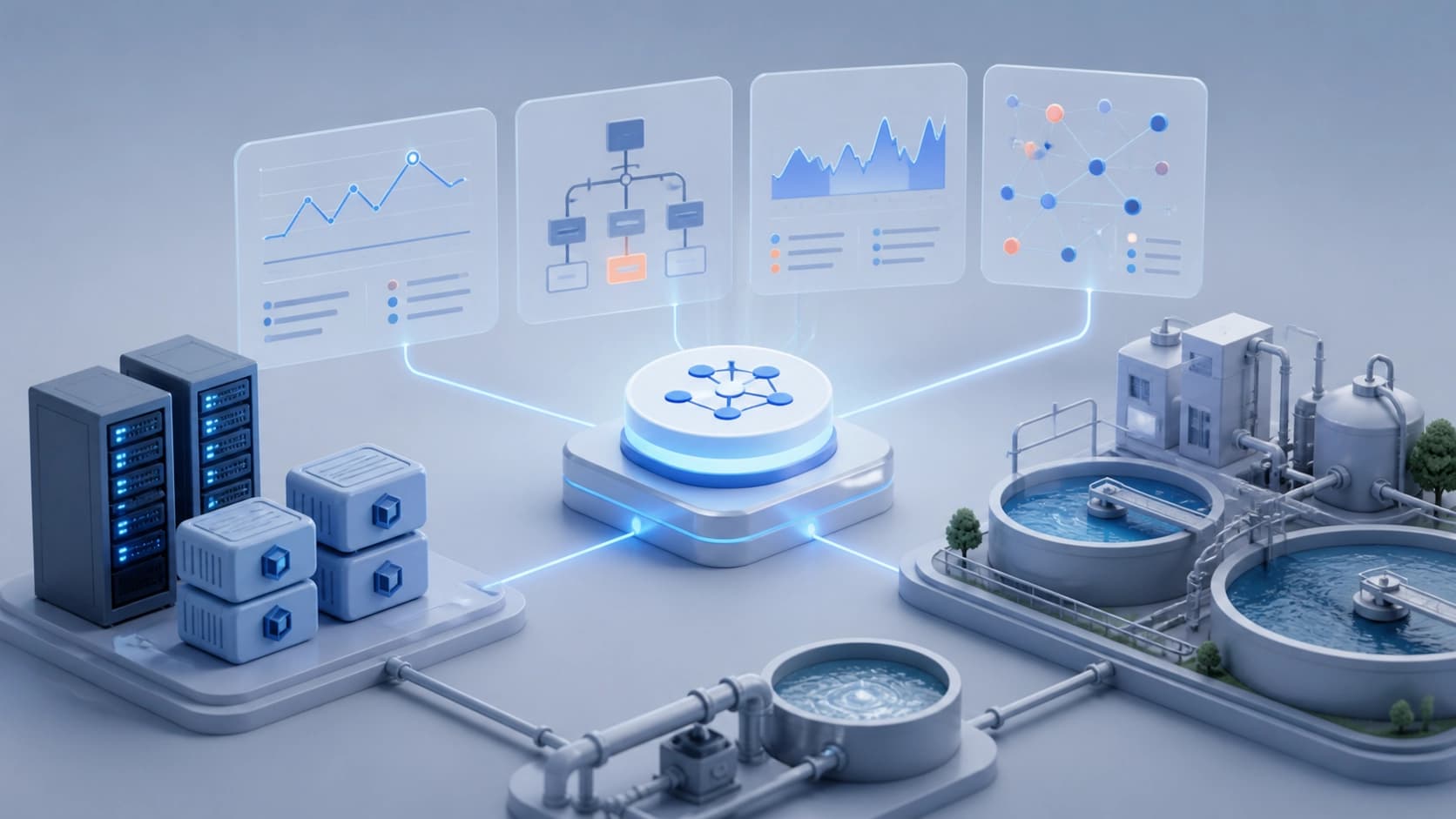
Root cause is not what fell first
Everyone has to figure out why a system failed: from the on-call SRE at a cloud provider to an engineer at a wastewater treatment plant. The insidious part of the task is that the symptom and the cause usually live at different levels. The user sees timeouts on the frontend, while the root of the problem lies in a failed service release, a drifted configuration, or a worn-out pump that no one has checked in six months. The reliability and operating cost of any complex system depend directly on the quality of that investigation.
The paradox is that the field evolved for years without a shared large database. Teams collected logs, metrics, and traces on their own, and usually only published their conclusions — without code and without any way to reproduce the experiment. There was almost nothing to compare algorithms against: one method was tested on an e-commerce site, another on telecom, and the numbers from the papers were meaningless to line up. Because of this, progress in root cause discovery was noticeably held back.
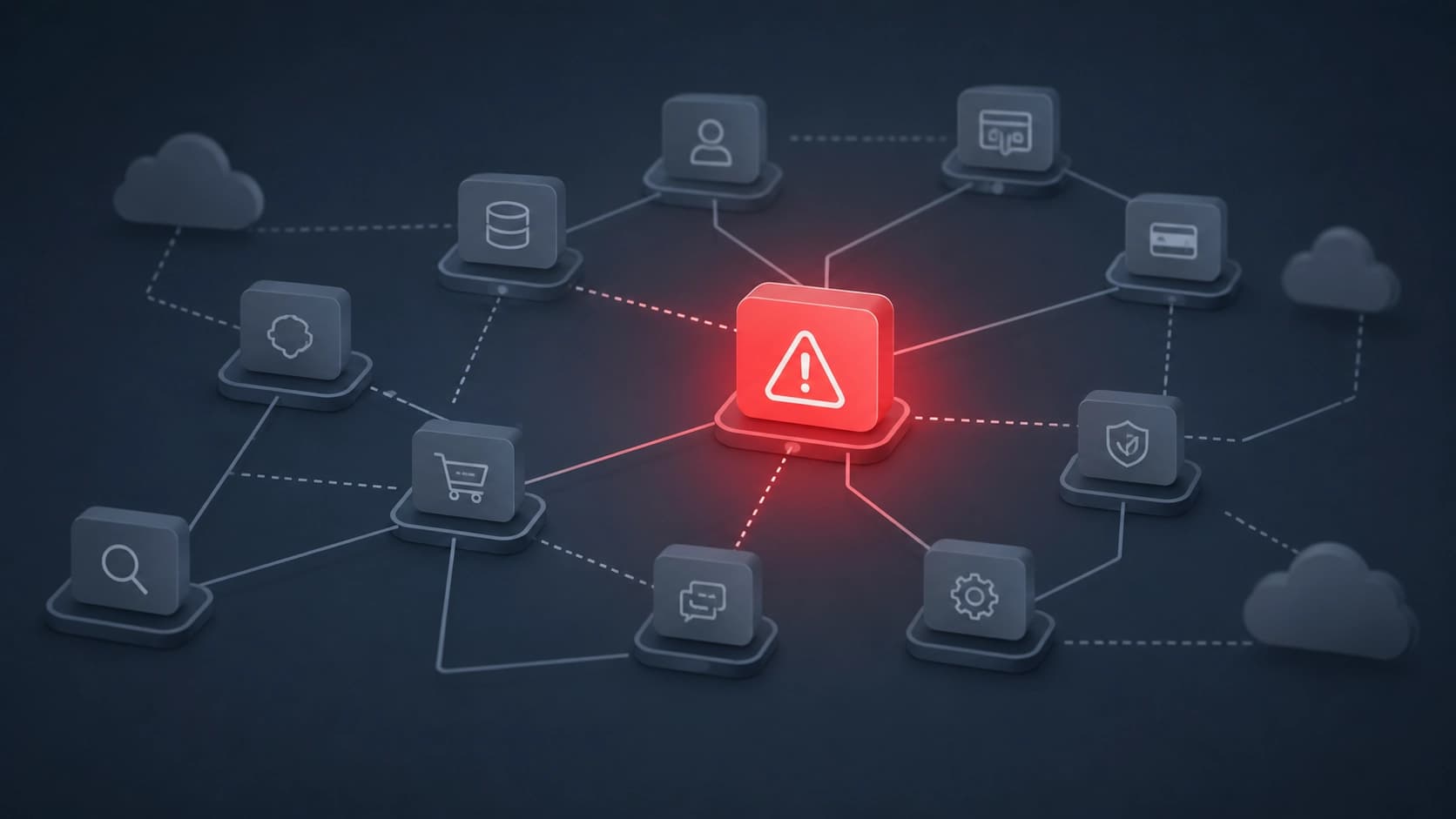
What is LEMMA-RCA
This gap is exactly what the dataset published on arXiv under number 2406.05375 in the cs.AI and cs.LG sections addresses. It was prepared by Lecheng Zheng, Zhengzhang Chen, Dongjie Wang, Chengyuan Deng, Reon Matsuoka, and Haifeng Chen. The work went through several iterations: the first version appeared on June 8, 2024, followed by updates in September 2024, May 2025, and August 2026. The publication was accepted to the CIKM 2026 conference, and the paper itself has a DOI issued through DataCite.
The key idea is simple: to gather in one place not synthetic but real failure scenarios covering hundreds of system entities. This is fundamentally different from toy testbeds that generate "ideal" failures with pre-known labels and predictable behavior.
IT and OT in one dataset: why that's rare
Usually the worlds of information technology and operational technology exist separately. IT engineers deal with services, containers, deployments, and network latency. OT specialists deal with physical processes: pressure in pipes, water quality, the operation of pumps and valves. Both are engaged in root cause discovery, but their tools, terminology, and even data types differ.
The dataset's authors mix both worlds: it includes microservice applications as well as water distribution and water treatment systems. This selection looks surprising right up until you remember that the cause of a failure in both cases is sought by the same logic — from the observed deviation backward, to its source. The only difference is that the "symptoms" in one case are errors and rising latency, while in the other they are a drop in pressure or deteriorating quality indicators.
Microservices as a data source
In a service architecture, a failure is almost never local. One slow component drags along its neighbors in the call chain, and a minute later half a dozen dashboards are already on fire. To figure it out, you need logs, metrics, traces, and knowledge of the topology — that is, several modalities at once. It is precisely this multidimensionality that makes the task interesting for models.
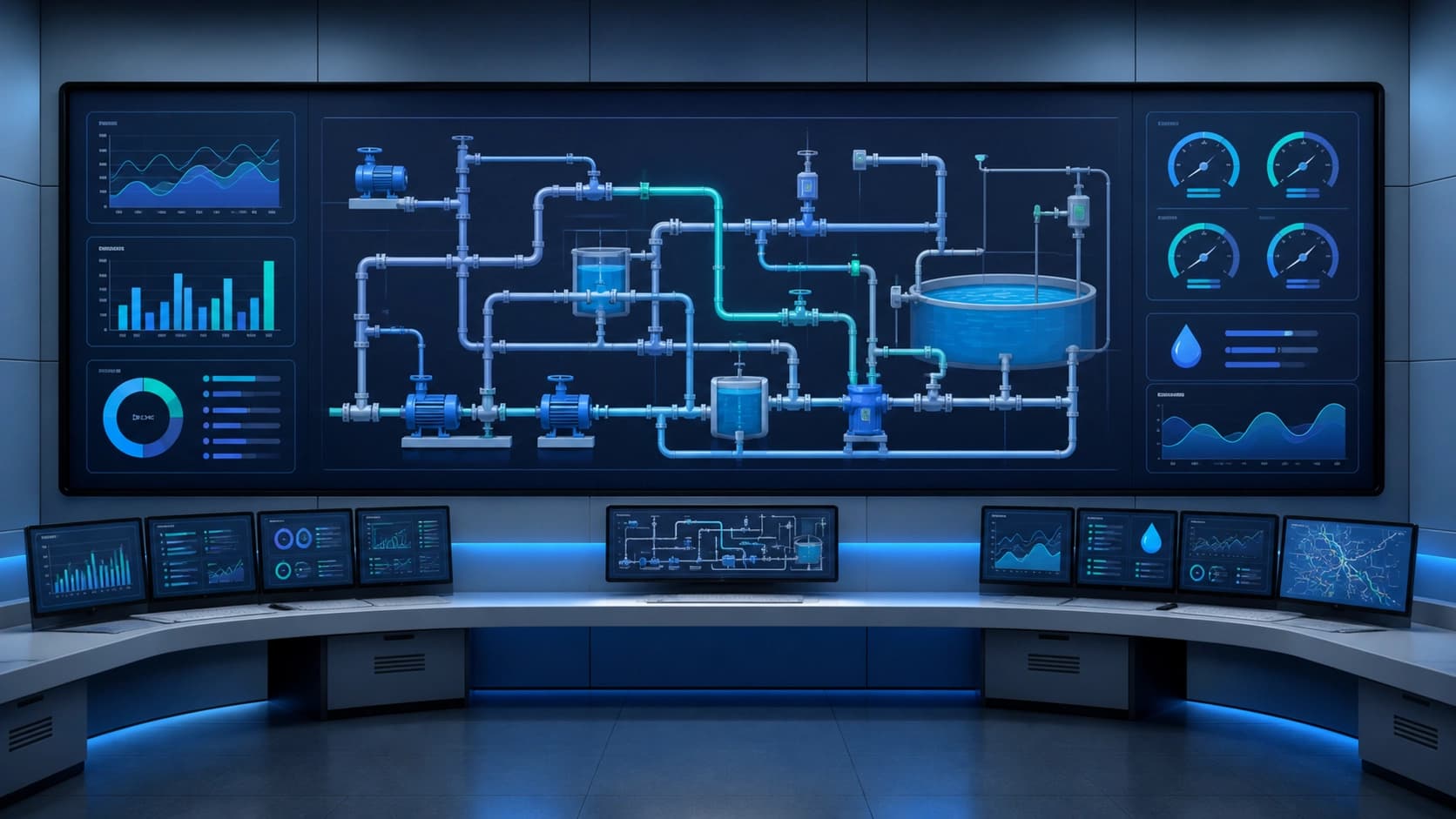
Water: when a failure is measured in liters
Hydraulic systems are no less insidious. Here, a failure is not only equipment breakdown but also gradual process degradation that is easy to miss. On the other hand, the data looks different too: long time series from sensors, tied to the physical layout of the facility.
How methods are tested on this
The authors ran six baseline methods against the dataset and compared them across several modes at once. First, offline and online: in the former case, the model learns from historical data; in the latter, it works on an incoming stream and must react quickly. Second, unimodal and multimodal settings — that is, models that look only at metrics, and those that can combine different types of signals.
The difference between these modes is enormous. The online scenario is far closer to real-world operation: no one will give an engineer a day to retrain while the service is down. And multimodality is an attempt to answer the question of whether an additional signal adds anything beyond the strongest data source, and if so, exactly how much.
What this changes in practice
The main value of such datasets is not in specific numbers but in the emergence of a common yardstick. When all methods are tested on the same data, the conversation shifts from "we got a good result" to "we got a better result than the others, and here is how to reproduce it." That is exactly what RCA researchers have been missing in recent years.
There is a second, less obvious effect as well. Mixing IT and OT scenarios makes it possible to test how universal a method is. An approach devised for microservices can be tried on a water utility — and vice versa. If an algorithm holds up in both domains, it most likely relies on something genuinely general rather than on the specifics of a particular dataset.
How to get the data and where to start
The dataset is open for use: access is provided through a public URL, and the metadata and instructions are placed under a DOI (10.48550/arXiv.2406.05375). A practical route for those who want to try it: first choose the domain closest to your experience, then reproduce one of the baseline methods in a unimodal offline setting, and only after that add the second modality and the online mode. That way it is easier to understand exactly where your method wins and where it breaks.
The dataset, of course, does not solve the root cause discovery problem on its own. But it removes the main obstacle — the absence of a common ground for fair comparison. And this is exactly the case where an infrastructure contribution turns out to be more useful than yet another elegant architecture.
Frequently asked questions
Related materials
All materials
Checking LLM Hallucinations via SQL-Based Source Representation Without Fine-Tuning
The study examines whether an LLM can apply a basic symbolic skill—building a SQL database from source documents—to ground its outputs in sources without supervision when detecting hallucinations. On RAGTruth and DiaHalu, this neuro-symbolic pipeline proves more accurate than direct prediction and comparable to state-of-the-art methods, without requiring domain-specific fine-tuning.
9 November 2026
MathAdv: What the Final Accuracy of Machine-Generated Proofs Conceals
A diagnostic suite of tasks spanning 13 undergraduate and graduate mathematics topics evaluates machine-proving systems in Lean 4 not only by their final results, but also by their subject-matter mastery, the quality of their informal reasoning, and their robustness to rephrased conditions. A component-by-component analysis shows that translating a problem into formal form remains the main obstacle, and that success depends heavily on the area of mathematics and how the problem is framed.
9 November 2026
AffordanceWAM: Affordances as an intermediary between scene prediction and manipulator control
The work describes a generative model that jointly predicts future RGB observations, scalar fields, affordance heatmaps, and continuous robot commands, using human videos to broaden interaction diversity without action annotations or retargeting. On RoboCasa, CALVIN ABC→D, and real-world tasks, the approach delivers consistent gains over RGB-only and robot-data-only baselines.
9 November 2026