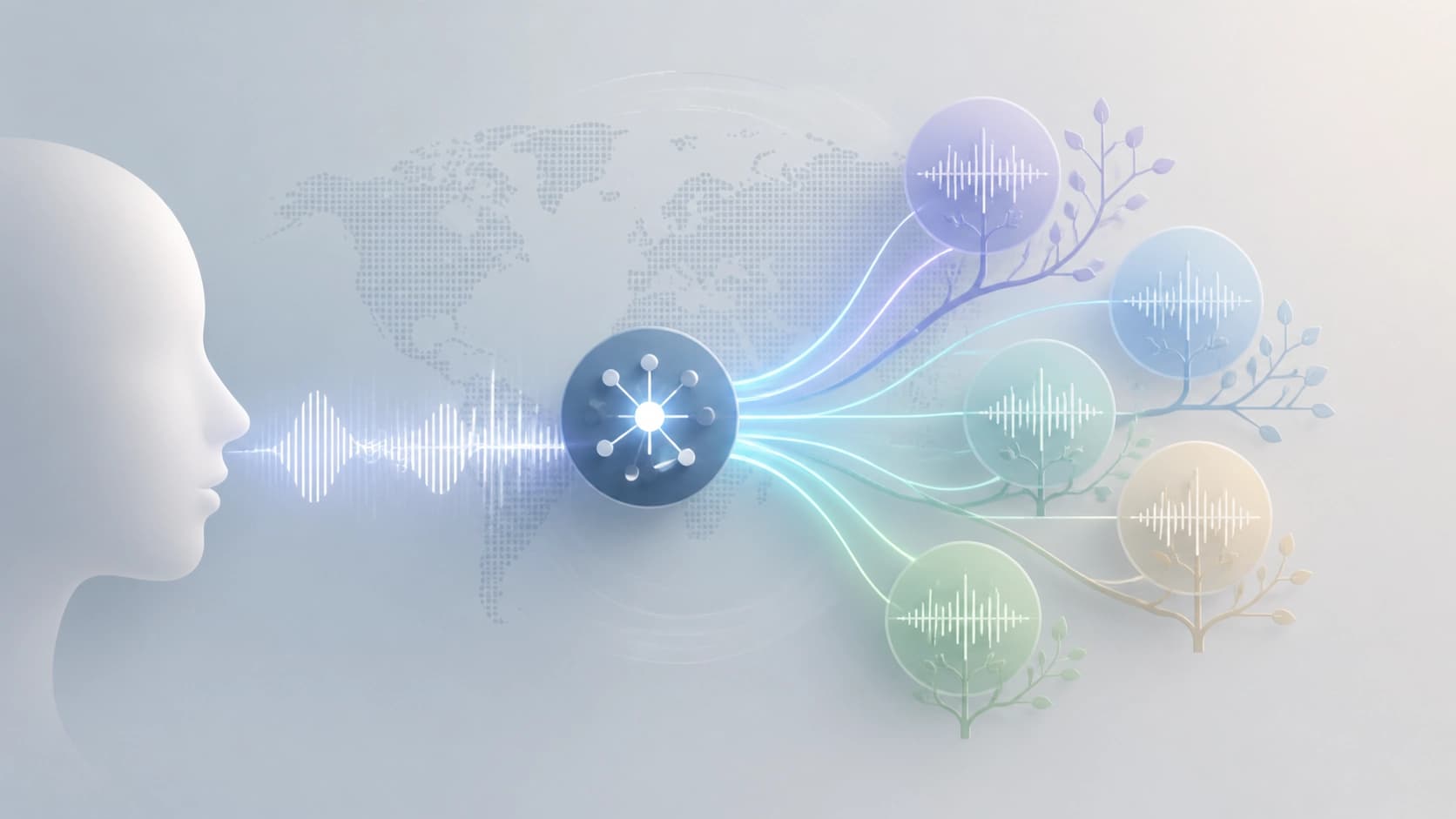
Watching large language models succeed with text, engineers have long wanted to apply them to audio as well. This is how hybrid speech recognition architectures emerged at the intersection of natural language processing and audio. The key idea: don't fine-tune the entire model, but use a ready-made LLM that, thanks to pretraining, already understands how human speech works. Alongside it operates a frozen speech encoder that converts the waveform into a sequence of features. Between them, a lightweight connector is inserted, responsible for translating acoustic representations into tokens the language model can understand. This setup achieves high recognition quality with limited computational resources.

Connectors as the main stumbling block
The design may look elegant, but in practice a natural question arises: what to do when there are multiple languages? In many previous works, a separate connector was trained for each individual language. English separately, German separately, Hindi separately. For a multilingual system, this quickly leads to model bloat: the more languages, the more auxiliary modules. Each connector has to be configured from scratch, which requires both time and labeled data.
At the same time, related languages share a common history and similar phonetics. Spanish, Italian, and Portuguese grew out of Latin, so they have more in common in many sounds and rhythms than with German or Chinese. But the previous approach ignored such kinship: even closely related languages received completely isolated connectors and could not share useful information. From a machine learning perspective, this looks wasteful.
Language family as a unit of economy
The authors of the new study propose a systematic approach to the problem. Instead of a connector per language — a connector per language family. The Romance group shares one module, the Slavic group another, the Turkic group a third. Within a family, the model learns to recognize common patterns but adapts to the nuances of a specific language when needed. It's like learning a "family accent": first you grasp what unites related speech, then you fine-tune for the details.
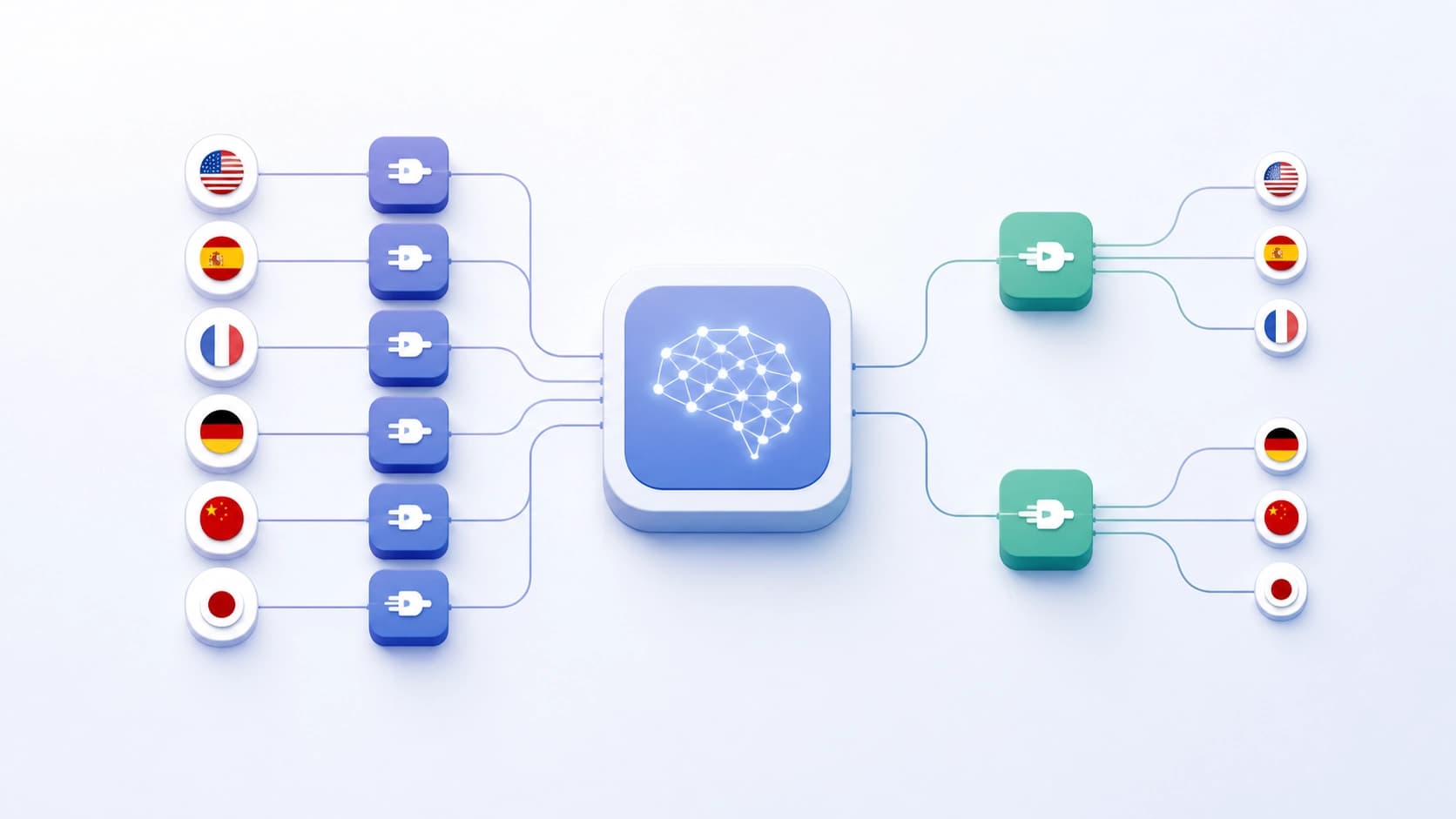
This solution changes the model's scale: instead of dozens of auxiliary modules, just a few are enough. Plus, there's a natural transfer of knowledge. If a language has little data, it can still benefit from patterns learned on related material. When adding a new language to the system, you only need to figure out which family it belongs to, rather than starting training from scratch.
What the experiments showed
The idea was tested on two multilingual LLMs. To keep the conclusions honest, the researchers used two different speech corpora. The first is curated recordings with careful annotation and controlled conditions. The second is crowdsourced data — real speech recorded on the most ordinary devices, with noise, slips of the tongue, and various accents. This contrast helps understand how robust the approach is in practice.
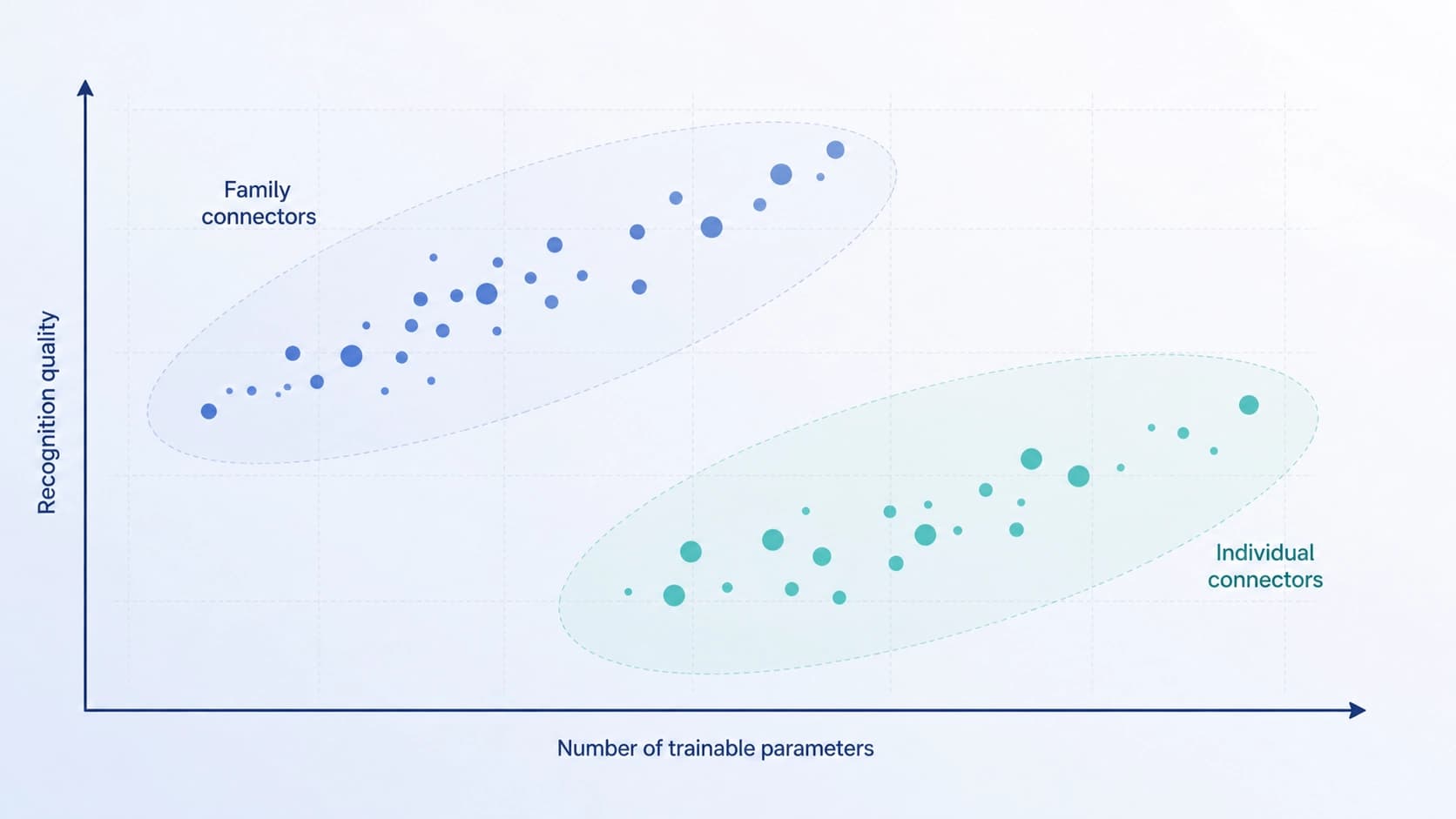
Expectations were met: family connectors not only reduce the number of trainable parameters but also barely lag behind individual solutions in quality. In some cases, they even handle transfer to unfamiliar domains better. The intuition here is simple: a model that has absorbed the common properties of an entire group of languages is less prone to overfitting on random artifacts of any single one.
What this changes for the industry
The most valuable part of this research is not just a technical trick for saving memory. It shows how linguistic knowledge can be embedded into neural network architecture. The language family acts as a kind of regularizer: it imposes meaningful structure on the model and prevents it from "sprawling" across numerous individual languages.
Likely, the next step will be a finer hierarchy. First a connector for the family, then adaptation to a branch or group, and only then — to a specific language. This approach could potentially scale to hundreds of languages, including low-resource ones. The work has already passed rigorous selection and been accepted at the main EACL'26 conference — a sign that the direction is recognized as significant by the scientific community.
Ultimately, multilingual speech recognition only benefits when engineers remember good old linguistics. Language kinship is not a formality from a reference book, but a powerful source of useful data that previously remained on the sidelines of modern speech systems.