
LAION has released a video corpus of 10 million hours to the public — with automatically generated subtitles
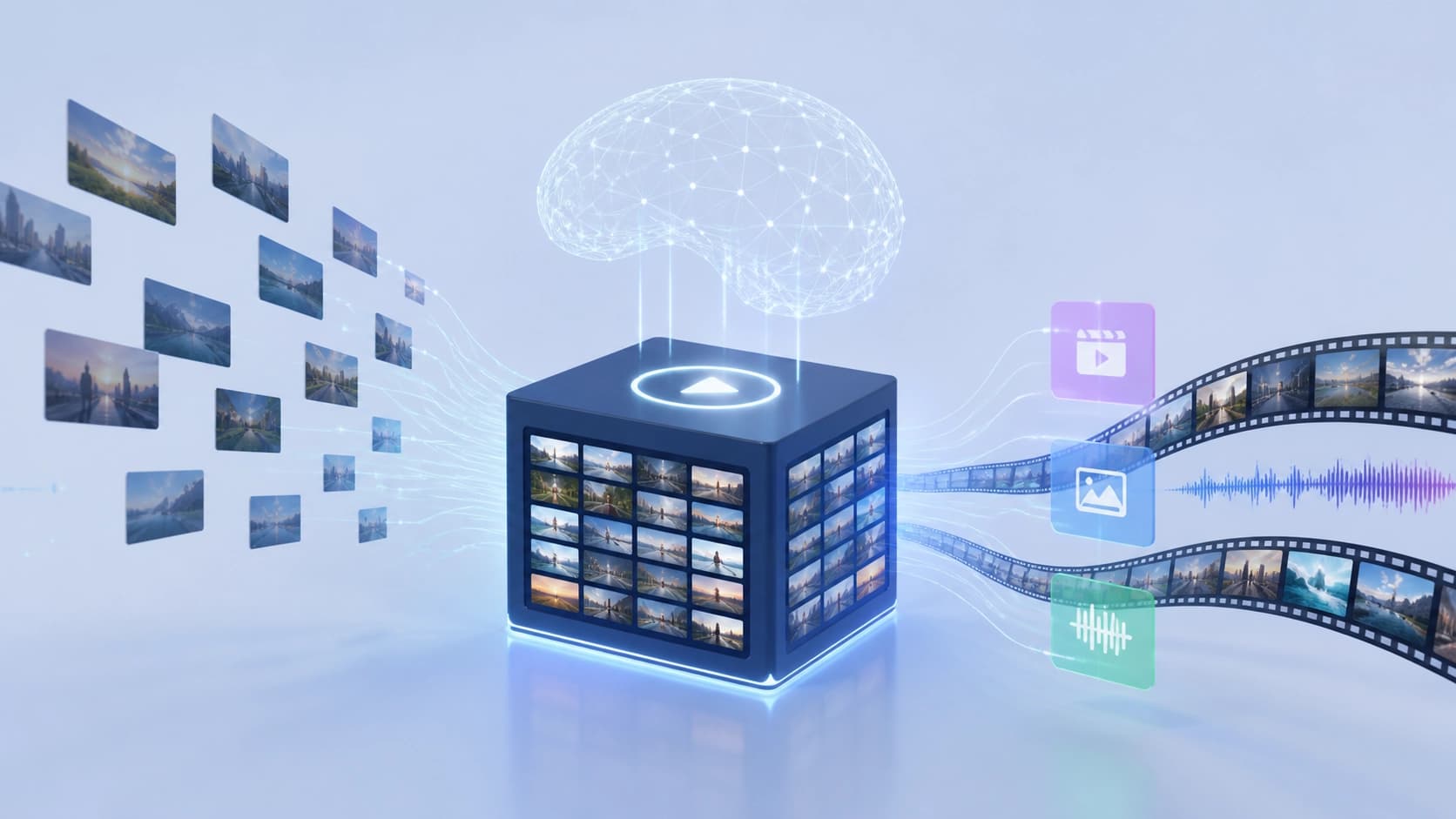
The LAION team has released the LAION-BVD video dataset: 1.3 billion links to clips from CommonCrawl, of which 80 million videos with a total duration of 10 million hours were actually downloaded. The material is split into clips with artificially generated descriptions of the video and audio track, making it possible to train multimodal models across three modalities at once.
Briefly: what exactly was released
At the end of August 2026, the LAION team released LAION-BVD — an open video corpus described in the preprint as a dataset of unprecedented scale for multimodal training. The work appeared on arXiv on August 25, 2026, under the categories of computer vision, artificial intelligence, and machine learning.
The bare numbers look like this:
- 1.3 billion video links — the starting point for assembly, the links were pulled from the CommonCrawl web crawl and tied to specific platforms;
- 80 million clips actually downloaded via those links — not everything found in the index made it to download;
- 10 million hours of total duration.
That last figure is hard to wrap your head around: it's more than a thousand years of continuous viewing. That's precisely why the release is being called a shift in what is available at all to researchers without a corporate budget — previously, video corpora of comparable size remained inside closed labs.
How it was assembled
From links to finished clips
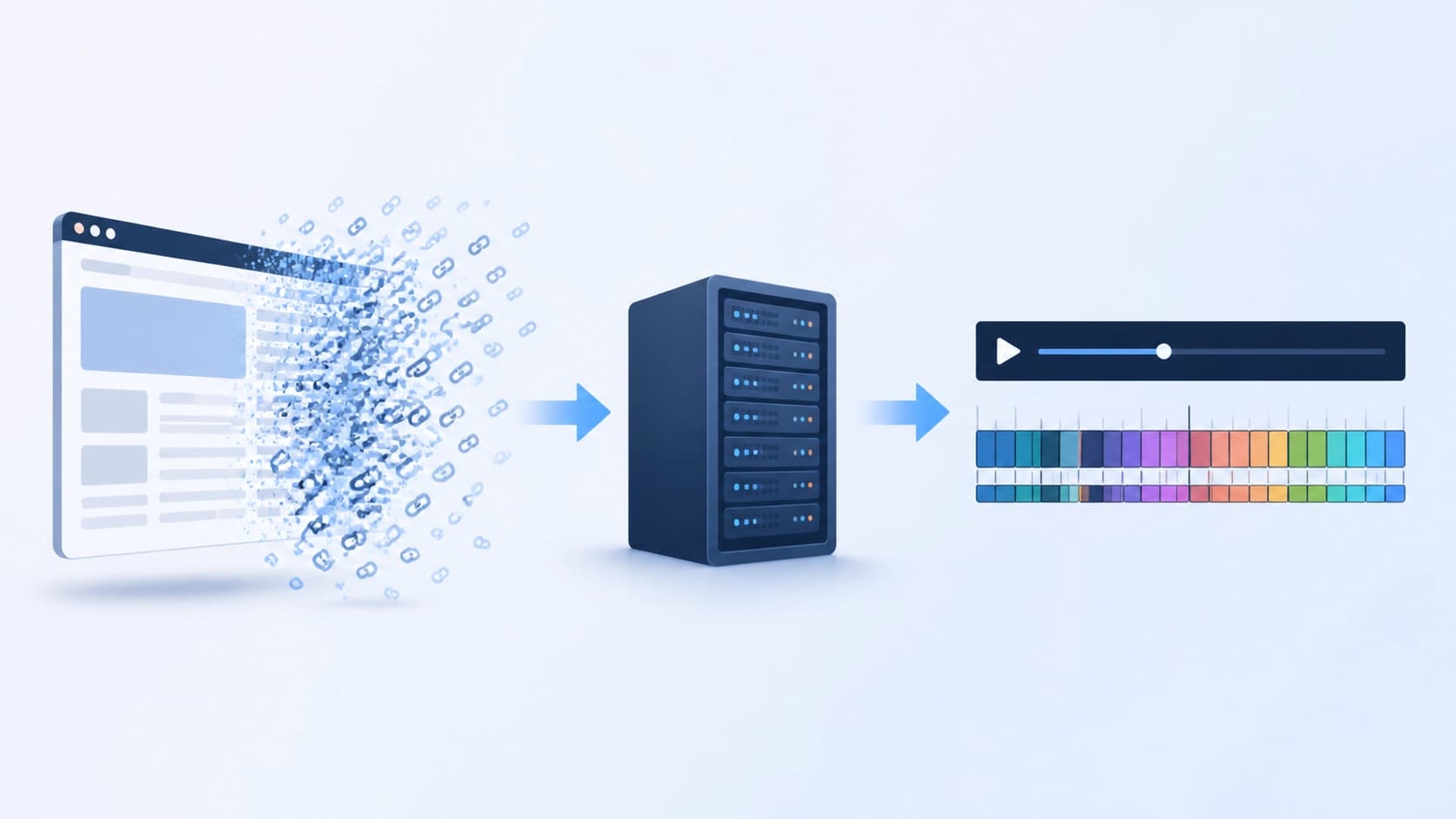
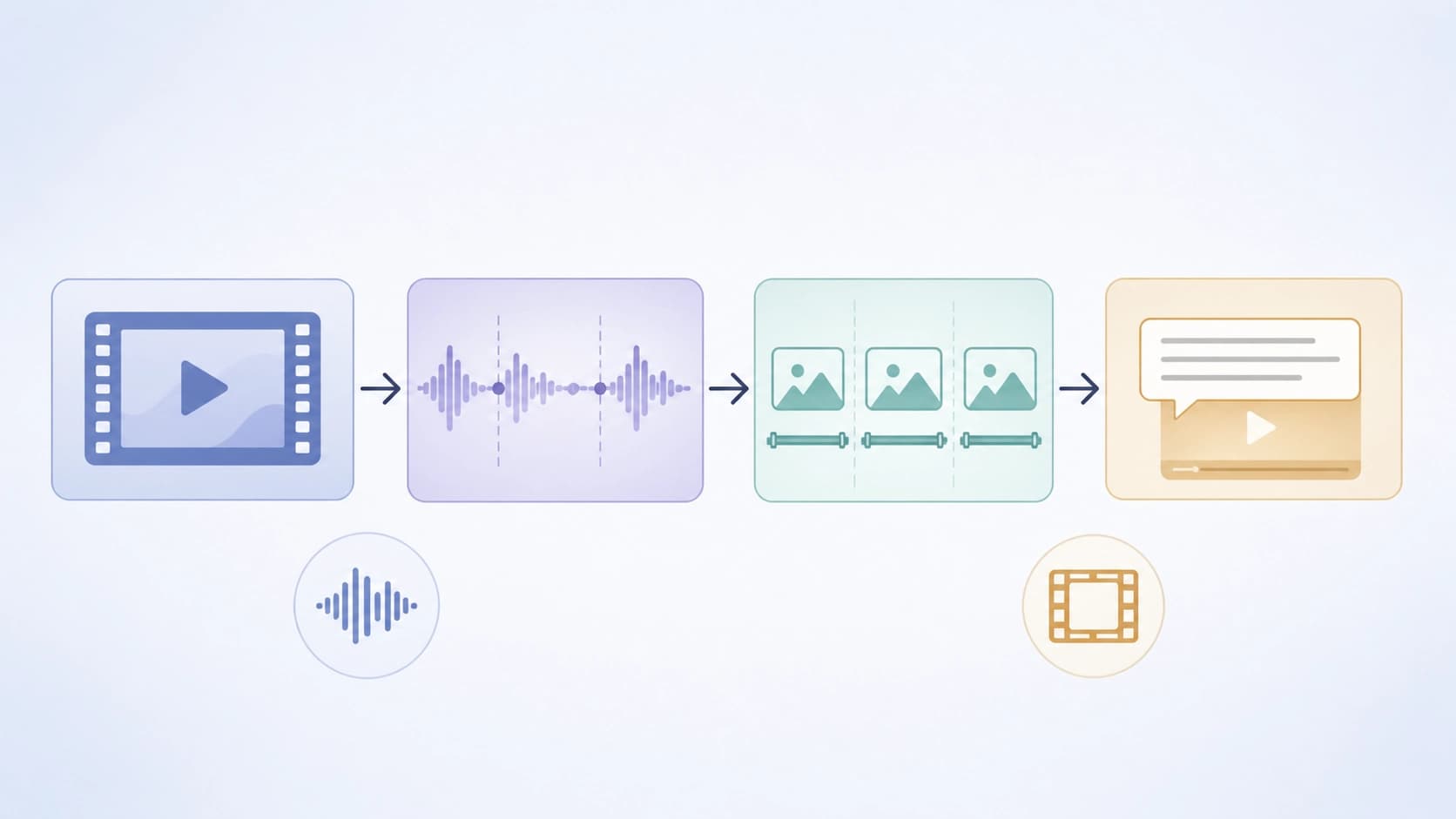
The pipeline consists of several stages, and each matters in its own way. First, the links are selected and normalized. Then mass downloading begins. Next comes scene detection that is sensitive to frame content: a long video is cut not at a fixed timecode, but at actual editing cuts.
Then comes the most interesting part. For the resulting clips, captions are generated synthetically, automatically, and in two modalities at once: a text pair for the video track and a separate one for the audio track. In other words, audio here is not a byproduct but a full-fledged training signal.
The resulting construction is designed for pretraining on three types of data at once: video, audio, and images.
Frames as a separate resource
The authors did not stop at clips. Frames corresponding to the moment of a cut are extracted from scenes and fed in as an independent source of image–text pairs. The logic is simple: video footage provides a different slice of the visual world than ordinary web image collections — with a different distribution of subjects, angles, and everyday details. For image retrieval tasks, such a distribution shift may prove more useful than another million photos from the same sources as before.
What the experiments showed
Video and audio
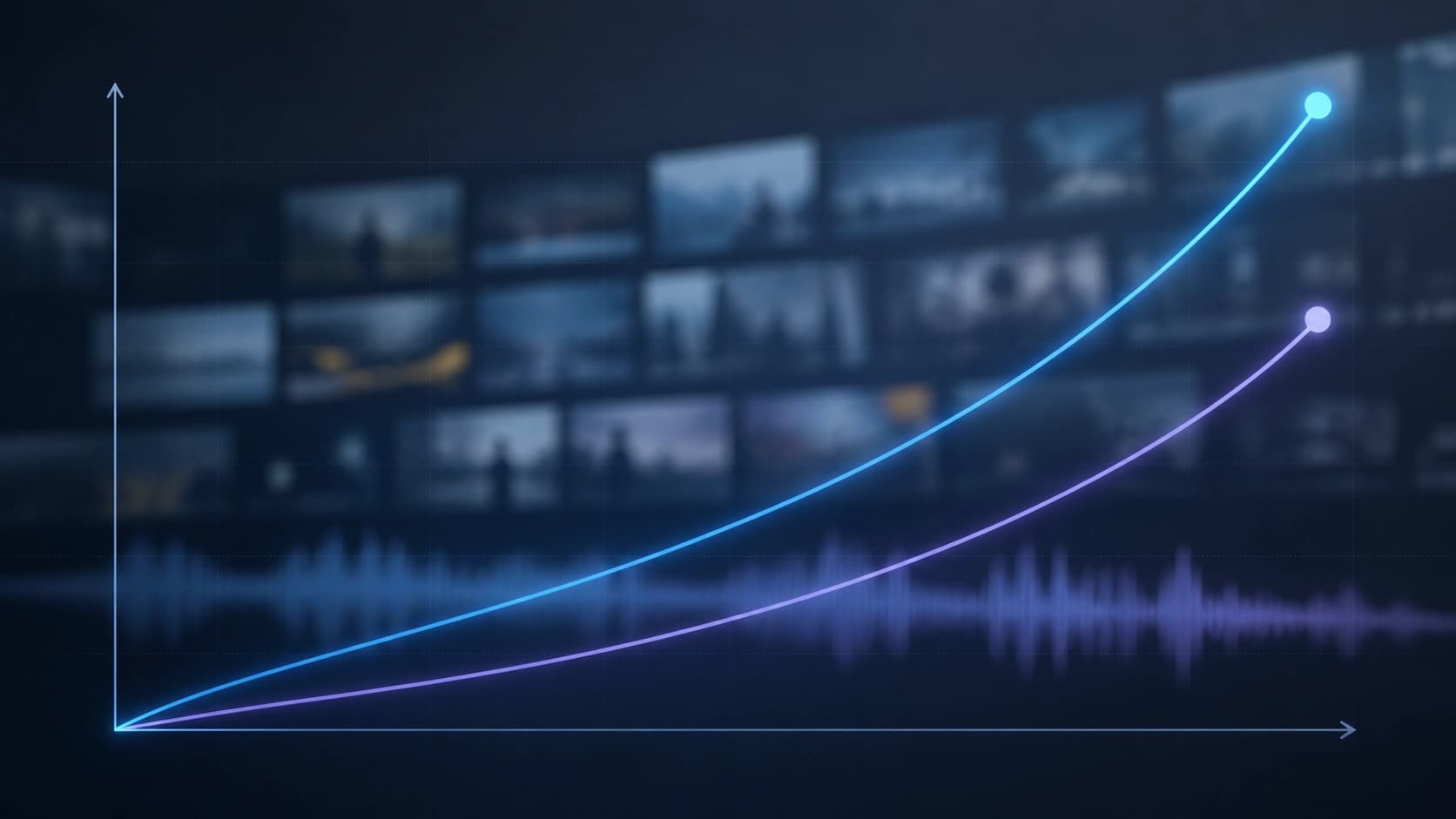
Models trained on the new corpus reach a competitive level on standard benchmarks for the video–text and audio–text pairings. More important is something else: as data volume or model size increases, quality grows steadily. This is exactly the sign that distinguishes a dataset that is "just big" from one worth scaling further.
Images
A separate line of experiments is training on the extracted frames. Here the result is also positive: strong performance in image retrieval. And this is despite the fact that the distribution of frames differs noticeably from familiar web corpora — meaning the gain comes not from volume itself, but from the different character of the visual data.
What's worth keeping in mind
- The captions are synthetic: they save thousands of person-hours, but they bring noise and systematic errors. The quality of filtering here matters more than the size of the corpus.
- Assembly starts from web links, which means the usual questions for such projects arise: link longevity, terms of use for the source material, attribution. An open dataset license does not remove questions about the original sources.
- The corpus is presented as a research release — in practice this means the barrier to entry is lower than for internal corporate sets, but the reproducibility of others' results will still have to be verified by hand.
Why this matters
Until now, open multimodal video at this volume was more of a promise than a reality: academic datasets were measured in thousands of hours, while everything measured in millions belonged to companies and never saw the light of day. LAION-BVD changes that arithmetic — and with it, the bar for those building their own models.
There are several practical consequences. First, a basis for honest comparisons emerges: if everyone trains on the same open corpus, debates about whose result is better become more substantive. Second, small teams and universities gain an alternative to renting someone else's embeddings — they can train their own. Third, audio stops being an appendage to video and gets its own training line.
The main question now is not whether there is enough data, but who will be the first to learn how to clean it. Synthetic captions, tens of millions of clips, and the inevitable junk in the sample make filtering and quality assessment the bottleneck of the whole endeavor. The dataset is open — from here on, everything depends on the community.
Frequently asked questions
Related materials
All materials
Validating Candidates Costs More Than Generating Them: Honeypots Against LLM Vulnerability Hunting
The study examines the cost asymmetry in agentic vulnerability discovery: generating candidate versions is cheap, while confirming them through reachability analysis, execution, and PoC development consumes most of the budget, making verification a potential standalone target for defense. The proposed RedHerring—repository-adapted decoys with a hidden certificate—reduced the number of real vulnerabilities found by 38.7–60.4% at equal cost across 33 OSS-Fuzz projects; even after the agent was warned, the reduction remained at 37.2%.
9 November 2026
Checking LLM Hallucinations via SQL-Based Source Representation Without Fine-Tuning
The study examines whether an LLM can apply a basic symbolic skill—building a SQL database from source documents—to ground its outputs in sources without supervision when detecting hallucinations. On RAGTruth and DiaHalu, this neuro-symbolic pipeline proves more accurate than direct prediction and comparable to state-of-the-art methods, without requiring domain-specific fine-tuning.
9 November 2026
MathAdv: What the Final Accuracy of Machine-Generated Proofs Conceals
A diagnostic suite of tasks spanning 13 undergraduate and graduate mathematics topics evaluates machine-proving systems in Lean 4 not only by their final results, but also by their subject-matter mastery, the quality of their informal reasoning, and their robustness to rephrased conditions. A component-by-component analysis shows that translating a problem into formal form remains the main obstacle, and that success depends heavily on the area of mathematics and how the problem is framed.
9 November 2026