
Figure tested Helix 2.5 in 30 homes: the robot fully completed 237 of 420 tasks
The robot folded towels, made beds, and picked up toys in homes it had never visited before. Tests showed that its skills transfer to new spaces, but 183 unfinished tasks and Figure’s own assessment of the results mean the system isn’t yet ready to clean independently.
What Was Tested
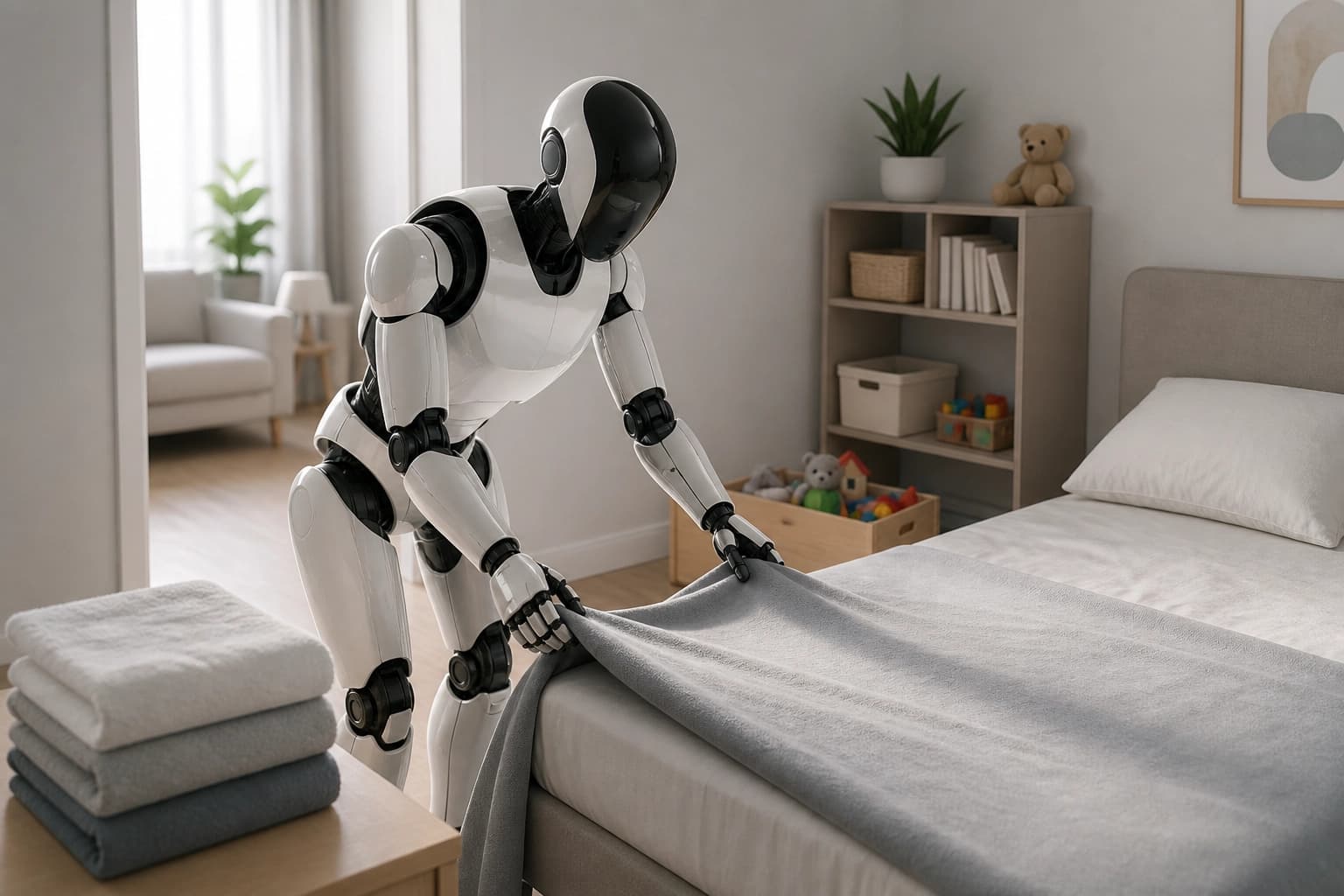
In 30 unfamiliar homes in the San Francisco Bay Area, Helix 2.5 performed three tasks: folding towels, making beds, and picking up toys.
Figure had not collected data in these homes beforehand. The same version of the model was used in every room: it was not fine-tuned on site or changed after previous attempts.
The company called the experiment zero-shot. The homes and objects were new, but the tasks themselves were not: the model had been trained beforehand on recordings from other rooms.
How Success Was Counted
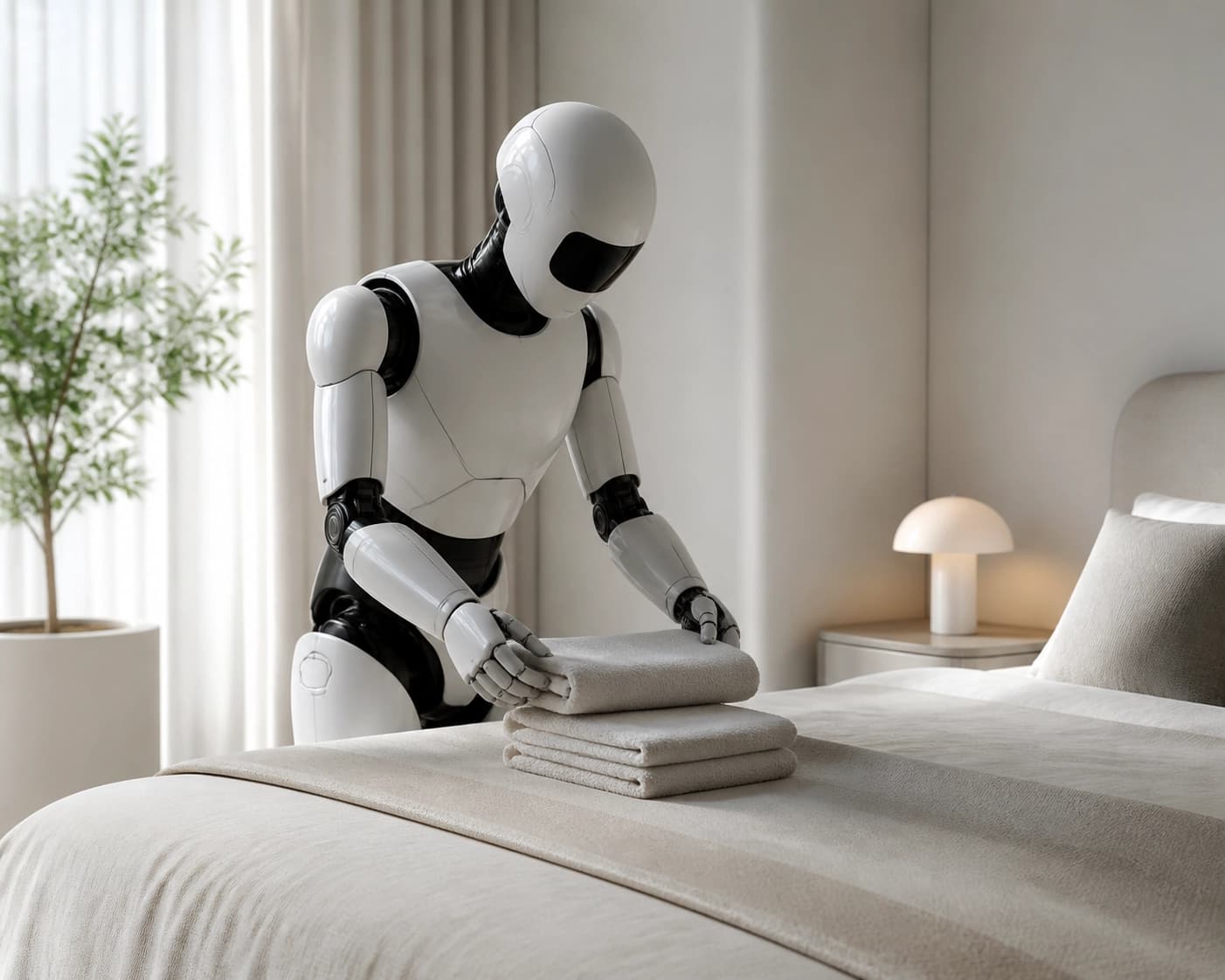
The trials included 420 tasks. No partial credit was given: the robot had to complete the task in full.
- Toys: put all 13–15 items in a basket.
- Towels: fold all the towels.
- Bed: place two pillows on it, pull up the top corners of the blanket, and smooth it out.
Any human intervention for safety reasons counted as a failure. So the final score reflects only tasks completed in full without such intervention.
How Many Tasks the Robot Completed
Helix 2.5 fully completed 237 of 420 tasks. It did best at making beds and worst at picking up toys.
| Task | Successful attempts | Success rate |
|---|---|---|
| Make a bed | 94 of 140 | 67% |
| Fold towels | 87 of 140 | 62% |
| Pick up toys | 56 of 140 | 40% |
For comparison, Figure trained a system on the same specialized data but started from random settings, without pretraining on Index. This version completed 35 of 420 tasks. Figure’s chart shows 8%, while the accompanying text says 9%.
Index is Figure’s collection of recordings of human actions. Data for each of the three tasks accounted for no more than 1.9% of this collection.
What the Results Say About Readiness for the Home
Figure conducted the evaluation itself; the results have not yet been independently replicated. The company also did not specify a release date for a home version or an acceptable failure rate.
The robot failed to complete 183 of 420 tasks. Figure believes that with this many failures, it is still too soon to leave it cleaning without supervision.
For a practical assessment, the best results on individual tasks are not the only thing that matters. The criterion is completing tasks in full without human intervention; the published evaluation does not yet demonstrate readiness for independent cleaning.
Frequently asked questions
Related materials
All materials
Checking LLM Hallucinations via SQL-Based Source Representation Without Fine-Tuning
The study examines whether an LLM can apply a basic symbolic skill—building a SQL database from source documents—to ground its outputs in sources without supervision when detecting hallucinations. On RAGTruth and DiaHalu, this neuro-symbolic pipeline proves more accurate than direct prediction and comparable to state-of-the-art methods, without requiring domain-specific fine-tuning.
9 November 2026
MathAdv: What the Final Accuracy of Machine-Generated Proofs Conceals
A diagnostic suite of tasks spanning 13 undergraduate and graduate mathematics topics evaluates machine-proving systems in Lean 4 not only by their final results, but also by their subject-matter mastery, the quality of their informal reasoning, and their robustness to rephrased conditions. A component-by-component analysis shows that translating a problem into formal form remains the main obstacle, and that success depends heavily on the area of mathematics and how the problem is framed.
9 November 2026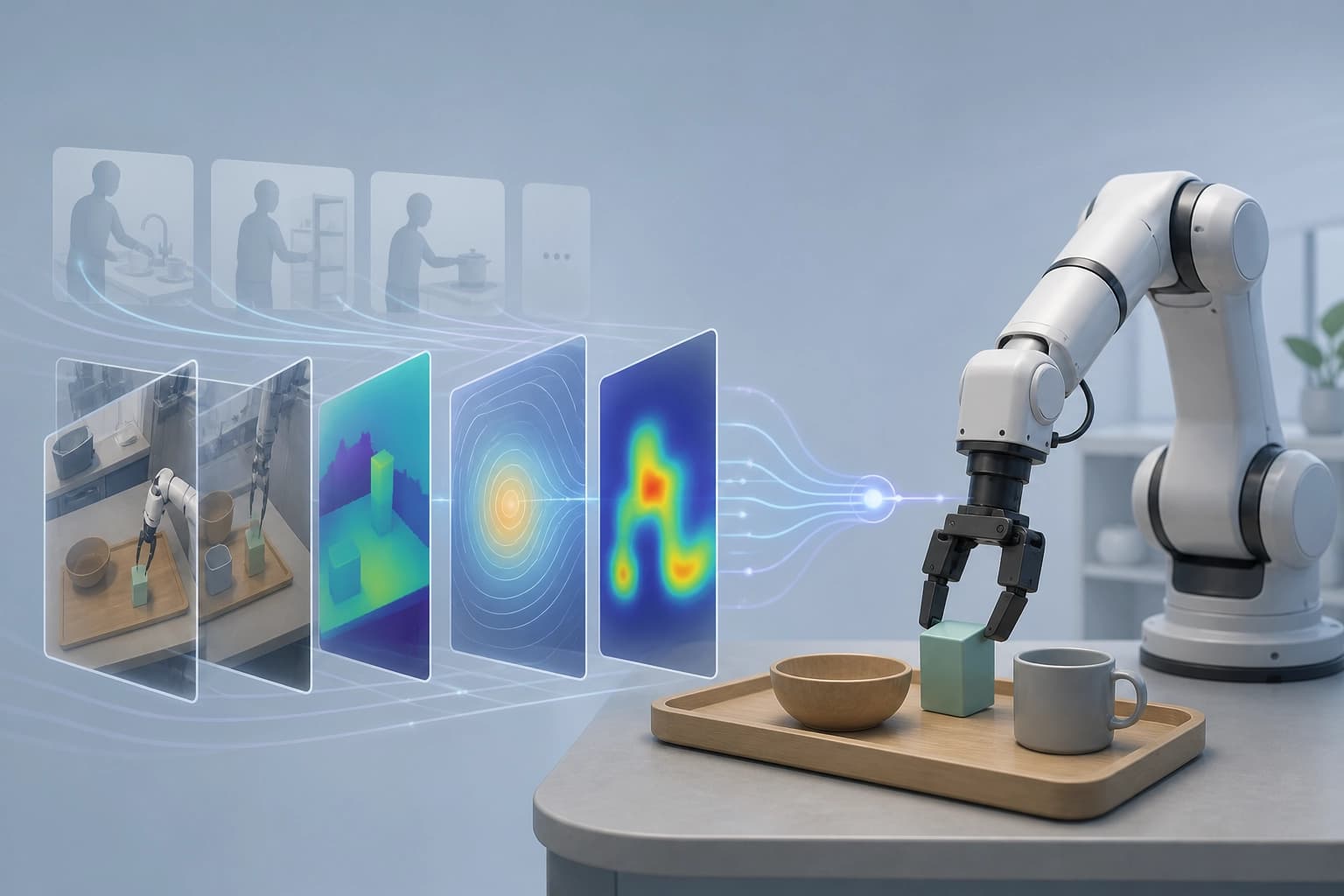
AffordanceWAM: Affordances as an intermediary between scene prediction and manipulator control
The work describes a generative model that jointly predicts future RGB observations, scalar fields, affordance heatmaps, and continuous robot commands, using human videos to broaden interaction diversity without action annotations or retargeting. On RoboCasa, CALVIN ABC→D, and real-world tasks, the approach delivers consistent gains over RGB-only and robot-data-only baselines.
9 November 2026