
Grok-2 AI Image Generator: an honest review of capabilities, pricing, and limitations
We break down xAI's image generator: what it runs on, how free and paid access work, and who it's really useful for. Fast generation, styles, and X integration — everything you need to know before getting started.
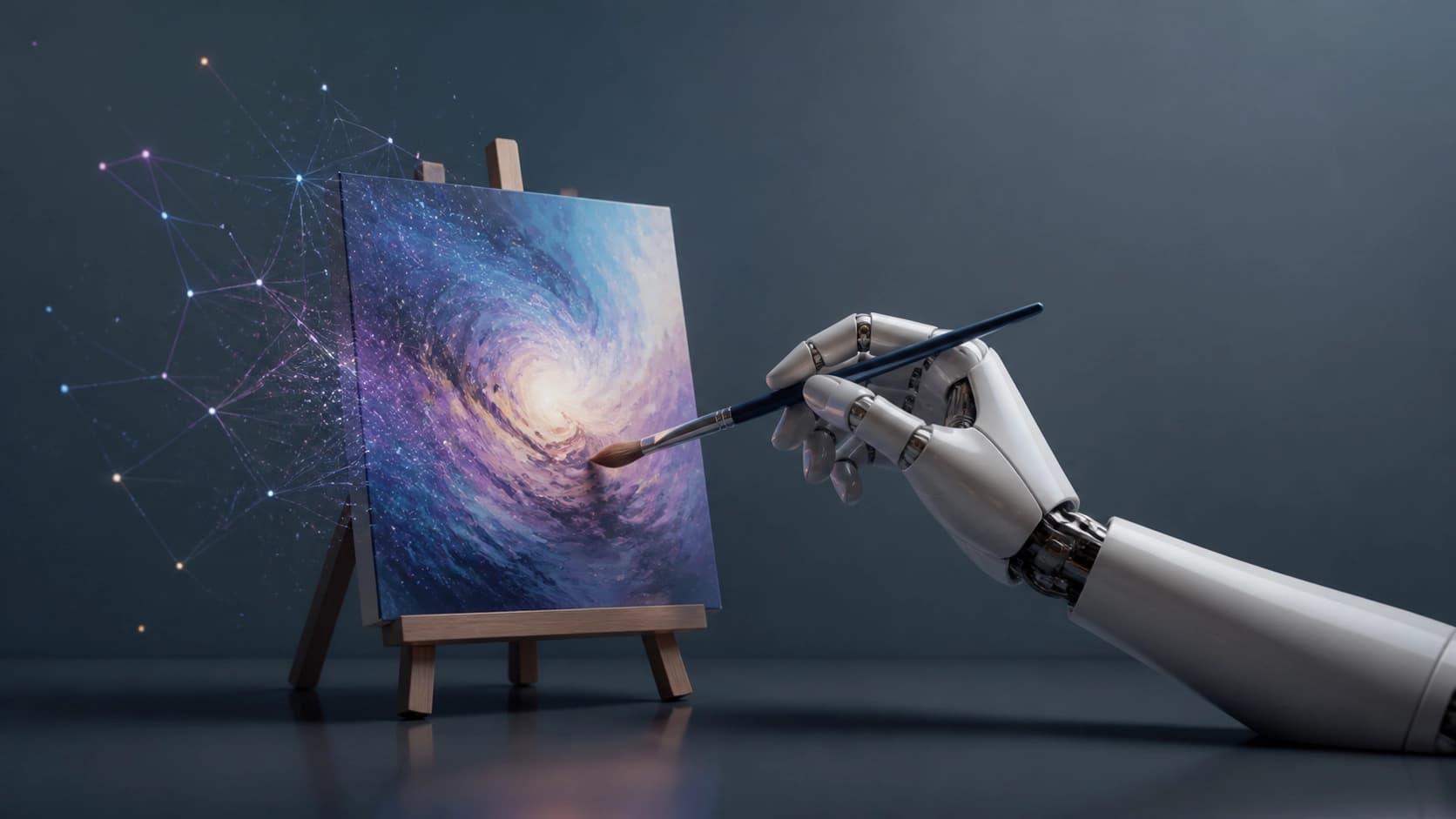
What is Grok-2 AI Image Generator
Grok-2 AI Image Generator is a neural network image generator developed by Elon Musk's company xAI. The service's key feature is its deep integration with the X platform (formerly Twitter): users can create images right in the social network's feed and publish them immediately. It is based on the Flux.1 model from the Flux AI family, which handles detail and photorealism.
The tool is positioned as a solution for both beginners and professionals. The interface is quite user-friendly: you just enter a detailed description, and the neural network interprets the request, turning it into a visual image — from a portrait to a landscape. At the same time, in terms of content restrictions, the service is noticeably more lenient than many competitors, which gives more freedom but also raises questions we'll discuss below.

Capabilities and generation quality
Grok-2's main strength is the high level of detail and photorealism in its results. The model handles mood, light, and texture well, so images rarely look flat. A wide range of subjects is available: from artistic illustrations to marketing mockups.
Speed deserves a special mention. An image is created in just a few seconds, which is critical when you need to quickly prepare visuals for a post, ad banner, or presentation. Built-in settings let you adjust style, color palette, and other artistic characteristics before launching generation — giving you a better chance of getting exactly what you envisioned.
The tool can do more than just draw from scratch. It's suitable for creating digital art, generating custom illustrations for social media, and even quickly visualizing ideas in branding. Since works can be published to X right away, it's also convenient for gathering audience feedback — turning the generator into a full-fledged creative platform.

Pricing and access model
The service operates on a freemium model. Basic features are available for free: you can generate images and use standard settings. A premium subscription unlocks advanced options and, importantly, higher-resolution image output. For exact pricing, it's best to check the official xAI and X pages, as rates change and are often tied to the social network's own subscription.
The logic is clear: the free tier lets you get acquainted with the tool and assess its quality, while the paid tier is designed for those who need results for commercial use or regular work. For one-off experiments, the free version is usually enough, but for professional content, an upgrade makes sense.
Limitations and ethical concerns
Here lies Grok-2's main paradox. Minimal content restrictions are both a plus and a minus. On one hand, artists and designers value creative freedom and the ability to generate scenes that other neural networks reject. On the other hand, such a policy creates risks of spreading misinformation and copyright infringement.
AI images are already hard to distinguish from real photographs, and without strict filters, the likelihood of manipulative content increases. This is a responsibility not only for developers but also for users. Before publishing a generated image, it's worth honestly asking yourself whether it might mislead anyone or violate someone's rights.
Who the tool is for
Grok-2 AI Image Generator is not a niche toy but a working tool. It will be useful for:
- designers and illustrators — for quick sketches and finding references;
- marketers — for creating visuals for posts and ads;
- content creators — for styling blogs and social media;
- anyone who needs a quality image without a long learning curve.
Speed and freedom of customization make it a strong option compared to competitors, especially if you already use the X ecosystem. However, it's important to keep the ethical side of generation in mind and review results before using them in serious projects. Otherwise, it's a solid tool that will be a great addition to the arsenal of anyone working with visual content.
Frequently asked questions
Related materials
All materials
GoldiMask Method for Fine-Tuning Diffusion Language Models: Context Selection and Target Weighting
This paper presents GoldiMask, a supervised fine-tuning approach for discrete diffusion language models that selects visible tokens via approximate maximization of a submodular function and assigns weights to remaining targets based on their training utility. Experiments across several models and datasets demonstrate improved average accuracy, gains on reasoning and coding tasks, and fewer parallel decoding iterations on GSM8K and MATH-500 at comparable quality.
30 October 2026
The Vocci Ring Offers a New Way to Record Meetings—with Caveats About Price and Privacy
Testing the device shows that it handles transcribing long conversations, but is less convenient for short notes; the app also has its drawbacks. The article explores privacy concerns and why a ring might suit some people better than other wearable recording devices.
13 October 2026
Analytics and ML in 2026: Fifteen Tools Shaping the Modern Tech Stack
This guide organizes fifteen software solutions spanning the full workflow, from preparing tabular data and querying databases to training models, managing experiments, and visualizing results. Readers will be able to quickly identify which components are suitable at each stage of a project and how their current versions align with analytics and ML tasks.
11 October 2026