
Learning becomes easier: Google adds interactive exercises, 3D simulations, and personalized tests to Search and Gemini
Google has introduced a suite of educational features that turn Search and Gemini into a full-fledged assistant for students: from solving problems via photo to generating study materials and practice quizzes. This is another step in Google's push to win over students amid competition with OpenAI.

Google continues to turn its services into a full-fledged educational platform. At the recent event, the company unveiled several new features designed to make life easier for students and schoolchildren: interactive visualizations, 3D models, personalized practice tests, and even background research reports. All of this is built into familiar tools — Search and Gemini — so no separate app is needed for studying.
Interactive Search: from diagrams to 3D
Search now lets you not just find information, but "feel" it. For example, a query like "pH scale" triggers not a static image, but a full interactive visualization right in AI Overview. And the process doesn't stop there: if you ask a follow-up question like "what happens if you add citrus to this scale?", the AI adapts the model to your query. The simulation changes, showing how different substances behave. In this mode, Google Search works like a tutor that immediately responds to clarifications and reshapes the material for a specific situation.

3D simulations in Gemini work on a similar principle. While visualization used to be limited to images, now you can ask "show how DNA works" — and get a volumetric model that you can rotate, zoom into, and explore from different angles. This format is great for topics that are hard to explain on a flat surface: molecular structures, physical processes, geographic objects. The controls are intuitive — finger or mouse, just like in a regular 3D app.
Personalized tests and solving problems through the camera
Another Search feature is generating practice tests tailored to a specific student. Just type something like "create a quiz with the most common SAT words" into the search bar — and Google will put together a set of questions on the topic. And it works not only for English: natural sciences, math, humanities, and foreign languages are all covered. You can take the tests right in the search results and get instant feedback.
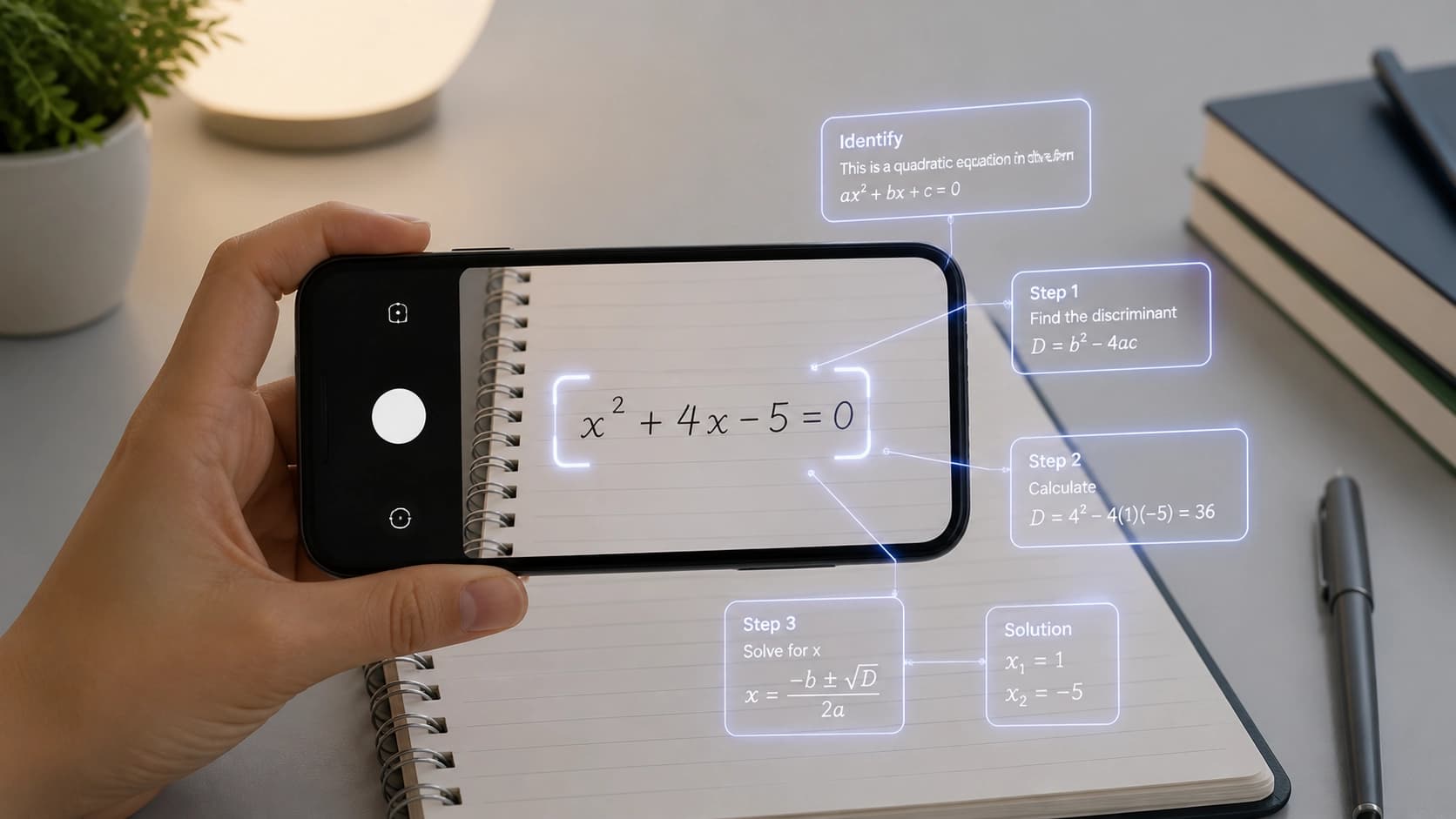
In the coming weeks, another useful scenario will be added — solving problems through the camera. Using Lens in the Google app, you'll be able to photograph a problem or exercise from a textbook. The AI won't just give you the ready answer — it will explain the concept, point out common mistakes, and suggest what to pay attention to. It's like a live teacher who looks at your solution (or lack thereof) and explains, rather than copying from an answer key.
Study materials from any files
You can scan and analyze not just individual problems. Students often face the issue of needed information being scattered across a dozen different sources: lectures, photos of notes, PDFs, and slides. Google proposes solving this through Search: you upload all the materials, and the AI compiles them into one convenient file — for example, a one-page summary with key concepts. It doesn't matter what format the sources are in: slides, a Word document, or a photo of handwritten text. Everything gets turned into a structured cheat sheet that's convenient for exam prep.
Gemini: background research and talking through results
The multi-step research report feature in Gemini Live deserves special attention. Previously, to get a serious breakdown of a topic, you had to sit and wait for an answer in the chat. Now the approach is different: you ask the AI to conduct research, then calmly close the app or go about your business — the work happens in the background. When the report is ready, you get a notification. And then comes the most interesting part: you can interact with the results by voice, ask follow-up questions, and request explanations of complex sections. Essentially, you get a conversational research assistant that prepared the material itself and then explains it to you.
The developers also added the ability for Gemini to generate functional 3D simulations and tables. And the answers aren't limited to static content: if you ask "how does DNA work," the model builds an interactive structure you can move and scale. This is useful for visual demonstrations right during classes or for self-study.
Everything in one place: a study hub in Gemini
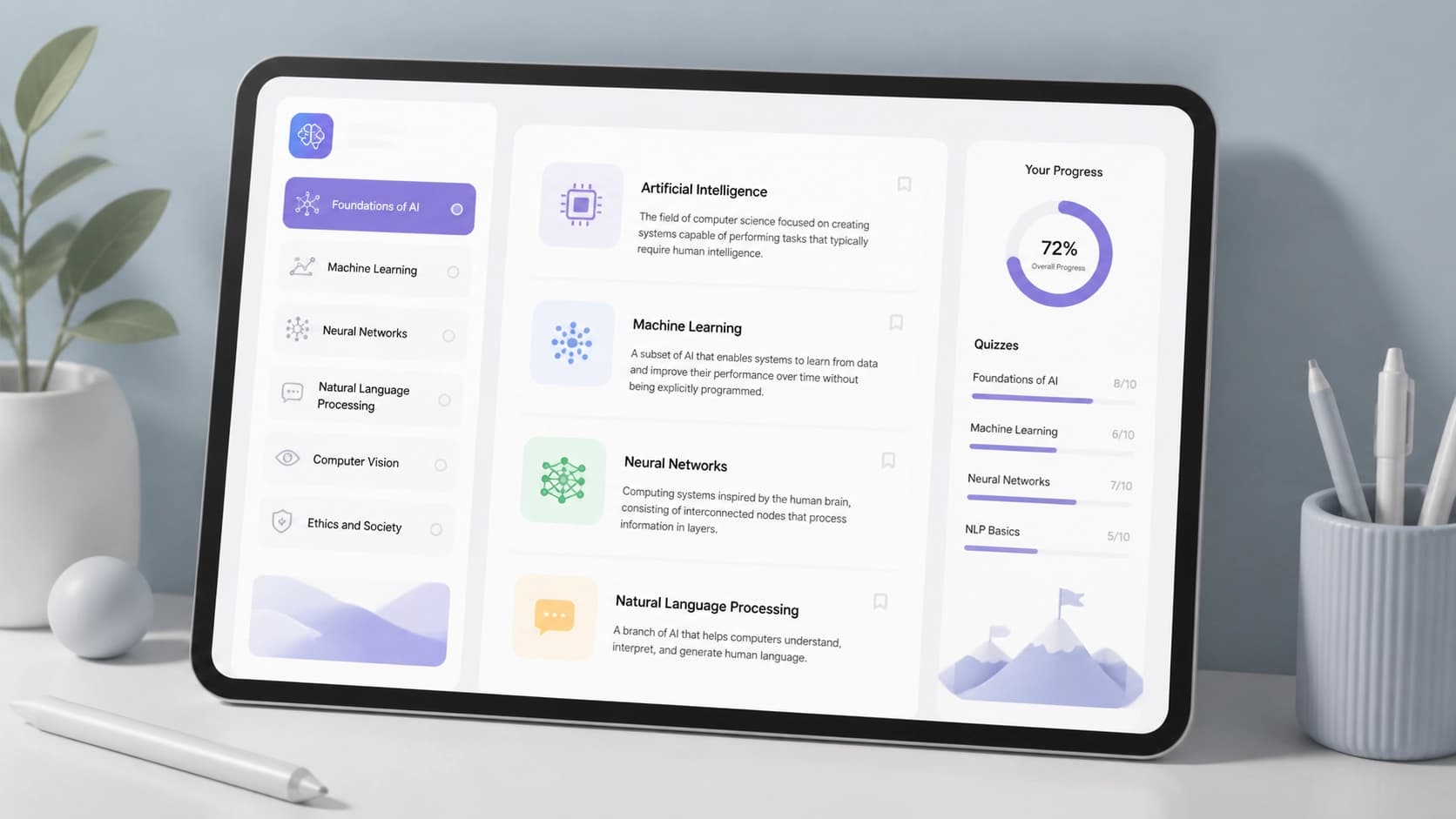
To keep users from jumping between different sections, Google is launching a dedicated student hub right inside the Gemini app. All study tools are gathered here: from creating flashcards to full-fledged practice tests. You can keep a study notebook, build plans, and jump straight into simulations. This "single dashboard" lets you organize your prep without unnecessary switching.
This step is part of Google's broader strategy to turn Gemini into the primary AI assistant for students. The company is clearly targeting an audience that today actively uses ChatGPT and specialized educational startups like Knowt or Gauth. The new features don't just replicate what competitors already have — they integrate study scenarios into everyday tools where students are already used to searching for information. If this approach works, studying really will become easier — especially when help is needed not as a ready-made cheat sheet, but in the "explain and let me practice" format.
Frequently asked questions
Related materials
All materials
Validating Candidates Costs More Than Generating Them: Honeypots Against LLM Vulnerability Hunting
The study examines the cost asymmetry in agentic vulnerability discovery: generating candidate versions is cheap, while confirming them through reachability analysis, execution, and PoC development consumes most of the budget, making verification a potential standalone target for defense. The proposed RedHerring—repository-adapted decoys with a hidden certificate—reduced the number of real vulnerabilities found by 38.7–60.4% at equal cost across 33 OSS-Fuzz projects; even after the agent was warned, the reduction remained at 37.2%.
9 November 2026
Checking LLM Hallucinations via SQL-Based Source Representation Without Fine-Tuning
The study examines whether an LLM can apply a basic symbolic skill—building a SQL database from source documents—to ground its outputs in sources without supervision when detecting hallucinations. On RAGTruth and DiaHalu, this neuro-symbolic pipeline proves more accurate than direct prediction and comparable to state-of-the-art methods, without requiring domain-specific fine-tuning.
9 November 2026
MathAdv: What the Final Accuracy of Machine-Generated Proofs Conceals
A diagnostic suite of tasks spanning 13 undergraduate and graduate mathematics topics evaluates machine-proving systems in Lean 4 not only by their final results, but also by their subject-matter mastery, the quality of their informal reasoning, and their robustness to rephrased conditions. A component-by-component analysis shows that translating a problem into formal form remains the main obstacle, and that success depends heavily on the area of mathematics and how the problem is framed.
9 November 2026