What’s happening at Google DeepMind
Google has announced a leadership reorganization of its key artificial intelligence unit — Google DeepMind. Co-founder and CEO Demis Hassabis is handing over operational control of the company to his longtime partner, while he focuses on scientific research and long-term strategic projects. This is not a box-ticking personnel reshuffle, but a carefully considered move that changes the balance between science and product development in one of the world’s most influential AI labs.
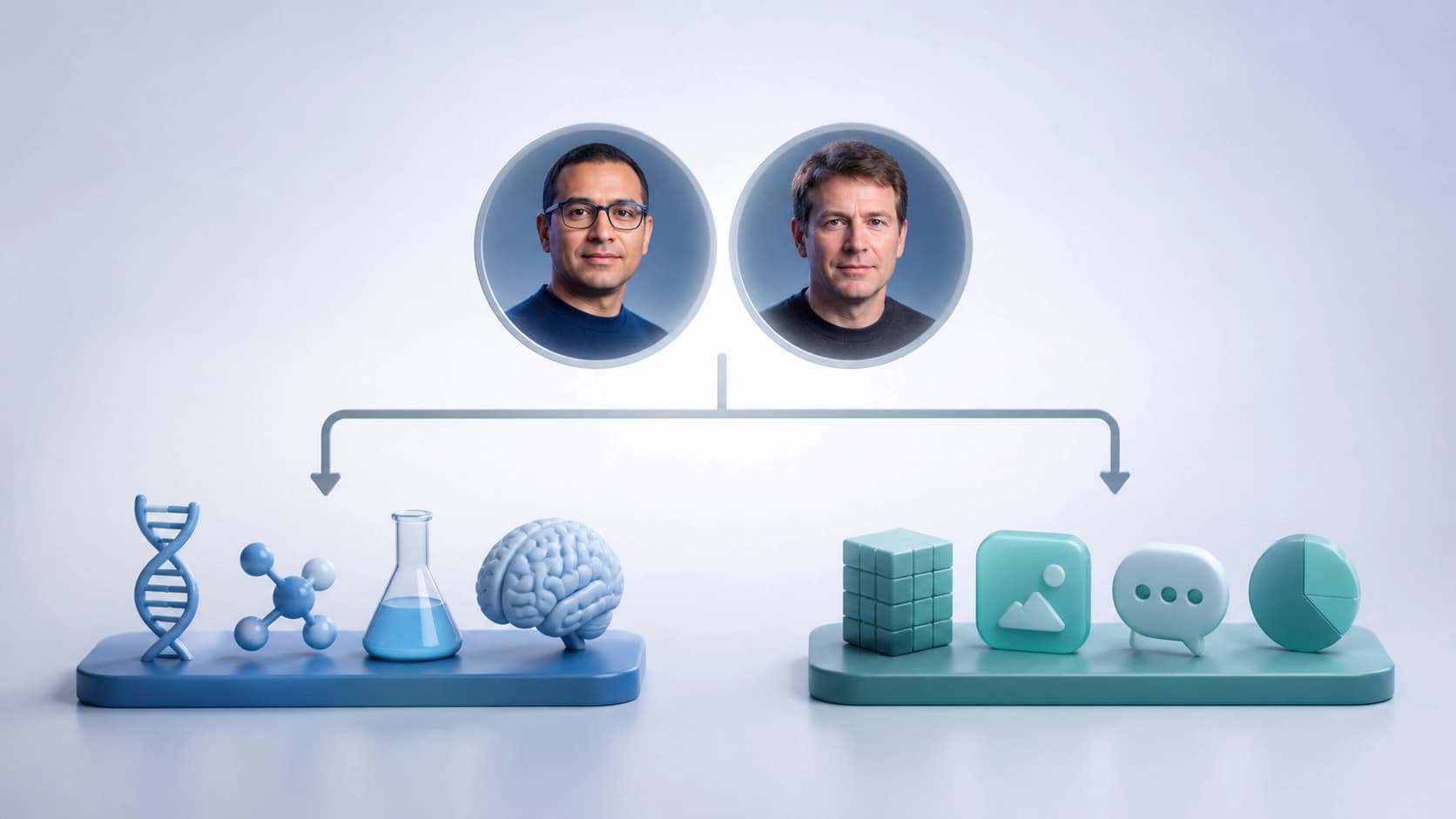
Cory Kaufman, who previously oversaw DeepMind’s strategy and business development, will become chief operating officer. He will handle day-to-day management, team coordination, and interaction with other Google divisions. Hassabis will remain at the company and continue to shape key scientific directions, but now he will have more time for fundamental work — for example, developing new model architectures and addressing AI safety issues. In essence, a “scientist + operations manager” pairing is taking shape inside DeepMind, one that should give the lab both the freedom to research and the discipline needed to ship products.
Why this matters right now
The AI industry is going through a period in which scientific breakthroughs and commercial products are converging into a single stream. Models that were research experiments as recently as yesterday are already becoming the foundation of services used by billions of people. Google occupies a special position here: on one hand, it has its own fundamental research and a world-class team; on the other, it faces pressure from competitors who bring finished products to market faster.
Hassabis has repeatedly stressed that his main goal is safe and responsible AI development, not simply releasing another chatbot version. However, in the race with OpenAI, Microsoft, and other players, this ambition often conflicts with the need to accelerate product cycles. Handing operational leadership to Kaufman is an attempt to resolve that contradiction: scientific experiments can proceed at their own pace, while the product engineering team gets a clear manager who answers for deadlines and results.
ChatGPT — the main competitor to Google’s current models — is aggressively expanding its functionality and integrating into ever more services. In response, Google released an entire line of models under the Gemini brand, but its development strategy often seemed contradictory: sometimes too cautious, sometimes too rushed. The new leadership structure is intended to help eliminate that chaos.
How management will be structured
Hassabis’s role: from manager to visionary
In effect, Hassabis becomes the scientific leader and the “face” of the lab. He will continue to oversee research programs, including those with no direct path to commercial products. This is especially important for areas like AI for science — for example, predicting protein structures or discovering new materials. Such projects require years of effort and do not fit into quarterly plans.
Kaufman’s role: operational efficiency
Kaufman, for his part, will gain control over budgets, task prioritization, and interaction with other Alphabet divisions. His main task is to ensure that research ideas turn into prototypes faster, and then into full-fledged products. This is not simply an administrative position: at large technology companies, it is precisely such people who provide the link between the lab and the business.
This kind of arrangement has been seen many times in the industry, when a company founder steps back from day-to-day operations to focus on big ideas. Larry Page and Sergey Brin, for example, remained at Google for a long time as strategic advisers, without getting involved in routine management. For DeepMind, however, this transition is happening for the first time: previously, Hassabis combined both roles.
Impact on science and the industry
For the scientific community, this is a good sign. Hassabis has always been a figure who, despite the commercialization of AI, continued to emphasize the importance of pure science. Together with his colleagues, he received the Nobel Prize in Chemistry for developing AlphaFold, a system for predicting protein structures. Now he will have more opportunities to develop such projects without spending his energy on meetings and reporting.
AlphaFold is one of the most striking examples of how DeepMind’s technologies go beyond AI itself. With it, scientists around the world have accelerated research in biology