Problem: models are tested where there is no longer any need to search
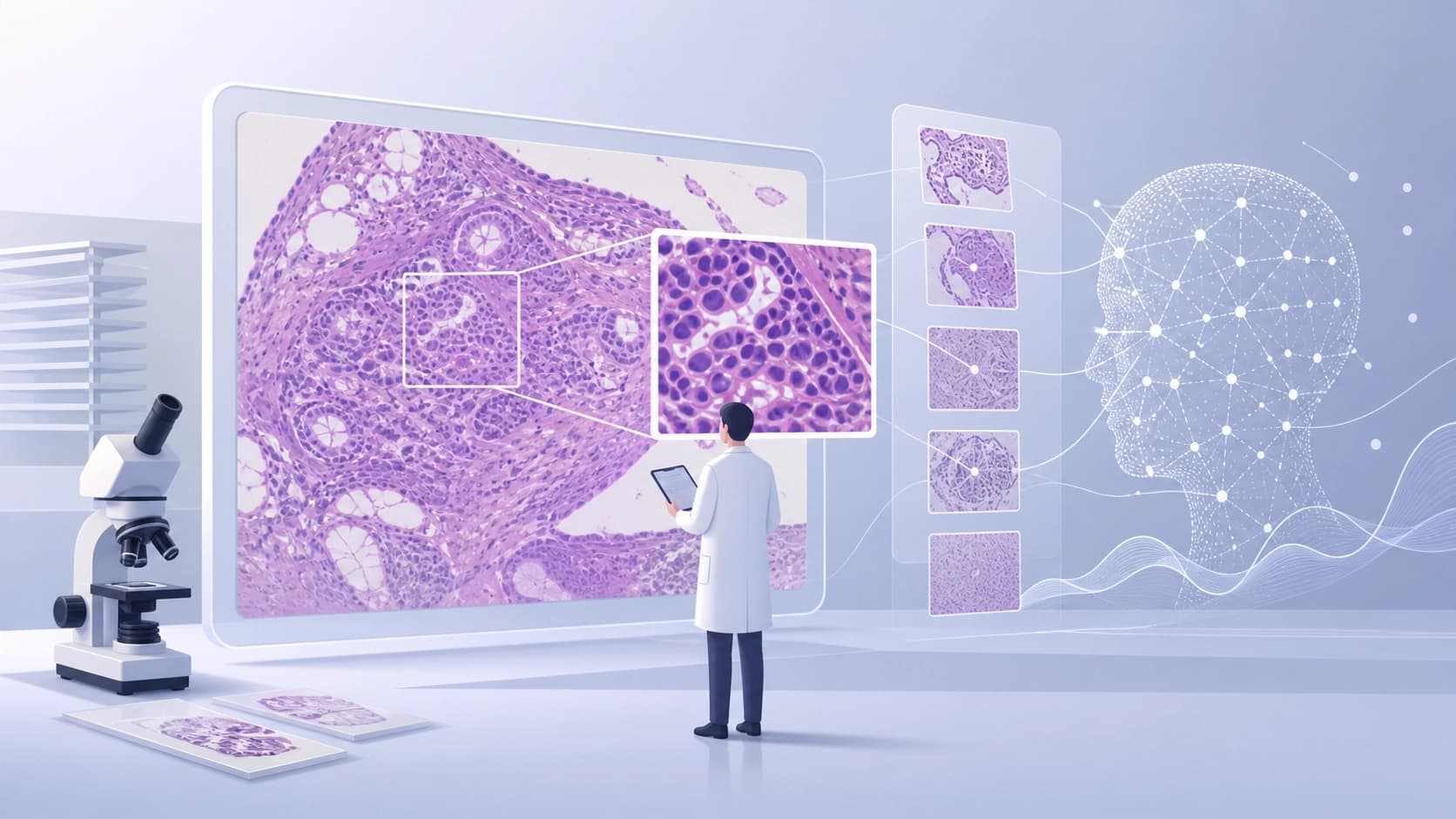
A histology slide is a gigapixel image. To make a diagnosis, a pathologist first scans the specimen at low magnification, picks out suspicious areas, then examines them up close, compares the picture across different scales, and only then formulates a conclusion. A substantial part of this work goes not into looking but into searching: where it is even worth looking.
Most existing benchmarks for AI pathology take this part of the work away from the model. The input is either a pre-cropped patch or already extracted slide features — that is, someone else has already decided in advance what matters here. The model receives ready-made evidence and demonstrates its ability to reason over it. But how well it obtains evidence on its own remains almost untested.
It is precisely this gap that the EviPathBench work targets. Its authors are Dankai Liao, Tianyi Zhang, Yufeng Wu, Xinyue Zhang, Qiaochu Xue, Zeyu Liu, Dachun Zhao, Linghan Cai, and Yueming Jin; the preprint appeared on arXiv on July 21, 2026, and by August 25 it had already reached a fourth version (arXiv:2607.19261, cs.CV / cs.AI). This frequency of revisions in itself hints that the authors consider the topic alive and contentious.
How the benchmark is structured
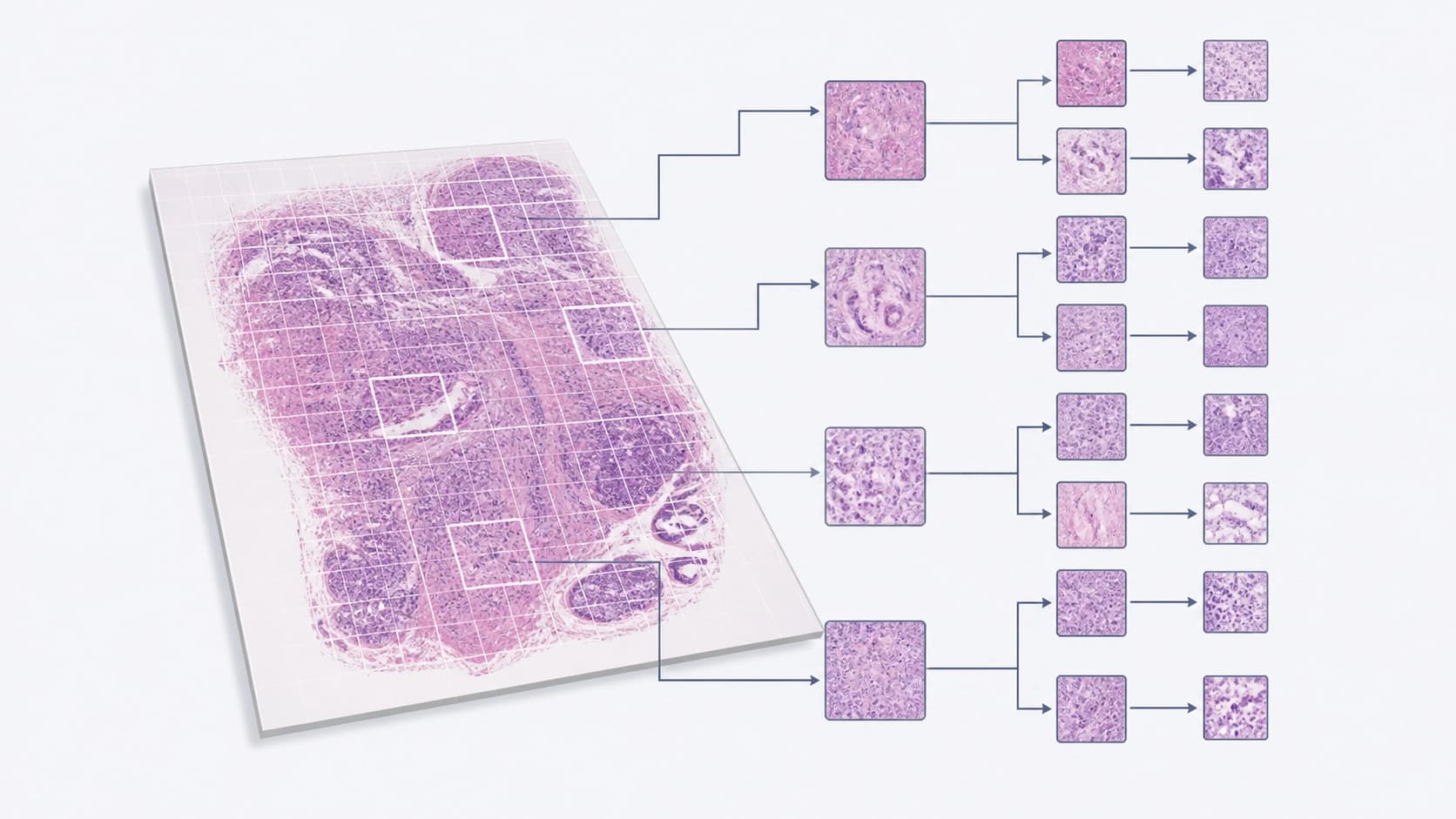
EviPathBench is built not as a set of separate multiple-choice questions but as a diagnostic tree. Nested regions at different magnifications are linked to findings specific to a particular scale, and ultimately to a diagnosis at the level of a pathology report. The model is required not merely to output a "cancer" label but to follow a chain: find a region, describe the finding at that magnification, move up a level, reconcile data across scales, and combine it all into an overall conclusion.
Four testable abilities
The authors broke down the skill of working with a slide into components and evaluate each separately:
- Image-text matching — interpretation of evidence, where the model links what it sees to a description.
- Text query to image (retrieval) — verification: given a formulation, the model must locate the corresponding fragment in the slide.
- Localization of the diagnostic region — evidence gathering proper: where exactly to look.
- Multi-level reasoning — integrating findings obtained at different magnifications into a single picture.
This division is valuable in itself: it shows that "understanding a slide" is not one ability but several, and they can diverge from one another very widely.
Data and annotation
The foundation consisted of 1,822 WSIs from TCGA and 17,135 diagnostic paths annotated by ten certified pathologists. A private cohort of 190 breast cancer slides with detailed annotations is used separately — it is needed to test specifically the autonomous examination of a whole specimen, without hints about where the region of interest is located.
Results: reasoning works, searching does not
The evaluation involved 19 "vision-language" models — general-purpose, medical, and specialized pathology ones — plus one text model as a reference, needed as a baseline.
The picture turned out to be stark. The best open models exceed 93% accuracy in multi-level reasoning and more than 50% in both cross-modal matching tasks. One might think all is well.
But localization of the diagnostic region is a disaster. The best result for text-guided mean IoU does not even reach 0.09. That is worse than a simple heuristic that places a rectangle in the center of the slide without analyzing anything at all. In other words, a model trained to look at tissue searches worse than a program that looks nowhere.
Scale breaks the search
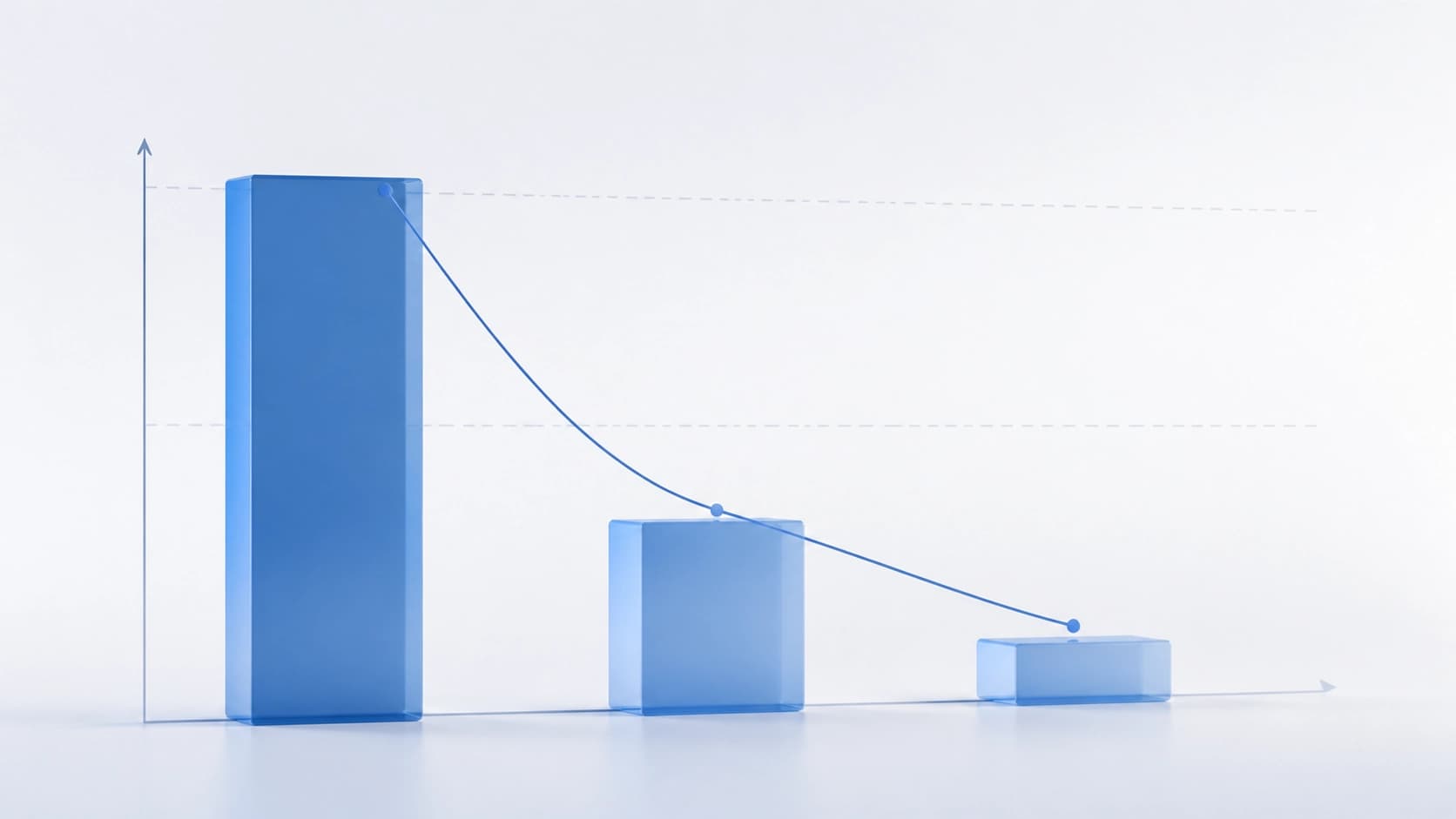
A separate line of the experiment is autonomous slide examination. Here the unconditional hit rate collapses as magnification increases: 0.522 at low, 0.185 at medium, and 0.020 at high. The logic of the decline is clear: at low magnification the model sees the overall architecture of the tissue and easily lands "somewhere in the right zone," but the stronger the zoom, the narrower the field of view and the more costly each mistake at the previous step. Errors accumulate, and by maximum magnification the model is almost guaranteed to be looking in the wrong place.
What follows from this
The main conclusion of the work is simple: there is a deep gap between the ability to reason over prepared evidence and the ability to obtain that evidence. The former is already handled fairly well by modern models; the latter is almost not handled at all.
For practice, this means that slide navigation cannot yet be left to the model "to figure out" with the expectation of a clinically meaningful result. However, the benchmark itself provides a common framework: it can be used to measure both abilities and to see whether a particular improvement — reinforcement learning, memory between zoom steps, hierarchical search — helps make progress in the part that is failing.
Some caveats are worth keeping in mind as well. The private cohort is limited to breast cancer, and the bulk of the data is retrospective TCGA material, meaning real clinical variability is not fully represented there. Localization metrics are sensitive to exactly how region boundaries were annotated, and four versions of the preprint in a month suggest that the numbers may still be refined.