Introduction
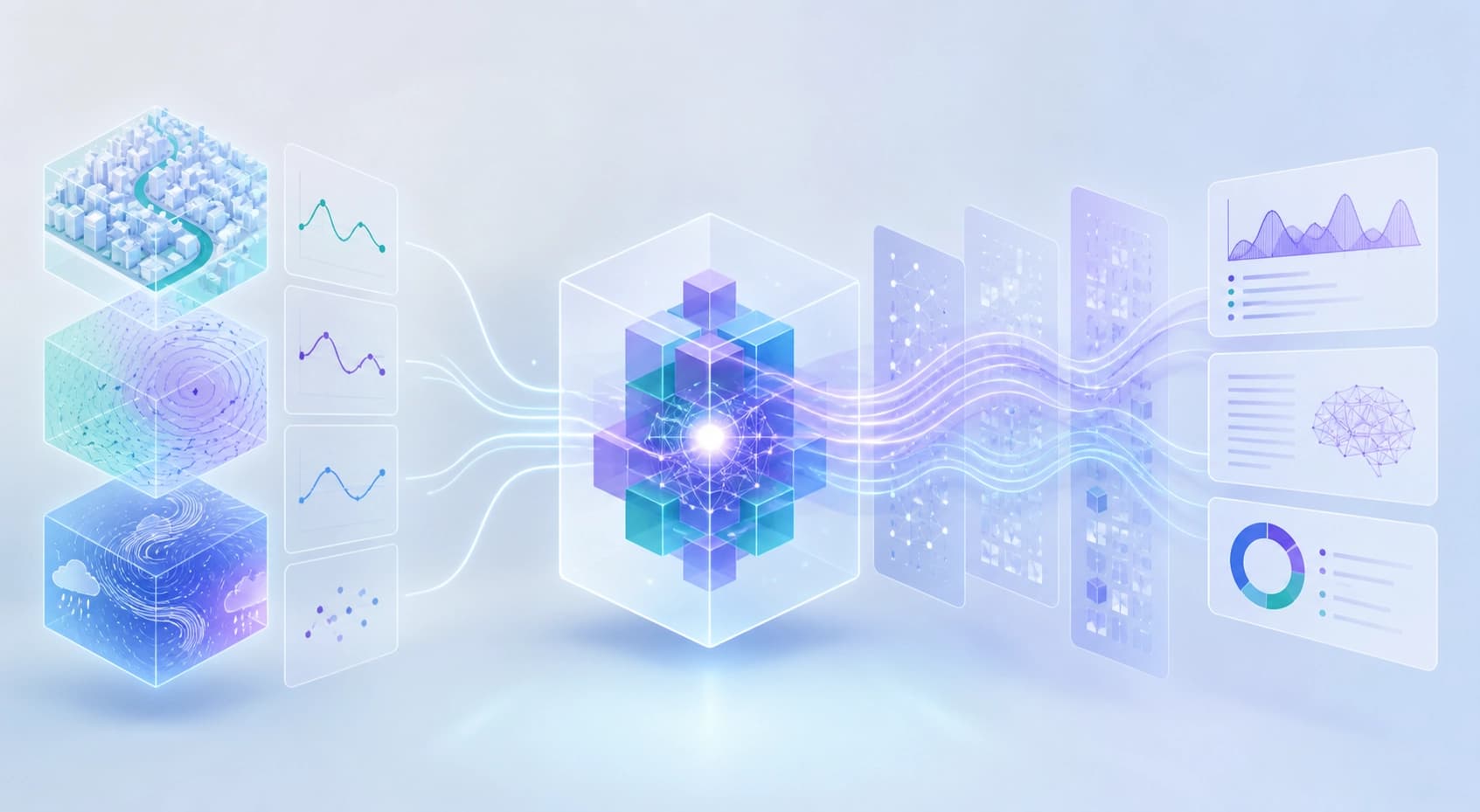
Classic multi-agent systems are typically built around a "dispatcher": it decides which agent should handle a task, collects responses, and produces the result. This approach works reasonably well in simple scenarios, but the more complex the request, the more noticeable the weaknesses become. The central node turns into a bottleneck: routing slows down, agent roles are fixed in advance, and the system struggles to adapt to unconventional multimodal data.
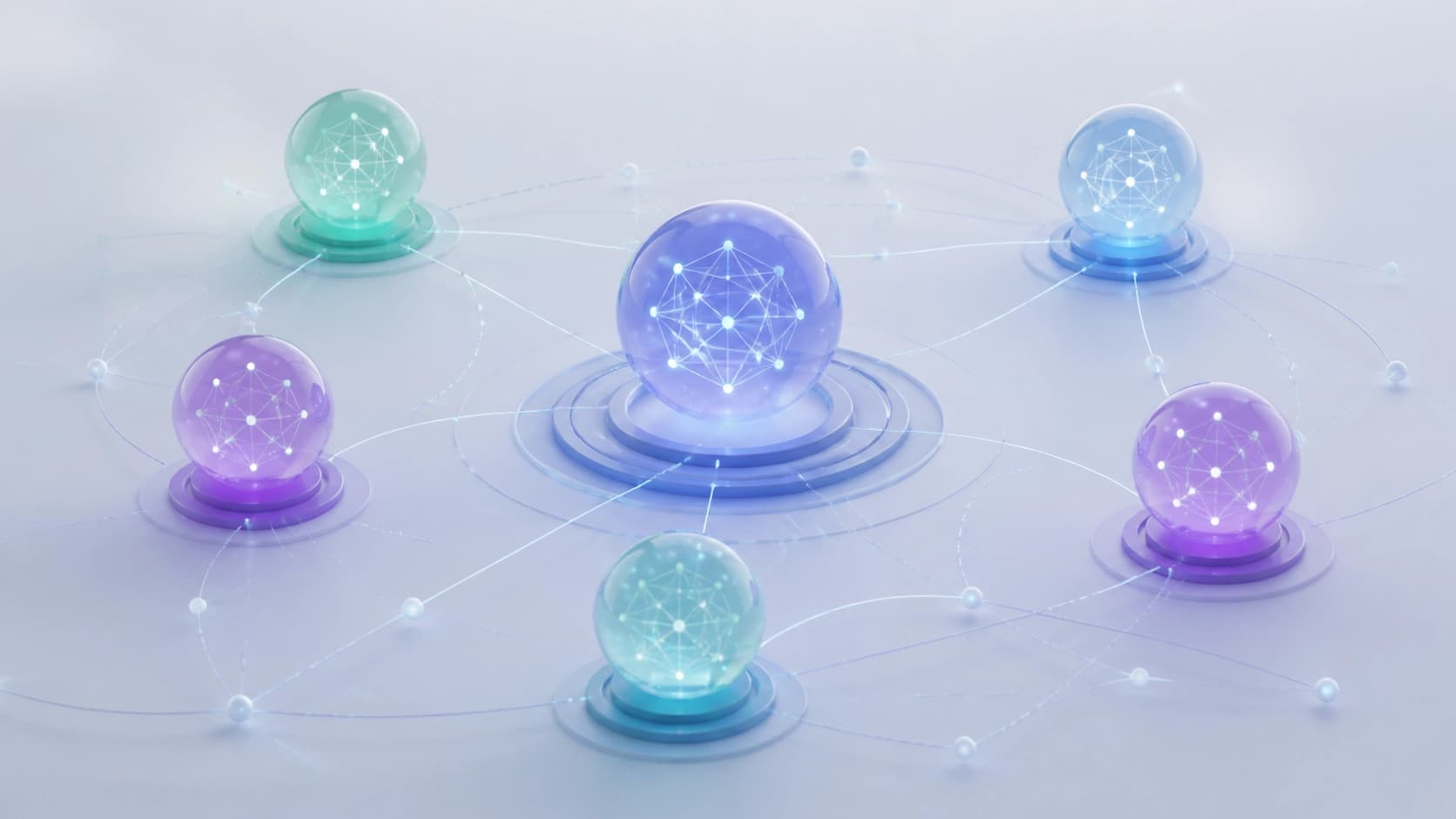
A recent preprint, DeAR, proposes a different path — fully decentralized interaction. Agents negotiate among themselves on their own, without a single coordinator, and decide for themselves who is responsible for what. The idea is to make collaboration more flexible and resilient — and, judging by the results, it works.
Why centralization hinders agents
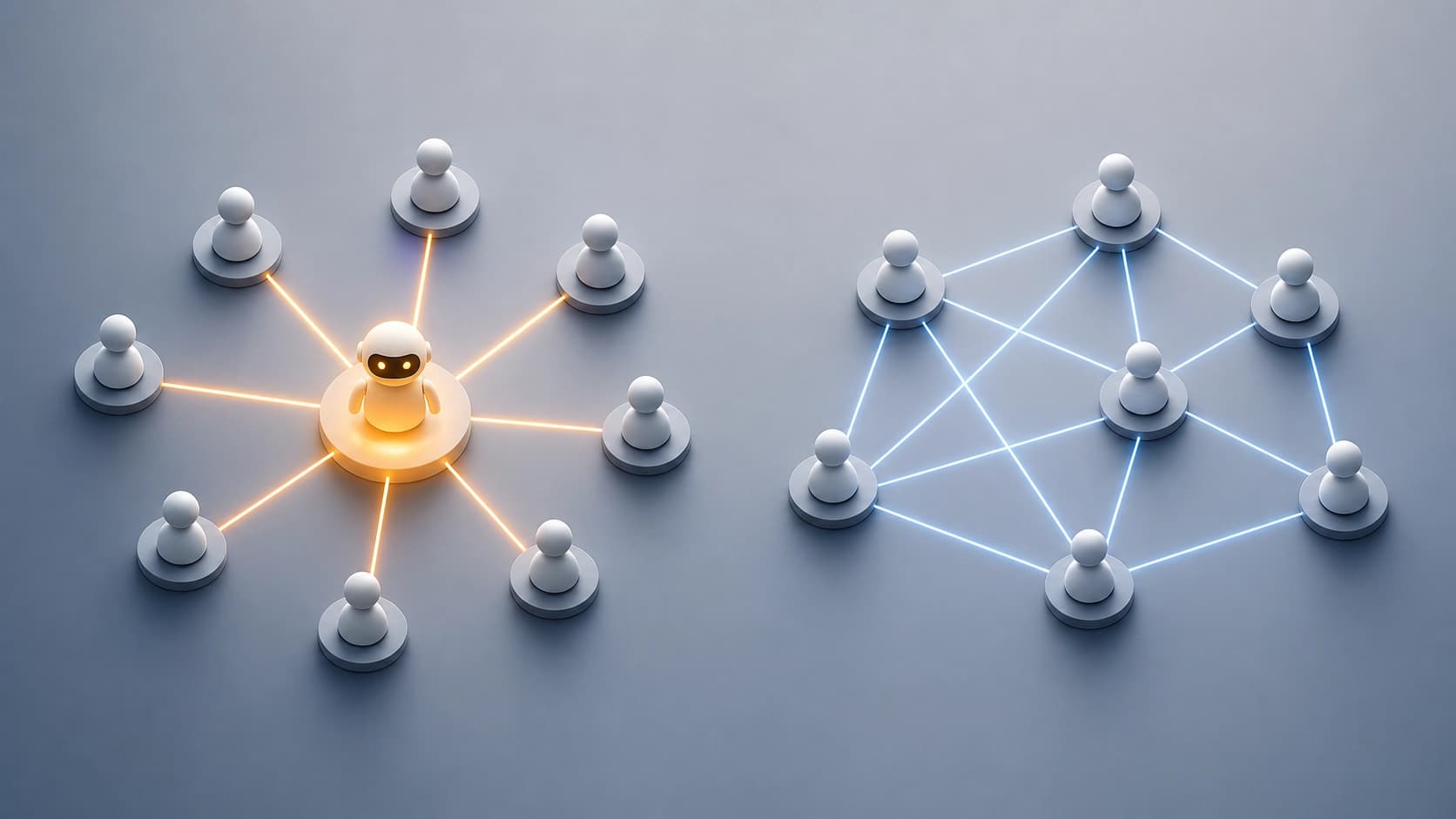
The familiar "router + executors" scheme looks logical, but it has systemic limitations. All requests pass through a single node, and its throughput determines the speed of the entire system. If a complex request arrives that requires the joint work of several specialized agents, the central planner must quickly figure out which part to assign to whom. In practice, this often leads to some agents sitting idle while others are overloaded.
Another problem is the static nature of roles. An agent assigned as "text-only" won't be able to help with an image, even if its underlying model is capable of more. Rigid boundaries prevent the system from using its real potential.
DeAR tries to move away from these limitations. Instead of a central planner, agents communicate in peer-to-peer mode. Each participant independently assesses how well its capabilities fit the current request and decides on its own in which direction to move the reasoning next.
How DeAR works
At the core of the framework are three mechanisms that together enable autonomous coordination.
Capability binding
The first step is decentralized capability binding. Each agent receives the request and "tries it on": it assesses what it can actually do and how relevant those skills are to the current task. No external planner assigns roles — specialization emerges naturally, based on the specific request. This makes the system more flexible: the same agent might work with text in one case and help analyze an image in another.
Thought map navigation
The second mechanism is thought map navigation. Once an agent has defined its area of responsibility, it needs to understand who to interact with next and how. Instead of randomly messaging everyone, agents build a targeted "map" of ideas and reasoning, along which they move toward the relevant participant. This approach reduces unnecessary traffic and makes collaboration meaningful: each step brings the system closer to an answer rather than merely creating the appearance of activity.
Topology update
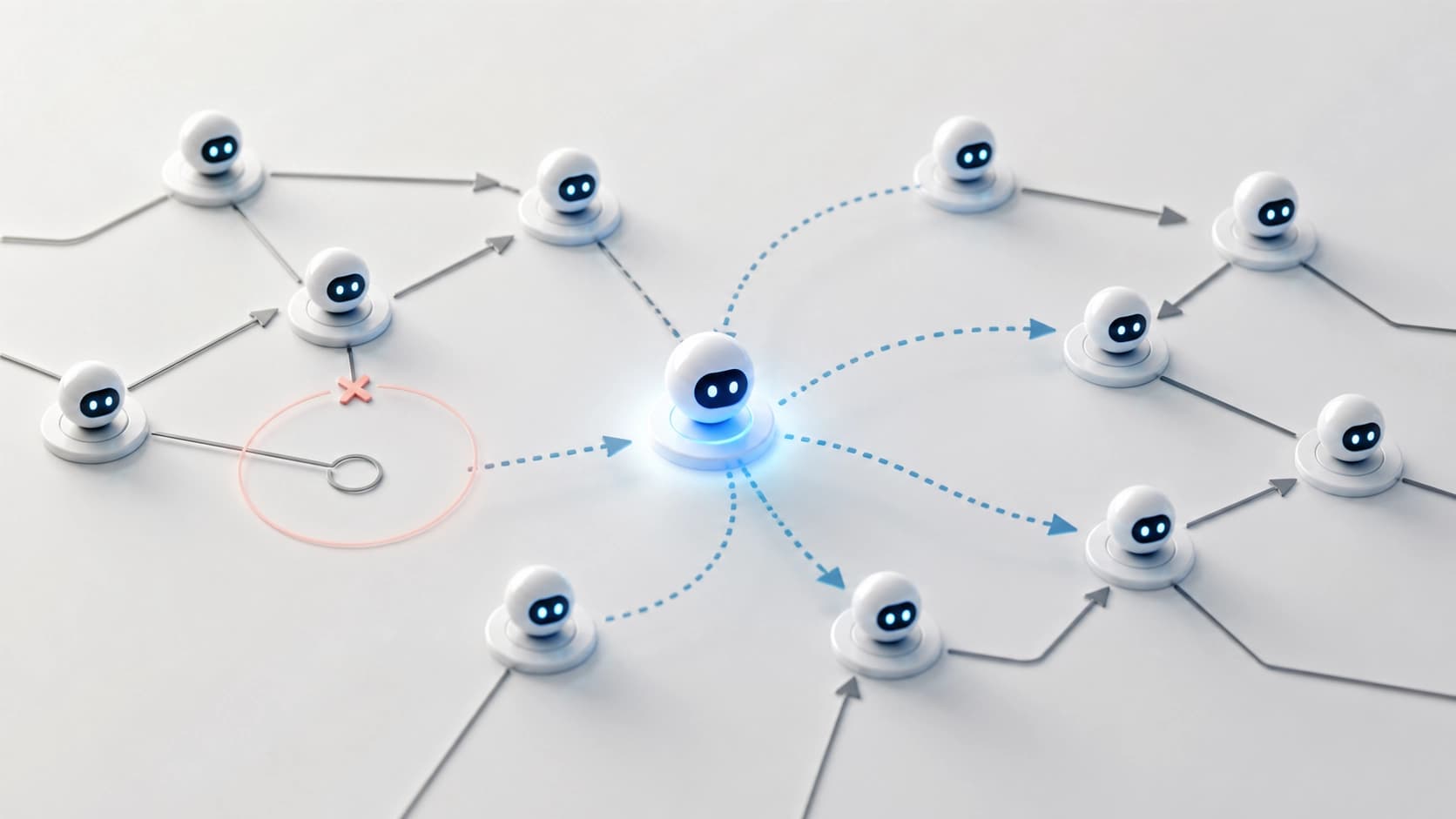
Finally, the ability to correct mistakes on the fly matters. DeAR includes a topology update — an adaptive mechanism that revises connections between agents if the chosen reasoning path hits a dead end. The system doesn't wait for a central node to notice the problem; it restructures its own architecture right on the fly.
What the tests showed
The authors evaluated DeAR on nine diverse benchmarks covering both multimodal reasoning and text-based question answering. In all cases, the decentralized framework consistently outperformed recent baseline methods.
The gain is especially noticeable on tasks that require intensive knowledge use and the combined efforts of different specializations. This confirms the main thesis: when agents can freely adapt and connect with each other directly, reasoning accuracy improves.

Conclusions
DeAR is a step toward a more natural and resilient architecture for agent systems. Instead of a rigid hierarchy — an autonomous network where each participant understands its own capabilities and chooses how to contribute to solving the task. This approach not only removes the bottleneck problem but also makes the system ready for unexpected scenarios that cannot be anticipated with static role assignment.
For now, the framework exists as a research project: the source code is promised to be released after publication. But it's already clear that decentralized agent collaboration is a promising direction, and DeAR looks like one of its compelling examples.