Why historians need their own AI
Historians work with unique archival materials: manuscripts, old maps, yellowed newspapers. This data is often not digitized in a convenient form, and universal machine learning tools require clean structure and do not understand the peculiarities of historical sources. That is why the adoption of AI in historical research is slower than in other disciplines — researchers simply lack solutions built for their tasks.
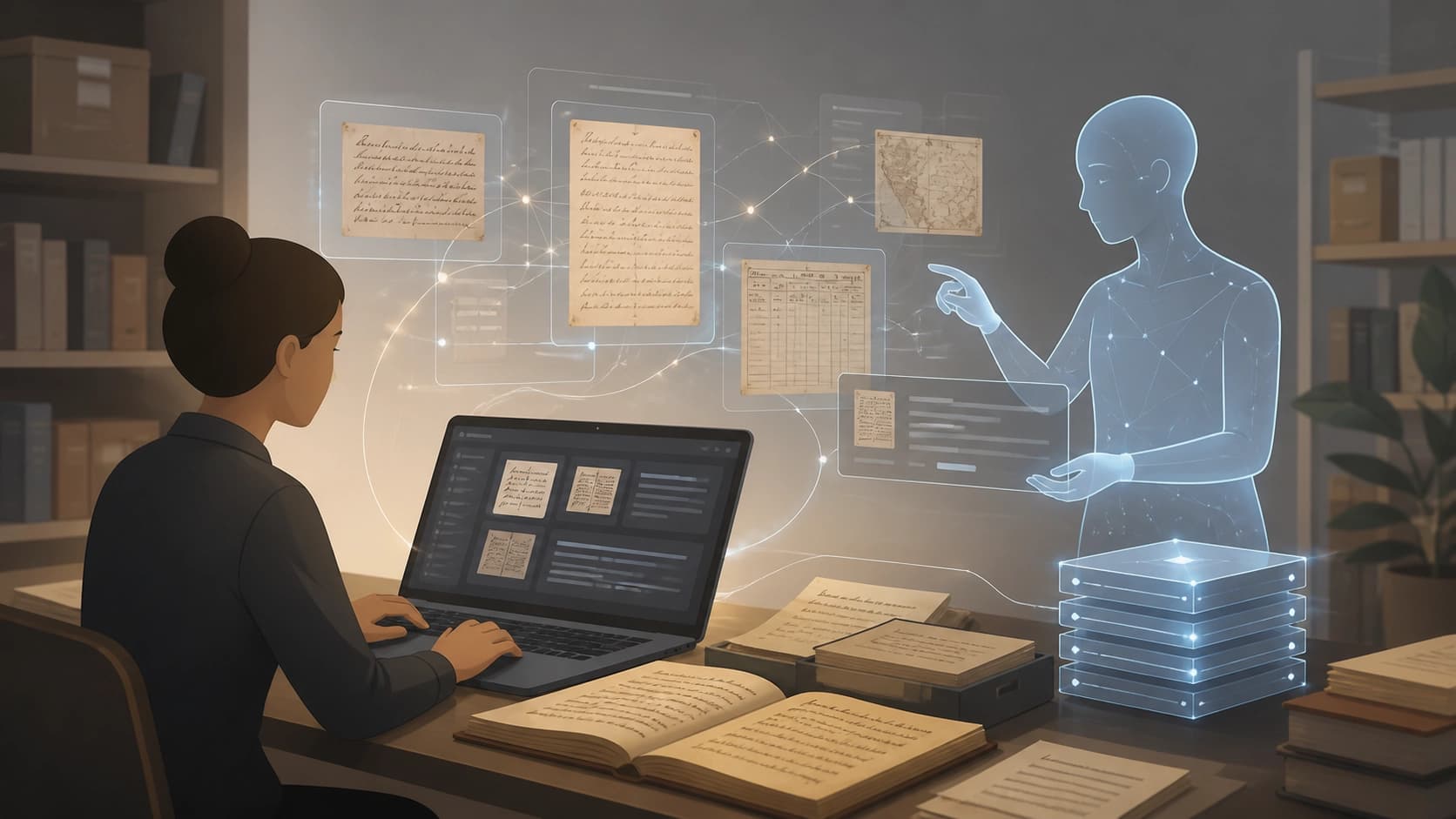
The answer came in the form of Chronos, a "digital co-historian" presented in a 2026 scientific preprint. The system is designed not as a universal assistant, but as a specialized helper that can work with primary sources and flexibly adapt to a historian's requests.
Setup in plain words
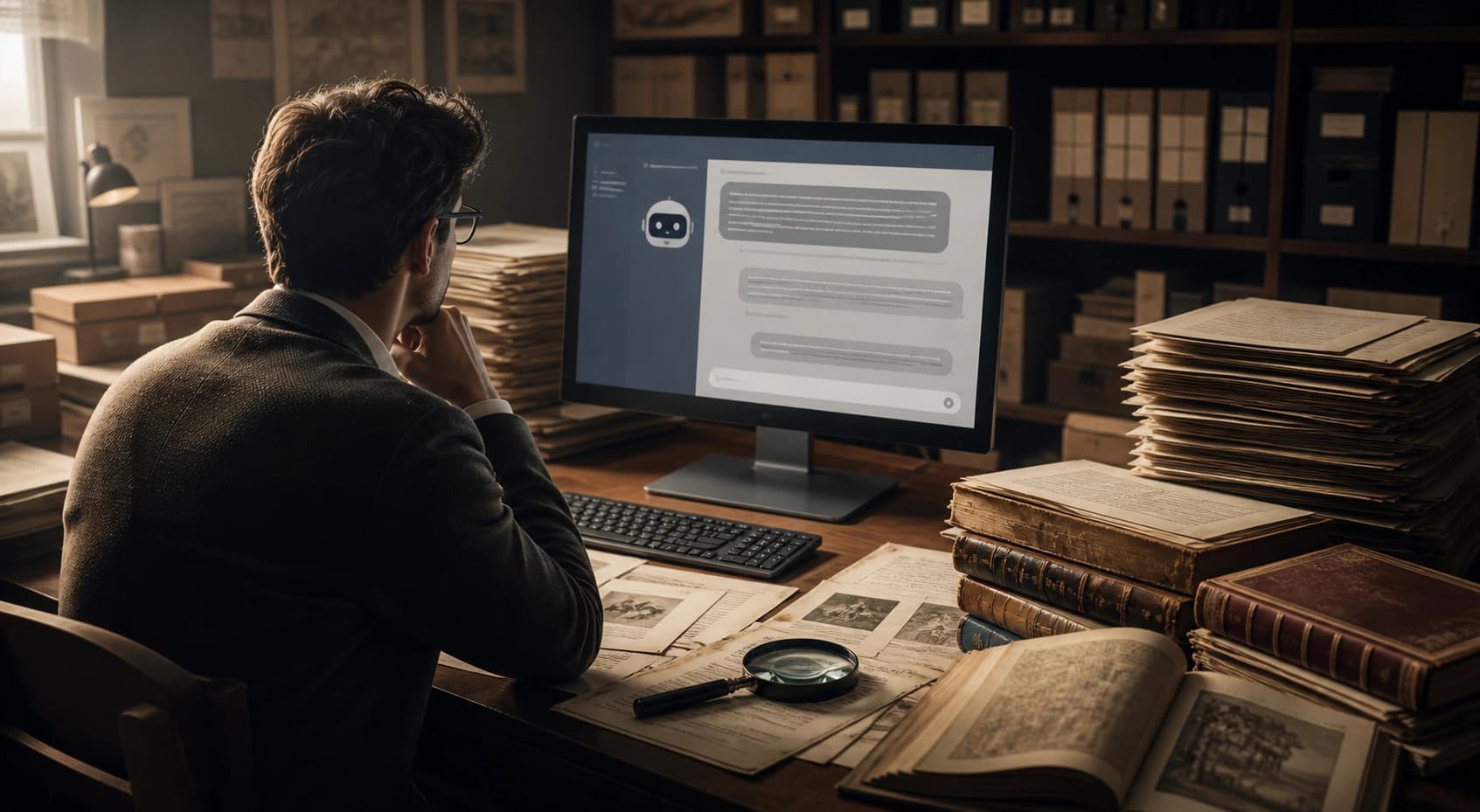
The key feature is configuration in natural language. A researcher describes what they need, and the system turns that description into a working process. No knowledge of Python or prompt engineering is required: it is enough to formulate the task the way you would explain it to a colleague.
Ready-made processes can be packaged into extensions — Chronos-Extensions. These are modules that researchers share with each other. For example, one historian has configured an algorithm for a specific type of document, and now anyone else can use that algorithm without reconfiguring it. In this way, the system grows a library of specialized solutions created by the community itself.
Extracting data from archival scans
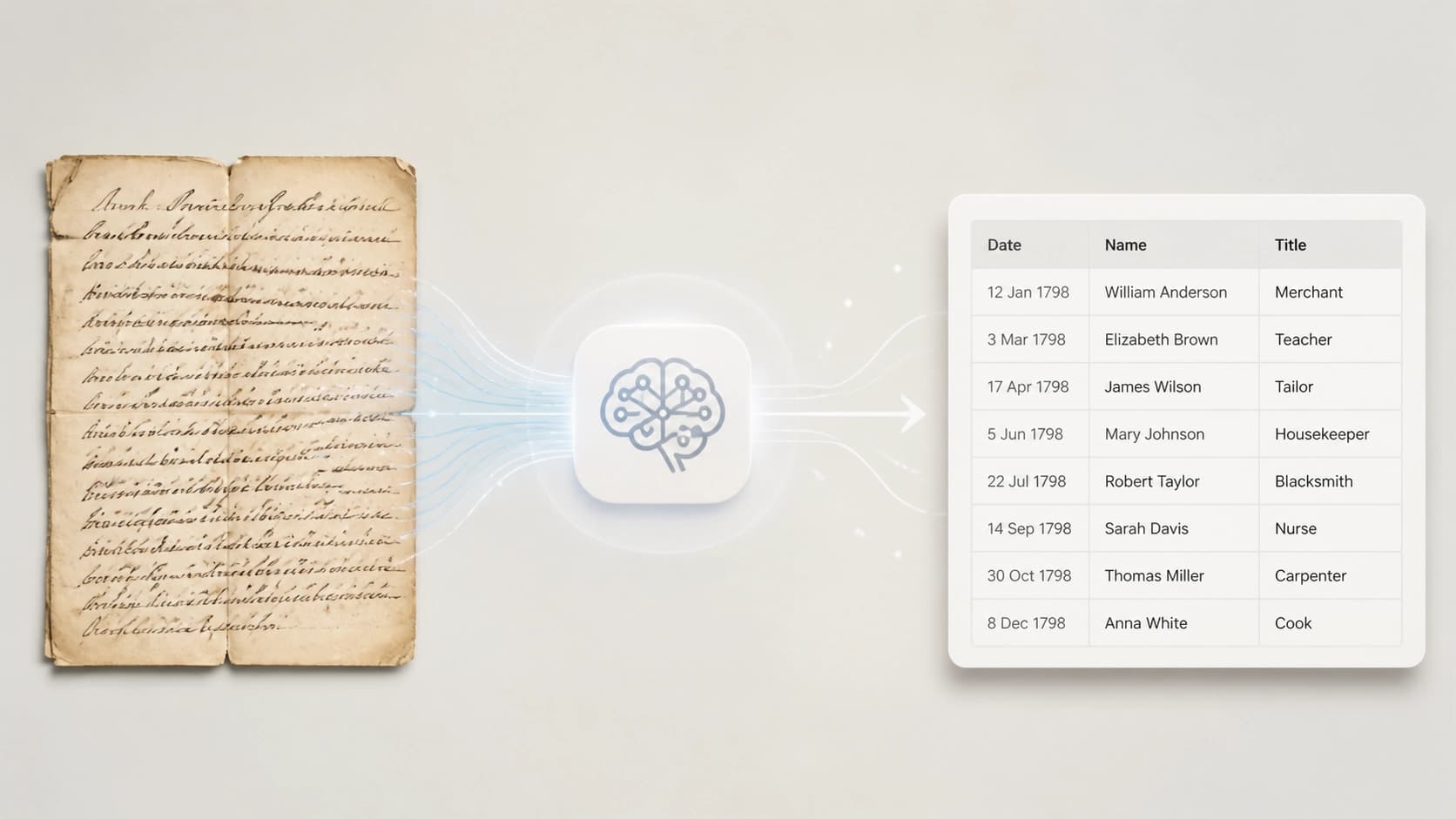
The first such extension was Chronos-Extract. It automates the extraction of information from scanned images: it recognizes text, highlights the required fields, and links them together. For a historian, this eliminates the monotonous manual work with hundreds of pages.
The developers tested Chronos-Extract on three different corpora of sources. The tests covered three centuries, several languages, different layouts and fonts, and on all of them the system showed consistently high accuracy. This is especially valuable because archival materials are often fragile, non-standard in layout, and poorly suited to standard OCR.
Open access and the future
Chronos is available to historians for free and openly. Any researcher can use it on both primary and secondary materials. This is an important step for the humanities, where tools are usually tailored to commercial organizations or resource-rich laboratories.
Thanks to the modular architecture, the system's capabilities will expand. The community will be able to add new "professional skills," share approaches, and adapt the AI to a wide range of historical questions. Perhaps very soon, the co-historian will become as familiar a working tool as the library catalog.