
ChatGPT vs Claude: detailed analysis
We examine the differences between two popular AI platforms, including their capabilities, pricing, results, and use cases.

In 2025, the choice between ChatGPT and Claude has become one of the most discussed topics among neural network users. Both services are flagships of the generative AI industry, but their creators' approaches to development and positioning differ noticeably. If ChatGPT from OpenAI is perceived as a universal Swiss Army knife, then Claude from Anthropic is often called a more careful and predictable analyst. Let's figure out how they differ in practice and which tool is worth choosing for specific tasks.
Philosophy and positioning
The differences begin with the fundamental approach to building neural networks. OpenAI bets on multifunctionality, constantly expanding the boundaries of what's possible, and integration with a huge ecosystem of services. Claude was created with an emphasis on safety, predictability, and adherence to value guidelines. Anthropic initially declared the principle of a "helpful, harmless, and honest AI," which directly affects the model's behavior in dialogue.
This philosophy inevitably shows up in the results. ChatGPT strives to impress the user with its capabilities, eagerly takes on creative and unconventional tasks, sometimes getting carried away by flights of fancy. Claude more often demonstrates caution, asks clarifying questions, and prefers to decline a risky answer rather than provide unverified information. For some users, this is a downside; for others, it's critically important reliability.
 Comparison of key capabilities
Language abilities and text generation
In Russian-language tasks, both models demonstrate high results, but with different specifics. ChatGPT often produces more coherent and lively marketing texts and handles copywriting and storytelling well. Its answers are usually less "dry," and the style can be flexibly adjusted.
Claude has traditionally been stronger in analytics, processing large volumes of documentation, and paraphrasing technical text. It literally "gets along" with files: the model can dive into uploaded PDF or Word documents down to individual tables and footnotes. It's Claude that is often chosen for summarizing scientific articles or creating summaries of multi-volume reports.
Working with context and memory
One of the main differences lies in the approach to long context. Claude became famous for its "window" of hundreds of thousands of tokens, allowing it to process volumes comparable to "War and Peace" in one go. If you need to analyze a 100-page corporate regulation and provide a summary of it, Claude will do an excellent job.
ChatGPT isn't far behind — it also supports a large context in the higher-tier plans. In practice, however, users note that when the context is heavily overloaded, ChatGPT may "lose" information from the beginning of the dialogue. OpenAI's added trump card is a new architecture that can relevantly extract the needed data from the middle of a large file. The question here isn't about specs, but about resilience to degradation in multi-day conversations, where Claude often looks more stable.
Code and technical tasks
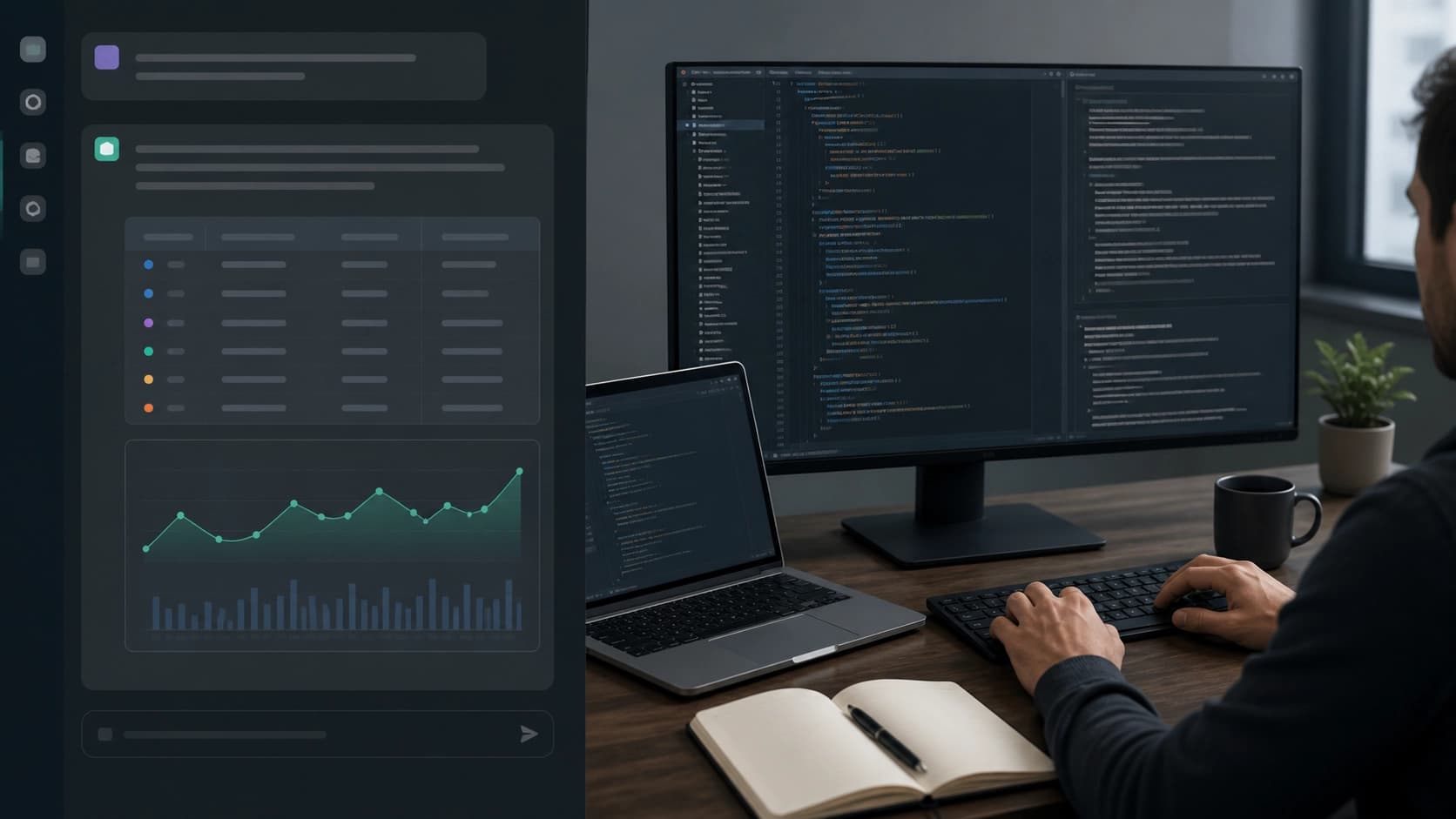
Both models' programming skills are close to benchmark level. ChatGPT has a major advantage in integration: through Code Interpreter (later renamed Advanced Data Analysis), users gained the ability to run Python code right in the chat, upload CSV files, and build visualizations. This makes it an ideal environment for data exploration.
Claude compensates for the lack of a "built-in interpreter" with more "polished" code generation. It less often produces excessive comments and offers solutions that are easier to integrate into an existing project. For developers who need neat refactoring and explanations of someone else's scripts, Claude often turns out to be clearer.
 Pricing and availability
Both companies follow the classic freemium model.
Both products have free versions, but their capabilities are constantly changing. Free access to ChatGPT usually means limits on the number of messages per hour and no access to the newest models. In Claude's free version, users also run into limits, but the base model almost always handles everyday tasks just fine.
The paid subscription for both neural networks includes priority response speed, access to the latest model versions, and extended conversation limits. Overall, OpenAI and Anthropic's pricing policies stay in roughly the same price category, so when subscribing, the choice between them is rarely made based on price. Rather, the decisive argument is which model better fits the user's routine scenarios.
Use cases
Based on the difference in character, we can sketch out the ideal scenarios for each.
ChatGPT is your universal partner for:
- creating creative content: social media posts, scripts, poems, jokes;
- brainstorming and generating out-of-the-box ideas;
- working with data "on the fly": building tables and charts, processing CSV right in the chat;
- finding alternative points of view on any topic.
Claude is preferable when you need:
- deep analysis of long documents, legal texts, and scientific literature;
- a structured retelling of large amounts of information without losing meaning;
- writing "safe" and well-verified corporate text where accuracy matters more than creativity;
- conversations on sensitive topics that require tact and a lack of bias.
Quick start: how to choose and get going
The choice between tools doesn't have to be for life. In practice, the best option is to use both services for different needs. However, if you need to make a decision right now, follow these simple steps.
- Identify the main task you face most often: texts, code, analysis, or a general assistant.
- Sign up for both services on their free plans.
- Give both models the same problem that's as close as possible to your real work.
- Evaluate not just the quality of the answer, but also whether the communication style suits you. If the model asks a clarifying question, are you comfortable answering it?
- Interact with the chosen service for a few days. Pay attention to speed, stability, and any outages.
- Decide on a subscription only after a real, extended test. That way you'll see whether the limits are worth it for your tasks.
Technical limitations and safety
Neither model is free of flaws. ChatGPT is periodically criticized for "hallucinations" — confidently citing facts that don't exist. Claude makes up things less often, but it does tend to politely refuse if a task seems ambiguous.
In terms of safety, Anthropic is significantly ahead of many competitors. The "constitutional AI" approach helps it avoid categorical and provocative answers even on contentious, politicized topics. OpenAI is more liberal in its restrictions, which can be useful for scientific research but less ethical for marketing purposes.
Conclusions and outlook
In short: ChatGPT is maximally versatile and aimed at the advanced user who loves to experiment. Claude is more specialized and predictable — it's the choice for analysts, lawyers, and anyone who needs a "calm" AI without surprises.
Both products are actively evolving: OpenAI keeps improving both integrations and speed, while Anthropic works tirelessly on context length and stability. It's worth revisiting your choice from time to time, since the model landscape changes literally every quarter. There's no such thing as a perfect neural network — there's only one that fits a particular user's specific tasks perfectly. So the best way to figure it out is to start testing it yourself today.
Frequently asked questions
Related materials
All materials
Step-by-Step Evaluation of GUI Agents for Dashboard Analysis: The DashAct Benchmark
Introducing DashAct, a benchmark of 348 human-verified trajectories that breaks down GUI agents’ work with interactive dashboards into three stages and four visual conditions. The results reveal persistent issues with action prediction and visual target grounding, as well as agents’ reliance on contextual and spatial support.
11 November 2026
Canonical Polynomial Invariants for Diagnosing RL Simulator Failures: Where Are They Actually Useful?
The study examines whether incorporating physical laws into learnable dynamics models is justified: invariants extracted from trajectories and reduced to canonical form using Gröbner bases yield modest forecasting gains, but prove powerful for diagnostics, enabling the localization of violated constraints and identification of specific erroneous parameters.
10 November 2026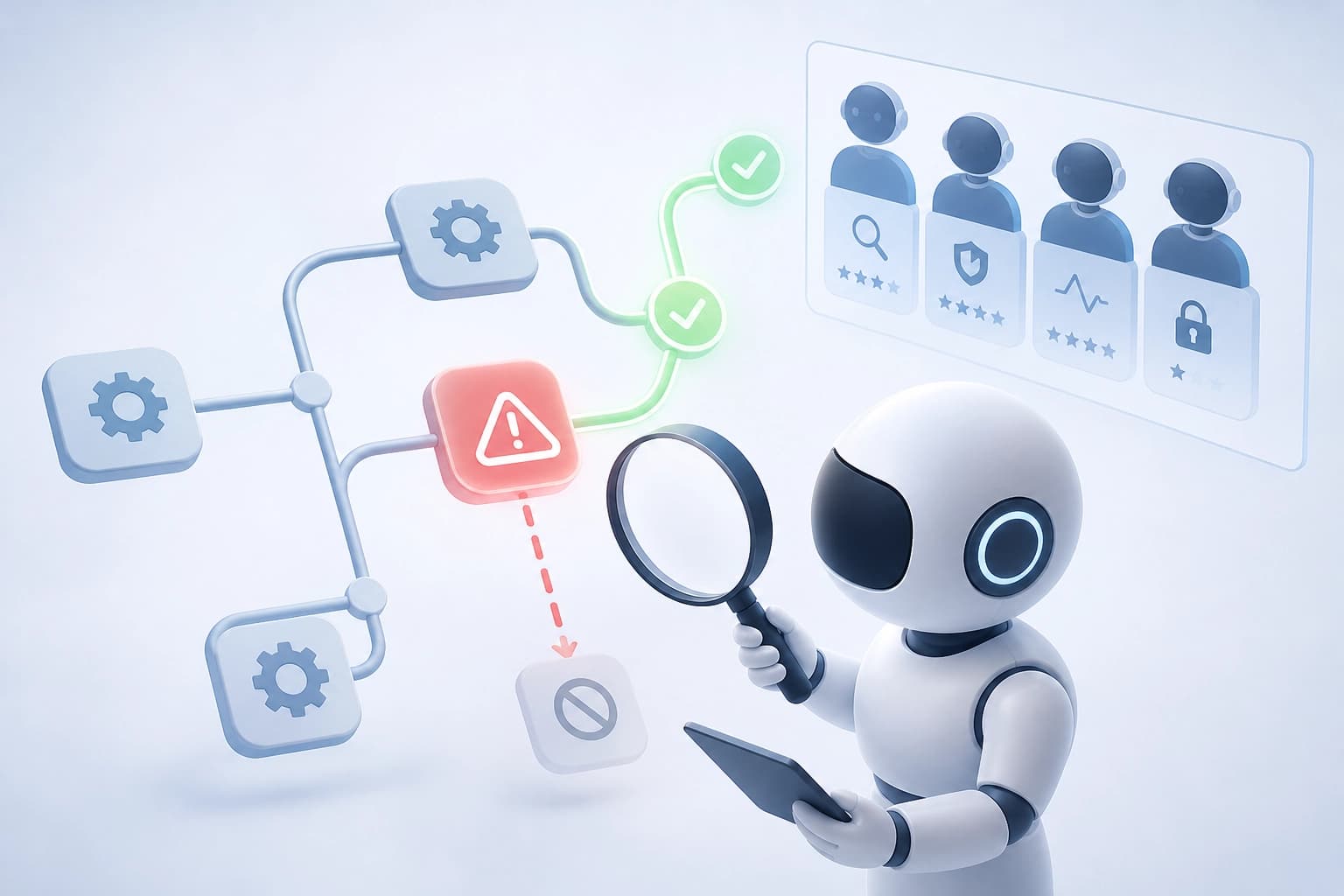
AURA-Eval: How to Check Whether an LLM Agent Recognized a Risk and Changed Its Next Step
The framework evaluates LLM agents’ behavior not by their final verdict, but by how they respond to risk at key decision points: tool-call trajectories are interrupted, after which the model must continue reasoning and acting, while a panel of LLM judges assesses risk detection, the nature of the step, and its safety. Across 1,249 tasks drawn from 157 R-Judge trajectories, unsafe actions become more frequent among 20 models when no safe path is available, and removing oversight before execution turns 52.3% of initially safe cases into unsafe ones.
10 November 2026