
Transferring Tactile Models to an Unfamiliar Sensor: BIDETA’s Approach Using Single Labeled Contacts
A gradient-free method is proposed for adapting a frozen tactile encoder to unknown hardware, requiring only a small fraction of labeled contacts from the target sensor. On the SITR benchmark, with 10% of target labels, Sparsh’s average accuracy rises from 6.86% to 87.09%, and adaptation to a new sensor is about 20 times faster than the best alternative evaluated.
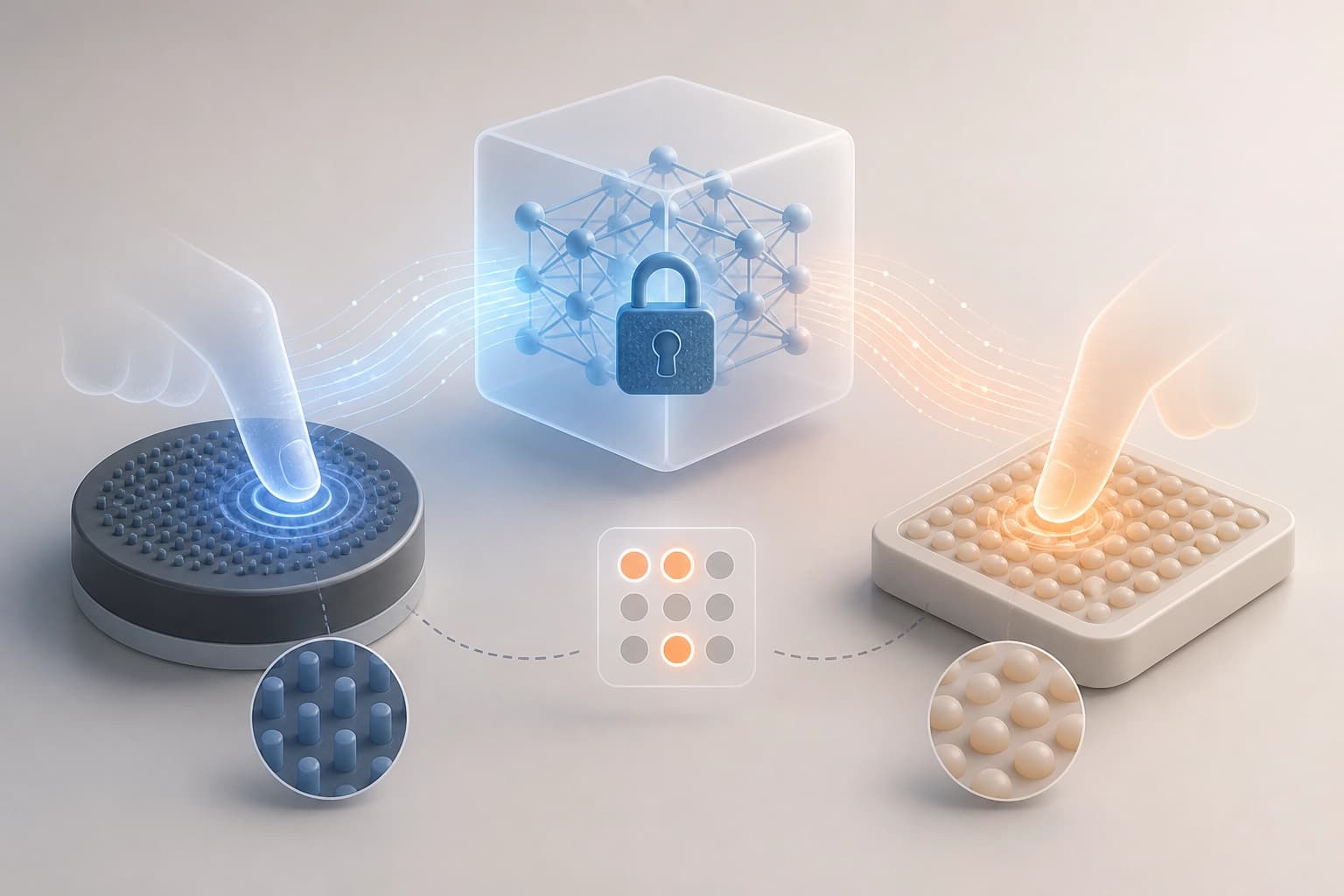
Why Transferring a Tactile Model to a New Sensor Is Difficult
Vision-based tactile sensors provide high-resolution contact information. They support robotic perception and contact-rich manipulation. These sensors advance embodied intelligence through more reliable physical interaction. However, sensing mechanisms depend on the device. As a result, tactile foundation models degrade on unfamiliar hardware.
Existing cross-sensor methods often require calibration data. They need paired observations or iterative training. This creates a barrier to rapid deployment on a new sensor. An approach is needed that preserves pretrained representations and adapts using only a small number of labels.
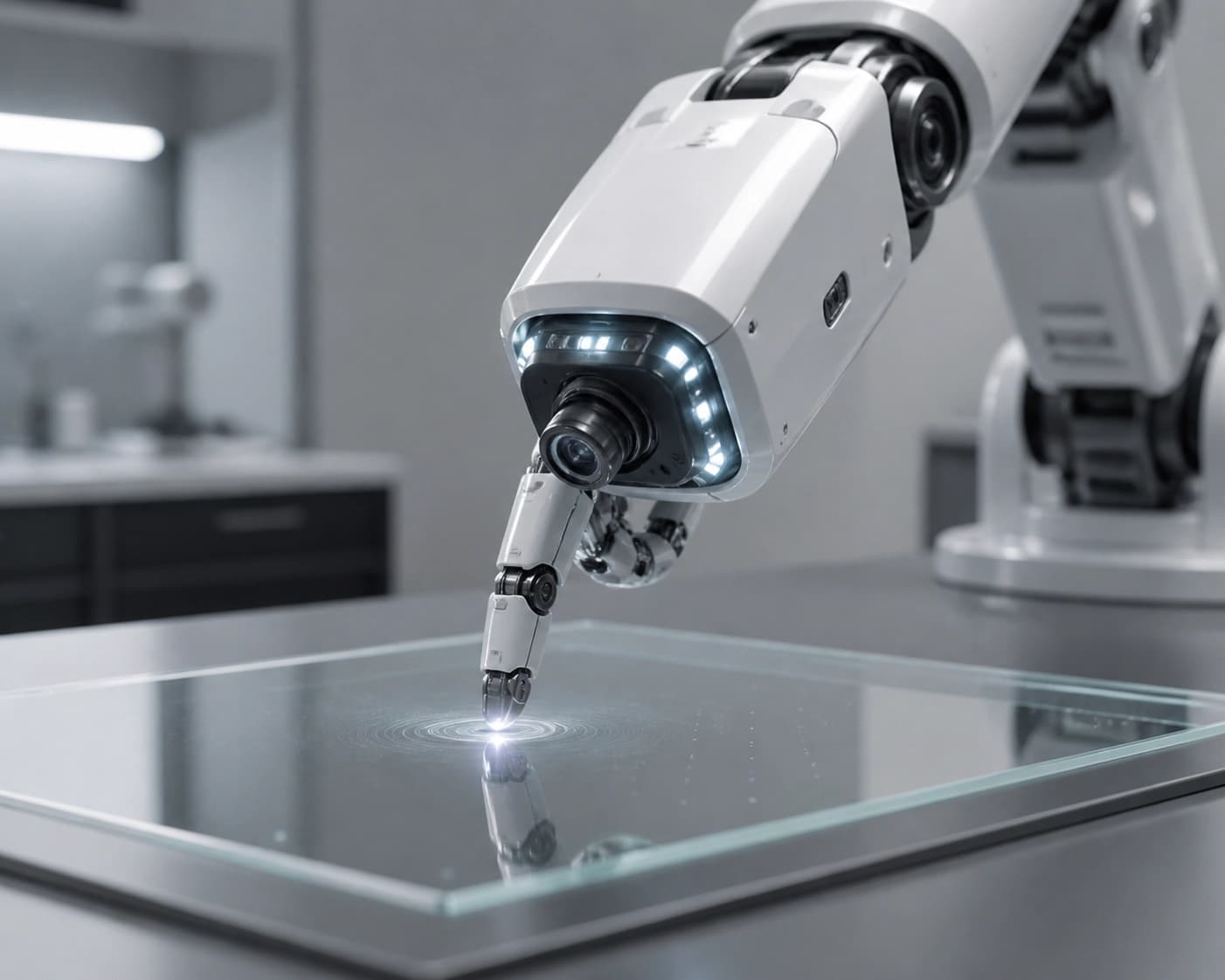
BIDETA in a nutshell: gradient-free adaptation from a few labeled contacts
BIDETA is a gradient-free framework for adapting tactile models to unfamiliar sensors. It uses a frozen tactile encoder and a few labeled target contacts. The framework jointly predicts labels for an unlabeled query batch. This approach relies on a handful of labeled contacts from the target sensor.
BIDETA is inspired by the brain’s rapid sensory adaptation. The framework does not perform gradient-based training. It preserves pretrained representations and adapts them to the new sensor. This makes adaptation data-efficient.
Takeaway: BIDETA is suitable for cases where access to large amounts of labeled data on the target hardware is unavailable.
Three components of BIDETA
BIDETA combines three components. The first is rapid support memory. The second is support-conditioned spectral graphs. The third is reliability-gated recurrence. Together, they address three challenges.
| Challenge | What happens |
|---|---|
| Preserving pretrained representations | The framework retains the model’s original features |
| Fixing sensor-dependent feature neighborhoods | The framework reconstructs sensor-dependent feature neighborhoods |
| Integrating reliable cross-query evidence | The framework combines reliable cross-query evidence |
The table shows which challenges the combination of components addresses. BIDETA preserves pretrained representations, repairs sensor-dependent feature neighborhoods, and integrates reliable cross-query evidence. These actions support adaptation without gradient-based training.

Results on SITR, TacVerse Shape, and TacQuad
The authors conducted experiments on SITR, TacVerse Shape, and TacQuad. On SITR with 10% labeled target data, BIDETA increases mean Sparsh accuracy from 6.86% to 87.09%. For comparison, the frozen source classifier achieves 6.86%. BIDETA exceeds the best implemented prior baseline by 47.22 percentage points.
| Method | Mean Sparsh accuracy on SITR with 10% labeled target data |
|---|---|
| Frozen source classifier | 6.86% |
| BIDETA | 87.09% |
| Improvement over the best implemented prior baseline | +47.22 percentage points |
The improvements generalize across datasets, pretrained backbones, and tactile tasks. BIDETA makes adaptation to the target sensor 20 times faster in the timing benchmark on SITR with TVL. This confirms a data-efficient and gradient-free pathway.
Takeaway: the approach delivers a substantial accuracy gain and speeds up adaptation to an unfamiliar sensor.
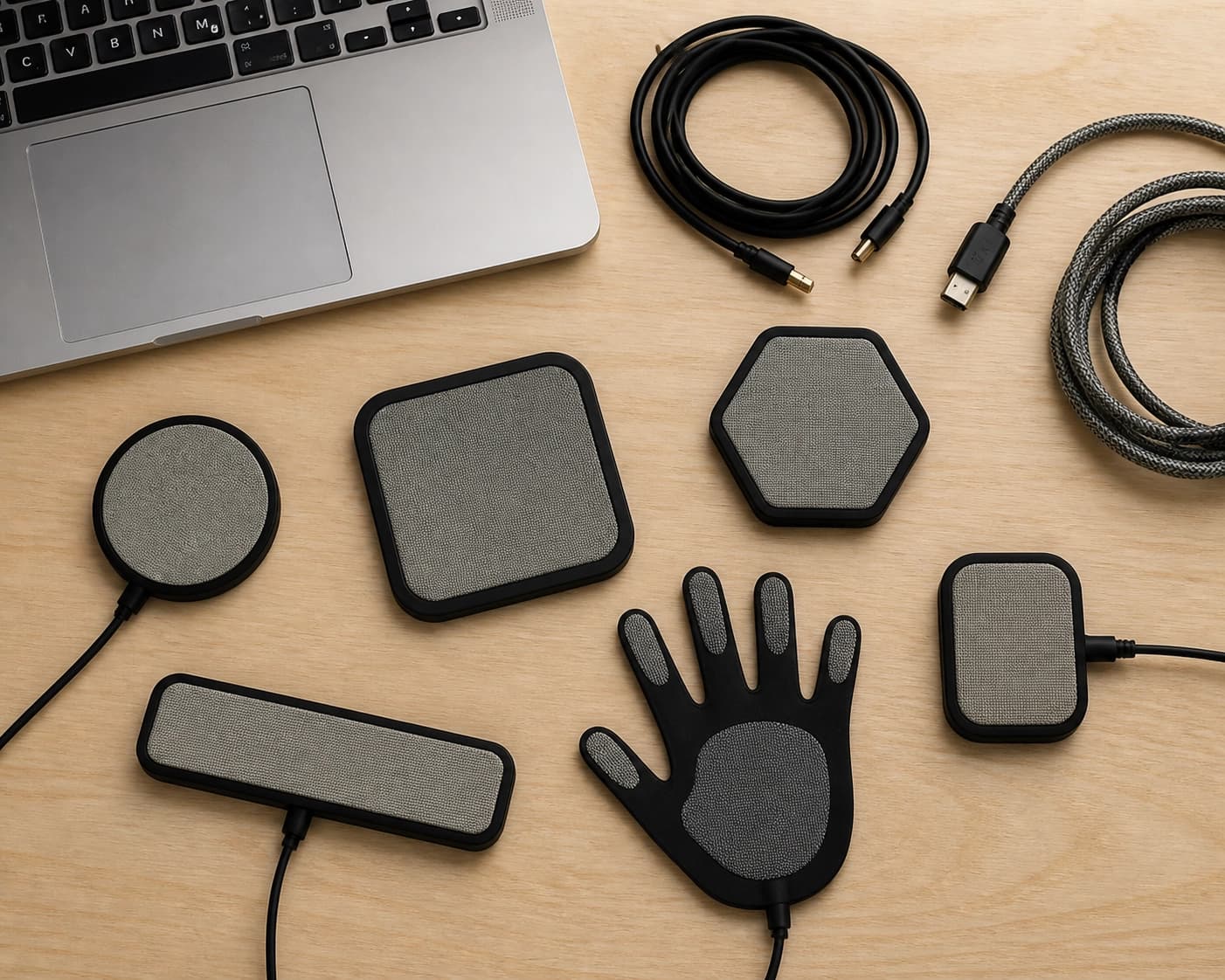
Practical criterion: when to choose BIDETA
BIDETA is worth considering when a tactile model needs to be transferred to an unfamiliar sensor. The approach is useful when calibration data, paired observations, or resources for iterative training are unavailable. A frozen tactile encoder and a few labeled target contacts are sufficient.
If large amounts of labeled data and paired observations are available, other cross-sensor methods may be suitable. BIDETA offers a gradient-free and data-efficient pathway for deploying tactile models on new hardware. The selection criterion is the limited availability of labeled contacts and the need for rapid adaptation.
Frequently asked questions
Related materials
All materials
Validating Candidates Costs More Than Generating Them: Honeypots Against LLM Vulnerability Hunting
The study examines the cost asymmetry in agentic vulnerability discovery: generating candidate versions is cheap, while confirming them through reachability analysis, execution, and PoC development consumes most of the budget, making verification a potential standalone target for defense. The proposed RedHerring—repository-adapted decoys with a hidden certificate—reduced the number of real vulnerabilities found by 38.7–60.4% at equal cost across 33 OSS-Fuzz projects; even after the agent was warned, the reduction remained at 37.2%.
9 November 2026
Checking LLM Hallucinations via SQL-Based Source Representation Without Fine-Tuning
The study examines whether an LLM can apply a basic symbolic skill—building a SQL database from source documents—to ground its outputs in sources without supervision when detecting hallucinations. On RAGTruth and DiaHalu, this neuro-symbolic pipeline proves more accurate than direct prediction and comparable to state-of-the-art methods, without requiring domain-specific fine-tuning.
9 November 2026
MathAdv: What the Final Accuracy of Machine-Generated Proofs Conceals
A diagnostic suite of tasks spanning 13 undergraduate and graduate mathematics topics evaluates machine-proving systems in Lean 4 not only by their final results, but also by their subject-matter mastery, the quality of their informal reasoning, and their robustness to rephrased conditions. A component-by-component analysis shows that translating a problem into formal form remains the main obstacle, and that success depends heavily on the area of mathematics and how the problem is framed.
9 November 2026