
Custom chips for Claude: Anthropic is forming an engineering team
Anthropic has officially confirmed for the first time its plans to create an internal semiconductor design division. The company is hiring engineers to jointly develop hardware and models for faster and more efficient operation of Claude, without giving up capacity from AWS, Google, Nvidia, and AMD.
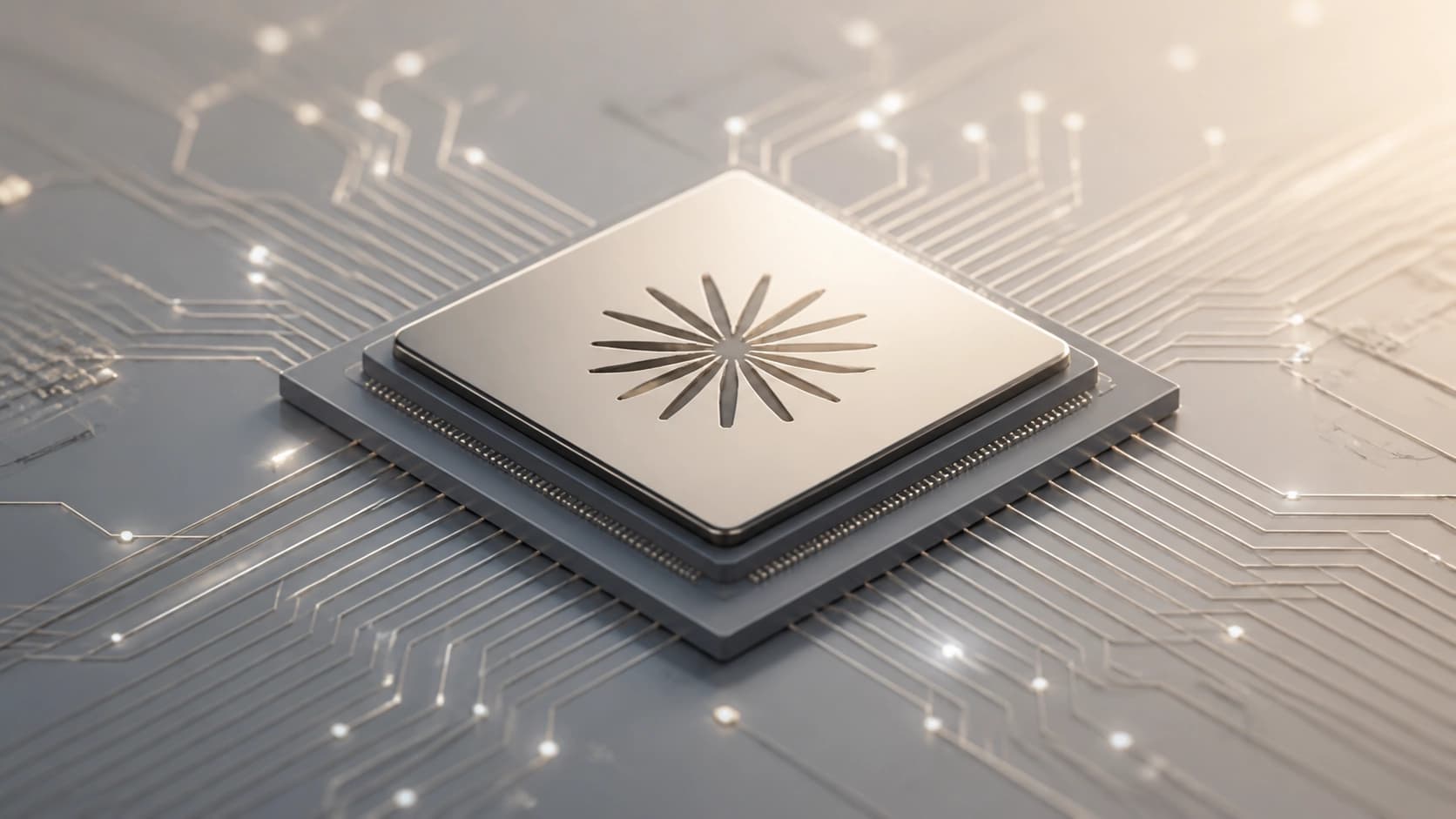
Anthropic has officially confirmed the creation of an in-house team to design custom chips for its models. This is the company's first public step toward independent development of semiconductor solutions. According to Business Insider, an Anthropic representative said that engineers will jointly design hardware and algorithms to achieve faster and more efficient performance from Claude.
Why this matters
Moving to custom chips is not just a way to save money, but a strategic move. Instead of adapting models to standard hardware, Anthropic will be able to design microchips for the specific needs of Claude. This should speed up computations and reduce scaling costs. The company emphasizes that it does not intend to abandon its existing infrastructure. As before, AWS and Google servers, as well as Nvidia and AMD accelerators, will play a key role. Custom developments will simply become another element of a larger ecosystem.
Who they are looking for
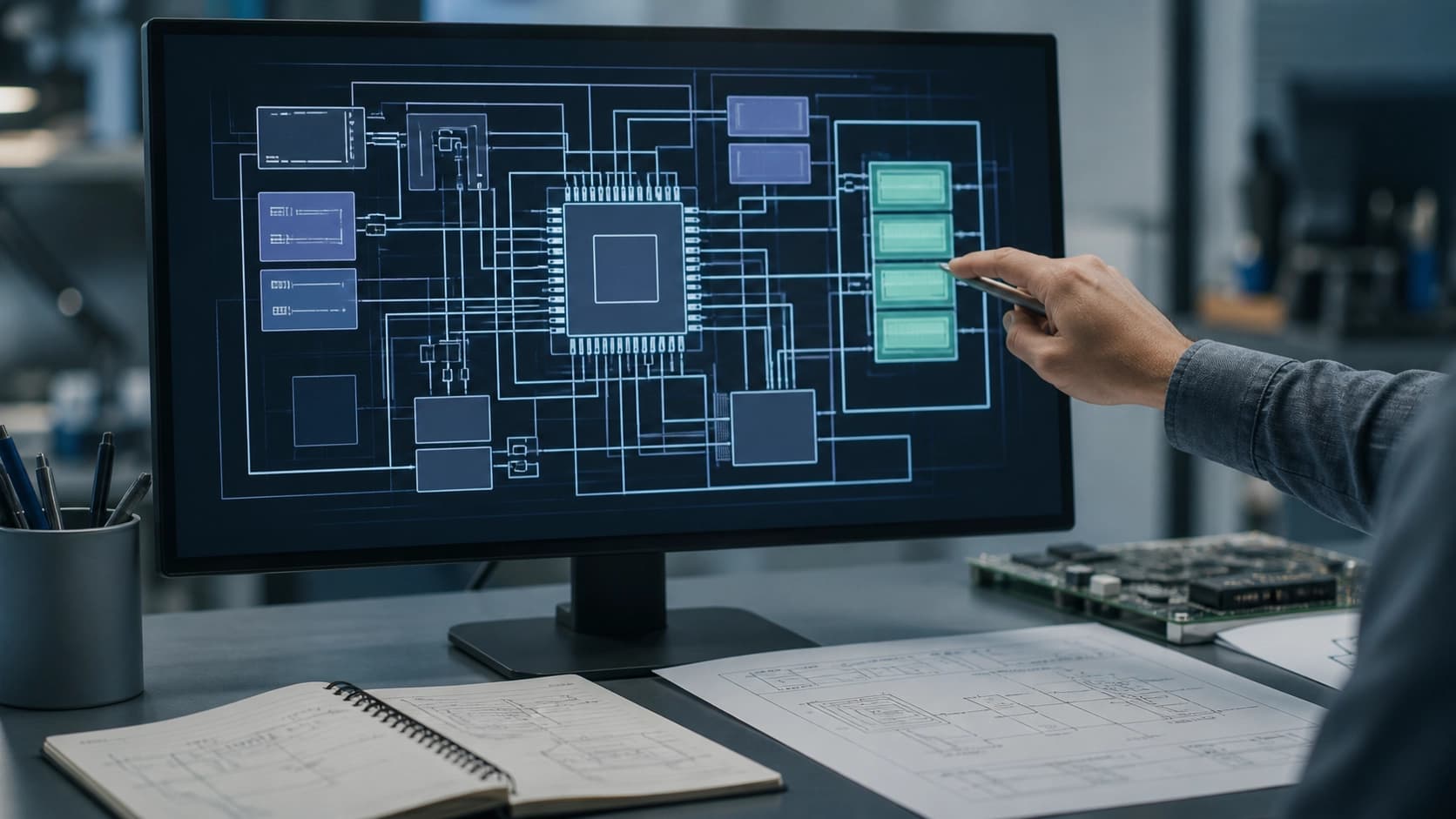
Anthropic's published job posting mentions the creation of a "custom silicon team." The company needs engineers with experience in chip design and verification. Hands-on experience is critically important: the candidate must have personally participated in the release of semiconductor products. The requirements are strict: they need someone who has "shipped silicon," has a realistic view of timelines, and is ready to make decisions independently without relying on a large support team.
The salary for such a position ranges from $320,000 to $485,000 per year. This is comparable to the level of leading specialists in the industry and confirms the seriousness of the company's intentions.
Industry context
Anthropic has joined a group of AI labs that have decided to take chip development under their own control. In June, OpenAI announced the Jalapeño chip, developed together with Broadcom. Meta plans to put its new chip into production in September. The founder of Mistral also does not rule out the appearance of its own silicon in the future.
Designing AI chips is an expensive and labor-intensive process, but it opens up opportunities for deep optimization. Companies gain control over performance and become independent of the whims of the market. It seems that this is the new standard for major players in the field of artificial intelligence.
Frequently asked questions
Related materials
All materials
Canonical Polynomial Invariants for Diagnosing RL Simulator Failures: Where Are They Actually Useful?
The study examines whether incorporating physical laws into learnable dynamics models is justified: invariants extracted from trajectories and reduced to canonical form using Gröbner bases yield modest forecasting gains, but prove powerful for diagnostics, enabling the localization of violated constraints and identification of specific erroneous parameters.
10 November 2026
AURA-Eval: How to Check Whether an LLM Agent Recognized a Risk and Changed Its Next Step
The framework evaluates LLM agents’ behavior not by their final verdict, but by how they respond to risk at key decision points: tool-call trajectories are interrupted, after which the model must continue reasoning and acting, while a panel of LLM judges assesses risk detection, the nature of the step, and its safety. Across 1,249 tasks drawn from 157 R-Judge trajectories, unsafe actions become more frequent among 20 models when no safe path is available, and removing oversight before execution turns 52.3% of initially safe cases into unsafe ones.
10 November 2026
Chern–Simons Reservoir Memory: Autonomous Connectivity Dynamics and Density Transport
The article explores how a reservoir preserves the history of input signals both in its density distribution and in its geometric degrees of freedom. A comparison of four mechanisms shows that current creates a separate connected component that alters the subsequent density response, while accounting for all measured features yields a small improvement in decoding pulse order.
10 November 2026